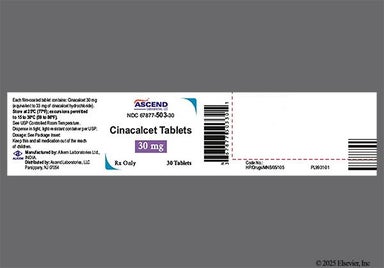
Cinacalcet (Sensipar) lowers high parathyroid hormone levels in people with overactive parathyroid glands caused by different medical conditions, including parathyroid cancer. It's taken by mouth with food, typically once or twice daily. Some common side effects of cinacalcet (Sensipar) include nausea and vomiting. Your provider will order blood work regularly to check your calcium levels to make sure it doesn't drop to low and put you at risk for rare, but more serious side effects. Cinacalcet (Sensipar) is available as brand name and generic tablets.
Parathyroid hormone is the hormone in your body that controls how much calcium and phosphorus are in your blood. Sometimes, people have overactive parathyroid glands that releases too much parathyroid hormone. This leads to your body releasing more calcium and phosphorus into the blood.
Cinacalcet (Sensipar) is in a drug class called calcimimetics. It works on your parathyroid glands to lower the amount of parathyroid hormone they produce. In doing so, it lowers the amount of calcium and phosphorus in your body.
The following side effects may get better over time as your body gets used to the medication. Let your healthcare provider know immediately if you continue to experience these symptoms or if they worsen over time.
Common Side Effects
Nausea (29-66%)
Vomiting (26-52%)
Diarrhea (21%)
Less Common Side Effects
Stomach pain
Muscle aches
Dizziness
Poor appetite
Headache
Back pain
Cinacalcet (Sensipar) serious side effects
Contact your healthcare provider immediately if you experience any of the following.
Very low levels of calcium: muscle pain and spasms, pins and needles sensation, seizures
Stomach bleed: vomiting that won't stop, blood in your vomit or stool, black, tarry stools, really bad stomach pain
Heart problems: abnormal heartbeats, trouble breathing, sudden weight gain or swelling of your arms and legs, feeling confused
The following Cinacalcet (Sensipar) side effects have also been reported
Along with its needed effects, a medicine may cause some unwanted effects. Although not all of these side effects may occur, if they do occur they may need medical attention.
Check with your doctor immediately if any of the following side effects occur:
Some side effects may occur that usually do not need medical attention. These side effects may go away during treatment as your body adjusts to the medicine. Also, your health care professional may be able to tell you about ways to prevent or reduce some of these side effects. Check with your health care professional if any of the following side effects continue or are bothersome or if you have any questions about them:
Take your cinacalcet (Sensipar) tablet with food or shortly after a meal. Swallow it whole, and don't crush or chew it.
Store cinacalcet (Sensipar) tablets at room temperature.
Cinacalcet (Sensipar) commonly causes nausea and vomiting. Let your provider know if you experience these side effects.
Some medications, such as certain diuretics (water pills), can have the opposite effect of cinacalcet (Sensipar) and raise the level of calcium in your blood. Let your healthcare provider or pharmacist know about all the medications you're taking.
Some people benefit from taking vitamin D supplements, because vitamin D can help raise your calcium levels if they become too low. Check with your healthcare provider or pharmacist if this could help you.
Risks and warnings for Cinacalcet (Sensipar)
Cinacalcet (Sensipar) can cause some serious health issues. This risk may be even higher for certain groups. If this worries you, talk to your doctor or pharmacist about other options.
Low calcium levels
Risk factors: Heart problems | Seizures | Also taking medications that lower calcium levels
Cinacalcet (Sensipar) can cause low blood calcium levels. Your risk is higher if you're also taking other medications that can lower your calcium levels. Very low calcium levels can be life-threatening. Low calcium levels can affect your muscles, cause seizures, and change your heart's natural rhythm. You'll need to have regular lab work done to make sure you are doing well on cinacalcet (Sensipar). Let your healthcare provider know if you have a history of heart problems or seizures. Speak to your healthcare provider right away if you experience muscle cramps, muscle aches, confusion, tingling sensations in the fingers or lips, and abnormal heart beats.
Upper gastrointestinal bleeding (bleeding from the stomach)
Risk factors: History of ulcers | History of stomach problems
Some people have experienced stomach bleeds while taking cinacalcet (Sensipar). The cause isn't known, but your risk might be higher if you have a history of ulcers or stomach problems. Speak to your healthcare provider right away if you experience nausea or vomiting that doesn't go away, blood in your vomit or stool, black, tarry stools, or stomach pain.
Bone problems
Cinacalcet (Sensipar) can cause bone problems if your levels of parathyroid hormones are too low. Your healthcare provider will have you get regular lab work to check your PTH levels.
Heart problems
Risk factors: History of heart problems
Cinacalcet (Sensipar) can cause heart problems (low blood pressure or abnormal heart rhythms) in those with a history of heart conditions. Let your healthcare provider know if you have abnormal heartbeats, trouble breathing, swelling of the limbs, sudden weight gain, mental confusion, or if you feel tired most of the time.
Cinacalcet (Sensipar) dosage
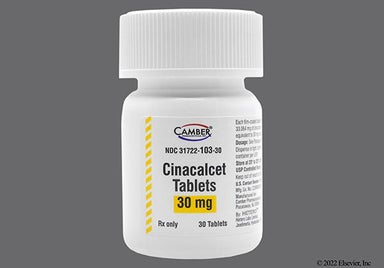
The average cost for 30 tablets of 30mg of Cinacalcet (Sensipar) is $26.07 with a free GoodRx coupon. This is 97.17% off the average retail price of $919.58.
Interactions between Cinacalcet (Sensipar) and other drugs
Cinacalcet (Sensipar) may interact with certain medications or supplements. Always let your doctor and pharmacist know about any other medications or supplements (including prescribed and over-the-counter medications, vitamins, and dietary or herbal supplements) that you are currently taking. The list below does not include all possible drug interactions with Cinacalcet (Sensipar). Please note that only the generic name of each medication is listed below.
Although certain medicines should not be used together at all, in other cases two different medicines may be used together even if an interaction might occur. In these cases, your doctor may want to change the dose, or other precautions may be necessary. When you are taking this medicine, it is especially important that your healthcare professional know if you are taking any of the medicines listed below. The following interactions have been selected on the basis of their potential significance and are not necessarily all-inclusive.
Using this medicine with any of the following medicines is not recommended. Your doctor may decide not to treat you with this medication or change some of the other medicines you take.
Eliglustat
Using this medicine with any of the following medicines is usually not recommended, but may be required in some cases. If both medicines are prescribed together, your doctor may change the dose or how often you use one or both of the medicines.
Using this medicine with any of the following medicines may cause an increased risk of certain side effects, but using both drugs may be the best treatment for you. If both medicines are prescribed together, your doctor may change the dose or how often you use one or both of the medicines.
Contraindications are specific health conditions or situations in which a person should not take a medication due to safety concerns. If you have any of the following conditions or if any of the following apply to you, let your healthcare provider know because Cinacalcet (Sensipar) will not be safe for you to take.
Very low calcium levels
What are alternatives to Cinacalcet (Sensipar)?
There are a number of medications that your doctor can prescribe in place of Cinacalcet (Sensipar). Compare a few possible alternatives below.
Cinacalcet (Sensipar)
Used for:
High calcium levels from:
Overactive parathyroid that can't be removed by surgery
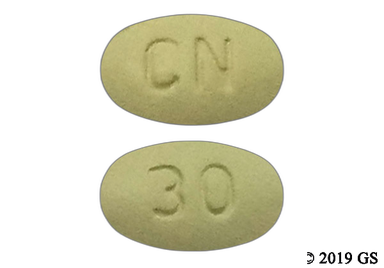
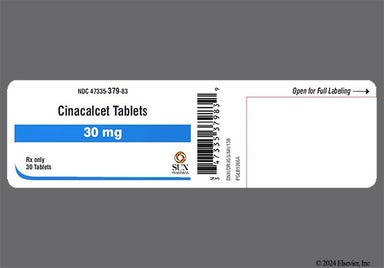
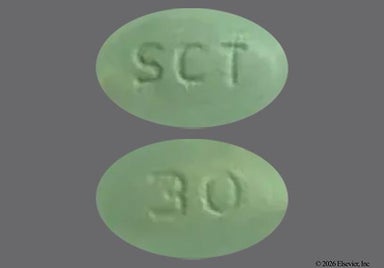
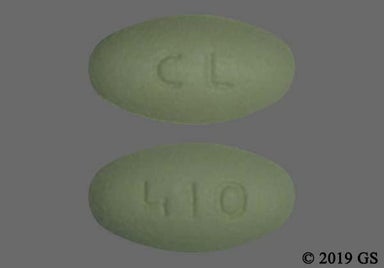
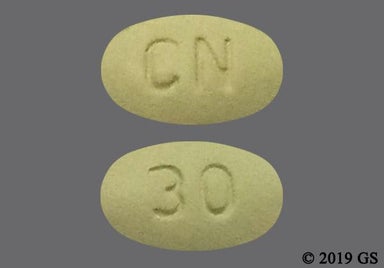
This medicine is Green, Oval Tablet Imprinted With "H" And "C6".Green Oval H And C6 - Cinacalcet Hydrochloride 30mg TabletThis medicine is Green, Oval Tablet Imprinted With "379".Green Oval 379 - Cinacalcet Hydrochloride 30mg TabletThis medicine is Green, Oval Tablet Imprinted With "Sct" And "30".Green Oval Sct And 30 - Cinacalcet Hydrochloride 30mg TabletThis medicine is Green, Oval Tablet Imprinted With "A33" And "30".Green Oval A33 And 30 - Cinacalcet Hydrochloride 30mg TabletThis medicine is Green, Oval Tablet Imprinted With "Cl" And "410".Green Oval Cl And 410 - Cinacalcet Hydrochloride 30mg TabletThis medicine is Green, Oval Tablet Imprinted With "Cn" And "30".Green Oval 30 And Cn - Cinacalcet Hydrochloride 30mg Tablet
GoodRx Health has strict sourcing policies and relies on primary sources such as medical organizations, governmental agencies, academic institutions, and peer-reviewed scientific journals. Learn more about how we ensure our content is accurate, thorough, and unbiased by reading our editorial guidelines.
Prescription savings
Stop paying too much for your prescriptions. Compare prices, get pharmacy coupons, and save up to 80%.
Take Cinacalcet by mouth with food or shortly after having a meal. This will help your body absorb more medication than if you were to take it on an empty stomach.
Don't chew, crush, or divide Cinacalcet tablets. If you have difficulties swallowing this medication whole, talk with your provider.
No, Cinacalcet isn't considered a phosphorus binder. But if you've chronic kidney disease (CKD) and are on dialysis, your provider might prescribe a phosphorus binder to take along with Cinacalcet to help lower phosphorus levels to a safe range. Your provider will likely check your phosphorus levels regularly while you're taking Cinacalcet. Ask your care team if you've any questions about the medications you're taking for your condition.
In clinical studies, many people who took Cinacalcet noticed changes in their parathyroid hormone, calcium, and phosphorus levels within 1 week. Your healthcare provider will regularly check your labs and review them to make sure this medication is working well for you. They might need to make adjustments to your dose of Cinacalcet every 2 to 4 weeks based on lab results. Keep in mind that it'll take some time before you and your provider find the right dose of Cinacalcet that works for you.
If your body's parathyroid hormone levels are too high, it can lead to osteoporosis (bone problems), kidney problems, or heart problems. Have a discussion with your provider about this concern and keep blood work appointments so your provider can make sure your levels are OK.
It depends. Cinacalcet is FDA-approved for people who have high levels of parathyroid hormone in their body caused by kidney problems and are on dialysis. However, some people have high levels of parathyroid hormone, but they're not on dialysis. Their condition is caused by cancer or other causes that raise the parathyroid hormone levels. For these people, they don't need to be on dialysis to use the medication.
There's not enough data available to know whether or not breastfeeding or being pregnant while taking Cinacalcet is safe. If you are planning to become pregnant or already are, let your healthcare provider know so you can discuss the risks and benefits of continuing Cinacalcet.