Ryzneuta
Ryzneuta (efbemalenograstim alfa) is an injectable medication used to lower the risk of infection in adults with certain cancers who are getting chemotherapy that can cause low white blood cells. It's a long-acting growth factor that helps the body make more neutrophils, a type of white blood cell important for fighting infections. A healthcare professional will give it as a shot under the skin once during each chemotherapy cycle. Side effects include nausea, low red blood cells, and low platelet count.


What is Ryzneuta (efbemalenograstim alfa)?
What is Ryzneuta (efbemalenograstim alfa) used for?
- Reduce the risk of infection in adults with certain cancers who are getting chemotherapy that can cause low white blood cells
How Ryzneuta (efbemalenograstim alfa) works
Ryzneuta (efbemalenograstim alfa) is a man-made leukocyte growth factor called a recombinant granulocyte colony-stimulating factor (G-CSF). G-CSF is a protein your body uses to tell your bone marrow to make more neutrophils, which are white blood cells that help fight infections.
By acting like G-CSF, Ryzneuta (efbemalenograstim alfa) helps raise your neutrophil levels. This is especially important during chemotherapy, when white blood cells can drop and make it harder for your immune system to protect you.
Drug facts
| Common Brands | Ryzneuta |
|---|---|
| Drug Class | Colony stimulating factor |
| Controlled Substance Classification | Not a controlled medication |
| Generic Status | No lower-cost generic available |
| Availability | Prescription only |

Side effects of Ryzneuta (efbemalenograstim alfa)
The following side effects may get better over time as your body gets used to the medication. Let your healthcare provider know immediately if you continue to experience these symptoms or if they worsen over time.
Common Side Effects
- Nausea (51%)
- Low red blood cell count (15%)
- Low platelet count (12%)
Less Common Side Effects
- Tiredness
- Bone pain
Ryzneuta (efbemalenograstim alfa) serious side effects
Contact your healthcare provider immediately if you experience any of the following.
- Spleen rupture: pain in the left upper stomach, pain in the left shoulder
- Breathing problems: shortness of breath, fever, trouble breathing, breathing fast
- Serious allergic reaction: rash, shortness of breath, facial or throat swelling, dizziness, fast heart rate
- Kidney injury: swelling of the face or ankles, dark-colored urine, blood in the urine, urinating less than usual
- Capillary leak syndrome (CLS): swelling or puffy, urinating less than normal, trouble breathing, swelling in the stomach and feeling full, dizziness, feeling faint, tiredness
- Blood problem: tiredness, fever, easy bruising or bleeding
- Inflammation of the aorta: fever, stomach pain, tiredness, back pain
The following Ryzneuta (efbemalenograstim alfa) side effects have also been reported
Side effects that you should report to your care team as soon as possible:
- Allergic reactions—skin rash, itching, hives, swelling of the face, lips, tongue, or throat
- Capillary leak syndrome—stomach or muscle pain, unusual weakness or fatigue, feeling faint or lightheaded, decrease in the amount of urine, swelling of the ankles, hands, or feet, trouble breathing
- High white blood cell level—fever, fatigue, trouble breathing, night sweats, change in vision, weight loss
- Inflammation of the aorta—fever, fatigue, back, chest, or stomach pain, severe headache
- Kidney injury (glomerulonephritis)—decrease in the amount of urine, red or dark brown urine, foamy or bubbly urine, swelling of the ankles, hands, or feet
- Low red blood cell level—unusual weakness or fatigue, dizziness, headache, trouble breathing
- Shortness of breath or trouble breathing
- Spleen injury—pain in upper left stomach or shoulder
- Unusual bruising or bleeding
Side effects that usually do not require medical attention (report these to your care team if they continue or are bothersome):

Pros and cons of Ryzneuta (efbemalenograstim alfa)
Pros
- Only needs to be given once per chemotherapy cycle
- Lowers the chance of serious infections due to chemotherapy
- No significant interactions with other medications or supplements
Cons
- Not known if it's safe and effective in children
- Commonly causes nausea as a side effect
- Risk of serious complications like spleen rupture or breathing problems

Pharmacist tips for Ryzneuta (efbemalenograstim alfa)

- Ryzneuta (efbemalenograstim alfa) is injected under the skin of your stomach, thigh, or the back of your upper arm.
- The needle cap on Ryzneuta (efbemalenograstim alfa) contains latex, which can cause an allergic reaction. Tell your care team if you have a latex allergy and watch for signs like hives, swelling, or a rash.
- Ryzneuta (efbemalenograstim alfa) can sometimes cause your spleen to rupture. Seek medical help right away if you have pain in the upper left side of your stomach or pain in your left shoulder.
- Ryzneuta (efbemalenograstim alfa) can cause serious breathing problems, sometimes with a fever. Contact your care team right away if you have trouble breathing.
- Ryzneuta (efbemalenograstim alfa) might cause kidney problems. Get medical help right away if you notice swelling, dark urine, or you urinate less than usual.
- Ryzneuta (efbemalenograstim alfa) can cause capillary leak syndrome, which lets fluid leak out of blood vessels. Call your care team right away if you feel dizzy from low blood pressure or notice sudden swelling.
- Let your oncologist know if you have sickle cell disease before using Ryzneuta (efbemalenograstim alfa). This medication can cause serious sickle cell crisis, which could lead to death. Tell your care team if you have pain or difficulty breathing.

Risks and warnings for Ryzneuta (efbemalenograstim alfa)
Ryzneuta (efbemalenograstim alfa) can cause some serious health issues. This risk may be even higher for certain groups. If this worries you, talk to your doctor or pharmacist about other options.
Spleen rupture
Ryzneuta (efbemalenograstim alfa) can sometimes cause the spleen to swell or tear, which can be life-threatening in rare cases. Contact your care team right away if you have pain in the upper left side of your stomach or pain in your left shoulder.
Breathing problems
Ryzneuta (efbemalenograstim alfa) can cause a serious breathing condition called acute respiratory distress syndrome (ARDS). ARDS happens when fluid builds up in the lungs, making it hard for oxygen to get into your blood and reach your organs. This prevents enough oxygen from getting into your blood and to your organs. Get medical help right away if you have shortness of breath, fast breathing, or fever.
Serious allergic reactions
- Risk factor: Allergy to Ryzneuta (efbemalenograstim alfa) or similar medications
Ryzneuta (efbemalenograstim alfa) can cause serious allergic reactions, including a life-threatening reaction called anaphylaxis. You shouldn't receive Ryzneuta (efbemalenograstim alfa) if you've ever had an allergic reaction to it or similar medications, such as Neulasta (pegfilgrastim) or Neupogen (filgrastim). Contact your care team right away if you have symptoms like trouble breathing, swelling of your face or throat, hives, or a severe rash after receiving the medication.
Sickle cell crisis in people with sickle cell disease
- Risk factor: Sickle cell disease
Ryzneuta (efbemalenograstim alfa) can cause severe and sometimes life-threatening sickle cell crises if you have sickle cell disease. Contact your care team right away if you develop severe pain, trouble breathing, or other symptoms of a sickle cell crisis after receiving the medication. If a sickle cell crisis happens, your care team will stop the medication.
Kidney injury
Kidney injury can happen in people receiving Ryzneuta (efbemalenograstim alfa). If your care team thinks you might have kidney problems, they might order blood tests to check how your kidneys are working. Let your care team know if you have blood in your urine, swelling in your legs, trouble urinating, or unusual tiredness.
Blood cell changes
Ryzneuta (efbemalenograstim alfa) can sometimes cause your white blood cell count to become too high. You'll need regular blood tests during treatment to watch for this. If your white blood cell count gets too high, you'll likely stop the medication.
Ryzneuta (efbemalenograstim alfa) can also lower your platelet count, which can affect how well your blood clots. Your care team will monitor your platelet count and watch for signs like easy bruising or bleeding so they can manage this safely.
Capillary leak syndrome
Ryzneuta (efbemalenograstim alfa) can cause a serious condition called capillary leak syndrome (CLS). CLS happens when fluid leaks out of your blood vessels, which can lead to low blood pressure and swelling. Contact your care team right away if you have sudden swelling, trouble breathing, dizziness, weakness, or tiredness.
Cancer risk
- Risk factor: Breast or lung cancer
Ryzneuta (efbemalenograstim alfa) is a growth factor that helps the body make more white blood cells. In some cases, it can also help tumors grow, which can make cancer worse. There is a risk of developing certain blood conditions or blood cancers when this medication is used during breast or lung cancer treatment, along with chemotherapy or radiation. Keep regular follow-up visits with your oncologist so they can make sure this medication is safe for you.
Inflammation of the aorta
Some people who received Ryzneuta (efbemalenograstim alfa) developed a condition called aortitis, which is inflammation of the aorta, a major blood vessel. This can happen as early as the first week after starting treatment. Let your care team know if you have a fever, stomach pain, back pain, or start feeling unwell. Your care team might need to stop the medication to help protect your blood vessels.

Ryzneuta (efbemalenograstim alfa) dosage
Typical dosage for Ryzneuta (efbemalenograstim alfa)
Ryzneuta (efbemalenograstim alfa) is usually given in a clinic or hospital by a healthcare professional.
The typical dose is 20 mg injected under the skin once each chemotherapy cycle, at least 24 hours after chemotherapy.

Ryzneuta (efbemalenograstim alfa) contraindications
Contraindications are specific health conditions or situations in which a person should not take a medication due to safety concerns. If you have any of the following conditions or if any of the following apply to you, let your healthcare provider know because Ryzneuta (efbemalenograstim alfa) will not be safe for you to take.
- History of allergy to granulocyte stimulating factors (e.g., Neulasta (pegfilgrastim), Neupogen (filgrastim))

What are alternatives to Ryzneuta (efbemalenograstim alfa)?

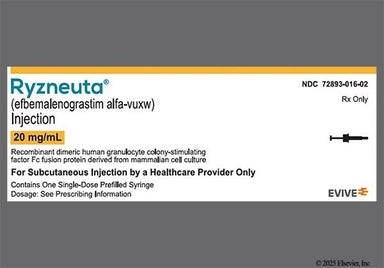
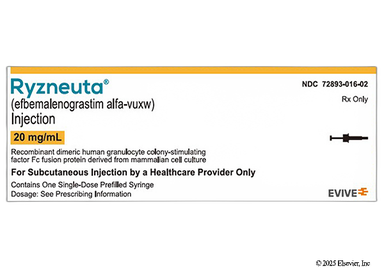
Ryzneuta (efbemalenograstim alfa) images