Rylaze
Rylaze (asparaginase erwinia chrysanthemi) is a chemotherapy medication used to treat children and adults aged 1 month and older with acute lymphoblastic leukemia (ALL) or lymphoblastic lymphoma (LBL). The medication is given as an injection into the muscle (intramuscular, IM) and is typically used alongside other chemotherapy medications. Rylaze (asparaginase erwinia chrysanthemi) is an asparaginase product specifically for people who are allergic to other asparaginase medications, such as Oncaspar (pegaspargase) or Asparlas (calaspargase pegol). But since it doesn’t last as long in the body, it needs to be given more frequently. Some side effects include nausea, muscle pain, and pancreatitis.


What is Rylaze (asparaginase erwinia chrysanthemi)?
What is Rylaze (asparaginase erwinia chrysanthemi) used for?
- Treatment of children and adults 1 month and older with acute lymphoblastic leukemia (ALL) or lymphoblastic lymphoma (LBL) given together with other chemotherapy medications
- For people who developed an allergic reaction to another form of an asparaginase medication
How Rylaze (asparaginase erwinia chrysanthemi) works
Rylaze (asparaginase erwinia chrysanthemi) is an asparagine specific enzyme. It works by targeting asparagine, a nutrient that cancer cells need to survive. By breaking down asparagine, Rylaze (asparaginase erwinia chrysanthemi) prevents cancer cells from using it, which helps stop them from growing and spreading.
Drug facts
| Common Brands | Rylaze |
|---|---|
| Drug Class | Asparagine specific enzyme |
| Controlled Substance Classification | Not a controlled medication |
| Generic Status | No lower-cost generic available |
| Availability | Prescription only |

Side effects of Rylaze (asparaginase erwinia chrysanthemi)
The following side effects may get better over time as your body gets used to the medication. Let your healthcare provider know immediately if you continue to experience these symptoms or if they worsen over time.
Common Side Effects
- Changes in liver enzymes (70-75%)
- Nausea (45-47%)
- Muscle pain (35-45%)
- Tiredness (22-36%)
- Headache (22-36%)
- Infection (27-36%)
- Febrile neutropenia (27-30%)
- Fever (20-30%)
- Bleeding (24-27%)
- Mouth sores (24-27%)
- Stomach pain (24-27%)
- Lower appetite (21-27%)
- Diarrhea (18-25%)
- Allergic reaction (21-24%)
- Pancreatitis (12-22%)
- Low potassium in blood (9-22%)
- High blood sugar (12-21%)
Less Common Side Effects
- High heart rate
- Cough
- Dehydration
- Nerve damage
- Trouble sleeping
Rylaze (asparaginase erwinia chrysanthemi) serious side effects
Contact your healthcare provider immediately if you experience any of the following.
- Serious allergic reaction: trouble breathing, hives, itching, facial swelling, dizziness, fainting
- Pancreatitis: severe stomach pain, fever, nausea, vomiting, chills, diarrhea
- Blood clots: sudden and severe headache, swelling in the arms or legs, trouble breathing, chest pain
- Bleeding: unusual bruising, nose bleeds
- Severe liver problems: sudden weight gain, stomach pain or swelling, nausea, vomiting, yellowing of the skin or the whites of the eyes
The following Rylaze (asparaginase erwinia chrysanthemi) side effects have also been reported
Side effects that you should report to your care team as soon as possible:
- Allergic reactions—skin rash, itching, hives, swelling of the face, lips, tongue, or throat
- Bleeding—bloody or black, tar-like stools, vomiting blood or brown material that looks like coffee grounds, red or dark brown urine, small red or purple spots on skin, unusual bruising or bleeding
- Blood clot—pain, swelling, or warmth in the leg, shortness of breath, chest pain
- Liver injury—right upper belly pain, loss of appetite, nausea, light-colored stool, dark yellow or brown urine, yellowing skin or eyes, unusual weakness or fatigue
- Pancreatitis—severe stomach pain that spreads to your back or gets worse after eating or when touched, fever, nausea, vomiting
Side effects that usually do not require medical attention (report these to your care team if they continue or are bothersome):
- Fatigue
- Headache
- Loss of appetite
- Muscle pain
- Nausea
- Pain, redness, or swelling with sores inside the mouth or throat
- Stomach pain

Pros and cons of Rylaze (asparaginase erwinia chrysanthemi)
Pros
- Recommended as part of combination therapy for ALL in children and adults
- Option for people who had an allergic reaction to a different asparaginase product
- Dose can be given in two different ways to adjust based on your needs
Cons
- Requires frequent injections
- Might cause a serious condition called pancreatitis and raise the risk of blood clots
- Not safe for people with severe liver problems

Pharmacist tips for Rylaze (asparaginase erwinia chrysanthemi)

- Because Rylaze (asparaginase erwinia chrysanthemi) commonly causes allergic reactions, you'll need to take premedications like acetaminophen (Tylenol), diphenhydramine (Benadryl), and famotidine (Pepcid) 30 to 60 minutes before each dose. If you experience symptoms like a rash, facial swelling, itching, or trouble breathing during or shortly after your treatment, tell your care team right away.
- Rylaze (asparaginase erwinia chrysanthemi) is usually given together with several other chemotherapy medications as part of a complex treatment regimen. The treatment schedule can be complicated and confusing. Consider using a treatment calendar or an app on your phone to help you keep track of appointments.
- Rylaze (asparaginase erwinia chrysanthemi) is given as an injection into the muscle, but you might need multiple injections of the medication in different areas of your body for one treatment.
- Rylaze (asparaginase erwinia chrysanthemi) can cause pancreatitis, or swelling of the pancreas. Seek medical help if you have symptoms such as severe stomach pain, fever, nausea and vomiting that won’t stop, and diarrhea.
- Rylaze (asparaginase erwinia chrysanthemi) can cause serious liver problems, so you’ll need to get regular labs done to check your liver health. If your liver enzymes are too high, you might need to pause. If you experience symptoms like yellow eyes, yellow skin, stomach pain, or a swollen belly, contact your care team right away.
- If you can become pregnant, use non-hormonal birth control while you’re taking Rylaze (asparaginase erwinia chrysanthemi). You’ll also need to continue to use birth control for at least 3 months after you stop treatment.
- It’s best to avoid breastfeeding while you’re taking Rylaze (asparaginase erwinia chrysanthemi) and for at least 1 week after your last dose, as there are potential risks to the baby.

Risks and warnings for Rylaze (asparaginase erwinia chrysanthemi)
Rylaze (asparaginase erwinia chrysanthemi) can cause some serious health issues. This risk may be even higher for certain groups. If this worries you, talk to your doctor or pharmacist about other options.
Allergic reactions
Even though this medication is specifically approved for people who have had allergic reactions in the past to other asparaginase products, you can still develop serious allergic reactions to Rylaze (asparaginase erwinia chrysanthemi), although this happened more when it was given as an infusion into the vein. These reactions can include rash, trouble breathing, facial swelling, hives, itching, or low blood pressure. To help prevent these reactions, you’ll take premedications such as acetaminophen (Tylenol), diphenhydramine (Benadryl), and famotidine (Pepcid) 30 to 60 minutes before each dose. If you have a serious reaction, you likely won’t be able to continue taking this medication
Pancreatitis
Sometimes, people taking Rylaze (asparaginase erwinia chrysanthemi) developed swelling in their pancreas, also called pancreatitis, which can be life-threatening if not treated right away. Contact your oncologist if you develop symptoms such as fever, nausea and vomiting, and severe stomach pain in the upper belly area. You might need to pause taking this medication while your oncologist looks into it. If they determine that you do have pancreatitis, you might need to stop taking Rylaze (asparaginase erwinia chrysanthemi) altogether.
Blood clots
Rarely, people taking Rylaze (asparaginase erwinia chrysanthemi) have developed blood clots, including stroke and pulmonary embolism. If you have swelling, warm skin, or redness in one arm or one leg, trouble breathing, a sudden and severe headache, or weakness on one side of your body, get medical help right away.
Bleeding
Some people taking Rylaze (asparaginase erwinia chrysanthemi) experienced bleeding, such as bruising and nosebleeds. They have also had changes in lab tests related to blood clotting, which means the body might have trouble stopping bleeds. If you experience bleeding that won’t stop or notice more bruising, let your care team know.
Liver problems
Rylaze (asparaginase erwinia chrysanthemi) can cause serious liver problems, some even life-threatening. Your oncologist will monitor your liver health on a regular basis to make sure this medication is still safe for you to take. If your liver labs are too high, you might need to pause or stop treatment. If you experience symptoms of liver problems such as stomach pain, sudden weight gain, yellowing of the skin, or yellowing around the whites of your eyes, call your oncologist right away.

Rylaze (asparaginase erwinia chrysanthemi) dosage
Typical dosage for Rylaze (asparaginase erwinia chrysanthemi)
Your oncologist will calculate your dose of Rylaze (asparaginase erwinia chrysanthemi) based on your body surface area (BSA), taking into account your height and weight.
Rylaze (asparaginase erwinia chrysanthemi) can be given two different ways over 2 or 3 weeks:
- Every other day: The typical dose is 25 mg/m2 injected into the muscle.
- Monday / Wednesday / Friday: The typical dose is 25 mg/m2 injected into the muscle on Monday and Wednesday mornings, and 50 mg/m2 injected in the muscle on Friday afternoons.

Rylaze (asparaginase erwinia chrysanthemi) contraindications
Contraindications are specific health conditions or situations in which a person should not take a medication due to safety concerns. If you have any of the following conditions or if any of the following apply to you, let your healthcare provider know because Rylaze (asparaginase erwinia chrysanthemi) will not be safe for you to take.
- History of pancreatitis to L-asparaginase treatment
- History of serious blood clot to L-asparaginase treatment
- History of serious bleeding to L-asparaginase treatment
- Severe liver problems

What are alternatives to Rylaze (asparaginase erwinia chrysanthemi)?

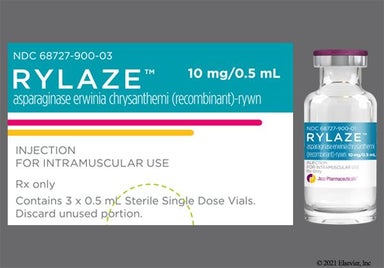
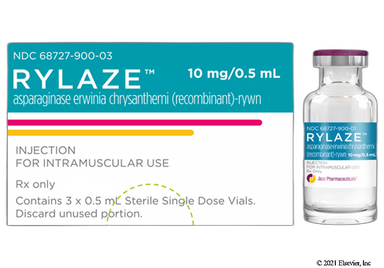
Rylaze (asparaginase erwinia chrysanthemi) images