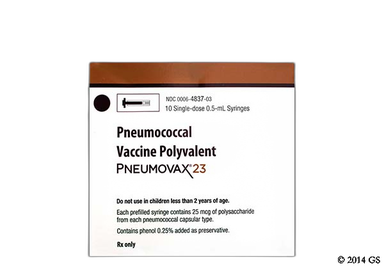
Pneumovax 23 is a inactivated polysaccharide vaccine. It protects you from a bacteria called Streptococcus pneumoniae that can cause many types of infections, including pneumonia and meningitis. Pneumovax 23 is typically given as a shot into the muscle by a healthcare professional (HCP). It's mainly given to older adults. But sometimes, HCPs might recommend it to children and younger adults with certain health conditions. Side effects of this vaccine include injection-site pain and redness, muscle pain, and headache.
Prevention of pneumococcal disease (infections caused by pneumococcus)
How Pneumovax 23 works
Pneumovax 23 is a vaccine that protects you against pneumococcal disease, an infection caused by the bacteria Streptococcus pneumoniae (also known as "pneumococcus"). This bacteria can infect many parts of the body and cause serious problems.
Pneumovax 23 is an inactivated vaccine that helps your body's immune system make antibodies that will attack the bacteria if it ever infects you.
The following side effects may get better over time as your body gets used to the medication. Let your healthcare provider know immediately if you continue to experience these symptoms or if they worsen over time.
Common Side Effects
Pain, soreness, or tenderness at the injection site (60-77%)
Swelling at injection site (20-40%)
Headache (18%)
Redness at injection site (16-35%)
Fatigue (13-18%)
Muscle pain (12-17%)
Less Common Side Effects
Fever
Chills
Diarrhea
Indigestion
Nausea
Back pain
Neck pain
Upper respiratory infections
Sore throat
Itching
Bruising
Pneumovax 23 serious side effects
Contact your healthcare provider immediately if you experience any of the following.
Protects against 23 types of pneumococcal bacteria
The vial stopper, syringe plunger stopper, and syringe cap don't contain natural rubber latex.
Cons
Can only be given as an injection
Brand name only
Must be given by a healthcare professional
Pharmacist tips for Pneumovax 23
Pneumovax 23 is typically only one injection into the muscle or under the skin of your shoulder or mid-thigh.
Wait until you're healthy to get Pneumovax 23. This will help make sure your immune system protects you as best as it can. If you have a mild sickness, such as a cold, you can still get Pneumovax 23. But if you feel moderately to severely sick, wait until you recover before getting this vaccine.
Make sure to keep a record of all your immunizations and show it to your healthcare professional before receiving any vaccine, including Pneumovax 23. This is helpful for your care team in figuring out what vaccines you need.
The most common side effects of Pneumovax 23 are typically mild and last 1 or 2 days. But if they last longer and are severe, contact your primary care provider.
Pneumovax 23 can cause some serious health issues. This risk may be even higher for certain groups. If this worries you, talk to your doctor or pharmacist about other options.
Severe allergic reactions
As with any vaccine, there's a small chance that you might have a severe allergic reaction to Pneumovax 23. Your healthcare professional might ask you to stay at the pharmacy or clinic for a short period of time after you've received your vaccine to make sure you can get proper care in case of a serious allergic reaction. Sometimes, these reactions can happen after you've already left the clinic. Get medical help right away if you notice symptoms of a severe allergic reaction, such as feeling faint, swelling of the face, closing of the throat, difficulty breathing, hives or rash, dizziness, shaking, nausea, or chest pain.
Lower response to Pneumovax 23
Risk factors: Current moderate-to-severe illness | Medical conditions or medications that weaken the immune system | Cerebrospinal fluid leakage
Pneumovax 23 might not work as well in people with certain medical conditions. If you have any of the risk factors listed above, don't get Pneumovax 23 until you talk to your primary care provider first.
Antibiotic use
Pneumovax 23 doesn't replace the need for using antibiotics (treatment or prevention) against pneumococcal infections. It's important that you take your antibiotics exactly as prescribed, whether it's for preventing or treating an infection from pneumococcus, even if you receive Pneumovax 23.
Pneumovax 23 dosage
The average cost for 1 syringe of 0.5ml of 25mcg/0.5ml of Pneumovax 23 is $122.21 with a free GoodRx coupon. This is 27.86% off the average retail price of $169.41.
The dose is 1 injection into the muscle or under the skin of your shoulder or the outside of your mid-thigh. Depending on your age and medical conditions, you might need a second dose of Pneumovax 23, which is typically given at least 5 years after the first dose.
How much does Pneumovax 23 cost?
To access savings, use a GoodRx coupon and pay just a fraction of the retail price.
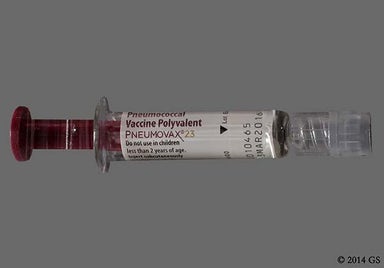
This medicine is Colorless Syringe.colorless - Pneumovax-23 25mcg/isolate Prefilled Syringe Solution for InjectionThis medicine is Colorless Syringe.colorless - Pneumovax-23 25mcg/isolate Prefilled Syringe Solution for Injection
GoodRx Health has strict sourcing policies and relies on primary sources such as medical organizations, governmental agencies, academic institutions, and peer-reviewed scientific journals. Learn more about how we ensure our content is accurate, thorough, and unbiased by reading our editorial guidelines.
Prescription savings
Stop paying too much for your prescriptions. Compare prices, get pharmacy coupons, and save up to 80%.
The most common side effects reported by people who've received Pneumovax 23 are symptoms of injection-site reactions, such as pain, tenderness, and swelling. Other common side effects can include headaches, tiredness, and muscle pain. Typically, these side effects are mild and should get better after 1 to 2 days. If you're concerned, ask your nurse or primary care provider about ways to ease these side effects. They might recommend that you place an ice pack on the injection site to ease swelling and redness, or to take acetaminophen (Tylenol) to help with the pain or fever.
No, Pneumovax 23 isn't a live vaccine; it's an inactivated vaccine. Live vaccines contain a weakened version of a germ. But Pneumovax 23 only contain parts of the pneumococcus bacteria's shell called polysaccharides. So Pneumovax 23 is also known as a polysaccharide vaccine.
Usually not. If you received Pneumovax 23 first, your primary care provider might recommend that you get Prevnar 20 to finish the series. But people who received Prevnar 20 first typically don't need to get Pneumovax 23. Ask your primary care provider or pharmacist if you're not sure which pneumococcal vaccine you need.
Most people only need one dose of Pneumovax 23. But some people might need another dose of Pneumovax 23 or a different pneumococcal vaccine, depending on their age and what other health conditions they have. Your primary care provider or pharmacist will let you know how many doses of Pneumovax 23 you need after they review your vaccine history.
No, Pneumovax 23 won't make you sick with pneumonia because it's an inactivated vaccine. This means it contains a small, inactive part of the Pneumococcus bacteria. However, you can get side effects from Pneumovax 23, such as injection-site pain, muscle pain, fatigue, and headache.