pentoxifylline
Pentoxifylline ER (extended-release) is used to treat a condition called intermittent claudication. This happens when you feel leg pain and cramps after walking or exercising due to blockages in your blood vessels. Pentoxifylline ER can improve symptoms by causing better blood flow, but it needs to be taken multiple times a day. It's also only available as extended-release tablets. Some side effects include nausea and indigestion. Pentoxifylline ER can interact with other medications, and has warnings for people who take blood thinning medications or have a higher risk of bleeding.


What is Pentoxifylline ER?
What is Pentoxifylline ER used for?
- Intermittent claudication (pain in your legs when you walk or exercise)
How Pentoxifylline ER works
Pentoxifylline ER is a hemorrheologic agent, meaning it affects the thickness of your blood. Blockages in your blood vessels make it harder for your blood to carry oxygen throughout your body, which can cause pain. Pentoxifylline ER works on different cells in your blood to make your blood less thick. For example, it helps prevent your red blood cells from clumping together. This helps your blood flow better throughout your body, which reduces pain.
Drug facts
| Common Brands | Trental |
|---|---|
| Drug Class | Hemorrheologic agent |
| Controlled Substance Classification | Not a controlled medication |
| Generic Status | Lower-cost generic available |
| Availability | Prescription only |

Side effects of Pentoxifylline ER
The following side effects may get better over time as your body gets used to the medication. Let your healthcare provider know immediately if you continue to experience these symptoms or if they worsen over time.
Common Side Effects
- Indigestion (3%)
- Nausea (2%)
- Dizziness (2%)
- Vomiting (1%)
- Headache (1%)
Less Common Side Effects
- Chest pain
- Burping, bloating, and gas
- Shakiness (tremor)
- Shortness of breath
- Swelling
- Low blood pressure
- Lowered appetite
- Constipation
- Dry mouth
- Blurry vision
Pentoxifylline ER serious side effects
Contact your healthcare provider immediately if you experience any of the following.
- Bleeding: blood in your urine or stool, unexplained bruising, bleeding that takes longer than usual to stop
The following Pentoxifylline ER side effects have also been reported
Along with its needed effects, a medicine may cause some unwanted effects. Although not all of these side effects may occur, if they do occur they may need medical attention.
Check with your doctor as soon as possible if any of the following side effects occur:
Signs and symptoms of overdose (in the order in which they may occur)
Drowsiness
flushing
faintness
unusual excitement
convulsions (seizures)
Some side effects may occur that usually do not need medical attention. These side effects may go away during treatment as your body adjusts to the medicine. Also, your health care professional may be able to tell you about ways to prevent or reduce some of these side effects. Check with your health care professional if any of the following side effects continue or are bothersome or if you have any questions about them:
Other side effects not listed may also occur in some patients. If you notice any other effects, check with your healthcare professional.
Call your doctor for medical advice about side effects. You may report side effects to the FDA at 1-800-FDA-1088.

Get your GoodRx coupon

Pros and cons of Pentoxifylline ER
Pros
- Available as a lower-cost generic medication
- Can improve pain in your legs due to exercise
- An option to treat symptoms while waiting for surgery or other therapies
- Benefits have been shown for as long as 6 months of use
Cons
- Might need to be taken multiple times a day
- Can take 2 weeks or longer before you see improvement in your symptoms
- Shouldn't be taken if you had a reaction to medications such as caffeine, theophylline, or theobromine
- Might raise bleeding risk

Pharmacist tips for Pentoxifylline ER

- Take pentoxifylline ER with meals since food raises the amount of medication that gets absorbed into your body. This will help the medication work better.
- Swallow the tablet whole. Don't crush or chew it. Pentoxifylline ER is an extended-release tablet, meaning it releases medication slowly over a longer period of time. Breaking the tablet might change the way it works.
- Let your provider know if you experience uncomfortable side effects, like stomach upset, nausea, vomiting, or dizziness. Your provider might want to adjust your dose to help with these side effects.
- If you're taking blood-thinning medications, like warfarin (Coumadin), you might be at higher risk of bleeding. If you see blood in your stool or urine, unexplained bruising, or have bleeding that takes longer than usual to stop, tell your provider right away.

Risks and warnings for Pentoxifylline ER
Pentoxifylline ER can cause some serious health issues. This risk may be even higher for certain groups. If this worries you, talk to your doctor or pharmacist about other options.
Higher bleeding risk
- Risk factors: Recent surgery | Taking blood thinners | Recent stomach ulcer
Bleeding has been reported in people who are taking pentoxifylline ER with NSAIDs like aspirin, anticoagulants like warfarin (Coumadin), and medications that affect your platelets like clopidogrel (Plavix). Some people have reported bleeding even though they weren't taking other blood-thinning medications. Contact your provider right away if you notice any signs of bleeding, such as blood in your urine or stool or unexplained bruising. Check with your provider about whether you need to be monitored more frequently for bleeding problems.
Interactions with other medications
Pentoxifylline ER can interact with certain medications. This can affect the amount of either pentoxifylline ER or those other medications in your body. For example, taking pentoxifylline ER with theophylline can raise the amount of theophylline in your body, which might lead to side effects. Other medications, such as ciprofloxacin (Cipro), can raise the amount of pentoxifylline ER in your body. Tell your provider all of the medications you are taking before starting pentoxifylline ER.

Pentoxifylline ER dosage
 Tablet
| Dosage | Quantity | Price as low as | Price per unit |
|---|---|---|---|
| 400mg | 60 tablets | $19.95 | $0.33 |
Typical dosage for Pentoxifylline ER
The typical starting dose is 400 mg by mouth three times a day with meals. Your provider might adjust your dose depending on side effects.
Your dose might differ if you have kidney problems.

Interactions between Pentoxifylline ER and other drugs
Although certain medicines should not be used together at all, in other cases two different medicines may be used together even if an interaction might occur. In these cases, your doctor may want to change the dose, or other precautions may be necessary. When you are taking this medicine, it is especially important that your healthcare professional know if you are taking any of the medicines listed below. The following interactions have been selected on the basis of their potential significance and are not necessarily all-inclusive.
Using this medicine with any of the following medicines is not recommended. Your doctor may decide not to treat you with this medication or change some of the other medicines you take.
- Ketorolac
- Riociguat
Using this medicine with any of the following medicines is usually not recommended, but may be required in some cases. If both medicines are prescribed together, your doctor may change the dose or how often you use one or both of the medicines.
- Aceclofenac
- Acemetacin
- Adenosine
- Amtolmetin Guacil
- Aspirin
- Bromfenac
- Bufexamac
- Celecoxib
- Choline Salicylate
- Clonixin
- Dexibuprofen
- Dexketoprofen
- Diclofenac
- Diflunisal
- Dipyrone
- Droxicam
- Etodolac
- Etofenamate
- Etoricoxib
- Felbinac
- Fenoprofen
- Fepradinol
- Feprazone
- Floctafenine
- Flufenamic Acid
- Flurbiprofen
- Ibuprofen
- Ibuprofen Lysine
- Indomethacin
- Ketoprofen
- Lornoxicam
- Loxoprofen
- Lumiracoxib
- Meclofenamate
- Mefenamic Acid
- Meloxicam
- Morniflumate
- Nabumetone
- Naproxen
- Nepafenac
- Niflumic Acid
- Nimesulide
- Nimesulide Beta Cyclodextrin
- Oxaprozin
- Oxyphenbutazone
- Parecoxib
- Phenylbutazone
- Piketoprofen
- Piroxicam
- Proglumetacin
- Propionic Acid
- Propyphenazone
- Proquazone
- Regadenoson
- Rofecoxib
- Salicylic Acid
- Salsalate
- Sodium Salicylate
- Sulindac
- Tenoxicam
- Tiaprofenic Acid
- Tolfenamic Acid
- Tolmetin
- Valdecoxib
Using this medicine with any of the following medicines may cause an increased risk of certain side effects, but using both drugs may be the best treatment for you. If both medicines are prescribed together, your doctor may change the dose or how often you use one or both of the medicines.
- Acenocoumarol
- Cimetidine
- Dicumarol
- Theophylline
- Warfarin

How much does Pentoxifylline ER cost?
$19.95

Pentoxifylline ER contraindications
Contraindications are specific health conditions or situations in which a person should not take a medication due to safety concerns. If you have any of the following conditions or if any of the following apply to you, let your healthcare provider know because Pentoxifylline ER will not be safe for you to take.
- Recent cerebral or retinal hemorrhage (bleeding in your brain or eyes)
- History of problems taking caffeine, theophylline, or theobromine

What are alternatives to Pentoxifylline ER?

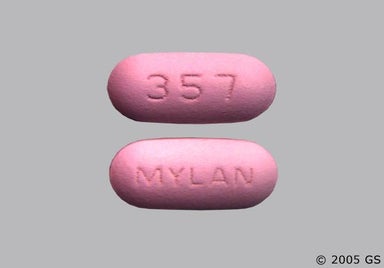
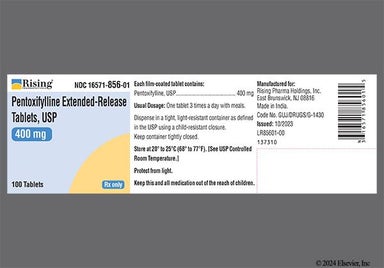
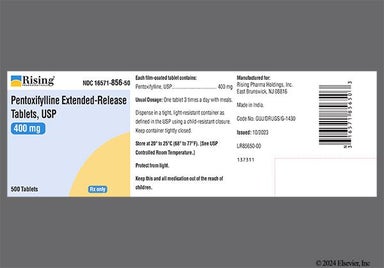
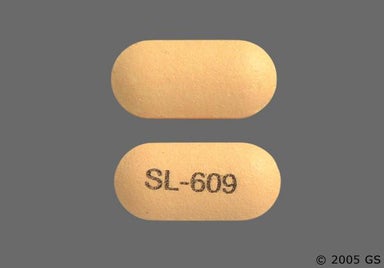
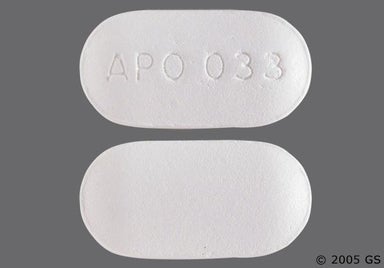
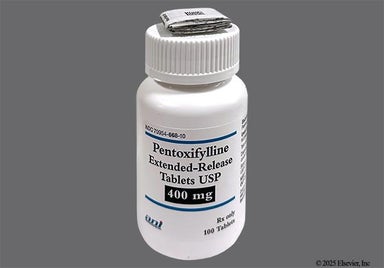
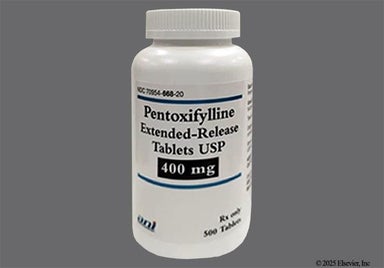
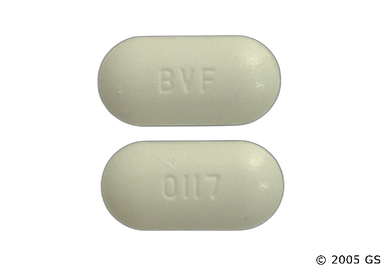
Pentoxifylline ER images