Key takeaways:
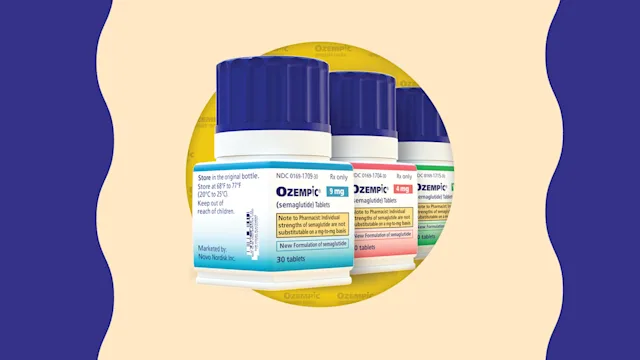
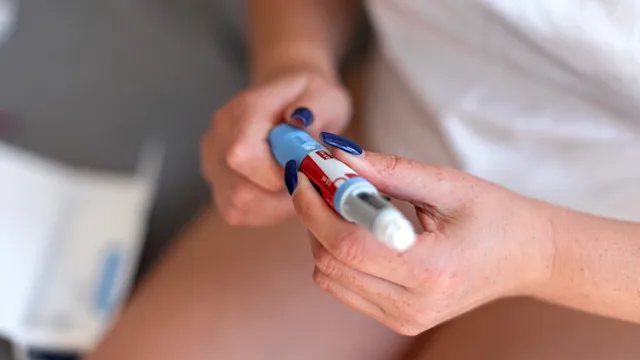
Ozempic (semaglutide) is an injectable medication that’s approved for several medical conditions.
Some people report an increased sex drive and improved erectile dysfunction (ED) with the medication. This may be related to improved blood sugar (glucose) control.
There may be a slightly increased risk of ED for men using semaglutide for weight loss without a diabetes diagnosis. But the risk of ED overall remains small.
Save on related medications
Ozempic (semaglutide) is a glucagon-like peptide-1 (GLP-1) receptor agonist that’s FDA approved for treating Type 2 diabetes and other medical conditions. Another version of semaglutide, Wegovy, is approved for weight management.
Both semaglutide medications can cause side effects such as nausea, diarrhea, and gas. But can Ozempic affect your sex drive?
Here’s what you should know about Ozempic and sexual side effects.
Search and compare options
Does Ozempic cause sexual side effects?
Sexual side effects weren’t reported in Ozempic’s original clinical studies. But researchers are still studying how semaglutide affects sex drive and sexual function. So far, the results are mixed. Some studies suggest Ozempic may help sexual function by improving weight and metabolic health. Others have found a possible link to certain sexual side effects. Let’s take a closer look.
Ozempic and erectile dysfunction
Right now, the relationship between Ozempic and erectile dysfunction (ED) is unclear. Some studies have found that men taking semaglutide were more likely to develop ED, but the overall risk was low.
Other studies have found the opposite effect. Researchers think GLP-1 medications may improve erectile function by treating conditions that contribute to ED, like Type 2 diabetes.
Researchers think Ozempic could affect erectile function in different ways. Improvements in weight, blood sugar, and overall cardiovascular health may help some people. But rapid weight loss and other changes in the body may temporarily worsen symptoms in others. This may help explain why studies have reported conflicting results.
Ozempic and libido
There’s currently no strong evidence that Ozempic directly increases or decreases sex drive.
Some people report an increase in libido while taking Ozempic. A small study looked at men with obesity, Type 2 diabetes, and low testosterone. Those taking Ozempic reported increased sexual desire and improvements in their sense of emotional well-being.
Other reports have found similar trends. For example, some people on social media have reported a higher sex drive after starting to take GLP-1 medications.
It's possible that these changes could be linked to improvements in:
Weight
Blood sugar
Energy levels
Overall health
But more research is needed before experts can determine whether Ozempic has a direct effect on libido.
Ozempic and hormones
Ozempic affects several hormones in the body, including GLP-1 and insulin. Researchers are still learning how it affects sex hormones like testosterone and estrogen.
Some studies suggest that Ozempic may increase testosterone levels in men with obesity, Type 2 diabetes, or obesity-related low testosterone. Researchers have also reported improvements in sperm quality in men taking Ozempic, which may help support fertility. These changes are likely related to weight loss and improved metabolic health.
In women, semaglutide may help regulate hormone levels and menstrual cycles in people with polyendocrine metabolic ovarian syndrome (PMOS) — formerly called polycystic ovary syndrome (PCOS). But researchers still don't know much about how Ozempic affects estrogen levels or other reproductive hormones.
Is Ozempic more or less likely to cause sexual side effects than other diabetes medications?
Diabetes medications don’t often cause unwanted sexual side effects.
But Ozempic and other GLP-1 related medications seem to improve diabetes-related ED better than metformin.
For women living with diabetes and prediabetes, metformin seems to improve sex drive. Insulin, on the other hand, is associated with a greater risk of sexual problems. But there aren’t any studies available comparing GLP-1 medications to other diabetes medications when it comes to sexual side effects in women.
How can you manage sexual side effects from Ozempic?
Talk with your healthcare team if you notice a decreased sex drive or ED while taking Ozempic.
It's important to remember that sexual health can be affected by many factors, including other medical conditions. Your healthcare team can help determine whether Ozempic may be playing a role and recommend the best treatment options.
For ED, prescription medications such as Viagra (sildenafil) or Cialis (tadalafil) may help. Women experiencing low libido may benefit from treatments such as Addyi (flibanserin) and Vyleesi (bremelanotide).
Things that may help improve sexual function and overall quality of life include:
Regular exercise
A balanced diet
Stress management
Individual or couples counseling
Frequently asked questions
The right medication to boost your sex drive depends on the causes of your low libido.
For example, significant low libido in women that lasts more than 6 months and causes distress is called female sexual interest/arousal disorder (FSIAD). FDA approved medications to treat FSIAD include Addyi (flibanserin) and Vyleesi (bremelanotide).
Meanwhile, testosterone replacement therapy (TRT) may be helpful for those with low-libido due to low testosterone levels.
"Ozempic penis" isn't a medical term. It's a phrase that has become popular on social media to describe the appearance of a larger penis due to weight loss from taking Ozempic.
There’s no evidence that Ozempic increases penis length or girth. Instead, weight loss can reduce the fat pad around the base of the penis, making more of the shaft visible. As a result, the penis may appear larger, even though its actual size hasn’t changed.
The right medication to boost your sex drive depends on the causes of your low libido.
For example, significant low libido in women that lasts more than 6 months and causes distress is called female sexual interest/arousal disorder (FSIAD). FDA approved medications to treat FSIAD include Addyi (flibanserin) and Vyleesi (bremelanotide).
Meanwhile, testosterone replacement therapy (TRT) may be helpful for those with low-libido due to low testosterone levels.
"Ozempic penis" isn't a medical term. It's a phrase that has become popular on social media to describe the appearance of a larger penis due to weight loss from taking Ozempic.
There’s no evidence that Ozempic increases penis length or girth. Instead, weight loss can reduce the fat pad around the base of the penis, making more of the shaft visible. As a result, the penis may appear larger, even though its actual size hasn’t changed.
The bottom line
Ozempic doesn’t appear to have a large effect on sex drive or sexual function. Some people report improvements in libido or erectile function, while others experience the opposite. Many of these changes may be related to improvements in weight, blood sugar, and overall health rather than a direct effect of the medication itself.

Why trust our experts?



References
Able, C., et al. (2025). Prescribing semaglutide for weight loss in non-diabetic, obese patients is associated with an increased risk of erectile dysfunction: A TriNetX database study. International Society for Impotence Research.
An, H., et al. (2024). Glucagon-like peptide-1 receptor agonists and the risk of erectile dysfunction: A drug target Mendelian randomization study. Frontiers in Endocrinology.
Arillotta, D., et al. (2024). Exploring the potential impact of GLP-1 receptor agonists on substance use, compulsive behavior, and libido: Insights from social media using a mixed-methods approach. Brain Sciences.
Copeland, K. L., et al. (2013). Diabetes mellitus and sexual function in middle-aged and older women. Obstetrics and Gynecology.
Deameh, M. G., et al. (2026). Effects of glucagon-like peptide-1 receptor agonists on male reproductive hormones, semen parameters, and metabolic outcomes: A systematic review. The Journal of Sexual Medicine.
Gregoric, N., et al. (2024). The effects of semaglutide vs testosterone replacement therapy on functional hypogonadism and sperm quality in men with type 2 diabetes mellitus and obesity. 26th European Congress of Endocrinology.
Gregorič, N., et al. (2025). Semaglutide improved sperm morphology in obese men with type 2 diabetes mellitus and functional hypogonadism. Diabetes, Obesity & Metabolism.
Krysiak, R., et al. (2017). Sexual functioning and depressive symptoms in women with diabetes and prediabetes receiving metformin therapy: A pilot study. Experimental and Clinical Endocrinology & Diabetes.
Novo Nordisk. (2026). Ozempic- semaglutide injection, solution [package insert].
Tang, H., et al. (2026). GLP-1 receptor agonist and risk of erectile dysfunction in men with type 2 diabetes: A target trial emulation. EClinicalMedicine.
Varnum, A. A., et al. (2023). Impact of GLP-1 agonists on male reproductive health—a narrative review. Medicina.
Yang, B., et al. (2025). Effects of anti-diabetic drugs on erectile dysfunction: A systematic review and meta-analysis. Diabetes, Metabolic Syndrome and Obesity.
Zhou, L., et al. (2023). Effects of GLP1RAs on pregnancy rate and menstrual cyclicity in women with polycystic ovary syndrome: A meta-analysis and systematic review. BMC Endocrine Disorders.