



Myrbetriq vs. Oxybutynin for Overactive Bladder: 5 Differences to Consider
Myrbetriq (mirabegron) and oxybutynin are popular medications for overactive bladder. They work by relaxing certain muscles. Compare side effects and more differences here.
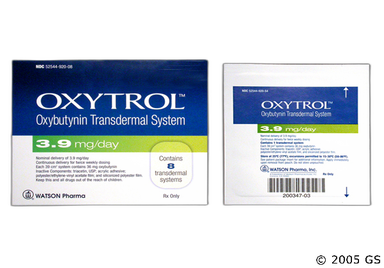
Oxytrol (oxybutynin) is a patch that's applied onto the skin. It's an anticholinergic medication that helps with bladder control in men with urinary incontinence (overactive bladder). The patch is applied every 3 or 4 days. Some of the most common side effects are itchiness where the patch is applied and dry mouth.
Note: Oxytrol (oxybutynin) that's approved for men is available by prescription only. There's also an over-the-counter version called Oxytrol for Women specifically for women.

Oxytrol (oxybutynin) is an anticholinergic medication. It's also known as an antimuscarinic.
Oxytrol (oxybutynin) works by blocking a chemical in the body called acetylcholine from attaching to muscarinic receptors in the bladder. By blocking acetylcholine from getting to these receptors, the medication helps your bladder muscles relax. This helps with bladder control and helps lower the urge or need to urinate.
| Common Brands | Oxytrol |
|---|---|
| Drug Class | Anticholinergic |
| Controlled Substance Classification | Not a controlled medication |
| Generic Status | No lower-cost generic available |
| Availability | Prescription only |

The following side effects may get better over time as your body gets used to the medication. Let your healthcare provider know immediately if you continue to experience these symptoms or if they worsen over time.
Contact your healthcare provider immediately if you experience any of the following.
Along with its needed effects, a medicine may cause some unwanted effects. Although not all of these side effects may occur, if they do occur they may need medical attention.
Check with your doctor immediately if any of the following side effects occur:
More common
Bladder pain
blistering, crusting, irritation, itching, or reddening of the skin
bloody or cloudy urine
burning, skin rash, swelling, soreness, redness, pain, itching, or irritation at the application site
cracked, dry, or scaly skin
difficult, burning, or painful urination
frequent urge to urinate
lower back or side pain
unusually warm skin
Incidence not known
Confusion as to time, place, or person
holding false beliefs that cannot be changed by fact
seeing, hearing, or feeling things that are not there
unusual excitement, nervousness, or restlessness
Some side effects may occur that usually do not need medical attention. These side effects may go away during treatment as your body adjusts to the medicine. Also, your health care professional may be able to tell you about ways to prevent or reduce some of these side effects. Check with your health care professional if any of the following side effects continue or are bothersome or if you have any questions about them:
Less common
Back pain
bloated feeling
changes in vision
excess air or gas in the stomach or intestines
feeling of fullness
muscle aches
passing gas
sleepiness or unusual drowsiness
Incidence not known
Forgetfulness
Other side effects not listed may also occur in some patients. If you notice any other effects, check with your healthcare professional.
Call your doctor for medical advice about side effects. You may report side effects to the FDA at 1-800-FDA-1088.



How to use Oxytrol (oxybutynin):

Oxytrol (oxybutynin) can cause some serious health issues. This risk may be even higher for certain groups. If this worries you, talk to your doctor or pharmacist about other options.
Oxytrol (oxybutynin) can slow down movement in the gut. This can lead to or worsen serious problems, like severe inflammation and swelling of the colon. It's also possible for certain digestive problems to affect the esophagus. Let your primary care provider know if you have any problems with the digestive system, like ulcerative colitis or gastroesophageal reflux disease (GERD). Also tell your prescriber if you take medications that can irritate the esophagus (like those for osteoporosis called bisphosphonates). Your care team can check that Oxytrol (oxybutynin) is safe for you.
Oxytrol (oxybutynin) can cause sleepiness, dizziness, headache, and confusion. It might also cause hallucinations (seeing or hearing things that aren't real). Let your healthcare team know if you have any of these side effects while you're taking the medication, especially if they affect your usual daily activities. Don't drive or do any activities that require a lot of attention until you know how Oxytrol (oxybutynin) makes you feel.
Be sure your healthcare team knows about the other medications you take or plan to take. Taking Oxytrol (oxybutynin) with other medications that can make you tired can cause side effects like sleepiness and dizziness to be more intense. This can raise your risk for falls and other accidents.
Some people who took oxybutynin as an oral tablet have experienced an uncommon, but serious side effect called angioedema. It can appear as swelling in different parts of the body, including the face, throat, tongue, and around the eyes. Swelling of the tongue or throat area can be life-threatening, since it can make it hard to breathe. Go to the emergency room right away if you suddenly can't breathe, notice swelling around your face or throat, or notice unusual swelling in any part of your body.
People with an autoimmune condition called myasthenia gravis should avoid taking Oxytrol (oxybutynin). It's possible that the medication can worsen symptoms. Stop taking Oxytrol (oxybutynin) and call the specialist for your myasthenia gravis if you experience worsening symptoms or flareups while you're taking this medication.

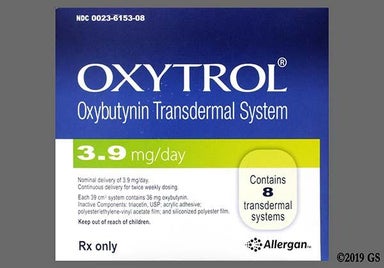
Each patch provides 3.9 mg of oxybutynin per day.
Apply 1 patch to dry, intact skin on your stomach, hips, or buttocks every 3 or 4 days. Be sure to take off the used patch before you put on a new one.

Although certain medicines should not be used together at all, in other cases two different medicines may be used together even if an interaction might occur. In these cases, your doctor may want to change the dose, or other precautions may be necessary. When you are taking this medicine, it is especially important that your healthcare professional know if you are taking any of the medicines listed below. The following interactions have been selected on the basis of their potential significance and are not necessarily all-inclusive.
Using this medicine with any of the following medicines is not recommended. Your doctor may decide not to treat you with this medication or change some of the other medicines you take.
Using this medicine with any of the following medicines is usually not recommended, but may be required in some cases. If both medicines are prescribed together, your doctor may change the dose or how often you use one or both of the medicines.
Using this medicine with any of the following medicines may cause an increased risk of certain side effects, but using both drugs may be the best treatment for you. If both medicines are prescribed together, your doctor may change the dose or how often you use one or both of the medicines.


Contraindications are specific health conditions or situations in which a person should not take a medication due to safety concerns. If you have any of the following conditions or if any of the following apply to you, let your healthcare provider know because Oxytrol (oxybutynin) will not be safe for you to take.






Prescription savings
Stop paying too much for your prescriptions. Compare prices, get pharmacy coupons, and save up to 80%.Resources
About GoodRx
 Find expert answers to your health questions so you can make the best decisions for yourself and your family.
Health conditions
Medications & treatment
Access & affordability
Well-being
Medication discounts

Oxytrol isn't discontinued. Oxytrol is still available by prescription for men. There's also an over-the-counter version of the oxybutynin patch called Oxytrol For Women that's available for women.
Yes, Oxytrol is specifically approved for men with overactive bladder. There's a similar version of the oxybutynin patch that's available over the counter called Oxytrol For Women, but it's not meant to be used by men.
The oxybutynin patch that's approved for men called Oxytrol is only available by prescription from a healthcare professional (HCP). But the oxybutynin patch that's meant to be used by women called Oxytrol For Women is available over the counter.
A clinical study showed that people who took Oxytrol had on average about 12 fewer episodes of urinary incontinence (bathroom accidents) per week after 3 months of treatment. They also took on average about 2 fewer trips to the bathroom. Keep in mind that everyone can have different results with Oxytrol. Follow up with your prescriber about how well the medication is working to improve your bladder control.
In a few clinical studies, some people who took Oxytrol reported having better bladder control (less bathroom accidents) within the first 2 to 3 weeks of treatment. Keep in mind that everyone can have a different experience with Oxytrol. Talk to your prescriber if you're concerned with how long it's taking the medication to improve your bladder control.
Apply the Oxytrol patch to clean, dry, and smooth (fold-free) skin on the stomach, hips, or buttocks. Avoid placing the patch on your waistline because tight clothing might rub against it. When you replace each patch, put the new one on a different area of the body to help prevent skin irritation. Don't put patches on the same area of skin for at least 7 days. Be sure to stay away from skin that's irritated, oily, or damaged with cuts or scrapes. This helps prevent your skin from getting even more irritated and helps prevent the patch from falling off.
Research shows that anticholinergic medications like Oxytrol can raise the risk for dementia and symptoms like trouble thinking, learning, and making decisions. Because of this risk, it's recommended that older adults should avoid anticholinergic medications, such as Oxytrol, unless absolutely necessary. Let your prescriber know if you or your loved ones notice that you have more trouble remembering things or thinking clearly if you're 65 years or older and you're taking this medication.
Yes, the active ingredient in Oxytrol, oxybutynin, also comes in pill form. Immediate-release versions of the pill form are taken by mouth 3 or 4 times per day, and extended-release pills are taken by mouth once per day. Oxybutynin oral pills are available as lower-cost generics. In comparison, the Oxytrol patch is worn on the skin, replaced every 3 or 4 days, and is available as a brand-name medication only. Speak with your prescriber about which form of oxybutynin is best for you.
