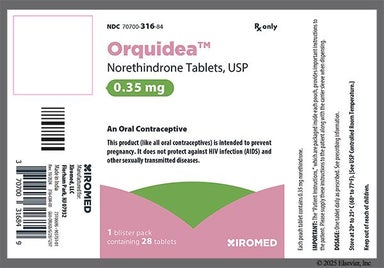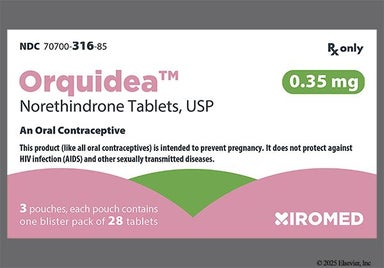
Orquidea
Orquidea (norethindrone) is a progestin-only birth control pill (the "mini-pill") used to prevent pregnancy. It’s estrogen-free, so it can be a good choice if you can’t use estrogen or if you’re breastfeeding. Orquidea (norethindrone) comes as a tablet you take by mouth once a day at the same time with no pill-free week. Common side effects include irregular bleeding or spotting, headache, and breast tenderness.


What is Orquidea (norethindrone)?
What is Orquidea (norethindrone) used for?
- To prevent pregnancy
How Orquidea (norethindrone) works
Orquidea (norethindrone) is a progestin, which is a man-made form of progesterone (a natural female hormone). It helps prevent pregnancy in several ways:
- Thickens the mucus at the cervix to block sperm
- Thins the lining of the uterus to make it harder for a pregnancy to happen
- Changes hormone levels and slows the movement of the egg
- In some people, it also stops ovulation (the release of an egg)
Drug facts
| Common Brands | Orquidea |
|---|---|
| Drug Class | Progestin |
| Controlled Substance Classification | Not a controlled medication |
| Generic Status | Lower-cost generic available |
| Availability | Prescription only |

Side effects of Orquidea (norethindrone)
The following side effects may get better over time as your body gets used to the medication. Let your healthcare provider know immediately if you continue to experience these symptoms or if they worsen over time.
Common Side Effects
- Irregular periods
- Spotting
Less Common Side Effects
- Headaches
- Tender breasts
- Nausea
- Dizziness
Orquidea (norethindrone) serious side effects
Contact your healthcare provider immediately if you experience any of the following.
- Ectopic pregnancy: severe one-sided lower belly or shoulder pain, dizziness, fainting, spotting
The following Orquidea (norethindrone) side effects have also been reported
Side effects that you should report to your care team as soon as possible:
- Allergic reactions—skin rash, itching, hives, swelling of the face, lips, tongue, or throat
- Blood clot—pain, swelling, or warmth in the leg, shortness of breath, chest pain
- Gallbladder problems—severe stomach pain, nausea, vomiting, fever
- Increase in blood pressure
- Liver injury—right upper belly pain, loss of appetite, nausea, light-colored stool, dark yellow or brown urine, yellowing skin or eyes, unusual weakness or fatigue
- New or worsening migraines or headaches
- Stroke—sudden numbness or weakness of the face, arm, or leg, trouble speaking, confusion, trouble walking, loss of balance or coordination, dizziness, severe headache, change in vision
- Unusual vaginal discharge, itching, or odor
- Worsening mood, feelings of depression
Side effects that usually do not require medical attention (report to your care team if they continue or are bothersome):
- Breast pain or tenderness
- Dark patches of skin on the face or other sun-exposed areas
- Irregular menstrual cycles or spotting
- Nausea
- Weight gain

Get your GoodRx coupon

Pros and cons of Orquidea (norethindrone)
Pros
- Estrogen-free option for birth control
- Simple once-daily schedule without breaks
- Fertility typically returns quickly after stopping
- Over 99% effective at preventing pregnancy with perfect use
Cons
- Must take it at the same time every day for it work best
- Irregular bleeding and spotting are common at first
- Interacts with some medications and herbal products
- Doesn’t protect against sexually transmitted infections (STIs)

Pharmacist tips for Orquidea (norethindrone)

- Take Orquidea (norethindrone) at the same time every day. This helps it work its best and can reduce irregular bleeding. Set a daily alarm or take it with a regular habit, like brushing your teeth.
- When starting Orquidea (norethindrone), it’s best to take your first pill on the first day of your period. If you start on another day, use a backup method like condoms for the next 48 hours.
- After you finish a pack of Orquidea (norethindrone), start a new pack the very next day. All pills in the pack are active pills since there aren't any placebo pills.
- If you vomit or have severe diarrhea after taking Orquidea (norethindrone), ask your pharmacist about using backup protection for at least 48 hours.
- It's normal to have irregular bleeding while taking Orquidea (norethindrone). Keep taking your pills as directed, even if this happens.
- Orquidea (norethindrone) doesn’t protect against sexually transmitted infections (STIs). You might want to use condoms every time you have sex to lower your risk.
- Some medications can affect how well Orquidea (norethindrone) works. Ask a pharmacist before starting seizure medications, certain HIV or hepatitis C treatments, or St. John’s wort. You might need to use backup birth control.
- Tell your care team if you have heavy bleeding, long-lasting bleeding, or no periods while taking Orquidea (norethindrone). They might check for pregnancy or adjust your treatment plan.
- Get medical help right away if you have a migraine with aura, vision changes, or trouble speaking while taking Orquidea (norethindrone). These could be signs of a serious problem.
- Watch for symptoms of ectopic pregnancy while taking Orquidea (norethindrone). Seek care right away if you have sharp one-sided stomach pain, shoulder pain, dizziness, or fainting.
- If you have diabetes, tell your care team before starting Orquidea (norethindrone). It can slightly affect blood sugar levels, so you might need extra monitoring.
- If you think you're pregnant while taking Orquidea (norethindrone), stop taking it and talk with your prescriber. There's no clear evidence of harm to the baby, but you don't need to continue the pill.
- If you're breastfeeding only, you can usually start Orquidea (norethindrone) 6 weeks after giving birth. If you're breastfeeding and using formula, you can start 3 weeks after birth. Ask your prescriber what’s right for you.
- You can stop taking Orquidea (norethindrone) at any time. But if you don't want to become pregnant, speak with your healthcare professional about other birth control options.
- Store Orquidea (norethindrone) in its original blister pack at room temperature. Keep it away from heat and moisture, and don't store it in a hot car or steamy bathroom.

Risks and warnings for Orquidea (norethindrone)
Orquidea (norethindrone) can cause some serious health issues. This risk may be even higher for certain groups. If this worries you, talk to your doctor or pharmacist about other options.
Ectopic pregnancy
If you become pregnant while taking Orquidea (norethindrone), there's a small chance the pregnancy could be ectopic (outside the uterus). The overall risk is low because this medication helps prevent pregnancy. But if pregnancy does happen while you’re taking it, the chance that it is ectopic is higher than if you weren’t using birth control. Get medical help right away if you have lower stomach pain, cramping, shoulder pain, dizziness, or fainting.
Ovarian cysts
Small ovarian cysts (fluid-filled sacs in the ovary) can form while taking Orquidea (norethindrone). They usually go away on their own without treatment. In rare cases, a cyst can twist or burst and will need medical care. Tell your care team right away if you have sudden or severe pelvic pain.
Irregular vaginal bleeding
Irregular vaginal bleeding is a common side effect of POPs like Orquidea (norethindrone), especially in the first months. If you have unusual bleeding, your prescriber might check for other causes, such as infection or other medical conditions. If your periods stop for a long time, you should check for possible pregnancy.
Possible risk of cancer
Some studies suggest that taking combination birth control pills might raise the risk of certain cancers, like breast or ovarian cancer. There is not enough information to know if Orquidea (norethindrone) or other progestin-only pills (POPs) carry the same risk. If you are worried about cancer risk, talk with your prescriber about your concerns.
Medication interactions
Tell your care team about all the medications and supplements you take before starting Orquidea (norethindrone). They can check for medication interactions.
Some medications can make Orquidea (norethindrone) less effective at preventing pregnancy and also raise the risk of breakthrough bleeding. These include certain seizure medications (such as phenytoin and carbamazepine), tuberculosis medications (like rifampin), HIV treatments, and St. John's wort. If you take any of these, your prescriber may recommend using a non-hormonal birth control, like condoms, during and after treatment.

Orquidea (norethindrone) dosage
 Package
| Dosage | Quantity | Price as low as | Price per unit |
|---|---|---|---|
| 28 tablets of 0.35mg | 3 packages | $22.55 | $7.52 |
Typical dosage for Orquidea (norethindrone)
Each tablet contains 0.35 mg of norethindrone.
The typical dose is one tablet by mouth every day, at the same time every day.

How much does Orquidea (norethindrone) cost?
$9.00

Orquidea (norethindrone) contraindications
Contraindications are specific health conditions or situations in which a person should not take a medication due to safety concerns. If you have any of the following conditions or if any of the following apply to you, let your healthcare provider know because Orquidea (norethindrone) will not be safe for you to take.
- Pregnancy
- Breast cancer
- Abnormal vaginal bleeding
- Liver tumor
- Sudden liver problems

What are alternatives to Orquidea (norethindrone)?

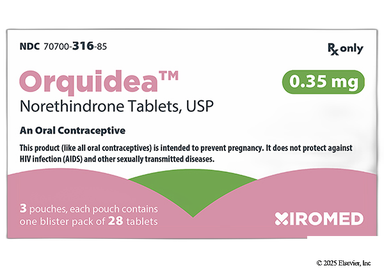
Orquidea (norethindrone) images