Key takeaways:
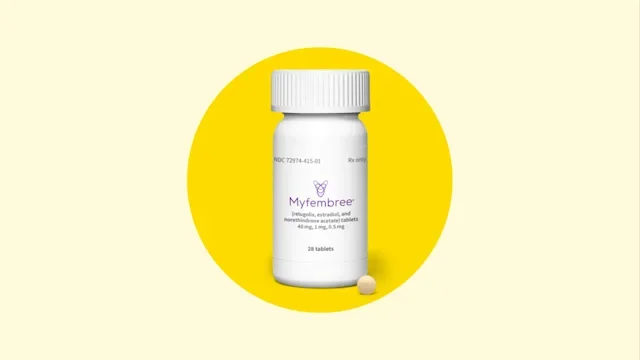
Myfembree (relugolix / estradiol / norethindrone acetate) is an oral medication that can help manage symptoms of uterine fibroids and endometriosis.
The typical Myfembree dosage is 1 tablet by mouth once a day, with or without food. You can take it anytime of day. But be sure to take it around the same time every day.
It’s not recommended to take Myfembree for more than 24 months (2 years). This helps prevent bone loss, a serious long-term side effect.
There are ways to save on Myfembree. If you’re eligible, a manufacturer savings card can help you get Myfembree for as little as $5 per prescription. A patient assistance program is also available.
Save on related medications
Living with uterine fibroids or endometriosis can be overwhelming. Symptoms, such as pain and heavy menstrual bleeding, can be severe for many with these conditions.
If you have fibroids or endometriosis, your prescriber may suggest Myfembree (relugolix / estradiol / norethindrone acetate). This oral medication is FDA approved for heavy bleeding due to fibroids and pain due to endometriosis.
If you’re starting Myfembree, it’s common to have questions about how to take it. Is there a certain time of day that’s better to take it? What happens if you miss a dose? Below are details about Myfembree dosages, including how to correct missed doses.
Good to know: Myfembree is approved only for adults who haven’t entered menopause. It hasn’t been well studied in children under age 18. Because of this, this article doesn’t discuss children’s Myfembree dosages.
What’s the typical Myfembree dosage for adults?
The typical Myfembree dosage is to take 1 tablet by mouth once a day, with or without food. This is the recommended dosage for the treatment of symptoms related to fibroids and endometriosis. You can take Myfembree anytime of day. But try to take it at the same time each day. This helps provide consistent effects.
Myfembree comes as an oral tablet that contains three active ingredients:
Relugolix 40 mg
Estradiol 1 mg
Norethindrone acetate 0.5 mg
It’s recommended to take your first dose of Myfembree as soon as possible after your period starts but no more than 7 days after your period starts. Depending on where you are in your menstrual cycle, you may need to wait a few weeks to start the medication. Your prescriber can help you determine when to start Myfembree.
How long can you take Myfembree?
The manufacturer recommends taking Myfembree for no longer than 24 months (2 years). This is because the medication can cause permanent bone loss when taken long term. This can raise your risk of developing osteoporosis and experiencing bone fractures (breaks).
Your prescriber may suggest taking Myfembree longer than this. They’ll weigh your personal risks when making this decision. They’ll also likely monitor your bone density with dual-energy X-ray absorptiometry (DEXA) scans while you take Myfembree. And they may recommend that you take calcium and vitamin D supplements to help support bone health.
Be sure to follow your prescriber’s instructions on how long you should take Myfembree. Their recommendations will be tailored to you.
Are there any Myfembree dosage adjustments for health conditions?
There are no recommended Myfembree dosage adjustments for health conditions, such as kidney or liver disease. But if you have liver problems, you may not be able to take the medication. The liver helps break down the estradiol in Myfembree. If your liver isn’t working as expected, your risk of certain side effects may be higher.
Myfembree dosage adjustment for drug interactions
There are medications and supplements that interact with Myfembree. And these interactions can affect how you take the medication.
Some medications cause Myfembree to build up in your body. This can lead to more side effects, such as hot flashes or headache. It’s recommended to avoid combining these medications with Myfembree. But if you need to take both, you should separate Myfembree from these medications by at least 6 hours.
Examples of medications that cause Myfembree to build up in your body include:
Clarithromycin (Biaxin XL)
Fluvoxamine (Luvox)
Ketoconazole tablets
Medications that contain ritonavir (Norvir), such as Paxlovid (nirmatrelvir / ritonavir)
Verapamil (Verelan)
Other medications cause Myfembree to leave your body too quickly. This means that Myfembree may not work as well as it’s supposed to. It’s recommended to avoid these combinations.
Examples of medications that cause Myfembree to leave your body too quickly include:
Carbamazepine (Tegretol)
Phenytoin (Dilantin)
Rifampin (Rifadin)
St. John’s wort
These aren’t all the medications that interact with Myfembree. Share a list of medications and supplements you take with your prescriber and pharmacist. This list can help them identify and manage interactions.
What happens if you miss a dose of Myfembree?
If you miss a dose of Myfembree, take it as soon as you remember. Then resume your usual schedule. But if it’s almost time to take your next dose, skip the missed one. Don’t double up on Myfembree or take extra pills to try to correct a missed dose. This can raise your risk of side effects.
What should you do if you take too much Myfembree?
If you take an extra dose of Myfembree by accident, it’s unlikely to cause serious harm. But you may experience more side effects than usual. These may include nausea, vomiting, and stomach pain. These side effects should resolve on their own.
If you take too much Myfembree, contact your prescriber or call Poison Control at 1-800-222-1222. But if you’re experiencing symptoms that are severe or life-threatening, call 911 or go to the ER.
How to save on Myfembree
There are ways to save on Myfembree, which is available as a brand-name medication. GoodRx can help you navigate between copay savings cards and patient assistance programs to save money on your prescription.
Save with a copay savings card. If you have commercial insurance, you may be eligible to pay as little as $5 for up to a 3-month supply of Myfembree using a savings card from the manufacturer.
Save with a patient assistance program. If you’re uninsured or underinsured, you may be eligible for Myfembree’s patient assistance program, which offers the medication for free.
The bottom line
Myfembree (relugolix / estradiol / norethindrone acetate) is an oral medication that can help manage symptoms related to uterine fibroids and endometriosis. The typical Myfembree dosage is to take 1 tablet by mouth once daily, with or without food. You can take it anytime of day. But be sure to take it around the same time every day.
It’s not recommended to take Myfembree for more than 24 months (2 years). This helps prevent bone loss, a serious long-term side effect. People with liver problems shouldn’t take Myfembree. And if you take certain medications that interact with Myfembree, you may need to separate the two by at least 6 hours.

Why trust our experts?



References
Coumau, C., et al. (2025). A systematic review and classification of the effects of P-glycoprotein inhibitors and inducers in humans, using digoxin, fexofenadine, and dabigatran as probe drugs. Clinical Pharmacokinetics.
COVID-19 Drug Interactions. (n.d.). Do not coadminister: Nirmatrelvir / ritonavir (5 days), relugolix. University of Liverpool.
MedlinePlus. (2025). Relugolix, estradiol, and norethindrone. National Library of Medicine.
Poison Control. (n.d.). Get Poison Control help online now. National Capital Poison Center.
Sumitomo Pharma America. (2025). Myfembree- relugolix, estradiol hemihydrate, and norethindrone acetate tablet, film coated [package insert]. DailyMed.