


7 Midodrine Side Effects to Be Aware Of
Midodrine helps treat orthostatic hypotension. It works by narrowing blood vessels. Midodrine side effects include goose bumps and tingling skin. High blood pressure is also possible.
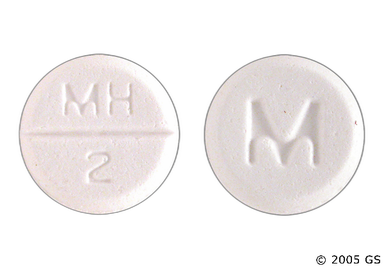
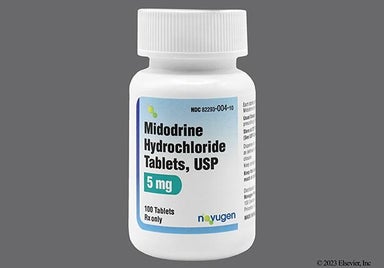
Midodrine is used to treat adults with symptoms of orthostatic hypotension (low blood pressure when getting up after lying down or sitting). It's usually taken if things like compression stockings, drinking more fluids, and other lifestyle changes aren't enough to help. Midodrine works as an alpha-1 agonist to get blood pressure back up. The dose is taken by mouth three times a day. Take the last dose of the day a few hours before bedtime since it can raise your blood pressure too much if you lie down. Side effects include a tingling or prickling feeling and goosebumps. Midodrine is available as a generic.

Midodrine belongs to the drug class called alpha-1 agonists. It works on proteins called alpha-1 receptors on your blood vessels. It squeezes your blood vessels and makes them more narrow. This helps raise your blood pressure.
| Common Brands | Proamatine |
|---|---|
| Drug Class | Alpha-1 agonist |
| Controlled Substance Classification | Not a controlled medication |
| Generic Status | Lower-cost generic available |
| Availability | Prescription only |

The following side effects may get better over time as your body gets used to the medication. Let your healthcare provider know immediately if you continue to experience these symptoms or if they worsen over time.
Contact your healthcare provider immediately if you experience any of the following.
Along with its needed effects, a medicine may cause some unwanted effects. Although not all of these side effects may occur, if they do occur they may need medical attention.
Check with your doctor immediately if any of the following side effects occur:
More common
Blurred vision
cardiac awareness
headache
pounding in the ears
Rare
Fainting
increased dizziness
slow pulse
Some side effects may occur that usually do not need medical attention. These side effects may go away during treatment as your body adjusts to the medicine. Also, your health care professional may be able to tell you about ways to prevent or reduce some of these side effects. Check with your health care professional if any of the following side effects continue or are bothersome or if you have any questions about them:
More common
Burning, itching, or prickling of the scalp
chills
goosebumps
urinary frequency, retention, or urgency
Less common
Anxiety or nervousness
confusion
flushing
headache or feeling of pressure in the head
skin rash
Other side effects not listed may also occur in some patients. If you notice any other effects, check with your healthcare professional.
Call your doctor for medical advice about side effects. You may report side effects to the FDA at 1-800-FDA-1088.




Midodrine can cause some serious health issues. This risk may be even higher for certain groups. If this worries you, talk to your doctor or pharmacist about other options.
 Midodrine can cause very high blood pressure when you lie down. This can sometimes be serious. In studies, some people had very high blood pressure (above 200 mmHg) when they laid down after taking 10 mg of midodrine. Most times, these people had relatively high blood pressure to begin with. That's why you should tell your prescriber if you have high blood pressure. While taking midodrine, blood pressure can also go up while sitting.
Your prescriber will check your blood pressure while you're lying down and sitting during office visits. This helps make sure midodrine is still safe for you.
To minimize the risk of blood pressure rising too much, avoid taking midodrine when you plan to lie down for a while. For example, avoid taking it too close to bedtime.
Tell your care team if you have symptoms of very high blood pressure while lying down. Look out for changes in your heartbeat, pounding in the ears, headache, or blurry vision. Stop taking midodrine right away and get medical advice if these symptoms don't go away.
After taking midodrine, your heart rate might slow a little. Be careful if you take midodrine with medications that can slow heart rate. This can include digoxin (Lanoxin) and beta blockers. Signs of very slow heart rate include a slow pulse, dizziness, and fainting. If this happens, stop taking midodrine and let your care team know.

 Tablet
| Dosage | Quantity | Price as low as | Price per unit |
|---|---|---|---|
| 10mg | 90 tablets | $26.77 | $0.30 |
| 5mg | 90 tablets | $24.02 | $0.27 |
| 2.5mg | 90 tablets | $20.63 | $0.23 |
The typical dose is 10 mg by mouth three times a day.
Your dose might differ if you have kidney problems.

Although certain medicines should not be used together at all, in other cases two different medicines may be used together even if an interaction might occur. In these cases, your doctor may want to change the dose, or other precautions may be necessary. When you are taking this medicine, it is especially important that your healthcare professional know if you are taking any of the medicines listed below. The following interactions have been selected on the basis of their potential significance and are not necessarily all-inclusive.
Using this medicine with any of the following medicines is not recommended. Your doctor may decide not to treat you with this medication or change some of the other medicines you take.
Using this medicine with any of the following medicines is usually not recommended, but may be required in some cases. If both medicines are prescribed together, your doctor may change the dose or how often you use one or both of the medicines.
Using this medicine with any of the following medicines may cause an increased risk of certain side effects, but using both drugs may be the best treatment for you. If both medicines are prescribed together, your doctor may change the dose or how often you use one or both of the medicines.


Contraindications are specific health conditions or situations in which a person should not take a medication due to safety concerns. If you have any of the following conditions or if any of the following apply to you, let your healthcare provider know because Midodrine will not be safe for you to take.



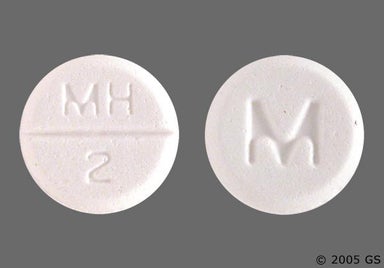

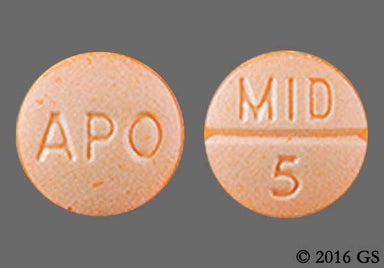
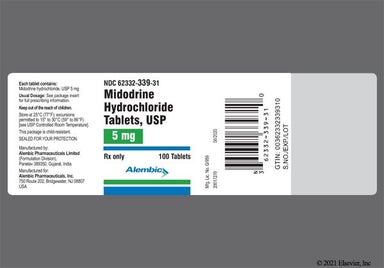

Prescription savings
Stop paying too much for your prescriptions. Compare prices, get pharmacy coupons, and save up to 80%. Find expert answers to your health questions so you can make the best decisions for yourself and your family.
Health conditions
Medications & treatment
Access & affordability
 Our monthly healthcare membership can help you save thousands on your prescription costs.
Resources

If you have trouble swallowing Midodrine tablets whole, ask your prescriber or pharmacist if you can crush them. The companies that make Midodrine don't say if the tablets can be crushed. But some studies have allowed crushing, which didn't cause any problems. To be safe, always check with your care team first.
After taking 10 mg of Midodrine, it can take an hour for it to raise the systolic blood pressure you have while standing by about 15 mmHg to 30 mmHg. Your systolic blood pressure is the top number in your blood pressure reading. This effect can sometimes last for up to 2 to 3 hours after taking Midodrine.
It takes about 15 to 20 hours for most of Midodrine to leave your body after a single dose. This is based on its half-life, which is the time it takes for half of the medication to leave your body. How long Midodrine stays in your system can also depend on how well your liver and kidneys. Even though it stays in body this long, still take the medication exactly as prescribed (3 times a day). This is because its blood pressure-raising effects only last for about 2 to 3 hours after each dose. If you have questions about how long Midodrine stays in your body, ask your prescriber.
Midodrine can sometimes lower your heart rate a little. Tell your prescriber about all your other medications to make sure they're safe to take with Midodrine. Some, like digoxin (Lanoxin) and beta blockers, can also slow your heart rate. Others include monoamine oxidase inhibitors (MAOIs) like phenelzine (Nardil). Let your care know if you notice a slow pulse, more dizziness, or feel like you might faint. These can be signs of a slow heart rate.
You shouldn't take Midodrine if you plan to lie down soon after. This medication can raise your blood pressure to a dangerous level when you're lying down. That's why you should be sure to take your last dose of the day at least 4 hours before bedtime.
No, fatigue or feeling tired isn't a typical side effect of Midodrine. If you feel more tired than usual, let your care team or primary care provider know. They will ask you questions to help figure out what might be causing your tiredness.
In 2010, the FDA almost took Midodrine off the market. They said the manufacturer hadn't given enough study data to show it was safe and worked well for orthostatic hypotension. But healthcare organizations, healthcare professionals, and people who took it asked the FDA to reconsider their decision to withdraw it. The FDA agreed, and later studies showed that Midodrine is safe and helpful. Because of this, the FDA allowed it to stay on the market. Midodrine is one of the few FDA-approved medications for symptoms of orthostatic hypotension.
If you're pregnant, planning to become pregnant, or breastfeeding, talk to your prescriber. We don't know if Midodrine is safe during pregnancy. We also don't know if the medication can pass into breast milk and if it can affect a baby if it does. Your prescriber can help you understand the risks and benefits of treatment. They can help you decide the safest option for you.
