Lumizyme
Lumizyme (alglucosidase alfa) is used to treat people with a rare genetic condition called Pompe disease. It's given as an infusion into the vein (intravenous, IV) every 2 weeks. The medication is only available as a brand medication, which can be expensive.


What is Lumizyme (alglucosidase alfa)?
What is Lumizyme (alglucosidase alfa) used for?
- Pompe disease
How Lumizyme (alglucosidase alfa) works
Lumizyme (alglucosidase alfa) is an enzyme replacement therapy. It replaces an enzyme (protein) that helps the body break down a large sugar called glycogen. People with Pompe disease aren't able to break down glycogen because they're either missing that enzyme or the enzyme doesn't work. So glycogen can build up in the body and cause problems, especially in the muscles.
Lumizyme (alglucosidase alfa) replaces the enzyme, which allows the body to break down glycogen and use it for energy.
Drug facts
| Common Brands | Lumizyme |
|---|---|
| Drug Class | Enzyme replacement therapy |
| Controlled Substance Classification | Not a controlled medication |
| Generic Status | No lower-cost generic available |
| Availability | Prescription only |

Side effects of Lumizyme (alglucosidase alfa)
The following side effects may get better over time as your body gets used to the medication. Let your healthcare provider know immediately if you continue to experience these symptoms or if they worsen over time.
Common Side Effects
Infants:
- Rash (18%)
- Fever (15%)
- Hives (13%)
- Flushing (13%)
- Cough (8%)
- Fast breathing (8%)
- Fast heart rate (8%)
Children and adults:
- Excessive sweating (8%)
- Hives (8%)
- Chest discomfort (7%)
- Muscle twitching (7%)
Less Common Side Effects
- Vomiting
- Chills
- Pale appearance
- Bluish discoloration of skin
- Agitation
- Tremor
- Muscle pain
Lumizyme (alglucosidase alfa) serious side effects
Contact your healthcare provider immediately if you experience any of the following.
- Serious allergic and skin reactions: hives, rash, blisters, skin reddening, swelling of the lips or tongue, difficulty breathing
The following Lumizyme (alglucosidase alfa) side effects have also been reported
Side effects that you should report to your care team as soon as possible:
- Allergic reactions or angioedema—skin rash, itching or hives, swelling of the face, eyes, lips, tongue, arms, or legs, trouble swallowing or breathing
- Infusion reactions—chest pain, shortness of breath or trouble breathing, feeling faint or lightheaded
- Kidney injury—decrease in the amount of urine, swelling of the ankles, hands, or feet
- Painful swelling, warmth, or redness of the skin, blisters or sores
Side effects that usually do not require medical attention (report these to your care team if they continue or are bothersome):

Pros and cons of Lumizyme (alglucosidase alfa)
Pros
- One of only a few options to treat Pompe disease
- Only given every 2 weeks
- Safe for use in children of all ages
Cons
- Needs to be given by a healthcare professional
- Brand name only, so it can be expensive
- Needs to be given as an IV infusion

Pharmacist tips for Lumizyme (alglucosidase alfa)

- Make sure to mark your appointments on your calendar for when you need to see your provider and receive Lumizyme (alglucosidase alfa) so you don't miss any doses. If you accidentally miss an infusion, talk with your provider right away about rescheduling your appointment.
- The total time to receive a Lumizyme (alglucosidase alfa) infusion is about 4 hours. Plan ahead for this time as you might need to take some time off of work or school, or arrange for childcare. You're encouraged to wear comfortable clothing and bring something to help you pass the time (like a book or a device to listen to music).
- There's a risk of developing allergic reactions when using Lumizyme (alglucosidase alfa). This can happen anytime during and up to 3 hours after an infusion. Let your provider know if you start to have symptoms such as trouble breathing, hives, itchiness, or swelling to receive proper treatment.
- Sometimes your body can naturally make antibodies against Lumizyme (alglucosidase alfa), meaning it stops the medication from working as well. You'll likely need to get blood work done to measure your antibody levels every 3 months for the first 2 years then once a year after that.
- If you’re breastfeeding and receiving Lumizyme (alglucosidase alfa), it's recommended that you pump and throw away any breast milk during treatment and for at least 24 hours after infusion. This should be done to reduce any possible medication exposure to your breastfed child.

Risks and warnings for Lumizyme (alglucosidase alfa)
Lumizyme (alglucosidase alfa) can cause some serious health issues. This risk may be even higher for certain groups. If this worries you, talk to your doctor or pharmacist about other options.
Serious allergic reactions
 Serious allergic reactions to Lumizyme (alglucosidase alfa) are possible, including life-threatening reactions like anaphylaxis (closing of the throat). This can happen anytime during and up to 3 hours after an infusion. If you notice dizziness, a choking sensation, sweating, dizziness, nausea, swelling around your eyes, swelling of the lips or tongue, or difficulty breathing after using Lumizyme (alglucosidase alfa), get medical attention right away.
 Also, certain immune-related reactions can occur with protein-based therapies like Lumizyme (alglucosidase alfa). This is due to your body developing an immune response (antibodies) to Lumizyme (alglucosidase alfa) which can lead to inflammation and damage to different parts of your body, including your skin and kidneys.
Because of these risks, your provider will start the infusion at a slow rate and then slowly raise the rate as long as you're not having any signs of an allergic or immune-related reaction.
Risk of sudden loss of breathing and heart problems in babies
- Risk factors: History of heart problems | History of lung problems
There have been reports of sudden loss of breathing and heart problems in babies with Pompe disease receiving Lumizyme (alglucosidase alfa) who have a history of heart and lung problems. Make sure to tell your child's provider about all of their medical conditions. Your child's provider will decide if it's safe for your child to receive Lumizyme (alglucosidase alfa).
Problems from general anesthesia
- Risk factors: Undergoing general anesthesia | History of serious heart problems | History of serious skeletal muscle problems
People with Pompe disease, especially babies, are at higher risk for heart and lung complications and problems from general anesthesia. This is because general anesthesia can lower blood flow to the heart and affect muscle strength. Complications include severe irregular heartbeats, low heart rhythm, and even a risk of cardiac arrest.

Lumizyme (alglucosidase alfa) dosage
Typical dosage for Lumizyme (alglucosidase alfa)
Your dose depends on your body weight.
The typical dose is 20 mg/kg given as an infusion through the veins (intravenous, IV) every 2 weeks.

What are alternatives to Lumizyme (alglucosidase alfa)?

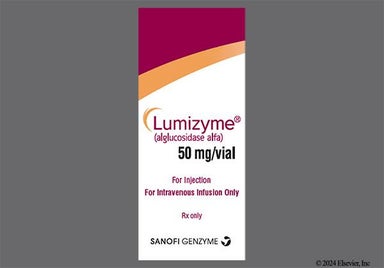
Lumizyme (alglucosidase alfa) images