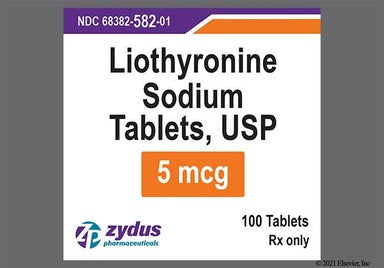
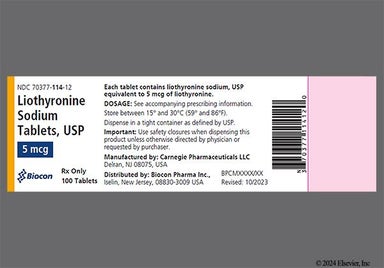
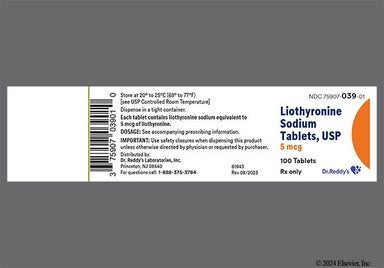
Liothyronine (Cytomel) is a thyroid hormone medication that can be used for a number of thyroid-related health concerns. More specifically, it's a lab-made form of the T3 thyroid hormone that's made by your thyroid gland. People of all ages can take this medication, and it's generally taken by mouth just once daily. Although weight loss is a potential side effect of liothyronine (Cytomel), it should not be taken solely for this purpose.
Liothyronine (Cytomel) is a lab-made version of the T3 thyroid hormone that's normally made by your thyroid gland. Your thyroid hormones have important functions, such as controlling your metabolism, vital signs like body temperature and heart rate, and more.
When the amount of thyroid hormone in your body is too low, taking thyroid replacement hormones like liothyronine (Cytomel) can bring your levels back to normal.
When does Liothyronine (Cytomel) start working?Time passed since treatment started:
The following side effects may get better over time as your body gets used to the medication. Let your healthcare provider know immediately if you continue to experience these symptoms or if they worsen over time.
Contact your healthcare provider immediately if you experience any of the following.
Heart problems (e.g., heart attack): chest pain; shortness of breath; feeling weak; breaking into a cold sweat; pain that spreads to the jaw, neck, back, shoulders, arms
When do Liothyronine (Cytomel) possible side effects begin and end?
Time passed since treatment started:
HHOURS
DDAYS
WWEEKS
MMONTHS
Symptoms of too much thyroid hormone
Seek immediate medical care if you experience this side effect.
If a line continues to the right, you'll likely keep experiencing this side effect once it starts.
The following Liothyronine (Cytomel) side effects have also been reported
Along with its needed effects, a medicine may cause some unwanted effects. Although not all of these side effects may occur, if they do occur they may need medical attention.
Check with your doctor immediately if any of the following side effects occur:
Some side effects may occur that usually do not need medical attention. These side effects may go away during treatment as your body adjusts to the medicine. Also, your health care professional may be able to tell you about ways to prevent or reduce some of these side effects. Check with your health care professional if any of the following side effects continue or are bothersome or if you have any questions about them:
Shouldn't be used to treat conditions that aren't related to abnormal thyroid function (e.g., benign thyroid nodules, nontoxic goiter, swelling of the thyroid gland caused by infection)
Pharmacist tips for Liothyronine (Cytomel)
Try to take liothyronine (Cytomel) at the same time each day to help your thyroid hormone levels stay the same from day to day. Choose a time during the day that's easy for you to remember so you can make it part of your daily routine. This can be helpful to avoid missing doses of your medication.
Make sure to get regular blood tests done when your prescriber asks. These blood tests check your thyroid hormone levels. They're important for helping your prescriber make sure you're taking a dose of liothyronine (Cytomel) that works well and is safe for you.
Most of the side effects that you might have while you're taking liothyronine (Cytomel) are symptoms of hyperthyroidism and it usually means that your dose is too high. Let your prescriber know if you have side effects like shakiness, a racing heart, or nervousness. Your prescriber might need to lower your dose.
Tell your prescriber and pharmacist about all the medications and supplements that you're taking. Liothyronine (Cytomel) can interfere with how other medications work. Examples include blood thinners, insulin, and cholestyramine (Prevalite). Your care team can recommend dose adjustments or changes to your treatment plan. This makes sure that your medications work well and are safe for you to take together.
Liothyronine (Cytomel) can cause some serious health issues. This risk may be even higher for certain groups. If this worries you, talk to your doctor or pharmacist about other options.
Not for weight loss
Risk factors: Taking other medications for weight loss
Liothyronine (Cytomel) shouldn't be used for weight loss. It’s not recommended, safe, or effective for this purpose. Taking high doses of liothyronine (Cytomel) can cause serious or deadly effects, especially if it's taken with other medications for weight loss like phentermine (Adipex-P). Speak with a healthcare professional (HCP) if your goal is to lose weight to figure out what the best approach to weight management is for you.
Heart problems
Risk factors: Currently have heart disease | Age 65 or older | Taking stimulant medications
Taking too much liothyronine (Cytomel) can cause heart problems, especially for older adults and for people with heart conditions. Because of this risk, the dose of liothyronine (Cytomel) that you start with might be lower than usual if you're older than 65 or if you have a heart condition.
Call your prescriber or get medical care right away if you have a rapid or irregular heartbeat, chest pain, or shortness of breath. Your prescriber might lower your dose of liothyronine (Cytomel) or ask you to stop taking the medication for a week before restarting it at a lower dose.
Adrenal crisis in people with adrenal insufficiency
For people who also have adrenal insufficiency (a condition of low adrenal hormone levels), it's important to start treatment for the adrenal hormone problem first with corticosteroids before starting liothyronine (Cytomel). This is because thyroid hormones can make the body process corticosteroids faster. Starting thyroid hormone replacement before treating adrenal insufficiency can cause your adrenal hormones to drop to very low levels and make you feel unwell.
Let your prescriber know about your full medical history before you start taking liothyronine (Cytomel). They might check your adrenal hormone levels to see whether this situation applies to you before you start thyroid hormone replacement therapy. Get medical attention right away if you experience signs of adrenal crisis, like stomach pain, dehydration, dizziness, high fever, nausea, or vomiting, while you're taking this medication.
Worsening diabetes
Risk factors: Taking diabetes medications
For people with diabetes, taking liothyronine (Cytomel) affect how well the body can regulate blood sugar levels. This can change the required dose of any diabetes medications that you're taking. Check your blood sugar levels when you first start taking liothyronine (Cytomel), when the dose of your thyroid medication changes, when you stop the thyroid medication, and as directed by your prescriber. Talk to your care team if your blood sugar levels are unusual.
Effect on bones if dose is too high
Risk factors: People who've reached menopause | Long-term treatment | Too high dose of liothyronine (Cytomel)
Taking liothyronine (Cytomel) at a dose that's too high for you can weaken your bones over time. This risk is higher for people who've gone through menopause. Your prescriber will check your thyroid hormone levels to make sure that you're taking the lowest dose of the medication that works well to treat your condition. This helps lower your risk for bone problems related to overtreatment.
Liothyronine (Cytomel) dosage
The average cost for 90 tablets of 5mcg of Liothyronine (Cytomel) is $25.00 with a free GoodRx coupon. This is 22.74% off the average retail price of $32.36.
Interactions between Liothyronine (Cytomel) and other drugs
Liothyronine (Cytomel) may interact with certain medications or supplements. Always let your doctor and pharmacist know about any other medications or supplements (including prescribed and over-the-counter medications, vitamins, and dietary or herbal supplements) that you are currently taking. The list below does not include all possible drug interactions with Liothyronine (Cytomel). Please note that only the generic name of each medication is listed below.
Although certain medicines should not be used together at all, in other cases two different medicines may be used together even if an interaction might occur. In these cases, your doctor may want to change the dose, or other precautions may be necessary. When you are taking this medicine, it is especially important that your healthcare professional know if you are taking any of the medicines listed below. The following interactions have been selected on the basis of their potential significance and are not necessarily all-inclusive.
Using this medicine with any of the following medicines is usually not recommended, but may be required in some cases. If both medicines are prescribed together, your doctor may change the dose or how often you use one or both of the medicines.
Using this medicine with any of the following medicines may cause an increased risk of certain side effects, but using both drugs may be the best treatment for you. If both medicines are prescribed together, your doctor may change the dose or how often you use one or both of the medicines.
Contraindications are specific health conditions or situations in which a person should not take a medication due to safety concerns. If you have any of the following conditions or if any of the following apply to you, let your healthcare provider know because Liothyronine (Cytomel) will not be safe for you to take.
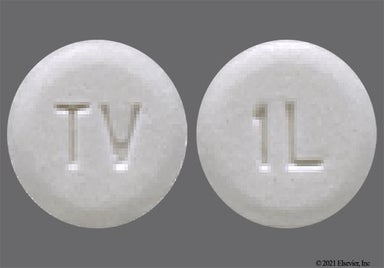
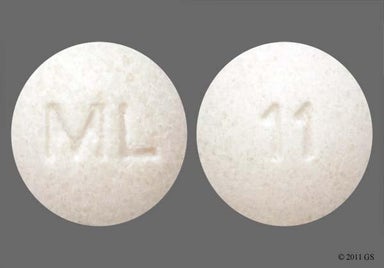
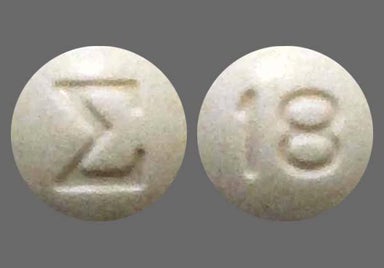
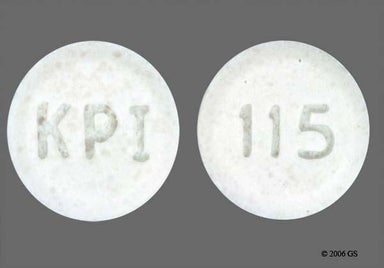
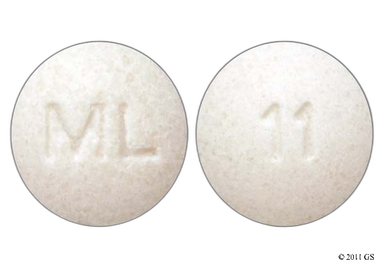
This medicine is White, Round Tablet Imprinted With "Tv" And "1L".White Round 1L And Tv - Liothyronine Sodium 5mcg TabletThis medicine is White, Round Tablet Imprinted With "Ml" And "11".White Round 11 And Ml - Liothyronine Sodium 5mcg TabletThis medicine is White, Round Tablet Imprinted With "582".White Round 582 - Liothyronine Sodium 5mcg TabletThis medicine is White, Round Tablet Imprinted With "Logo" And "18".White Round Logo And 18 - Liothyronine Sodium 5mcg TabletThis medicine is White, Round Tablet Imprinted With "Kpi" And "115".White Round 115 And Kpi - Liothyronine Sodium 5mcg TabletThis medicine is White, Round Tablet Imprinted With "582".White Round 582 - Liothyronine Sodium 5mcg TabletThis medicine is White, Round Tablet Imprinted With "L3".White Round L3 - Liothyronine Sodium 5mcg TabletThis medicine is White, Round Tablet Imprinted With "5 220".White Round 5 220 - Liothyronine Sodium 5mcg Tablet
GoodRx Health has strict sourcing policies and relies on primary sources such as medical organizations, governmental agencies, academic institutions, and peer-reviewed scientific journals. Learn more about how we ensure our content is accurate, thorough, and unbiased by reading our editorial guidelines.
Prescription savings
Stop paying too much for your prescriptions. Compare prices, get pharmacy coupons, and save up to 80%.
It's possible for Liothyronine to cause weight loss as a side effect, but it's more likely to happen if you're taking a dose of the medication that's too high for you. Don't take Liothyronine specifically for weight loss; it's not recommended, safe, or effective for this purpose. Speak with a healthcare professional (HCP) about ways to manage your weight if you're interested in losing weight.
Weight gain isn't a commonly reported side effect of Liothyronine. But the medication can sometimes make you feel hungrier or have a larger appetite as a side effect, especially if the dose is too high for you. Speak with your prescriber if you notice changes in your weight while you're taking Liothyronine. They can help figure out the cause or adjust the dose of your thyroid medication.
There isn't much evidence showing that taking levothyroxine and Liothyronine together is beneficial, so clinical guidelines typically don't recommend taking them together. But some studies found that some people have preferred this combination and some people might need both medications if one isn't enough to bring thyroid hormone levels back to normal. Speak with your prescriber if taking levothyroxine and Liothyronine together is appropriate for you.
It's best to take Liothyronine just once a day. Choose a time of day that's convenient for you to take the medication and be sure to stick with this time every day. Speak with your prescriber if you have questions about what the best time for you is to take Liothyronine once every day.
Liothyronine is a lab-made version of the T3 thyroid hormone that's normally made by your thyroid gland. It's the active form of the thyroid hormone that helps regulate many functions of the body.
Liothyronine starts to work to raise thyroid hormone levels within a few hours. The full effects of a single dose can happen within 2 or 3 days of taking the medication. But it can take a week or two for your thyroid hormone levels to stabilize at a particular dose. This is why you'll need to take a particular dose of Liothyronine for a week or two before your prescriber decides to adjust your dose. This means that it can take a few weeks to find the appropriate dose for you. Speak with your prescriber if you have questions about how long it's taking for Liothyronine to work for you.
The makers of Liothyronine don't say that the medication needs to be taken on an empty stomach, but it might be a good idea. This is because certain foods might affect how the medication gets absorbed into the body. Whether you choose to take Liothyronine with or without food, try to be consistent with how you take the medication every day. This will help keep a steady level of medication in your body.









 Liothyronine (Cytomel) shouldn't be used for weight loss. It’s not recommended, safe, or effective for this purpose. Taking high doses of liothyronine (Cytomel) can cause serious or deadly effects, especially if it's taken with other medications for weight loss like