Key takeaways:
Latuda (lurasidone) is a medication that treats schizophrenia and bipolar disorder in adults and children ages 10 and over.
The typical Latuda dosage starts at 40 mg once daily for schizophrenia and 20 mg once daily for depression due to bipolar disorder. Your prescriber may increase your dose from there based on how you respond.
The maximum daily dose of Latuda is typically 120 mg to 180 mg for adults and 80 mg for children and adolescents. You may need a lower Latuda dosage if you're living with kidney or liver problems or take medications that interact with it.
Latuda is available as a lower-cost generic. GoodRx can help you save over 95% off the average retail price at certain pharmacies.
Save on related medications
Latuda (lurasidone) is a prescription medication that treats schizophrenia and bipolar depression (depression due to bipolar disorder). It’s an atypical antipsychotic medication that affects dopamine and serotonin levels in the brain.
If you or someone you know has been prescribed Latuda, it’s important to know how to take it safely. In this guide, we’ll review the recommended Latuda dosages for adults and children as well as what to do if you miss a dose. Remember to check with your prescriber or pharmacist if you have questions about your Latuda dosage. It could be different from what’s covered here.
What’s the typical Latuda dosage for adults?
Latuda is FDA-approved to treat schizophrenia and bipolar depression (depression associated with bipolar disorder) in adults. Symptoms of these mental health conditions can vary from person to person. So your prescriber will determine your Latuda dosage based on how you respond to the medication. The recommended dosage range varies based on the condition you’re treating.
Schizophrenia
The typical Latuda dosage for adults with schizophrenia starts at 40 mg by mouth once daily with food. Your prescriber will assess your response and slowly raise your dosage from there as needed. Latuda’s maximum recommended dosage for schizophrenia in adults is 160 mg daily.
Depressive episodes associated with bipolar 1 disorder
Adults experiencing bipolar depression typically start with 20 mg of Latuda by mouth once daily with food. You may take Latuda alone or along with another medication, such as lithium (Lithobid).
Your prescriber will adjust your Latuda dosage as needed based on your symptoms. The maximum recommended Latuda dosage for bipolar depression is 120 mg daily. But 20 mg to 60 mg daily works well for most adults.
What’s the typical Latuda dosage for children and adolescents?
Latuda is also approved to treat schizophrenia in adolescents ages 13 to 17 and bipolar depression in children and adolescents ages 10 to 17. The Latuda dosage for your child is based on why they’re taking it and their response to the medication.
Schizophrenia
The typical starting Latuda dosage for schizophrenia in adolescents is 40 mg once daily with food. Your child’s prescriber may then raise the dose up to a maximum of 80 mg daily as needed.
Depressive episodes associated with bipolar 1 disorder
For children ages 10 to 17 living with bipolar depression, the typical Latuda dosage starts at 20 mg by mouth once daily with food. After 1 week, your child’s prescriber may increase their dose as needed.
The highest recommended Latuda dosage for bipolar depression in children and adolescents is 80 mg per day. But 20 mg to 40 mg daily works well for most in this age group.
How to take Latuda
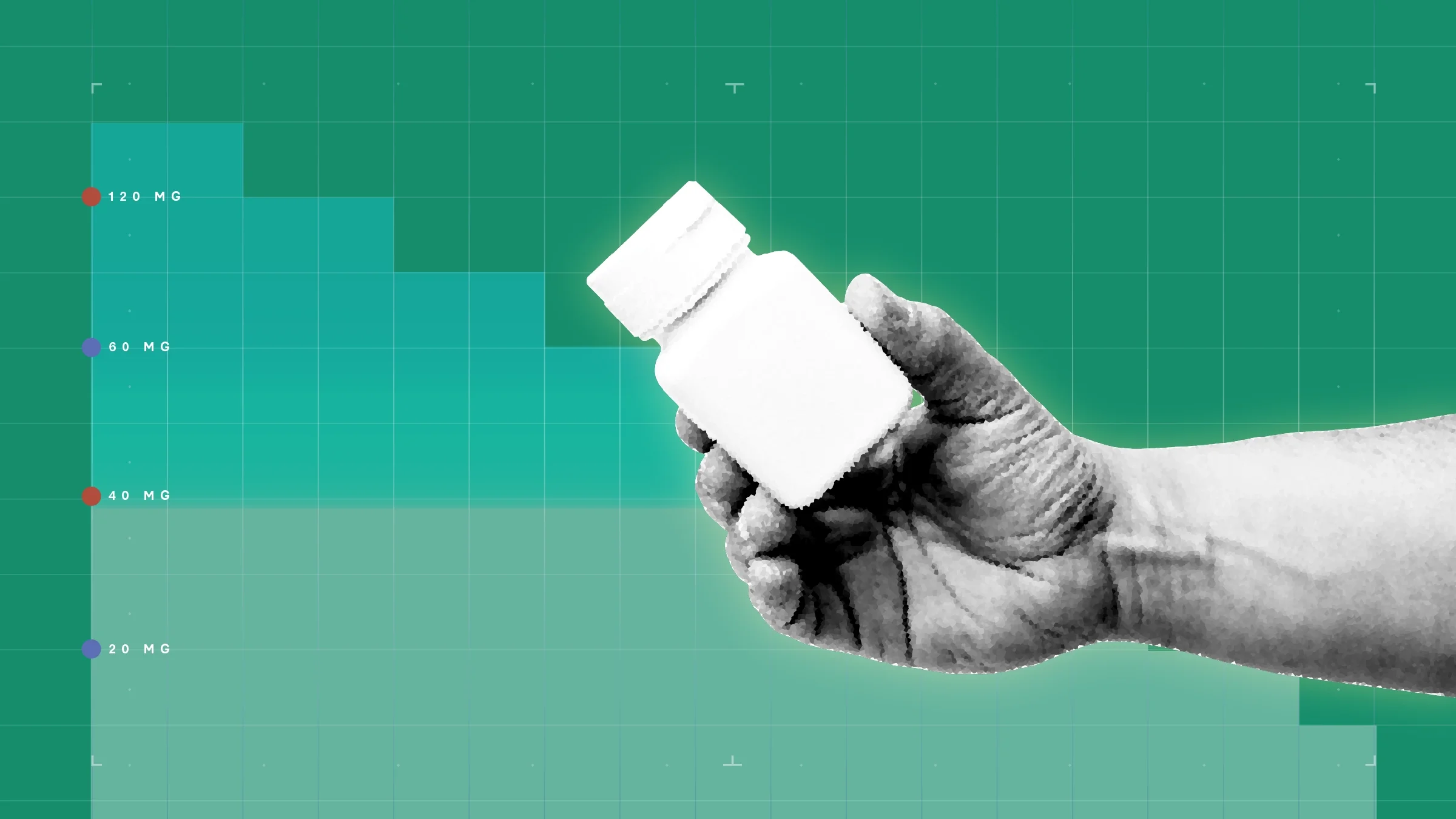
Latuda comes as an oral tablet in the following doses:
20 mg
40 mg
60 mg
80 mg
120 mg
You should take Latuda with food — a meal or snack containing at least 350 calories is best. Food helps your body absorb Latuda so it can reach its full effects. But you should avoid grapefruit juice while you’re taking Latuda. It can raise the amount of Latuda in the body to unsafe levels.
Are there any dosage adjustments for medical conditions?
Sometimes, you may need an adjustment to your Latuda dosage because of other health conditions or interactions. Your prescriber will help decide if the dosage changes below apply to you.
Dosage for people with kidney problems
Lower Latuda dosages are recommended for people living with kidney problems, such as chronic kidney disease. If you have moderate to severe kidney problems, it’s best to start with a lower Latuda dosage of 20 mg daily. And doses over 80 mg daily aren’t recommended.
Dosage for people with liver problems
A lower Latuda dosage is also recommended if you're living with moderate or severe liver disease. A lower starting dosage of 20 mg daily is best. Your dosage may be raised to a maximum of 80 mg per day if you have moderate liver issues. But if you have severe liver problems, Latuda dosages over 40 mg daily aren’t recommended.
Dosage with certain interactions
Certain medications interact with Latuda and can raise the levels of Latuda in your body. If you’re taking one of these medications, your prescriber will likely start Latuda at half the usual dose. If you’re already taking Latuda and you start taking one of these medications, your Latuda dosage should be cut in half. The medications include:
Calcium channel blockers, such as diltiazem (Cardizem) and verapamil (Verelan)
Erythromycin (Ery-tab, E.E.S.)
Fluconazole (Diflucan)
Atazanavir (Reyataz)
Make sure to give your prescriber a complete list of medications and supplements you take before starting Latuda. And check with them before starting any new medications while you’re taking Latuda They can make any necessary changes to your Latuda dosage if there's a possible interaction.
What happens if you miss a dose of Latuda?
If you miss a dose of Latuda, take it with food as soon as possible. But skip the missed dose if it’s almost time for your next one. You shouldn’t take two doses at once to make up for a missed dose.
If you miss more than one dose of Latuda, contact your pharmacist or prescriber. They can help you get back on track with your medication safely. Consider tools, such as a medication reminder app or daily pill organizer, to help you remember your medication in the future.
What should you do if you take too much Latuda?
If you accidentally take an extra dose of Latuda, it’s unlikely to cause you any serious harm. But you may have a higher risk of side effects, such as nausea or drowsiness.
Large doses of Latuda may cause more serious effects, such as an irregular heartbeat, vomiting, and high or low blood pressure. Severe uncontrolled body movements can also happen.
If you or someone you know has taken too much Latuda, contact your healthcare team or call the Poison Control Center at 1-800-222-1222. But if you have chest pain or you’re having trouble breathing, it’s best to seek emergency medical care.
How to save on Latuda
There are ways to save on Latuda, which is available as both a brand-name and generic medication. GoodRx can help you save over 95% off the average retail price of the generic version. A 30-day supply of generic Latuda 20 mg tablets costs as little as $18.19 with a free GoodRx discount at certain pharmacies.
Frequently asked questions
For children, it’s recommended to wait at least 1 week before increasing the Latuda dosage when treating bipolar depression. Otherwise, your prescriber will increase your Latuda dosage as needed based on your symptoms and any side effects you’re experiencing. You shouldn’t increase your Latuda dosage on your own without the guidance of a healthcare professional.
Most clinical studies measured Latuda’s effects after 6 weeks of treatment. But it may start improving your symptoms within the first 1 to 2 weeks. Keep in mind that everyone responds differently to medications, so Latuda may work faster or take longer than this for some people. Talk to your healthcare team about any concerns you have about Latuda’s effectiveness.
It’s not a good idea to suddenly stop taking Latuda on your own. This could lead to withdrawal symptoms, including more severe mental health issues. If you’d like to stop taking Latuda, talk to your prescriber for guidance. They can help you stop taking it safely or help you switch to a different medication, if needed.
For children, it’s recommended to wait at least 1 week before increasing the Latuda dosage when treating bipolar depression. Otherwise, your prescriber will increase your Latuda dosage as needed based on your symptoms and any side effects you’re experiencing. You shouldn’t increase your Latuda dosage on your own without the guidance of a healthcare professional.
Most clinical studies measured Latuda’s effects after 6 weeks of treatment. But it may start improving your symptoms within the first 1 to 2 weeks. Keep in mind that everyone responds differently to medications, so Latuda may work faster or take longer than this for some people. Talk to your healthcare team about any concerns you have about Latuda’s effectiveness.
It’s not a good idea to suddenly stop taking Latuda on your own. This could lead to withdrawal symptoms, including more severe mental health issues. If you’d like to stop taking Latuda, talk to your prescriber for guidance. They can help you stop taking it safely or help you switch to a different medication, if needed.
The bottom line
Latuda (lurasidone) is a medication that treats schizophrenia and bipolar depression in adults and children. For schizophrenia, the recommended Latuda dosage starts at 40 mg once daily with food. For bipolar depression, the recommended Latuda dosage starts at 20 mg once daily with food. You may need a lower Latuda dosage if you're living with kidney or liver problems or take medications that interact with it.
Your prescriber may raise your Latuda dosage based on your response to the medication. The maximum daily dose of Latuda is typically 120 mg to 180 mg for adults and 80 mg for children and adolescents.

Why trust our experts?




References
Azhar, Y., et al. (2023). Lurasidone.
Keks, N., et al. (2019). Stopping and switching antipsychotic drugs. Australian Prescriber.
Macleods Pharmaceuticals Limited. (2026). Lurasidone hydrochloride- lurasidone hydrochloride tablet, film coated [package insert].
MedlinePlus. (2018). Lurasidone.
National Alliance on Mental Illness. (2024). Lurasidone (Latuda).
Weiss, S. J., et al. (2020). Characterization of intentional lurasidone ingestions using the United States National Poison Data System. Clinical Toxicology.