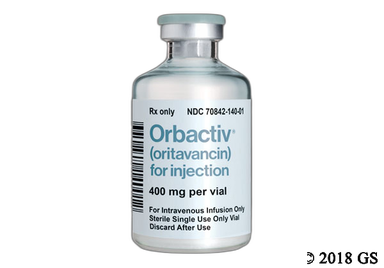
Orbactiv
Orbactiv (oritavancin) is a newer antibiotic that treats skin infections caused by certain bacteria. It's commonly used for people who have, or might have, an infection from resistant bacteria. It's given as an injection through the veins for one dose and is available as a brand-name medication only, which can be expensive.


What is Orbactiv (oritavancin)?
What is Orbactiv (oritavancin) used for?
- Skin and skin structure infections caused by certain bacteria in adults
How Orbactiv (oritavancin) works
Orbactiv (oritavancin) is an antibiotic. It fights against certain bacteria called Gram-positive bacteria. The medication works by preventing the bacteria from making their protective covering properly. It's also able to break through this covering, which causes the bacteria to die.
Drug facts
| Common Brands | Orbactiv, Kimyrsa |
|---|---|
| Drug Class | Antibiotic |
| Controlled Substance Classification | Not a controlled medication |
| Generic Status | No lower-cost generic available |
| Availability | Prescription only |

Side effects of Orbactiv (oritavancin)
The following side effects may get better over time as your body gets used to the medication. Let your healthcare provider know immediately if you continue to experience these symptoms or if they worsen over time.
Common Side Effects
- Nausea (10%)
- Headache (7%)
- Vomiting (5%)
- Infection in limb or under the skin (4%)
- Diarrhea (4%)
Less Common Side Effects
- Dizziness
- Inflammation in vein at injection site
- Fast heart rate
Orbactiv (oritavancin) serious side effects
Contact your healthcare provider immediately if you experience any of the following.
- Serious allergic reaction: hives, rash, blisters, skin reddening, swelling of the lips or tongue, difficulty breathing
- C. difficile-related diarrhea: foul-smelling diarrhea, frequent bowel movements (up to 15 times per day), fever, stomach pain or cramps
The following Orbactiv (oritavancin) side effects have also been reported
Side effects that you should report to your care team as soon as possible:
- Allergic reactions—skin rash, itching, hives, swelling of the face, lips, tongue, or throat
- Bone pain
- Infusion reactions—chest pain, shortness of breath or trouble breathing, feeling faint or lightheaded
- Severe diarrhea, fever
- Unusual vaginal discharge, itching, or odor
Side effects that usually do not require medical attention (report to your care team if they continue or are bothersome):

Pros and cons of Orbactiv (oritavancin)
Pros
- Has been shown to avoid unnecessary hospital admissions
- Works well to treat skin and skin structure infections caused by resistant bacteria
- Only need to get one dose, because it lasts for about 2 weeks
- Can be used in certain people with kidney or liver problems
Cons
- Needs to be injected by a healthcare provider
- Infusion takes 1 to 3 hours, depending on which brand you get
- Brand name only, which can be expensive
- The Infectious Diseases Society of America (IDSA) hasn't made a recommendation for how to use Orbactiv (oritavancin) in their current clinical practice guidelines for skin and soft tissue infections.

Pharmacist tips for Orbactiv (oritavancin)

- Make sure to mark on your calendar when you're supposed to see your provider and receive your dose of Orbactiv (oritavancin) so your infection can be treated. It's important to get your dose of Orbactiv (oritavancin) even if your skin infection looks better, because it might get worse or become harder to treat.
- Contact your provider if you develop other symptoms of an illness or if your symptoms become worse. Orbactiv (oritavancin) can only treat infections caused by bacteria, and won't help if you have an infection caused by a virus or fungus.
- Orbactiv (oritavancin) can interact with a lot of commonly used medications. Make sure to tell your provider about all the medications you take before receiving Orbactiv (oritavancin).
- If you're taking a blood thinner called warfarin (Coumadin), tell your provider who manages your blood thinner medication that you received Orbactiv (oritavancin). Orbactiv (oritavancin) can falsely raise your INR or international normalized ratio (a blood test result that your provider uses to check how well your blood is clotting).
- If you get admitted into the hospital within 5 days of receiving Orbactiv (oritavancin), tell your providers caring for you in the hospital that you've received this medication. Orbactiv (oritavancin) affects which medications your provider will give you to help prevent blood clots while you're hospitalized.

Risks and warnings for Orbactiv (oritavancin)
Orbactiv (oritavancin) can cause some serious health issues. This risk may be even higher for certain groups. If this worries you, talk to your doctor or pharmacist about other options.
Severe allergic reactions
- Risk factors: Allergy to other related antibiotics
Severe allergic reactions to Orbactiv (oritavancin) are possible, including life-threatening reactions like facial swelling, shock, and anaphylaxis (closing of the throat). Tell your provider if you're allergic to other related antibiotics (e.g., vancomycin (Vancocin)) before receiving Orbactiv (oritavancin). If you notice dizziness, a choking sensation, difficulty breathing, or swelling around your eyes, lips, or tongue after receiving Orbactiv (oritavancin), get medical attention right away.
Infusion reactions
Infusion-related reactions are possible during your Orbactiv (oritavancin) infusion. These reactions can include flushing of the upper body, hives, itching, or rash. Others might include chest or back pain, chills, and shaking. If any of these reactions happen, tell your provider right away so they can slow or stop the infusion.
Diarrhea from Clostridioides difficile
Nearly all antibiotics, including Orbactiv (oritavancin), can cause an infection with a bacteria called Clostridioides difficile (C. diff). This infection causes diarrhea. Antibiotics change the amount of normal bacteria in your stomach and intestines, which can lead to an overgrowth of C. diff. It's important to recognize the difference between diarrhea as a side effect of Orbactiv (oritavancin) and C. diff-related diarrhea. C. diff-related diarrhea can cause foul-smelling diarrhea, frequent bowel movements (even up to 15 times per day), fever, and nausea, and is a medical emergency. If you have any of these symptoms, get medical attention right away so you can be tested for C. diff and receive treatment.

Orbactiv (oritavancin) dosage
Typical dosage for Orbactiv (oritavancin)

Orbactiv (oritavancin) contraindications
Contraindications are specific health conditions or situations in which a person should not take a medication due to safety concerns. If you have any of the following conditions or if any of the following apply to you, let your healthcare provider know because Orbactiv (oritavancin) will not be safe for you to take.
- Use of IV heparin for 5 days after receiving Orbactiv (oritavancin)

What are alternatives to Orbactiv (oritavancin)?

Orbactiv (oritavancin) images