Key takeaways:
Freelance health writer Judi Ketteler has written pieces about low back pain. She also has experienced it herself.
It can be excruciating and soul-crushing, she says.
It sometimes strikes when she least expects it. And she hopes it goes away.
So much of what is written about low back pain can best be described as concise, but slightly meaningless.
I know, because I’ve written a lot of it.
Here’s the reality: You can do all the things right. You can exercise, do core strength workouts, and live a healthy life. And sudden episodes of back pain can still find you.
Search and compare options
This, too, I know. Because recently, after writing about a dozen blog posts on low back pain for a client, I wound up in the emergency room. My back pain was unquestionably the worst pain of my life (and I’ve birthed a 10.5 pound baby).
Would my knowledge help me in any way? Or put another way: Is there ever a good answer when you’re in pain?
The worst pain of my life
To be fair, I’ve tried hard to write helpful pieces. I always include stats — like how low back pain causes more disability around the world than other conditions. I don't want people reading to feel so alone in their misery. But you likely do feel alone. Hopeless even, as you try to grasp bulging discs and sciatic nerves. Who cares if it’s all over the place when it’s happening to you?
Nearly every low back pain article references the most common risk factors. Some are behavioral, like smoking cigarettes or wearing high heels. Some are vague, like having a weak core or poor posture. And some you can do absolutely nothing about, like age and genetics.
These articles also mention the symptoms. Oh, the callousness of bullet points. “Numbness” tucks neatly inside a list with its easy eight letters. But it means you can say goodbye to your 8 hours of sleep.
The point is that reading a word and experiencing the reality of that word is quite different.

Judi watering plants at her home in Cincinnati
As for me, I had been gardening when a ripple of searing pain snaked its way up the right side of my back. It got worse, then better, and then worse again. It finally wrapped around to my thigh and set my hip flexor on fire — to the point I thought I might be dying. I started to hyperventilate as my husband drove me to the hospital.
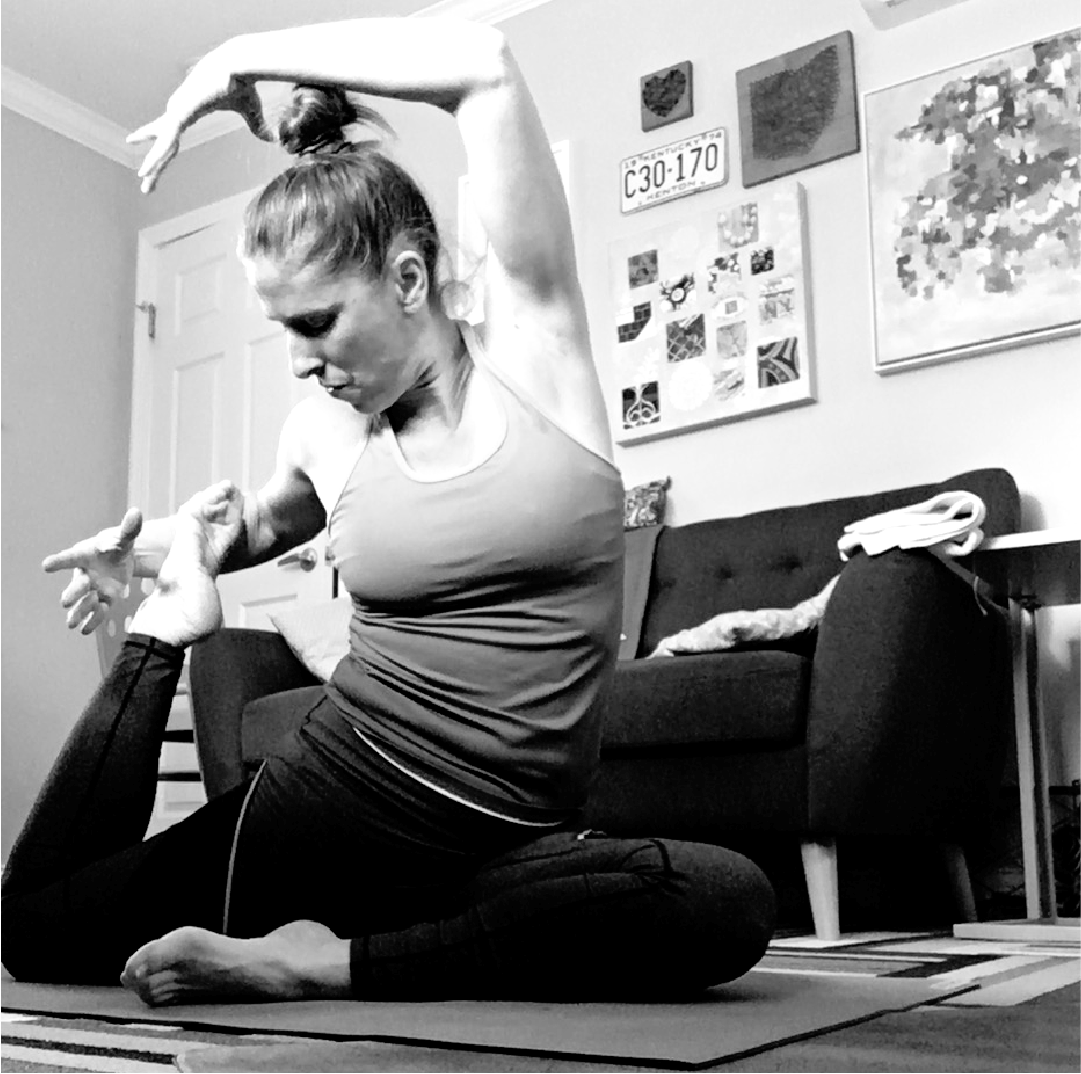
It had been 3 years since I had tweaked my back while doing just an ordinary forward fold in yoga. I’ve tried to be so mindful ever since. I moved with deliberation and engaged my core when I reached or lifted. But, like millions of Americans, I made one wrong move on a random afternoon. And it instantly erased every moment of carefulness.
Why did this happen to me?
There I was in the ER, a pity party of one, unable to stop thinking that I was a 47-year-old woman doing everything she was supposed to do for her health. I eat fiber, swim laps, run 75 to 100 miles a month, and do yoga. I get mammograms and vaccinations. I barely drink. My resting heart rate is 47. A former gymnast, I can still do handstands on the ground and back flips on the trampoline, for crying out loud.
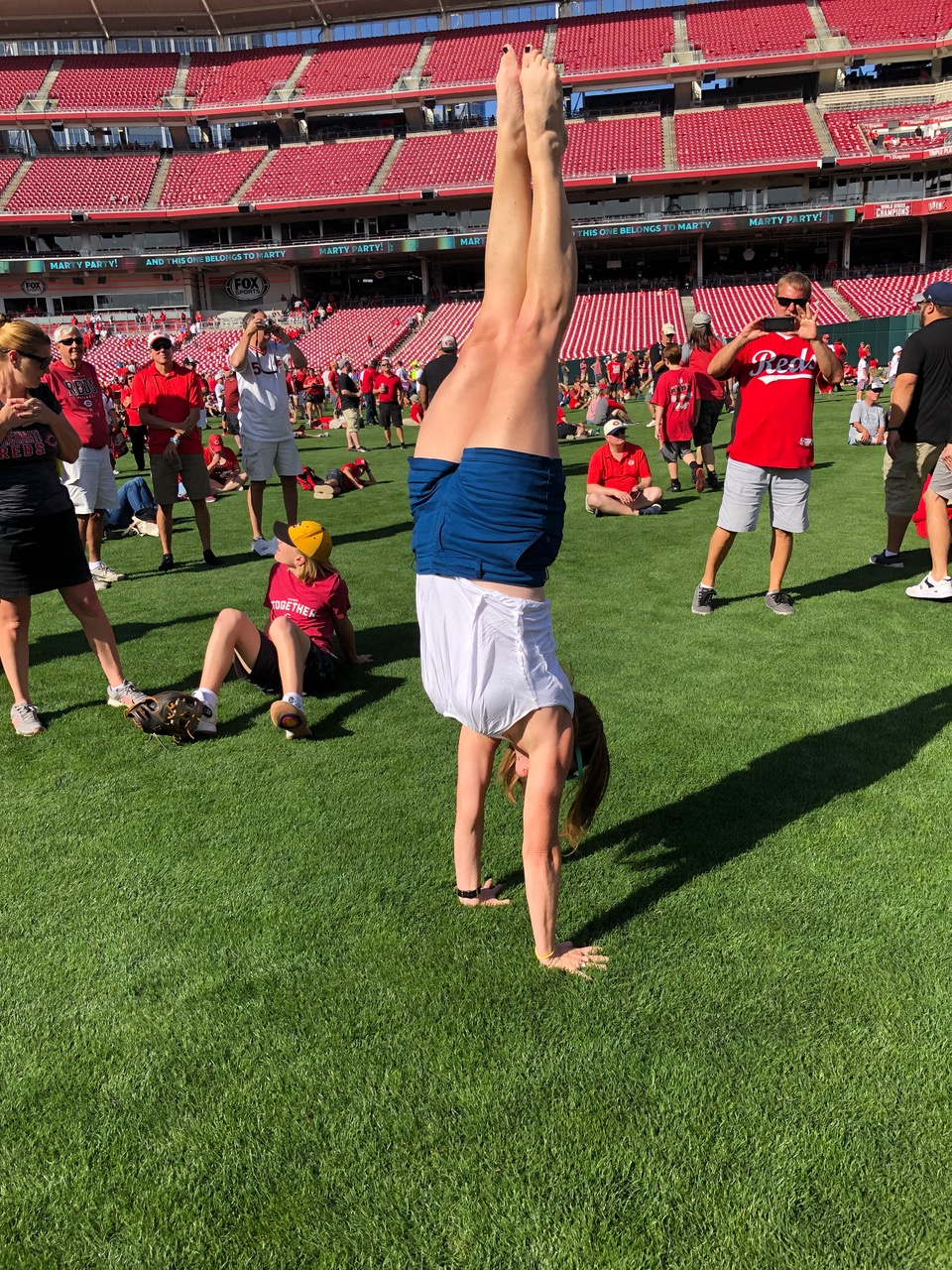
The author, a former gymnast, demonstrates a handstand.
I sobbed alone in a room, waiting for a doctor to give me a concise explanation of what was happening and then take the pain away. As I waited, I got X-rays to rule out a fracture or tumor. A nurse gave me a pain shot and steroids. I got a prescription for muscle relaxers, Prednisone and a strong anti-inflammatory.
And then, I got a sea of terms. Within about 2 minutes, the doctor — whom I genuinely liked because she had empathy and a nice bedside manner for 4 in the morning on a Tuesday — mentioned no less than five terms:
Herniated disc (a condition)
Pinched nerve (a symptom of disc condition)
Sciatica (another symptom, though my sciatic nerve didn’t hurt as far as I could tell)
Back spasm (a catch-all term that roughly describes any acute low back pain)
PSIS tenderness (posterior superior iliac spine, or the little bone at the divot just above your butt, where a bunch of nerves attach)
I had written these terms myself so many times. I had tried to untangle them into explanations that made sense to your average Googler of health content. But it suddenly felt so incomprehensible and incomplete.
I still had so many questions: Why was this happening to me? How long until it went away? Or what if it got worse?
Will my lower back pain go away on its own?
The minute the doctor left to go print out prescription information, I pulled out my phone. I hopped on PubMed to learn about treatments for PSIS. I was afraid a general Google search might bring up one of my own ghosted pieces about sacroiliac pain.
Would I ultimately need one of the specialized injections I learned about in my 10-minute, half-asleep reading of the literature? Would the cocktail of drugs work, or were they unnecessary as new research may suggest? Or would the pain just resolve on its own as it does in most cases of acute low back pain?
That’s right. All of this awfulness. This exhaustion and this frustration and inability to do the things you want. This forced confrontation with your age, your mortality, and the limits of the human spine and hip bones.
And suddenly, poof! It just goes away.
Only to return in a year or 5 when you lean down to move some pot in your garden.
I’m sorry your back hurts, too
As I write this, the pain has improved somewhat. But I’ve had to stop taking most of the medications prescribed because they would upset my stomach and cause insomnia. I wound up having to take a laxative to deal with the awful constipation. And now, every system in my body feels like it’s gone haywire.
I alternate between thinking movement is helpful and worrying that I will reaggravate the whole situation if I do too much. No matter how much I Google, I can’t figure out what I should actually do, other than follow up with my primary care doctor in a few weeks. She will likely prescribe physical therapy, which I will eagerly do, because it’s been helpful for other injuries I’ve had.
Yet, the numbness in my thigh remains. To think I ever reduced it to a bullet point! It’s uncomfortable, frightening, and perplexing — even when I understand the relationship between discs, nerves, and pain receptors. Sometimes, I get a feeling that a butterfly is dancing on my quadricep. But when I reach down to flick it away, I realize it is coming from inside my own body.
So many people have low back pain stories. Sometimes, the pain turns chronic. People miss work and can’t pay bills. They lose their livelihoods. They become addicted to pain pills, like my brother did after a back injury. It’s a massive sea of pain and unfairness. It just swirls around, catching unsuspecting humans by the spine.
I’m not allowed to write a soup of expletives — words that might offer what I really think about bulging discs, how much I know it hurts, and how sorry I am you have to deal with it.
Instead, I am only allowed to write sentences that are 22 words — a best practice for healthcare writing — because short, simple sentences are also a form of empathy.
But as I sit here with my heating pad, I see you. And I know my bullet points can never tell your story. Because they definitely can’t tell mine.

Why trust our experts?