Key takeaways:
Cervical cancer screening finds abnormal changes in your cervix that could lead to cancer if not treated. When cervical cancer is caught early, it’s very treatable.
There are two main types of cervical screening: the Pap test and the HPV test. They are both easy to do and can be done during a regular pelvic exam.
Starting at age 21, all people with a cervix and uterus should start getting regular cervical screening.
Cervical screening is one of the most important steps you can take to stay healthy and cancer free. Screening has lowered the number of women who get cervical cancer and who die from it by 50% in the past several decades. It’s the best tool to lower the risk of getting cervical cancer.
Here we’ll review what you need to know about cervical cancer screening, including who needs it and when.
What is cervical cancer screening?
Cervical cancer screening detects abnormal changes in cells of the cervix, which is the lower part of the uterus. Abnormal changes in these cells could lead to cervical cancer if not treated. Screening for cervical cancer involves collecting cells from your cervix so they can be tested in a lab.

There are different risk factors for cervical cancer, but the most important one is infection with human papillomavirus (HPV) — a common virus that can be passed between people during sexual contact. In rare cases, HPV can spread through genital contact without sexual intercourse.
What happens during a cervical screening?
Cervical cancer screening includes two different tests:
The Pap test (or Pap smear): A sample of cells from the cervix is examined for any abnormalities that could turn into cancer.
The HPV test: A sample of cells from the cervix is examined for any HPV strains that can cause cancer.
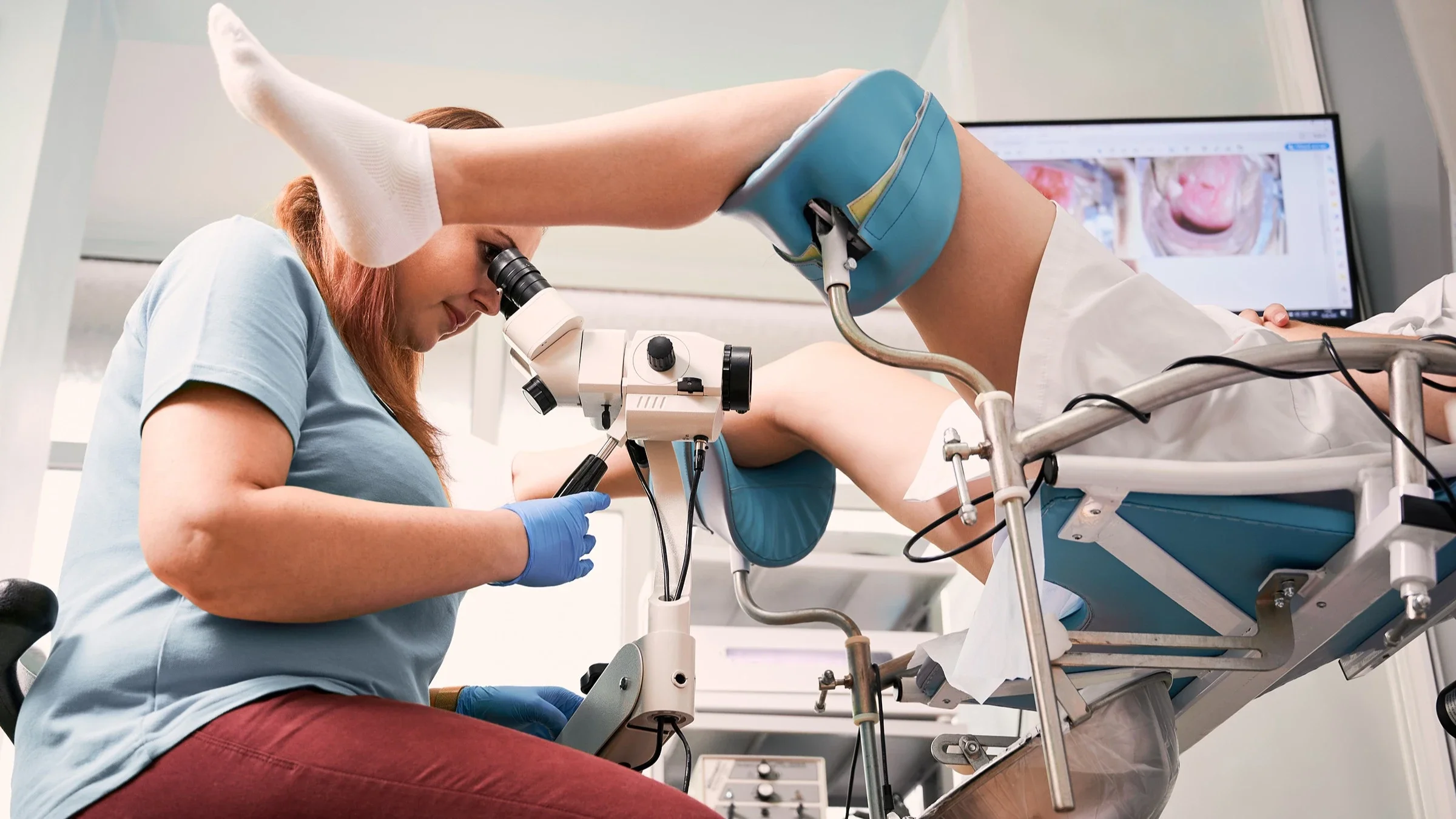
Most commonly, cervical screening is done as part of the pelvic exam. During the screening, a healthcare professional uses an instrument called a speculum to open your vagina, which helps them see your cervix. They then put a small brush-like tool into the vagina, which is used to collect a sample of cells from different parts of the cervix. The cells are sent to a laboratory for further testing.
It’s also possible to do a self-test for HPV. It’s just as effective as when a healthcare professional performs the test. But it only detects HPV, not precancerous changes in cells.
What is cervical cancer?
Cervical cancer refers to cancer of the cervix, which is the lower part of the uterus. In the U.S., there are over 13,000 new cases of cervical cancer each year.
Cervical cancer, especially at very early stages, usually doesn’t have any symptoms. But when caught early, it can also be curable. This is why screening is so important — screening can catch early, precancerous changes before symptoms even start.
When symptoms do happen, they can include:
Vaginal bleeding between periods or after intercourse
Vaginal bleeding after menopause
Unusually heavy or long menstrual periods
A change in your normal vaginal discharge

Read more like this
Explore these related articles, suggested for readers like you.




Aside from HPV, other risk factors for cancer of the cervix include:
Smoking
Having multiple sexual partners
Having a weakened immune system
First pregnancy at younger than 20 years of age
Having a family history of cervical cancer
Exposure to the synthetic estrogen diethylstilbestrol (DES) before birth
Who should get a cervical screening?
All people with a uterus and cervix who are between age 21 and 65 should have regular cervical screening.
You don’t need screening if you:
Are younger than 21 years, even if you are sexually active
Older than 65 years, as long as you don’t have a higher risk for cervical cancer (see risk factors below)
Have had your uterus and cervix removed (unless you have a history of high-grade changes or cervical cancer)
How often should you have a cervical screening?
How often you need cervical screening depends on your age, your medical history, and the results of your most recent screening test.
The Women’s Preventive Services recommends these screening guidelines.
Age (years) | Recommendation |
|---|---|
21-29 | Pap test every 3 years |
30-65 | HPV every 5 years or Combined Pap and HPV test* every 5 years or Pap every 3 years (if HPV testing isn’t available) |
* HPV self-testing is an option.
If you have any of the following, you may need a screening test more often:
A history of cervical cancer
HIV
A weakened immune system
Exposure to DES before birth
If any of these are true for you, talk with your healthcare team to make sure you’re getting the right screening tests at the right time.
Do I still need cervical screening if I have had the HPV vaccine?
Yes — even if you’ve had the HPV vaccine, you still need to get regular cervical cancer screening. The HPV vaccine helps protect against the common HPV types that can cause cancer, but it doesn’t protect against all HPV types.
What is the difference between cervical screening and a Pap smear?
Cervical cancer screening includes two quick and easy tests: the Pap smear (also called Pap test) and the HPV test. So a Pap smear is one form of cervical screening.
How does a Pap smear test work?
A Pap smear is usually done during a regular pelvic exam. Your gynecologist or primary care provider will collect a small sample of cells from the cervix for examination under a microscope. The Pap test can show if the cells of the cervix are healthy or not. Abnormal cervix cells may mean the cells are cancerous, but more commonly, the cells show changes that are “precancerous.” This means that over time those cells could turn into cancer of the cervix.
After the Pap test, your healthcare team will contact you with results. More on this below.
Does cervical screening also test for HPV?
Yes. The second part of cervical screening is the HPV test. This looks for certain types of HPV that can cause cervical cancer.
There are over 200 HPV types (also called genotypes). About 12 of these are considered “high-risk,” which means they are more likely to cause cancer. HPV types 16 and 18 cause the majority of cervical cancers. A high-risk HPV infection (usually with HPV type 16 or 18) can increase the risk of getting certain types of cancer, including:
Cervical cancer
Oropharyngeal cancer (mouth and throat)
Genital cancers (anus, penis, vulva, and vagina)
The sample for the HPV test is also collected via pelvic exam. So it can be done at the same time as the Pap test. This is called co-testing. The HPV test can also be done separately, and can be used as a screening test every 5 years.
HPV test results
The HPV test can either be negative or positive:
A negative test means that you don’t have any high-risk HPV types. For most women, this means that you can wait 5 years before getting another HPV test.
A positive test means that you have one or more of the high-risk HPV types. This doesn’t mean that you have cancer or that you will get cancer. It just means that you are at higher risk of getting cervical cancer, and may need additional testing or treatment.
If you have a positive HPV test and a normal Pap test, a healthcare professional may recommend that you be rechecked in a year. This is because your immune system may be able to attack the virus and get rid of it on its own.
Most people who are sexually active will have an HPV infection at some point and not even realize it. But your immune system can clear HPV infections most of the time. This is why people in their 20s don’t need HPV testing.
Pap smear test results
Getting your Pap test results can be stressful. Here’s some information to help you know what to expect and when. Be sure to talk with your healthcare team about your specific situation and results in order to come up with the best plan for you.
What does my Pap smear result mean?
Normal
A normal test (also called a negative test) means it didn’t detect any abnormal changes in the cells of your cervix. This is good news, but you still need to get regular screening moving forward.
After a normal Pap test with a normal HPV test at the same time, you can wait 5 years until your next screening.
Unsatisfactory Pap test results
This means that the laboratory couldn’t perform the test. This could be because there weren’t enough cells collected, or the cells could have been hidden by blood or mucus. A healthcare professional will ask you to come back and have another Pap test done. This is frustrating, but it’s not necessarily bad news.
Abnormal
Having an abnormal Pap test (also called a positive test) can definitely make you worry. But it doesn’t mean that you have — or will develop — cervical cancer.
Abnormal Pap tests are actually quite common: About 16% of women have had one at some point. An abnormal test just means that some abnormal cells were found in your sample.
Abnormal cells are usually described as low grade or high grade. This refers to how slowly or quickly the cells could turn into cancer:
Low-grade changes usually don’t turn into cancer and can go back to normal on their own. Women with low-grade changes may need to be tested more often to make sure the abnormal changes improve or don’t get any worse.
High-grade changes are more likely to turn into cancer. But this can take 3 to 7 years, so screening can usually catch these changes very early. If you have high-grade changes, you may need additional testing and treatment. You’ll probably also need screening more often.
What happens if my Pap test is abnormal?
It’s important to remember that only a very small percentage of abnormal screening tests will actually turn into cancer. Still, if you’ve had an abnormal result, you’re likely to have a ton of questions, which is normal.
What comes next will depend on what type of abnormality was found. The cervix has two main types of cells — squamous and glandular — and the abnormal changes can involve either type of cell.
Here are some common abnormal test results and possible next steps.
Atypical squamous cells of undetermined significance (ASC-US)
This is the most common abnormal result. It means that there were some mild abnormal changes in the squamous cells (which line the surface of the cervix). These changes could be from HPV or from something else, like hormones or a yeast infection. A healthcare professional may do an HPV test (if you haven’t had one), or they may just repeat your Pap test in a year.
Atypical glandular cells (AGC)
This means that some glandular cells were found that don’t look normal. Glandular cells are found in the cervical canal. With an AGC result, usually more testing is needed.
Low-grade squamous intraepithelial lesions (LSIL)
This means that there were low-grade changes found (also called mild dysplasia). This could be from an HPV infection and may go away on its own, but more testing is usually recommended. This may include a biopsy to see if there are more severe changes that need to be treated (see below for information about biopsies)
Atypical squamous cells, cannot exclude HSIL (ASC-H)
This means that changes could be a high-grade squamous intraepithelial lesion (see below). But since the changes weren’t definite, more testing is usually required, possibly including a biopsy.
High-grade squamous intraepithelial lesion (HSIL)
These changes are more serious and could turn into cervical cancer if not treated. A biopsy — and possibly treatment — are usually recommended.
Adenocarcinoma in situ (AIS)
This is an advanced area of abnormal growth found in the glandular cells of the cervix. If this isn’t treated, it could become cancer (cervical adenocarcinoma).
Cervical cancer cells
Sometimes, cancer cells (squamous or glandular) can be found in a Pap test. This is very uncommon in women who have regular screening, since the screening tests catch any abnormal changes very early. Further testing and treatment is needed.
Possible next tests
Having an abnormal screening test may mean getting screened more often, or it may mean you’ll need additional testing. Here are some common procedures your healthcare team may order if you’ve had an abnormal cervical screening test.
Colposcopy
A colposcopy is an in-office procedure that helps a healthcare professional examine your cervix and vagina more closely. It’s similar to a pelvic exam, but it uses a colposcope, which is a magnifying instrument with a light.
During a colposcopy, a healthcare professional may put an acetic-acid solution (similar to vinegar) on the cervix. This helps highlight any areas that may have suspicious, or abnormal, cells. If there are abnormal areas, a healthcare professional will likely take a biopsy, which is a small tissue sample to be looked at under the microscope.
Biopsy
A biopsy removes a part of the tissue from the cervix. In many cases, examining the tissue under a microscope is the best way to see if the cervical changes are precancerous, cancer, or something else. Sometimes a biopsy is a treatment, removing the abnormal part. In that case, you may not need further treatment.
A biopsy can cause cramping pain, pressure, and bleeding afterwards. Your healthcare team will let you know what to expect, based on what kind of biopsy they’re doing.
There are a few different types of biopsy you can have.
Colposcopic biopsy
During a colposcopy exam, forceps are used to take a small sample of tissue from the surface of the cervix.
Endocervical curettage (endocervical scraping)
A small instrument or a brush is used to get a sample of tissue from the inside of the cervical canal.
Cone biopsy
This type of biopsy removes a cone-shaped piece of tissue from the cervix, which includes tissue from the outer part of the cervix and the cervical canal. There are two main types of cone biopsies:
Loop electro-surgical excision procedure (LEEP): LEEP uses a thin, electrified wire to get a tissue sample. This is usually done with local anesthesia in the office.
Cold knife cone biopsy: This uses a knife or laser to remove a larger piece of tissue. This is usually done with some type of anesthesia at the hospital.
After a biopsy, a pathologist will examine the tissue in the lab for cervical intraepithelial neoplasia (CIN). CIN is graded 1 to 3, based on how abnormal the cells look and how much of the tissue is affected. It can help you and your healthcare team decide the best next steps.
If the biopsy shows that cancer is present, you may need more testing. This can determine if and where the cancer has spread. If this happens, your healthcare team will work with you to determine the appropriate next steps.
How can I lower my risk of cervical cancer?
There are some steps you can take to help lower your risk of cervical cancer:
Get screened: This is the most important — and effective — step you can take to lower your risk. Make sure you follow the recommended screening guidelines, and if you have any questions, be sure to reach out to your healthcare team.
Get the HPV vaccine: Certain types of HPV are the main risk factor for getting cervical cancer. The HPV vaccine can help prevent you from getting those infections. The HPV vaccine is recommended for girls and boys between 9 and 12 years old. It’s also recommended for everyone up to age 26 years if they didn’t receive it earlier, and for some adults between 27 and 45 years old.
Don’t smoke: Studies have shown that smoking is a significant risk factor for developing cervical cancer. The risk decreases after quitting.
Use condoms: HPV can be transmitted between sexual partners, and using condoms can help lower the risk of getting HPV.
Limit your number of sexual partners: Having more sexual partners can increase your risk because it increases your risk of being exposed to HPV. Limiting your number of partners can help lower that risk.
Frequently asked questions
To get the best possible results, try to schedule your testing for when you’re not on your period. It’s a good idea to avoid putting anything in your vagina for 48 hours before the test. This includes spermicide, tampons, vaginal creams, and sexual intercourse.
No, Pap smears don’t detect sexually transmitted infections (STIs), like chlamydia, gonorrhea, or HIV. It’s a good idea to ask for separate STI testing at least once a year if you’re sexually active.
It can take 1 to 3 weeks to get your screening results back. Your healthcare team can give you a better idea of when to expect results, depending on the lab they use.
Cervical screening isn’t painful for many women. But it can cause mild pressure, discomfort, or pain similar to menstrual cramps. The process usually takes less than a minute, so any discomfort usually goes away quickly.
After cervical screening, you may experience some light bleeding or spotting. This is very common and usually goes away within a few hours.
To get the best possible results, try to schedule your testing for when you’re not on your period. It’s a good idea to avoid putting anything in your vagina for 48 hours before the test. This includes spermicide, tampons, vaginal creams, and sexual intercourse.
No, Pap smears don’t detect sexually transmitted infections (STIs), like chlamydia, gonorrhea, or HIV. It’s a good idea to ask for separate STI testing at least once a year if you’re sexually active.
It can take 1 to 3 weeks to get your screening results back. Your healthcare team can give you a better idea of when to expect results, depending on the lab they use.
Cervical screening isn’t painful for many women. But it can cause mild pressure, discomfort, or pain similar to menstrual cramps. The process usually takes less than a minute, so any discomfort usually goes away quickly.
After cervical screening, you may experience some light bleeding or spotting. This is very common and usually goes away within a few hours.
The bottom line
Cervical cancer is one of the most preventable cancers. Screening for cervical cancer involves HPV testing and Pap smears, or both. It’s important to stay up-to-date on cervical screening, and a healthcare professional can help you do that. Other ways to reduce your risk of cervical cancer include not smoking, getting the HPV vaccine, and limiting your number of sexual partners.

Why trust our experts?




References
American Cancer Society. (2025). Risk factors for cervical cancer.
American Cancer Society. (2025). Signs and symptoms of cervical cancer.
American Cancer Society. (2025). Tests for cervical cancer.
American College of Obstetricians and Gynecologists. (2024). Colposcopy. Every Stage Health.
American College of Obstetricians and Gynecologists. (2025). Cervical cancer screening. Every Stage Health.
BBC News. (2019). Smear test top tips: How to make cervical screening more comfortable.
Cantor, A. G., et al. (2025). Cervical cancer screening: Women’s Preventive Services Initiative Evidence Review Update.
Chido-Amajuoyi O., et al. (2019). Prevalence of abnormal cervical cancer screening outcomes among screening-compliant women in the United States. American Journal of Obstetrics & Gynecology.
Christine, B., et al. (2026). New cervical cancer screening guidelines from the US Department of Health and Human Services: Strengthening women’s preventive health. JAMA.
Klanjšček, J., et al. (2024). Importance of condom use in cervical cancer prevention.
European Journal of Obstetrics and Gynecology and Reproductive Biology.
Malevolti, M. C., et al. (2023). Dose-risk relationships between cigarette smoking and cervical cancer: a systematic review and meta-analysis. European Journal of Cancer Prevention.
National Cancer Institute. (2025). Cervical cancer screening.
National Cancer Institute. (n.d.). Cancer stat facts: Cervical cancer.
National Cancer Institute. (2025). Diethylstilbestrol (DES) exposure and cancer.
National Cancer Institute. (2024). HPV and Pap test results: Next steps after an abnormal cervical cancer screening test.
National Cervical Cancer Coalition. (n.d.). Cervical cancer screening: Pap and HPV tests.