Key takeaways:
Higher body fat — especially around the abdomen — is linked to increased risk of conditions like Type 2 diabetes, heart disease, and liver disease.
Body mass index (BMI) is often used to estimate body fat. But it doesn’t measure fat directly or show where fat is stored.
Simple at-home measurements like waist circumference or waist-based ratios are better ways to estimate abdominal fat and overall health.
More advanced tools like DEXA scans or body volume index (BVI) can measure fat more accurately, but they’re costly and require specialized equipment.
Body fat is a normal and necessary part of your body. It helps regulate temperature, make hormones, and store energy and nutrients. But having too much body fat — especially around the abdomen — is linked to a higher risk of health conditions like Type 2 diabetes, heart disease, and liver disease.
There are two main types of abdominal fat:
Subcutaneous fat sits just under the skin (the fat you can pinch)
Visceral fat lies deeper and surrounds internal organs (you can't see it or feel it)
Visceral fat is more strongly linked to health risks than subcutaneous fat.
For decades, body mass index (BMI) has been widely used to estimate body fat based on height and weight. It’s quick and convenient, but it doesn’t tell the whole story. BMI doesn’t measure body fat directly or show where fat is located.
Other tools can paint a clearer picture of body composition and health risk. Some — like weight-based measurements — are simple, inexpensive, and easy to do at home. Others use advanced scanning to measure body fat and distribution in more detail, but they aren’t practical for routine use.
How to measure body fat
Here’s a quick comparison of the most common methods used to estimate body fat.
Method | What it measures | At-home? | Main advantage | Main limitation |
|---|---|---|---|---|
Body mass index (BMI) | Weight relative to height | Yes | Quick and widely used | Doesn’t estimate body fat well |
Waist circumference | Abdominal fat | Yes | Simple, only needs a tape measure | Doesn’t measure total body fat |
Waist-to-hip ratio | Waist, hip | Yes | Accounts for body shape | Doesn’t measure total body fat |
Waist-to-height ratio | Abdominal fat relative to height | Yes | Accounts for height | Doesn’t measure total body fat |
BRI, RFM | Body fat and body fat distribution | Yes, with online calculators | May estimate body fat more accurately | Requires more complex calculation |
Body volume index (BVI) | Body fat/body shape | No | Detailed picture of body composition | Expensive, requires specialized equipment |
Dexa scan | Body composition and fat distribution | No | Very accurate | Expensive, requires specialized equipment |
Limitations of body mass index
Body mass index (BMI) is calculated using height and weight. The formula is weight divided by height squared. It’s easy to calculate, which is one of the reasons why it’s so commonly used.
BMI can help some people identify if their weight might be putting them at risk for certain health conditions. But this assumes that a higher BMI means more body fat — and that’s not always true. For example, someone with more muscle mass might have a “higher than normal” BMI and still have a healthy amount of fat. And someone with a “normal” or low BMI may still have an above average amount of belly fat.
Waist circumference
Waist circumference doesn’t measure total body fat, but it’s a simple way to estimate abdominal fat with just a tape measure.
In general, health risks increase if your waist measures more than 35 inches for women, or more than 40 inches for men.
Waist-to-hip ratio
Your waist-to-hip ratio is another way to estimate how body fat is distributed, which may be more closely tied to health risk than waist size alone. To calculate it, measure your waist and your hips at their widest point. Then divide your waist measurement by your hip measurement.
“Abdominal obesity” is defined as a waist-to-hip ratio of over 0.85 for women, or above 0.90 for men, according to the World Health Organization (WHO).

Read more like this
Explore these related articles, suggested for readers like you.



Waist-to-height ratio
Your waist-to-height ratio compares your waist size to your height. You can get this number by dividing your waist measurement by your height. This measurement has the advantage of factoring in height, which may help make it a more accurate assessment of health risk than waist size alone. Some research suggests it’s also less likely to be affected by differences in sex and race.
In general, a waist-to-height ratio above 0.5 is linked to a higher health risk, for both men and women.
Body roundness index (BRI) and relative fat mass (RFM)
The body rounded index (BRI) and relative fat mass (RFM) are newer tools. They use mathematical formulas to estimate body fat more precisely.
BRI estimates visceral fat using height, weight, hip, and waist size. Since it factors in height and hip size, it may do a better job of estimating visceral fat than BMI or waist size alone.
RFM estimates body fat percentage using height, waist circumference, and sex. Since it doesn't rely on overall weight, RFM is less likely than BMI to misclassify muscular people as having too much body fat.
Whole-body scans
All of the measurements we’ve covered so far can be done at home with a simple tape measure. There are more advanced tests that can measure body fat directly — but they’re less practical for everyday use.
Body volume index (BVI)
The body volume index (BVI) uses 3D body scanning to measure the volume of different parts of the body. This provides a more detailed picture of body composition than BMI or waist-to-hip ratios. Because BVI requires specialized equipment, it’s not widely available and is mostly used for research or in specialized clinics.
DEXA scan for body fat
A dual-energy X-ray absorptiometry (DEXA) scan is commonly used for osteoporosis screening. It uses low-dose X-rays to identify bone, soft tissue, and body fat. In addition to measuring bone density, it can also offer information about your body fat percentage and where your body fat is located.
DEXA scans are considered one of the most accurate ways to measure body composition and body fat. But there are some downsides. They require a medical appointment. They can be costly. And they aren’t typically used for routine screening of body fat.
Other tools for calculating body fat percentage that aren't recommended
Some methods can estimate body fat percentage, but they’re either less accurate, less practical, or don’t provide much useful detail about health risk:
Body fat scales (bioelectrical impedance analysis): These smart scales are quick and easy to use at home, but they aren’t accurate enough to routinely recommend.
Underwater weighing: This method can be fairly accurate, but it requires specialized equipment and doesn’t provide information about fat distribution.
Air displacement plethysmography (Bod Pod): This test measures how much air your body displaces in a sealed chamber to estimate body fat. It’s not widely available and can be expensive.
Skinfold calipers: Calipers are hand-held devices that measure the thickness of fat under the skin. They’re inexpensive and easy to use, but they aren’t very accurate.
Frequently asked questions
A healthy body fat level depends on many factors, including gender and age. In women, a healthy body fat percentage is usually between 20% and 35%. In men, it’s between 8% and 25%. It’s normal for women to have more body fat than men. It’s also normal for the amount of body fat to increase with age.
If your body fat measurements are higher than recommended, it may mean you’re at higher risk for certain health conditions. A healthcare professional can help you understand what your results mean. They can also discuss whether lifestyle changes can help you lower your health risks, such as:
Increasing physical activity
Getting regular sleep
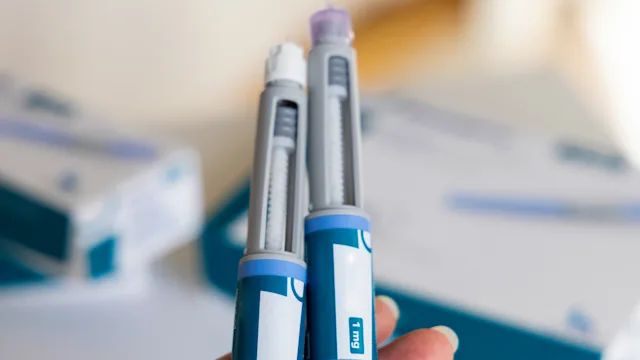
In some cases, your healthcare team may recommend weight loss medicines or other approaches to lower your weight.
A healthy body fat level depends on many factors, including gender and age. In women, a healthy body fat percentage is usually between 20% and 35%. In men, it’s between 8% and 25%. It’s normal for women to have more body fat than men. It’s also normal for the amount of body fat to increase with age.
If your body fat measurements are higher than recommended, it may mean you’re at higher risk for certain health conditions. A healthcare professional can help you understand what your results mean. They can also discuss whether lifestyle changes can help you lower your health risks, such as:
Increasing physical activity
Getting regular sleep
In some cases, your healthcare team may recommend weight loss medicines or other approaches to lower your weight.
The bottom line
Body mass index (BMI) has long been used as a quick way to estimate body fat, but it has important limitations. It doesn’t measure body fat directly or show where fat is stored, which matters for your health.
Other tools, especially waist measurements and related calculations, can give you a better sense of how much body fat you have and where it’s stored — which matters for your health risk. More advanced scans offer the most detailed information. But they aren’t practical for routine use.
The “best” option depends on what you’re looking for and what’s practical for you. No matter which method you use, the goal isn’t a perfect number. Rather, it’s understanding your health and using that information to make informed choices.

Why trust our experts?



References
Centers for Disease Control and Prevention. (2025). How overweight and obesity impacts your health.
Cameron, A. J., et al. (2020). Combined influence of waist and hip circumference on risk of death in a large cohort of European and Australian adults. JAHA.
Elsey, A. M., et al. (2021). Comparison of the three-site and seven-site measurements in female collegiate athletes using BodyMetrix. International Journal of Exercise Science.
Frija-Masson, J., et al. (2021). Accuracy of smart scales on weight and body composition: Observational study. JMIR mHealth and uHealth.
Gallagher, D., et al. (2000). Healthy percentage body fat ranges: An approach for developing guidelines based on body mass index. American Journal of Clinical Nutrition.
Heath, E. M., et al. (1998). Bioelectric impedance and hydrostatic weighing with and without head submersion in persons who are morbidly obese. Journal of the American Dietetic Association.
Inojosa, B. J. M, et al. (2024). Prediction of presence and severity of metabolic syndrome using regional body volumes measured by a multisensor white-light 3D scanner and validation using a mobile technology. European Heart Journal - Digital Health.
Jackson, A. S., et al. (2009). Body mass index bias in defining obesity of diverse young adults: The training intervention and genetics of exercise response (TIGER) study. The British Journal of Nutrition.
Kruschitz, R., et al. (2013). Detecting body fat–A weighty problem BMI versus subcutaneous fat patterns in athletes and non-athletes. PLoS One.
National Heart, Lung, and Blood Institute. (n.d.). Calculate your BMI.
National Heart, Lung, and Blood Institute. (2025). Aim for a healthy weight.
Richard, A. J., et al. (2020). Adipose tissue: Physiology to metabolic dysfunction. Endotext.
Scheuer, S. H., et al. (2015). Abdominal fat distribution and cardiovascular risk in men and women with different levels of glucose tolerance. The Journal of Clinical Endocrinology & Metabolism.
Shepherd, J., et al. (2017). Body composition by DXA. Bone.
Suthahar, N., et al. (2025). Relative fat mass: Refining adiposity measurement in the era beyond body mass index. Current Heart Failure Reports.
Tewari, A., et al. (2023). Comparative evaluation of waist-to-height ratio and BMI in predicting adverse cardiovascular outcome in people with diabetes: A systematic review. Cureus.
Thomas, D. M. (n.d.). Body roundness index (BRI). MDCalc.
Woolcott, O. O. (n.d.). Relative fat mass (RFM). MDCalc.
World Health Organization. (2008). Waist circumference and waist-hip ratio: report of a who expert consultation.
Zhang, X., et al. (2024). Body roundness index and all-cause mortality among US adults. JAMA Network Open.