The short answer... no
Vaccines save lives and are one of the best disease-prevention tools that modern medicine has. Even so, there are legitimate concerns about how vaccines are made. One narrative is that vaccines are made from the tissue of aborted fetuses. This certainly sounds alarming — however, it is not correct.
Some vaccines have been produced using fetal cell lines, which are very different from fetal tissue. Fetal cells lines consist of cells that originated from abortions that took place decades ago. Since then, the cells used in vaccines have been grown in the laboratory — no new fetal cell lines have been used. Fetal cell lines are used to make a handful of vaccines, but not all vaccines use them.
Why are people worried about fetal cells in vaccines?
To make a vaccine, scientists must first grow a germ in living cells (more on that later). Early vaccines were produced using animal cells. However, viruses didn’t grow well in animal cells, and those cells didn’t survive long. So, scientists started looking for better ways to make vaccines.
In the 1960s, scientists were able to use fibroblast fetal cells obtained from two abortions to grow viruses. Fibroblast cells are in our skin and other connective tissues. This line of fibroblast fetal cells has been used, and is still used, to grow viruses that make vaccines, such as the chickenpox vaccine.
In 1985, scientists obtained retinal cells from an abortion that have been used to grow the adenovirus — a common virus used in vaccinations and cancer treatment. Retinal cells are in our eyes and help us see. This retinal cell line was used to create the Johnson & Johnson COVID-19 vaccine.
There has been some debate on whether individuals who disagree with abortion, are pro-life, or are members of certain religions can morally accept a vaccine made from fetal cell lines. Here, we will review the history of the use of fetal cell lines in vaccines, answer some common questions, and describe the stance of some religious institutions.
The complete answer
Yes, it is true that, decades ago, cells from three legally aborted fetuses were used to grow viruses. Today, five vaccines are made using descendants of these cells that have been grown in a laboratory. But that is not the same as saying that today’s vaccines are made using fetal cells. To understand why that is — and what the difference is — we need to start at the beginning, with how vaccines are made and why human cells are involved in the process.
How are vaccines made?
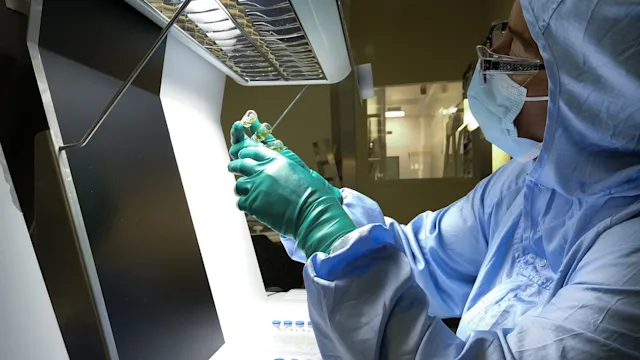
To your immune system, the stuff in vaccines looks like a germ — but it isn’t harmful to your body. Vaccines are germ imitators, tricking your body to respond. This prepares your immune system to fight off the real germ, preventing you from getting sick. To make a vaccine, scientists first have to grow the germ inside a laboratory.
Vaccines that prevent bacterial infections can be started in a Petri dish with specific chemicals that help the bacteria that will be used in the vaccine grow. Vaccines that prevent viral infections need a living cell in which the virus can replicate. This cell can come from a chicken egg, which is used to make some flu vaccines, or from a human cell line, as is the case for the hepatitis A vaccine. After the bacteria or virus has replicated, it’s purified to remove any debris. Sometimes, additional ingredients are added to the vaccine to strengthen the immune response or stabilize the solution before it’s packaged for delivery.

Read more like this
Explore these related articles, suggested for readers like you.

Why were fetal cells used to produce vaccines in the past?
The first vaccines were developed using animals. The smallpox vaccine, for example, was created from calves in the late 1800s. Over time, creating vaccines from animals proved to be unreliable. Animal cells could be contaminated with viruses or cancers that might be passed to the vaccinated person. And a lot of animals were needed to produce enough vaccines for a population.
In the 1960s, scientists used human fetal cells from two abortions to develop an adenovirus vaccine used in the military, followed by the life-saving rubella vaccine.
Human fetal cell lines were used to make vaccines in the 1960s, and human cell lines proved to be superior to animal cell lines because human cell lines:
Are far less likely to have been exposed to viruses and cancer
Are more stable and can continue to replicate without additional cell lines
Can be stored at very low temperatures and used in the future
Scientists have been able to continue producing cell lines from the original 1960s fetal cells to create more vaccines. The Johnson & Johnson Janssen COVID-19 vaccine was produced using cells from an abortion that took place in 1985. Fetal cells from these terminations are the only cell lines used in vaccinations today.
Are fetal cell lines still used to create vaccines?
Yes. The fetal cell lines described above are still used to create vaccines. These cell lines have been able to multiply in the laboratory over the past several decades. The vaccines produced today use fetal cell lines that are many generations removed from the original fetal cells. No new fetal cell lines have been created, and there is no fetal tissue in vaccines.
Which vaccines are made from fetal cell lines?
Some vaccines used today are produced using fetal cell lines originating in the 1960s and 1985. For decades, these original cell lines have multiplied and been used to produce effective vaccines, including the following commonly administered ones.
Childhood vaccinations
Some routine childhood vaccinations have been produced using human cell lines. These include:
Rabies vaccine
The rabies vaccine is produced using the 1960s fetal cell line. People who are at high risk of being exposed to rabies, such as veterinarians and animal handlers, may get the rabies vaccine. The rabies vaccine is also given after someone is exposed to rabies, to prevent the disease from developing. Without the vaccine, rabies is nearly always fatal.
COVID-19 vaccine
The Johnson & Johnson Janssen COVID-19 vaccine uses the 1985 human cell line. The other approved COVID-19 vaccines do not use human fetal cell lines.
Do vaccines contain fetal or human DNA?
No — vaccines do not contain fetal or human DNA. Even though human cell lines are used to create vaccines, vaccines don’t contain someone else’s DNA. Before a fetal cell line is used to make a vaccine, it goes through a cleansing process. This process removes any cellular debris that is not needed for the vaccine — including chemicals needed for the DNA to replicate. Any leftover DNA is broken down, preventing it from replicating in the vaccinated person. All vaccines go through the same rigorous FDA and CDC approval process, which prioritizes safety.
Can I still get a vaccine if I am pro-life?
Some religious groups, such as the Roman Catholic Church and Southern Baptist Convention, oppose abortion, and thus its members may have concerns about getting vaccines that use fetal cell lines. If there is an alternative available, as is the case with the COVID-19 vaccine, individuals may be able to get an effective vaccine that is not produced using fetal cell lines. If there is no widely available alternative, religious leaders consider the risks of unvaccinated people getting sick or causing others to get sick. The Catholic Church, for example, assesses the effectiveness of the vaccine, and might guide its followers to accept a vaccination made with fetal cell lines.
The vaccines produced today use human cell lines from three abortions that took place decades ago — and no new fetal cell lines are needed to produce vaccines. These human cell lines replicate in a laboratory. Thus, more vaccines are produced without the need for new fetal cell lines from additional abortions.
How we decided
Many types of resources were used to gather the information presented in this piece. Here is a summary of how this research was reviewed.
Historical reports
Understanding how the original fetal cell lines came to be was important to understanding current practices in vaccine production. The History of Vaccines was particularly useful in informing this piece.
Current vaccine manufacturing ingredients
Whenever a vaccine is approved by the FDA, the ingredients list is available to the public and provided on the FDA website. If a vaccine uses a human cell line for production, it will be listed as an ingredient. Both the CDC and the FDA also provide information on common ingredients in vaccines and the purpose of those ingredients.
Official recommendations of religious leaders
Religious leaders often provide recommendations to their members regarding vaccines that use fetal cell lines in production. Information for this piece came from:
Keep in mind
Decisions about our health can be complex. Our healthcare providers and public health leaders are here to provide us with factual, easy-to-understand information. This helps us make the best decisions for ourselves and our loved ones. When it comes to vaccines made from fetal cell lines, it’s a balance between the prevention of disease spread with views on abortion. This can be a tough decision. By getting vaccinated, you are not just protecting yourself. You are making sure you don’t spread germs to your:
Children
Parents
Neighbors
Friends
Seeking the input of public health and religious leaders for these decisions may be helpful.
Other choices
Vaccinations are one of the greatest healthcare achievements of the past century. They are very low risk and prevent us from getting dangerous infections that can be deadly. Millions of lives, from newborns to older adults, have been saved because of vaccines. When it comes to vaccines, there are no safe alternatives.
What’s ahead
There has been a lot of excitement about the mRNA technology used to successfully produce two effective COVID-19 vaccines, one from Moderna and the other from Pfizer–BioNTech. mRNA technology has been around for a while, but it’s typically used in developing cancer treatments. The COVID-19 vaccine is the first time it has been used successfully in vaccinations. Why is this so exciting? First, mRNA vaccines do not need to use fetal cell lines to be produced. Because there is no need to replicate the virus with this technology, no cells are needed. Second, the vaccine can be produced in mass quantities much more quickly than cell-dependent vaccines can be produced. Expect to see more mRNA vaccine developments in the future.
More information and resources
References
Best study we found
The College of Physicians of Philadelphia. (2021). How vaccines are made.
Centers for Disease Control and Prevention. (2011). Ten great public health achievements — United States, 2001–2010.
Centers for Disease Control and Prevention. (2014). Vaccine testing and the approval process.
Centers for Disease Control and Prevention. (2018). Hepatitis A vaccination.
Centers for Disease Control and Prevention. (2019). What’s in vaccines?
Centers for Disease Control and Prevention. (2020). How Influenza (flu) vaccines are made.
Centers for Disease Control and Prevention. (2020). Rabies vaccination information statement.
Centers for Disease Control and Prevention. (2020). Rubella vaccination.
Centers for Disease Control and Prevention. (2021). Chickenpox (varicella) vaccination.
Centers for Disease Control and Prevention. (2021). Johnson & Johnson’s Janssen COVID-19 vaccine overview and safety.
Centers for Disease Control and Prevention. (2021). Moderna COVID-19 vaccine.
Centers for Disease Control and Prevention, (2021). Pfizer–BioNTech COVID-19 vaccine.
Centers for Disease Control and Prevention. (2021). Understanding mRNA COVID-19 vaccines.
Children’s Hospital of Philadelphia. (2020). A look at each vaccine: Hepatitis A vaccine.
Children’s Hospital of Philadelphia. (2021). Vaccine ingredients: DNA.
Children’s Hospital of Philadelphia. (2021). Vaccine ingredients — fetal cells.
The College of Physicians of Philadelphia. (2018). Human cell strains in vaccine development.
The College of Physicians of Philadelphia. (2021). The history of vaccines.
The College of Physicians of Philadelphia. (2021). How vaccines are made.
Livingston, E. H., et al. (2021). The Johnson & Johnson vaccine for COVID-19. Journal of the American Medical Association.
Lopez, A., et al. (2021). Varicella. Centers for Disease Control and Prevention.
The National Catholic Bioethics Center. (2020). Vaccines and vaccination.
Pew Research Center. (2016). Where major religious groups stand on abortion.
Pieracci, E., et al. (2019). Vital signs: Trends in human rabies deaths and exposures — United States, 1938–2018. Morbidity and Mortality Weekly Report.
U.S. Food and Drug Administration. (2019). Common ingredients in U.S. licensed vaccines.
U.S. Food and Drug Administration. (2021). Learn more about COVID-19 vaccines from the FDA.
U.S. Food and Drug Administration. (2021). Vaccines licensed for use in the United States.
Wold, W. S. M., et al. (2013). Adenovirus vectors for gene therapy, vaccination and cancer gene therapy. Current Gene Therapy.
World Health Organization. (2016). Smallpox vaccines.
World Health Organization. (2017). The power of vaccines.

Why trust our experts?