Key takeaways:
While tonsil removal is more common in kids than adults, adults sometimes need to have their tonsils removed to address health conditions such as sleep-related breathing problems or frequent infections.
A tonsillectomy can be painful, and adults don’t heal as quickly from it as kids.
Recovering from a tonsillectomy typically involves resting, managing pain, limiting activities, and eating a diet of soft foods.
When kids get their tonsils taken out, they might look forward to ice cream or popsicles as a reward. But adults contemplating tonsil removal are more likely to anticipate the discomfort and soreness following the procedure.
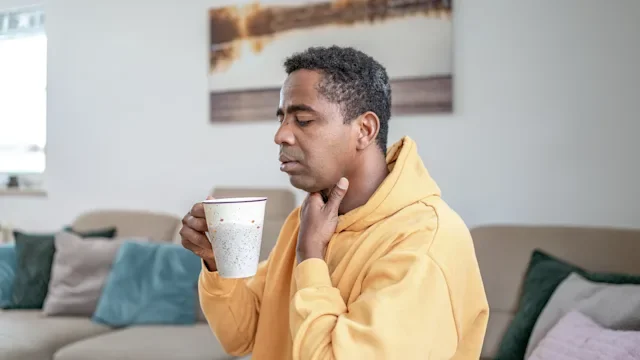
A tonsillectomy is a common procedure to remove enlarged tonsils. Both children and adults can get the surgery, which is often recommended because of frequent throat infections. But adults don’t heal as quickly from it as kids do.
Even so, pain after tonsil surgery usually gets better after a few days. Here’s how three people describe what it feels like to have your tonsils removed as an adult.
Tonsil surgery resolved her sleep apnea
Sleep issues led Colleen O'Connor, a 32-year-old public relations professional in Long Beach, New York, to have her tonsils removed as an adult.
Search and compare options
A few years ago, Colleen’s primary care doctor referred her to a sleep specialist, who recommended that she lose weight to correct her sleep apnea. The sleep specialist also suggested that she use a CPAP (continuous positive airway pressure) machine. But being in her late 20s, Colleen didn't want to use a machine for the rest of her life. So she went to an ear, nose and throat (ENT) specialist for another opinion.
The ENT specialist found that Colleen’s airway was small and that her tonsils were four times larger than what’s typical. (Colleen’s dentist had also mentioned previously that her tonsils were larger than normal.) He recommended, instead, that she have her tonsils removed to reduce her sleep apnea.
So, in January 2020, Colleen had her tonsils and adenoids taken out at the same time.

Colleen felt an immediate difference and was no longer snoring while she was sleeping. But the recovery period after getting her tonsils removed was still rough. It was difficult to swallow, which made staying hydrated a challenge. In the first week, she lost 12 lbs because she wasn’t eating solid foods. Even speaking proved to be difficult.
“I didn’t really speak for the first 2 weeks because there was so much swelling and scabbing,” she says.
But, on the upside, she was sleeping better, which was important for her recovery. A sleep test she took a month after her procedure confirmed that things were improving. And that made the pain of a tonsillectomy worth it for Colleen.

Read more like this
Explore these related articles, suggested for readers like you.




“I didn’t care what the recovery was going to be,” she says. “Because I knew in the long term, I had to live a healthier life. It had to be better than what it was.”
Do you need your tonsils removed? Here are signs you may need a tonsillectomy as an adult.
Explore surgery for sleep apnea. Adenotonsillectomy is just one type of surgery used to treat obstructive sleep apnea.
Is strep throat only for kids? Adults can get strep throat, too. Read about the causes, symptoms, and when to get treatment.
Getting her tonsils out ended recurring tonsillitis
For Kelly Taylor, a 31-year-old certified public accountant in Minneapolis, sore throats have been a constant part of life. She had chronic strep throat as a kid and tonsillitis many times as an adult.
“It got annoying to be sick a couple of times a year with the same thing,” Kelly says.
After getting tonsillitis for the third time in 2022, Kelly decided to see an ENT specialist. The specialist confirmed she had chronic tonsillitis and told her that a tonsillectomy could resolve it.

Kelly researched the procedure and talked to people who said it was awful but they would do it again. Since getting sick all of the time was making her miserable, she decided surgery was the right move.
“It wasn’t fun by any means, but it also wasn’t the worst thing I’ve ever had done,” she says.
Her primary diet for a week was popsicles, ice, and yogurt. Sometimes, she had mashed potatoes or scrambled eggs. But anything more solid than that was too difficult to eat.
She took pain relievers for a while during her recovery. She says the pain “felt like the worst strep throat I’ve ever had in my life.” But once she got better, the sore throats stopped coming back.
A neuroscientist researched ways to heal faster
Ben Rein, a 28-year-old neuroscientist from Buffalo, New York, had his tonsils removed in 2021 because he kept getting tonsil stones. Though, initially, he was afraid to have the surgery because he doesn’t like pain.
“I was actually shivering on the operating table when they brought me in, because I was so nervous,” Ben says.
He shared about his tonsillectomy experience on TikTok, explaining that he did research to figure out scientific ways to reduce his pain and heal faster.

When the procedure actually happened that September, however, “the pain wasn’t as bad as I expected it to be,” Ben says. “When you swallow, that’s when the pain would get severe for a second and then go away.”
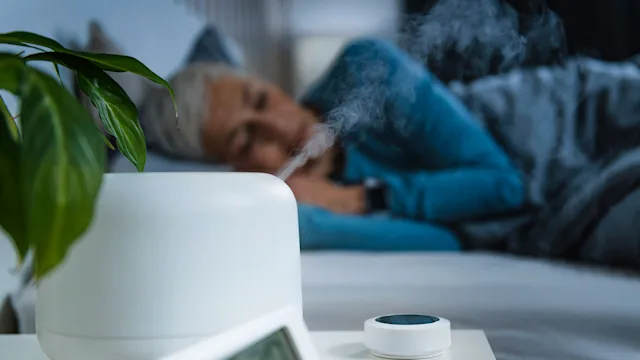
A couple of recovery strategies that worked for him were staying hydrated, letting hot food cool down before eating it, and using a bedside humidifier and an ice wrap around his throat.
“Once the scabs started coming off, then it got a lot more painful for a day or two. Then, it subsided,” he says. He was able to recover quickly and return to work a week after the surgery.

Why trust our experts?