Key takeaways:
Strep throat is a very contagious bacterial throat infection. It spreads from person to person through respiratory droplets and saliva.
People with strep throat stop being contagious 12 to 24 hours after starting antibiotics.
People who don’t take antibiotics for strep throat can be contagious for several weeks. Strep throat should be treated with antibiotics to prevent serious health complications.
Do you have fever, sore throat, and pain when swallowing? You may have strep throat. Most cases of sore throat are due to viruses. But strep throat is an infection of the throat and tonsils caused by a bacteria called group A Streptococcus or Streptococcus pyogenes.
Strep throat is more common among children and teens, but adults can get strep too. If you’ve been diagnosed with strep throat, here’s what to expect on how long you’ll be contagious and what you can do to limit transmitting it to your friends and family.
How long is a person with strep throat contagious?
How long you’re contagious with strep depends on whether you get treated with antibiotics.
People who take antibiotics for strep throat stop being contagious within 24 hours.
But people who don’t take antibiotics can remain contagious for up to 3 weeks — even if their symptoms are getting better. That means they can pass strep throat to others without realizing they’re still sick.
What are the symptoms of strep throat?
Strep throat symptoms often start all of a sudden. Symptoms can include:
Fever
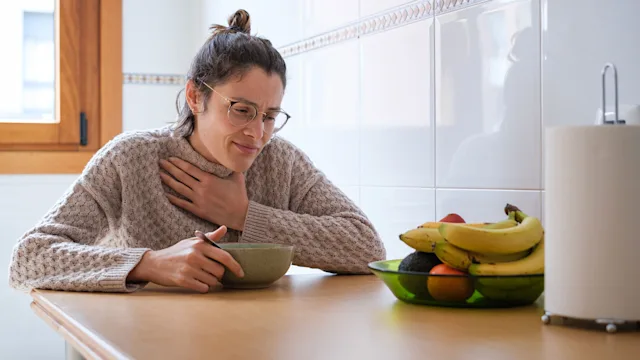
Throat pain (especially when swallowing)
Red and inflamed tonsils
Swollen lymph nodes in the neck
Vomiting and stomach pain (more common in younger children)
Does strep throat go away on its own?
Yes, strep throat will go away on its own. But even though your throat will eventually get better without antibiotics, you still need antibiotics to treat strep throat.
Here’s what antibiotics do for strep throat:
They prevent rheumatic fever, a serious complication of strep throat infection that can damage your heart.
They keep the infection from spreading and causing more severe infections, like mastoiditis or a peritonsillar abscess.
In children, antibiotics lower the risk of developing PANDAS (pediatric autoimmune neuropsychiatric disorder associated with streptococcal infections) — a condition that can cause severe behavioral symptoms.
They might reduce your risk of post-strep glomerulonephritis, a complication of strep that can damage your kidneys.
Antibiotics stop the spread of strep throat by making people less contagious in as little as 12 hours.
Plus, taking antibiotics can also help you feel better faster.
How contagious is strep throat?
Strep throat is very contagious. It can quickly spread through schools, homes, and workplaces. This is why it’s important to practice good hand hygiene and to get treatment if you have strep.
How do you know when strep throat is no longer contagious?
If you’re taking antibiotics, you can be confident that you’re no longer contagious once you’ve taken antibiotics for 24 hours — or about 1 to 2 doses. But schools, daycares, and workplaces may ask you to meet additional criteria before you go back to a group setting. For example, they may ask that you no longer have a fever.

Read more like this
Explore these related articles, suggested for readers like you.


“You can go back to work, school, and other group settings after one day of taking antibiotics,” said Dr. Shiv Sudhakar, an infectious disease specialist and GoodRx contributor. “But you should also make sure you’re feeling better and don’t have any more fevers.”
If you’re not taking antibiotics for your strep throat, it can be hard to tell if you’re still contagious. Assume that you’re contagious for about 3 weeks. And avoid situations where you can pass the bacteria to others during that time. There’s no test to see whether you’re still contagious with strep throat, so there’s no way to shorten that window.
When do you become sick after exposure to strep throat?
If you’re exposed to someone with strep throat, you won’t get sick right away. The strep throat incubation period is 2 to 5 days, so you won’t develop strep throat symptoms for a few days.
Strep throat is more common in children and teens. If your child has been exposed to someone with strep throat at home or school and now they develop symptoms a few days later, you can be pretty certain that they have strep throat, too.
Keep in mind that adults can also get strep throat. Adults are more likely to get strep throat if they:
Live in group settings like dormitories or care facilities
Work with children between ages 5 and 15
Live with someone who has strep throat
Are exposed to tobacco smoke or other pollutants
If you have strep throat symptoms and fall into one of these categories, you could have strep throat — especially if you were recently exposed to someone with strep throat.
Quiz: Do I have strep throat?
How do you get strep throat, and how is it spread?
Strep throat is caused by group A Streptococcus or Streptococcus pyogenes. If you’re infected with this bacteria, you can spread it to others through your saliva or respiratory secretions. This can happen when you blow your nose, sneeze, or cough. If someone else breathes in these droplets, they can get infected too.
How long does strep throat live on surfaces?
The bacteria that causes strep throat doesn’t live on surfaces for very long. But it’s possible to get strep throat by touching surfaces or objects that have the bacteria on it and then touching your mouth or nose.
How can you prevent spreading strep throat?
If you or someone in your household has been diagnosed with strep throat, here’s what you can do to prevent passing strep throat to others:
Stay home. People with strep throat need to stay home from work, school, or daycare until they’ve been treated with antibiotics for 24 hours.
Don’t share cups or utensils. The bacteria that causes strep throat can be transmitted through saliva. Avoid sharing any personal items that go in or near your mouth.
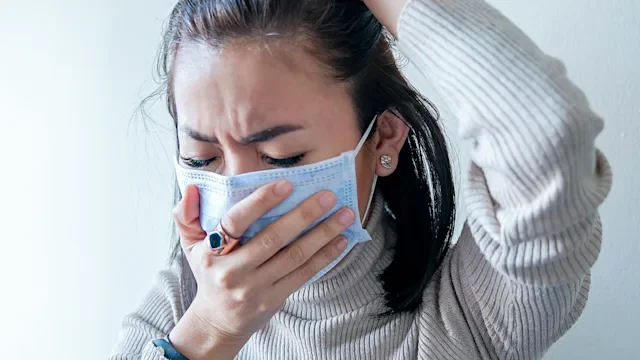
Cover your mouth if you sneeze or cough. The bacteria can also spread through respiratory droplets. Covering your mouth helps limit the transmission of the bacteria.
Wash your hands often. This keeps germs off your hands so you don’t accidentally transmit them to others.
When should you see a healthcare professional for strep throat?
If you think you could have strep throat, it’s a good idea to see a healthcare professional within 1 to 2 days after you start feeling sick. Since your sore throat might be from something else, it’s OK to wait 1 to 2 days to see if your symptoms go away on their own.
But there are times when it’s a good idea to head to your doctor’s office as soon as you start feeling sick. See a healthcare professional right away in these cases:
Someone in your home, workplace, or classroom was diagnosed with strep throat.
You have a weakened immune system.
You’re having trouble breathing or swallowing.
You aren’t able to eat or drink, which puts you at risk for dehydration.
Keep in mind that children are more likely to get strep throat than adults. They’re also at higher risk of developing complications like rheumatic fever. So, if your child has symptoms of strep throat, make sure to see a healthcare professional within 24 hours.
Frequently asked questions
Yes, adults are less likely to get strep throat than children. But some adults are more at risk of getting strep than others. You’re more likely to get strep as an adult if you work with children or live in a group setting.
Strep is very contagious. But it’s hard to say exactly what the chances of getting it are. The odds depend on several factors, including your own health, the length of exposure, and whether the person you were exposed to had started antibiotic treatment. Your chances of getting strep throat are higher if you spend a longer period of time in an enclosed space near someone who has the infection.
Yes, you can get strep throat even if you’ve had your tonsils removed. The bacteria that causes strep throat often infects the tonsils, but it can also infect other parts of your throat. So, not having tonsils lowers your chance of getting strep, but infection is still possible.
Yes, adults are less likely to get strep throat than children. But some adults are more at risk of getting strep than others. You’re more likely to get strep as an adult if you work with children or live in a group setting.
Strep is very contagious. But it’s hard to say exactly what the chances of getting it are. The odds depend on several factors, including your own health, the length of exposure, and whether the person you were exposed to had started antibiotic treatment. Your chances of getting strep throat are higher if you spend a longer period of time in an enclosed space near someone who has the infection.
Yes, you can get strep throat even if you’ve had your tonsils removed. The bacteria that causes strep throat often infects the tonsils, but it can also infect other parts of your throat. So, not having tonsils lowers your chance of getting strep, but infection is still possible.
The bottom line
Strep throat is a bacterial infection of the throat and tonsils. The bacteria that causes strep throat — group A Streptococcus — is very contagious. But the risk of spreading strep throat decreases once you start taking an antibiotic.
People stop being contagious after taking antibiotics for 24 hours. But people who don’t take antibiotics for strep throat will be contagious for up to 3 weeks. It’s important to always get treated with antibiotics for strep throat. Early antibiotic treatment also reduces the risk of rare, but serious, complications of strep throat like rheumatic fever. Antibiotic treatment also reduces the spread of strep throat and can help you feel better faster.

Why trust our experts?



References
Armstrong, C. (2010). AHA guidelines on prevention of rheumatic fever and diagnosis and treatment of acute streptococcal pharyngitis. American Family Physician.
Avire, N. J., et al. (2021). A review of streptococcus pyogenes: Public health risk factors, prevention and control. Pathogens.
Bateman, E., et al. (2022). Examining the efficacy of antimicrobial therapy in preventing the development of postinfectious glomerulonephritis: A systematic review and meta-analysis. Infectious Disease Reports.
Centers for Disease Control and Prevention. (2025). Clinical guidance for group A streptococcal pharyngitis.
FamilyDoctor.org. (2024). Strep throat.
Gupta, G., et al. (2023). Peritonsillar abscess. StatPearls.
McGuire, E., et al. (2023). Time to negative throat culture following initiation of antibiotics for pharyngeal group A Streptococcus: A systematic review and meta-analysis up to October 2021 to inform public health control measures. Eurosurveillance.
MedlinePlus. (2023). Strep throat.
National Institute of Mental Health. (2025). PANS and PANDAS: Questions and answers.
Sahi, D., et al. (2023). Mastoiditis. StatPearls.
Schwartz, R. H., et al. (2015). A reappraisal of the minimum duration of antibiotic treatment before approval of return to school for children with streptococcal pharyngitis. The Pediatric Infectious Disease Journal.
Spinks, A., et al. (2013). Antibiotics for sore throat. Cochrane Database of Systematic Reviews.