Key takeaways:
CPR stands for “cardiopulmonary resuscitation.” It increases someone’s chance of survival when they’re having a cardiac arrest.
The most important part of CPR is chest compressions. This is what keeps the blood flowing through the body when the heart can’t pump on its own.
If you think someone’s heart has stopped, quickly call for help and start performing chest compressions. You might be able to save their life.
Most of us are familiar with the idea of a cardiac arrest from what we have seen on TV. A person suddenly collapses, someone yells for help, and then they start performing chest compressions and “mouth-to-mouth” breathing. That’s CPR in a nutshell.
When someone’s heart stops beating or can’t pump blood, CPR can keep blood flowing through the body. But the situation is often more grim than it appears on TV. About 90% of people who have a cardiac arrest outside of a hospital do not survive. But CPR can double survival rates after a cardiac arrest, especially when performed right away.
What does CPR mean?
CPR stands for “cardiopulmonary resuscitation.” The goal of CPR is to keep blood (and oxygen) flowing to the heart muscle, lungs, brain, and the rest of the body. Healthcare providers and the general public can perform CPR.
CPR typically includes:
Chest compressions: This involves pushing down firmly and quickly on someone’s chest (more on this below).
Rescue breathing: Most people recognize this as “mouth-to-mouth” breathing. It can also include special airway equipment to deliver oxygen, like a mask and inflatable bag.
An automated external defibrillator (AED): This is a small, portable medical device that can read someone’s heart rhythm. It will then deliver an electrical shock, if necessary, to try and restart the heart.
Medications: When a trained medical provider is doing CPR, they can also give strong medications (often through an IV) to try and restart the heart.
When is CPR used?
CPR is performed on an unresponsive person who is having a cardiac arrest. This means their heart is not beating well enough to pump blood — or at all. So someone having a cardiac arrest will not have a pulse you can feel.
A cardiac arrest can happen anywhere, so CPR can be useful in many situations. Most cardiac arrests happen in a person’s own home. CPR performed by a bystander (perhaps you) can be key to someone’s survival.
Do you need CPR training to perform it on somebody?
No, you do not need to be trained to perform CPR. The American Heart Association encourages anyone who witnesses the sudden collapse of an adult to provide chest compressions as soon as possible. This is when you push hard and fast in the middle of someone’s chest. Keep reading for a basic guide to CPR.
How to perform CPR
If you see someone collapse, here are a few simple steps that may help save their life:
Shake the person to see if they wake up and if they’re breathing.
If they don’t immediately wake up, or they do not appear to be breathing well, call 911.
Start chest compressions.

Read more like this
Explore these related articles, suggested for readers like you.


If there’s someone nearby who can call 911 for you, even better. This way you don’t waste any time starting chest compressions. The sooner you start compressions, the better. Here’s how you perform hands-only CPR:
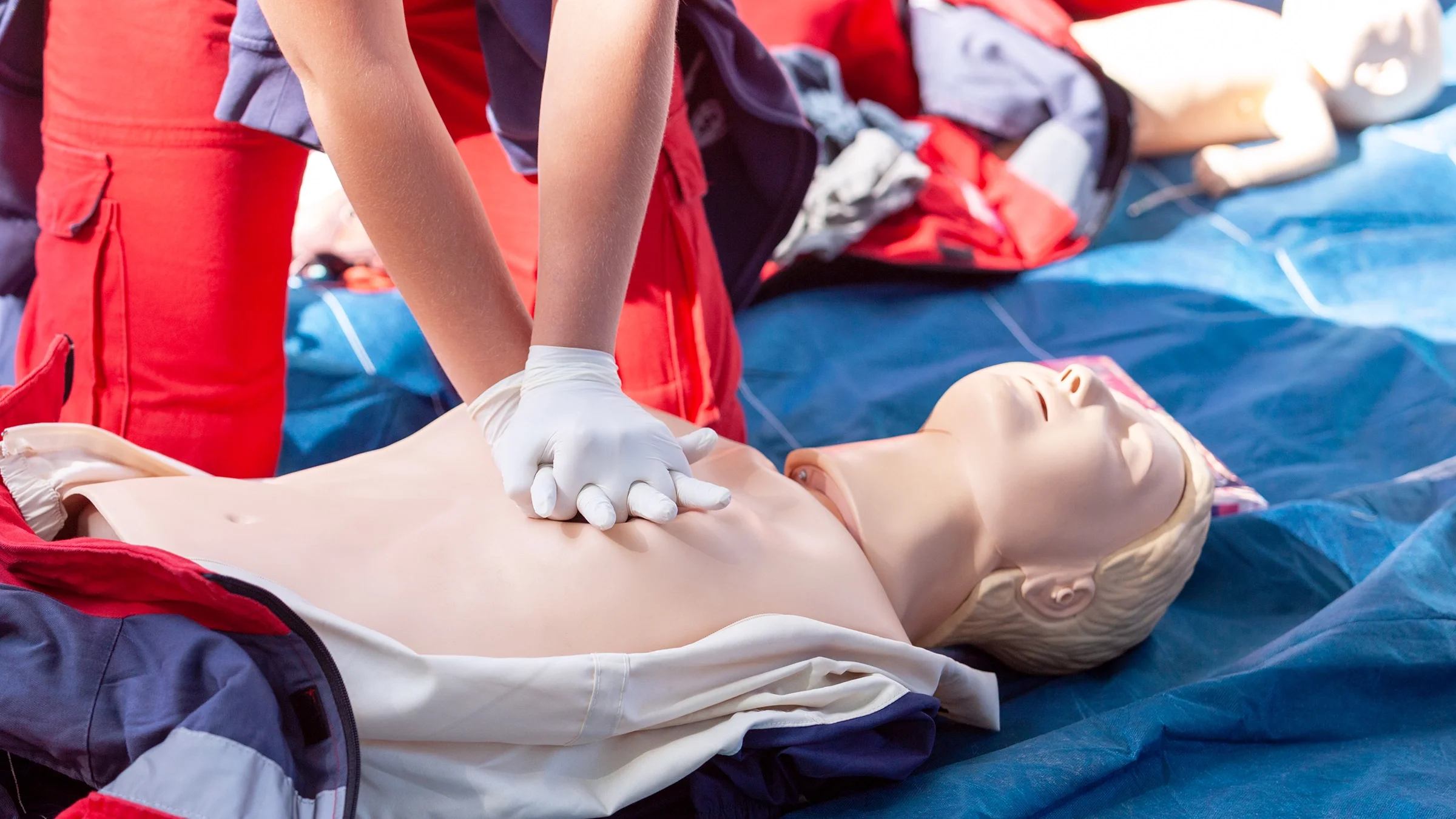
Position the person on their back. It’s best if they’re lying on a hard surface, like the floor.
Place your fists on top of each other and interlace your fingers. Center your hands in the middle of the chest, over the sternum (the “breast bone”).
Push straight down — hard and fast.
The ideal rate of chest compressions is 100 to 120 compressions a minute. It can be hard to know how fast this is. Following the beat of the song “Stayin’ Alive” gives you a rough sense of the cadence.
Make sure you lift your weight completely off the chest between each compression, so that the chest returns to its normal position between each push.
CPR is hard work. Even someone who is strong and fit will tire quickly — within 2 minutes. If somebody else is nearby, ask them to switch with you every couple of minutes so you both can have a break.
The other person can also provide mouth-to-mouth breathing while you take a break. It’s important to know that you do not need to perform mouth-to-mouth breathing for CPR to be effective. Ideally, the person should receive continuous chest compressions until a medical provider arrives.
If you’re interested in learning more about CPR, you can get certified by finding a class near you. Anyone can become CPR certified!
Are there risks if you don’t properly perform CPR?
CPR, like anything else, has some associated risks. But it doesn’t mean you shouldn’t perform it. All the same, it helps to know some of the things that can happen.
Pressing on the ribs during chest compressions can cause bruising, broken ribs, or even a collapsed lung. Vomiting can also occur, which can lead to stomach contents getting into the lungs. Most people need to be placed on a ventilator after a cardiac arrest.
But these risks are minimal compared to the consequences of not performing CPR. If CPR is not performed quickly after a cardiac arrest, a person typically suffers irreversible damage within 5 to 10 minutes and dies. This is scary to think about. But keep in mind that any type of CPR can increase survival rates — even when someone who isn’t certified performs CPR.
There are situations when people do not want CPR performed. This is a DNR order, which stands for “do not resuscitate.” If you know for sure someone has a DNR order, you should not start CPR. But if you’re not sure, it’s best to start CPR. If you or someone you love thinks they do not want CPR, have a conversation with a healthcare provider. They can help you develop an advance directive to explain your wishes.
How does CPR on a child differ from CPR on an adult?
The basic idea for CPR on a baby or child is the same as an adult. You should still check to see if they’re breathing and responding — and call 911. The main difference is how you perform chest compressions:
For a small child: Use the heel of one hand to deliver compressions.
For a baby less than 1 year old: Use two thumbs just below the nipple line to press down, with the other fingers wrapping around the baby’s body toward the back.
There are specific courses to help parents who want to get certified in pediatric CPR.
The bottom line
No one likes the idea of having to give someone CPR. But there’s a reason it’s considered a lifesaving maneuver. In order for someone to survive a cardiac arrest, you have to keep blood flowing through the body.
If you see someone who you think needs CPR, call for help and start chest compressions. And if you’re interested in becoming CPR certified, search for classes in your area. You could help save a life!

Why trust our experts?



References
American Family Physician. (2000). Cardiopulmonary resuscitation.
American Heart Association. (n.d.). What is CPR?
American Red Cross. (n.d.). Child & baby CPR.
American Red Cross. (n.d). CPR steps.
Cardio Partners (n.d.). (Almost) everything you need to know about CPR and AEDs.
Centers for Disease Control and Prevention. (2021). Three things you may not know about CPR.
Riva, G., et al. (2019). Survival in out-of-hospital cardiac arrest after standard cardiopulmonary resuscitation or chest compressions only before arrival of emergency medical services. Circulation.
Sayre, M. R., et al. (2008). Hands-only (compression-only) cardiopulmonary resuscitation: A call to action for bystander response to adults who experience out-of-hospital sudden cardiac arrest. Circulation.