Key takeaways:
Benadryl (diphenhydramine) is an over-the-counter (OTC) antihistamine that’s FDA approved to treat allergic reactions. It causes drowsiness, so people sometimes use it to help them fall asleep.
Benadryl isn’t recommended as a sleep aid for children. It can cause serious side effects and may not be safe for all children.
Evidence also suggests that Benadryl doesn’t work well to help children sleep. Your child’s healthcare team can offer safer, more effective alternatives to improve your child’s sleep.
Save on related medications
Getting your kids to wind down and sleep doesn’t always go as smoothly as you hope. These bedtime struggles have led many parents to try over-the-counter (OTC) treatments like melatonin for their kids. But can an antihistamine like Benadryl also do the trick?
Benadryl is sometimes used as a short-term sleep aid for adults, but is it safe to give it to kids? Let’s take a closer look at whether you should consider Benadryl to help your child get a good night’s sleep.
What is Benadryl for kids?
Benadryl (diphenhydramine) is an antihistamine that’s available OTC. There are many types of Benadryl products on the market. Some are formulated for adults, and others are formulated for children.
Search and compare options
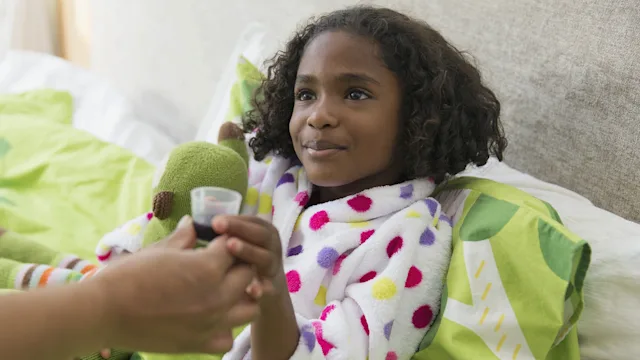
Children’s Benadryl — like Children’s Motrin or Children’s Tylenol — is formulated so that it’s easier to give a specific dose. The right dose for a child is based on their weight or age. Children’s Benadryl is formulated so you can give just the right dose for your child. Children’s Benadryl comes in many different forms, like liquid or chewables, which are easier for children to take if they can’t swallow pills.
Children’s diphenhydramine is a generic version of Children’s Benadryl. It works in the same way and usually comes in the same doses as the brand-name product.
Children’s Benadryl (diphenhydramine) is FDA approved to treat allergies and allergic reactions. It’s sometimes used off-label to treat nausea or motion sickness. Diphenhydramine is an older medication. It’s still used to treat acute allergic reactions. But in most other situations, it’s been replaced by other, newer medications that cause fewer side effects.
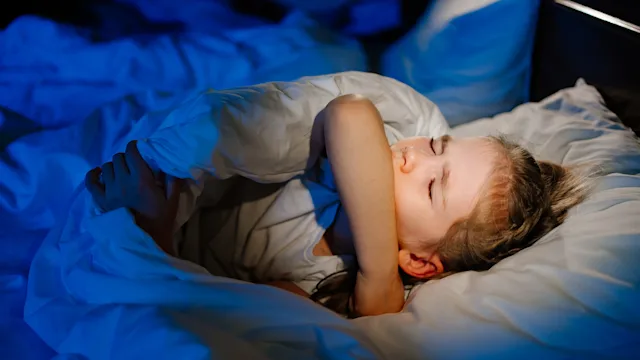
Can you give your child Benadryl to help them sleep?
Benadryl isn’t a good sleep aid for children. The FDA goes so far to say that Benadryl should never be given as a sleep aid to children younger than 12. But that doesn’t mean it’s a good option for tweens and teens either.
There are many reasons why Benadryl isn’t the best option to help your child sleep.
Benadryl doesn’t work very well as a sleep aid
Benadryl can cause drowsiness, and it has been used as a short-term sleep aid for adults. But that doesn’t mean it can reliably help people fall or stay asleep. In fact, sleep experts say you shouldn't take diphenhydramine as a sleep aid because there’s very little evidence that it actually works.
In clinical studies, adults with insomnia who took Benadryl didn’t see consistent improvements in their ability to fall or stay asleep. They also didn’t experience better quality sleep.
The research on Benadryl for children’s sleep is even more underwhelming:
In one study, children who took diphenhydramine only fell asleep about 8 minutes faster than those who took a placebo (no medication).
An older study found that children who took Benadryl didn’t sleep longer than children who took a placebo.
In another study, infants who woke up a lot at night were given Benadryl to see if it helped them sleep longer. The Benadryl had so little effect that the researchers stopped the trial early.

Read more like this
Explore these related articles, suggested for readers like you.




Benadryl can cause side effects and may not be safe for long-term use
Benadryl can cause serious side effects (more on that below). And these side effects are more common in young children. Because Benadryl doesn’t work very well as a sleep aid, most people would agree that its potential risks outweigh any possible benefits.
Also, Benadryl can stay in your system for up to 12 hours. Depending on your child’s sleep schedule, they may still feel Benadryl’s effects the next morning. This can make it harder for them to get up and participate in the first few hours of school or other activities.
Finally, the FDA points out that Benadryl hasn’t been studied as a long-term sleep aid. So, while it may be safe to give teens an occasional dose of Benadryl, it’s not clear if it’s safe to give your child Benadryl on a more regular basis. That’s why experts recommend alternative sleep aids, even for teens.
Benadryl can make some kids hyper or anxious instead of drowsy
Another reason to avoid diphenhydramine is that it can cause a paradoxical reaction in some children. That means some children feel anxious, nervous, or agitated and restless after taking Benadryl. Instead of drowsiness, these children feel wide awake and often can’t fall asleep for hours.
It’s impossible to know whether your child will have the opposite reaction to Benadryl ahead of time. But you probably don’t want to find out when your child is having a hard time falling asleep in the first place.
Safer alternatives to help children sleep
Benadryl isn’t the best sleep aid for children. But there are treatments that can help your child sleep better.
Start by talking with your child’s healthcare team. They can offer recommendations for safer alternatives, like melatonin. Melatonin is a natural supplement that your body releases when it’s time to go to sleep. It’s non habit forming and is safe for short-term use in most children. Your child’s healthcare team can help you find the right dose for your child.
Your child’s healthcare team can also help you develop a healthy sleep routine with your child. Good sleep hygiene can help your child fall and stay asleep. These sleep habits help your child build a healthy sleep routine they can use for the rest of their lives.
Here are some tips to promote good sleep for your child:
Establish a consistent and soothing bedtime routine.
Try to stick with a consistent bedtime and wake time.
Keep your child from becoming overtired.
Avoid screen use 1 hour before bedtime.
Make sure your child has had a nutritious meal or snack within 2 hours of bedtime.
Encourage plenty of activity and exposure to light during the day.
When should you give your kid Benadryl?
It’s not a good idea to use Benadryl as a sleep aid for kids. But it can be used to treat a variety of symptoms and conditions. These include:
Allergy symptoms (like runny nose and sneezing)
Hives
Itching
Allergic reactions
Nausea
Motion sickness
Is Benadryl safe for kids?
Benadryl (diphenhydramine) is considered safe for kids older than 6 to treat allergic reactions. Talk with your child’s healthcare team before giving Benadryl to children younger than 6.
Benadryl may not be the best option to treat allergies for older children. Many experts encourage newer antihistamines, like loratadine (Claritin), which tend to be safer and have fewer side effects.
Your child’s healthcare team can help you choose the best allergy medication for your child. They can also help you decide when Benadryl might be the best option for your child.
Types of Benadryl for kids
Children's Benadryl is available as a liquid and chewable medication. Teenagers can also take Benadryl formulated for adults, which comes as pills and capsules. Benadryl is a brand name, but you may also see the generic version: diphenhydramine.
Other products, like OTC cold medications, may contain multiple ingredients — including diphenhydramine. So it’s a good idea to keep an eye out for this ingredient if you’re considering giving Benadryl separately. You will need to make sure the total dose of diphenhydramine is appropriate for your child so you don’t accidentally give them too much.
Benadryl dosing chart
For allergic reactions, you can calculate the dose of Benadryl for your child based on their age. To make sure Benadryl is safe for your child — at any dose — always check with your child’s healthcare team first.
Child’s age | Children’s diphenhydramine liquid suspension (12.5 mg per 5 mL) | Children’s diphenhydramine chewable tablets (12.5 mg per tablet) |
|---|---|---|
6 to 11 years old | 5 to 10 mL every 4 to 6 hours (don’t use more than 6 times per day) | 1 to 2 chewable tablets every 4 to 6 hours (don’t use more than 6 times per day) |
12 years old and up | 10 to 20 mL every 4 to 6 hours (don’t use more than 6 times per day) | 2 to 4 chewable tablets 4 to 6 hours (don’t use more than 6 times per day) |
Keep in mind: These doses aren’t appropriate if you choose to use Benadryl as a sleep aid. Your child’s healthcare team can offer support on the best doses to give if you’re using Benadryl to help your child sleep.
What are the side effects of Benadryl in kids?
A common side effect of Benadryl is drowsiness. But, in some kids, it can cause excitability or agitation. Other side effects include:
Dry mouth, nose, and throat
Dizziness
Nervousness
Nausea
Vomiting
Decreased appetite
Constipation
Headache
Muscle weakness
What should you do if you give a child too much Benadryl
Benadryl can cause serious side effects. Call your local poison control hotline at 1-800-222-1222 if you think you gave your child too much Benadryl.
Seek medical attention immediately if your child develops serious symptoms like:
Trouble waking up
Seizures
Confusion
Vision changes
Trouble urinating
Nausea or vomiting
Rapid heart rate
Frequently asked questions
The manufacturers of Benadryl and the FDA don’t give guidance on Benadryl dosing for children younger than age 6. Benadryl should only be given to infants under the care of a healthcare professional. Contact your child’s healthcare team to see if Benadryl is safe for your child.
Yes, children older than 6 and teenagers may be able to take Benadryl along with Zyrtec to manage their allergies. Talk with your child’s healthcare team to see if your child should take both medications.
Benadryl isn’t safe for all children. Benadryl should only be given to babies under the care of a healthcare professional. Contact your child’s healthcare team to see if Benadryl is safe for your child.
The manufacturers of Benadryl and the FDA don’t give guidance on Benadryl dosing for children younger than age 6. Benadryl should only be given to infants under the care of a healthcare professional. Contact your child’s healthcare team to see if Benadryl is safe for your child.
Yes, children older than 6 and teenagers may be able to take Benadryl along with Zyrtec to manage their allergies. Talk with your child’s healthcare team to see if your child should take both medications.
Benadryl isn’t safe for all children. Benadryl should only be given to babies under the care of a healthcare professional. Contact your child’s healthcare team to see if Benadryl is safe for your child.
The bottom line
Benadryl (diphenhydramine) is a popular over-the-counter (OTC) medication to treat allergy symptoms. Even though it commonly causes sleepiness in adults, it can cause the opposite effect in kids. It’s not recommended as a sleep aid for children. If your child isn’t sleeping well at night, talk to their healthcare team. They can help you find safe ways to support a good night’s sleep for your child.

Why trust our experts?



References
Bruni, O., et al. (2017). Practitioner review: Treatment of chronic insomnia in children and adolescents with neurodevelopmental disabilities. Journal of Child Psychology and Psychiatry, and Allied Disciplines.
Clark, J., et al. (2025). Diphenhydramine: It is time to say a final goodbye. World Allergy Organization Journal.
Dailymed. (2024). Childrens Benadryl chewables- diphenhydramine hydrochloride tablet, chewable.
Dailymed. (2024). Childrens Benadryl Dye-Free Allergy- diphenhydramine hydrochloride solution.
Dailymed. (2024). Diphenhydramine hydrochloride solution.
de Leon, J., et al. (2008). Paradoxical excitation on diphenhydramine may be associated with being a CYP2D6 ultrarapid metabolizer: Three case reports. CNS Spectrums.
Glass, J. R., et al. (2008). Effects of 2-week treatment with temazepam and diphenhydramine in elderly insomniacs: A randomized, placebo-controlled trial. Journal of Clinical Psychopharmacology.
McDonagh, M. S., et al. (2019). Pharmacologic treatments for sleep disorders in children: A systematic review. Journal of Child Neurology.
MedlinePlus. (2026). Diphenhydramine.
Merenstein, D., et al. (2006). The trial of infant response to diphenhydramine: The TIRED study--a randomized, controlled, patient-oriented trial. Archives of Pediatric and Adolescent Medicine.
Morin, C. M., et al. (2005). Valerian-hops combination and diphenhydramine for treating insomnia: A randomized placebo-controlled clinical trial. Sleep.
National Center for Biotechnology Information. (2026). PubChem compound summary for CID 3100, diphenhydramine.
Russo, R. M., et al. (1975). The effectiveness of diphenhydramine HCI in pediatric sleep disorders. Journal of Clinical Pharmacology.
Sateia, M. J., et al. (2017). Clinical practice guideline for the pharmacologic treatment of chronic insomnia in adults: An American Academy of Sleep Medicine clinical practice guideline. Journal of Clinical Sleep Medicine.
Sicari, V., et al. (2025). Diphenhydramine. StatPearls.
Simons, F. E. R., et al. (2011). Histamine and H1-antihistamines: Celebrating a century of progress. The Journal of Allergy and Clinical Immunology.