Key takeaways:
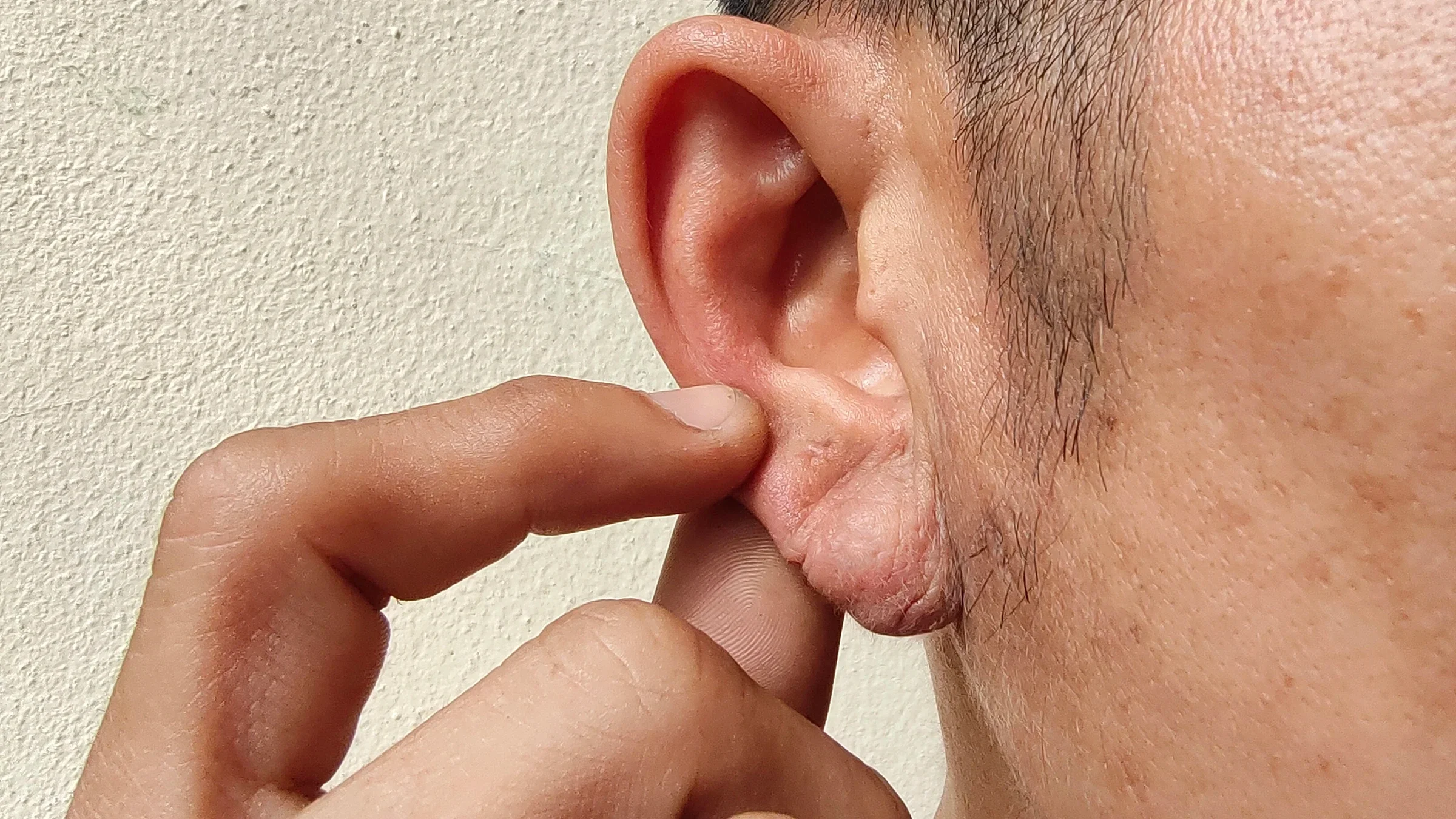
Frank’s sign is a diagonal crease that runs across the front of your earlobe.
If you have Frank’s sign, it means that you’re more likely to have heart disease compared to someone who doesn’t have it. But not everyone with Frank’s sign has heart disease.
Frank’s sign becomes more common with age. Most adults over the age of 60 have it. But only about 1 in every 6 people under 30 have it.
When you think about your risk for heart disease, the usual culprits — like high blood pressure, diabetes, and high cholesterol — probably come to mind. But what about a wrinkle in your earlobe?
Frank’s sign — a diagonal crease in your earlobe — can be a surprising clue that you might be at higher risk for heart disease. Scientists are still studying how it’s connected to heart health. In this article, we’ll bring you up to date on what you need to know.
What is Frank’s sign?
Frank’s sign is a diagonal crease or wrinkle in the skin of your earlobe. It’s named for Dr. Saunders Frank, who first described it in 1973. If you have Frank’s sign, you may have a higher risk of heart disease than someone who doesn’t have the crease.
What does Frank’s sign look like?
Frank’s sign looks like a diagonal crease that begins near the earlobe and runs down and backwards towards the outer edge of your ear. Unlike the faint wrinkles you might get from sleeping on your side or wearing heavy earrings, Frank’s sign is a permanent groove. Some people may have more than one diagonal crease in an earlobe.
What does it mean if you have Frank’s sign?
Frank’s sign may be a clue that you have heart disease. But it’s not proof that you have it.
Small studies suggest that about 6 in 10 people with Frank’s sign may have coronary artery disease — the type of heart disease that increases your risk for heart attacks. And if you already have heart disease, Frank’s sign may mean your risk of complications is higher than it is for someone without the crease.
But not everyone with Frank’s sign has heart disease. There are certain features of the earlobe crease that point to a higher risk. These include:
Creases on both ears
Creases extending all the way across the earlobe
Deeper creases
More than one crease in an earlobe
One study found that more than half of people who died from heart disease had Frank’s sign. On the flip side, people without Frank’s sign are less likely to have heart disease. But many people without the crease also have heart disease.
Frank’s sign has also been linked to a higher risk of stroke. This may not be surprising because heart disease and stroke share many of the same risk factors.
Why does Frank’s sign develop?
Experts don’t know exactly why Frank’s sign develops. But it may be linked to poor blood flow and low oxygen levels that can affect both your earlobe and your heart. One study looked at people with Frank’s sign who died from a number of different causes. Researchers found damage to small blood vessels in the earlobe, along with evidence of damage in the heart.
Who’s most likely to develop Frank’s sign?
Frank’s sign has been reported in people from a variety of different racial and ethnic groups. And both men and women can get it.
Some risk factors for heart disease can run in families. These include high blood pressure, diabetes, and high cholesterol. People with these conditions may be more likely to get Frank’s sign. But there’s no clear evidence that Frank’s sign itself is inherited.
The single biggest factor in developing the crease is aging. To show just how much age matters, one large study looked at over 1,000 adults and found:
Young adults (ages 18-29): about 16% had Frank’s sign
Middle-aged adults (ages 40-49): about 58% had it
Older adults (ages 60 and up): more than 90% had Frank’s sign
Heart disease is also more common as we age. So, it’s not surprising that many older adults have Frank’s sign. Frank’s sign is most concerning when it happens in people under the age of 60. In this age bracket, it should be taken as a potential early warning indicator.
What should you do if you have Frank’s sign?
Frank’s sign doesn’t mean you have heart disease. But it can be a clue that you’re at risk. If you have it, talk with your primary care clinician. They can help you address your risk factors. They can also recommend any additional testing you might need.
Important heart disease risk factors include:
High blood pressure (hypertension)
Diabetes
High cholesterol
Smoking
Nutrition
Lack of exercise
There are many things you can do to help prevent heart disease. These include choosing a healthy lifestyle, managing your medical conditions, and following up with your primary care clinician.
The bottom line
Frank’s sign is a diagonal crease in the earlobe that may be linked to a higher risk of heart disease and stroke. Having this crease doesn’t mean that you have a problem. Instead, it’s a possible warning sign. Frank’s sign becomes more common with age. It’s often seen in people over 60 but is less common in people under the age of 30. If you have Frank’s sign, talk with someone on your healthcare team about your heart health and your other risk factors. They can help you to get these factors under control to keep your heart healthy and strong.

Why trust our experts?



References
Agouridis, A. P., et al. (2015). Ear lobe crease: A marker of coronary artery disease? Archives of Medical Science.
Fernández, A. L., et al. (2024). Frank’s sign and cardiovascular risk: An observational descriptive study. The American Journal of Medicine.
Gasga, A., et al. (2021). Familial Frank’s sign: Diagonal earlobe creases and premature coronary artery disease. Journal of General Internal Medicine.
Hung, T. P., et al. (2025). Predictive value of Frank’s sign for obstructive coronary artery disease confirmed by coronary computed tomography angiography. Italian Journal of Medicine.
Lin, A. N., et al. (2018). A myth still needs to be clarified: A case report of the Frank’s sign. Cureus.
Pangel, T. M., et al. Ear-ly warnings: The diagnostic accuracy of Frank’s sign in fatal coronary artery disease – A forensic pathology study. Journal of Forensic and Legal Medicine.
Prangenberg, J., et al. (2022). The prognostic value of the Frank sign. Forensic Science, Medicine, and Pathology.
Renju, A., et al. (2025). Frank’s sign: A clinical predictor of ischaemic strokes. Cureus.
Rivas-Mundiña, B., et al. (2024). Detection of Frank’s sign in the dental setting: A population-based cohort study. Special Care in Dentistry.
Stoyanov, G. S., et al. (2021). The histological basis of Frank’s sign. Head and Neck Pathology.
Thilo, C., et al. (2021). Diagonal earlobe crease and long-term survival after myocardial infarction. BMC Cardiovascular Disorders.
Więckowski, K., et al. (2021). Diagonal earlobe crease (Frank’s sign) for diagnosis of coronary artery disease: A systematic review of diagnostic test accuracy studies. Journal of Clinical Medicine.