Key takeaways:
Psoriasis doesn’t look the same in everyone. In Black people with darker skin tones, psoriasis is more likely to show up as patches that are purple, brown, or gray with a silver scale.
Psoriasis can take longer to diagnose and take more of an emotional toll on Black people and other people of color.
Psoriasis on dark skin can create light or dark spots that take months to heal. So it’s important to account for this when making a treatment plan with your healthcare team.
Psoriasis is a skin condition caused by your immune system. It affects more than 8 million people in the U.S. People of all races and ethnicities can get psoriasis. But it doesn’t look the same in everyone.
Psoriasis can affect the skin of Black people and other people of color differently, making it harder to get the right diagnosis. One reason for this is that skin conditions affecting Black people are underrepresented in medical textbooks and public resources.
If you want to learn more about psoriasis on Black skin and darker skin tones, you’re in the right spot. Let’s take an in-depth look at how psoriasis affects Black people, including signs to look for and what to consider when getting treated.
Signs of psoriasis on Black skin and other brown skin tones
In white people, psoriasis usually forms red patches on the skin that are covered in a thick, white scale. But in Black people, psoriasis can look quite different. This can make it more challenging to diagnose, especially for clinicians who don’t have much experience working with darker skin tones.
Some signs of psoriasis in people with darker skin tones include:
Raised skin patches that can be purple, brown, or gray
Skin scales that are silver or gray rather than white
Scaly patches in the scalp that can look like dandruff
Healed psoriasis that leaves behind flat patches of darkened or lightened skin
Keep in mind that psoriasis may affect just a small portion of skin, like the elbows and knees. But it may be more widespread.
Images of psoriasis on Black skin and other brown skin tones?
Psoriasis in Black and brown people with darker skin tones can look different depending on its type and location. Here are some descriptions of this common rash in darker skin types, as well as some images to help you see the features.
Plaque psoriasis
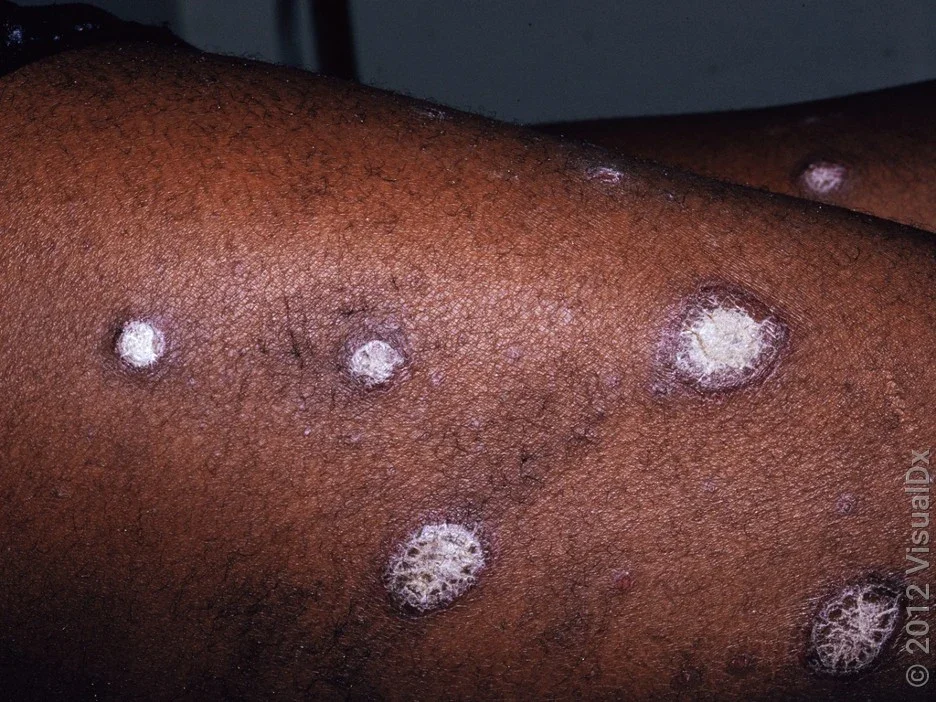
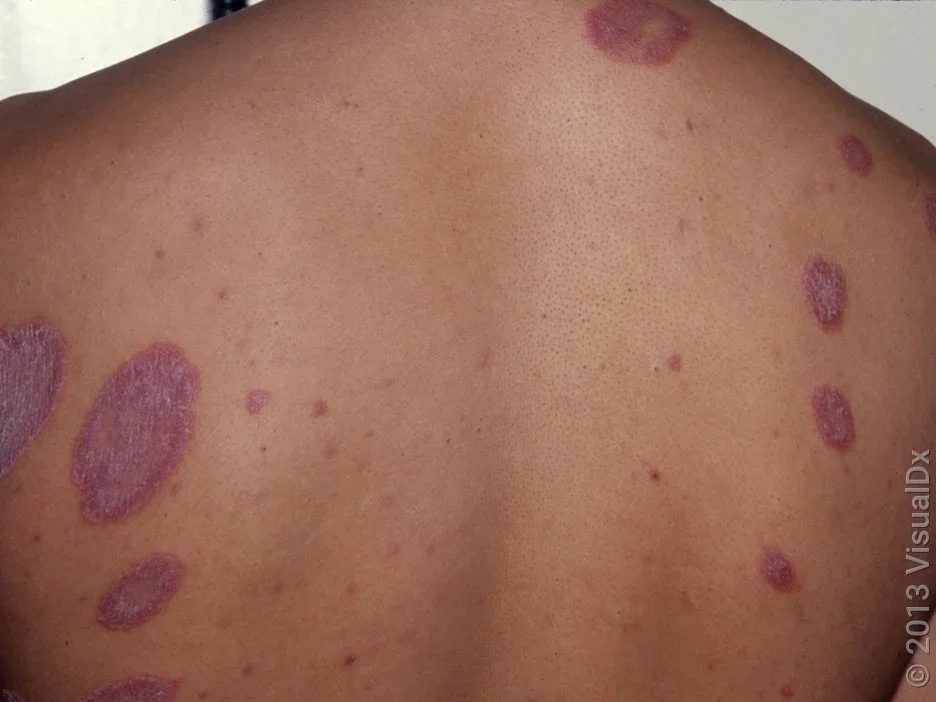
Plaque psoriasis is the most common type of psoriasis. It can affect any part of the body. It causes thick skin patches that show up as violet or brown with overlying gray or white scales. After it heals, psoriasis can leave dark patches that can take months to fade. This is called post-inflammatory hyperpigmentation.
Guttate psoriasis
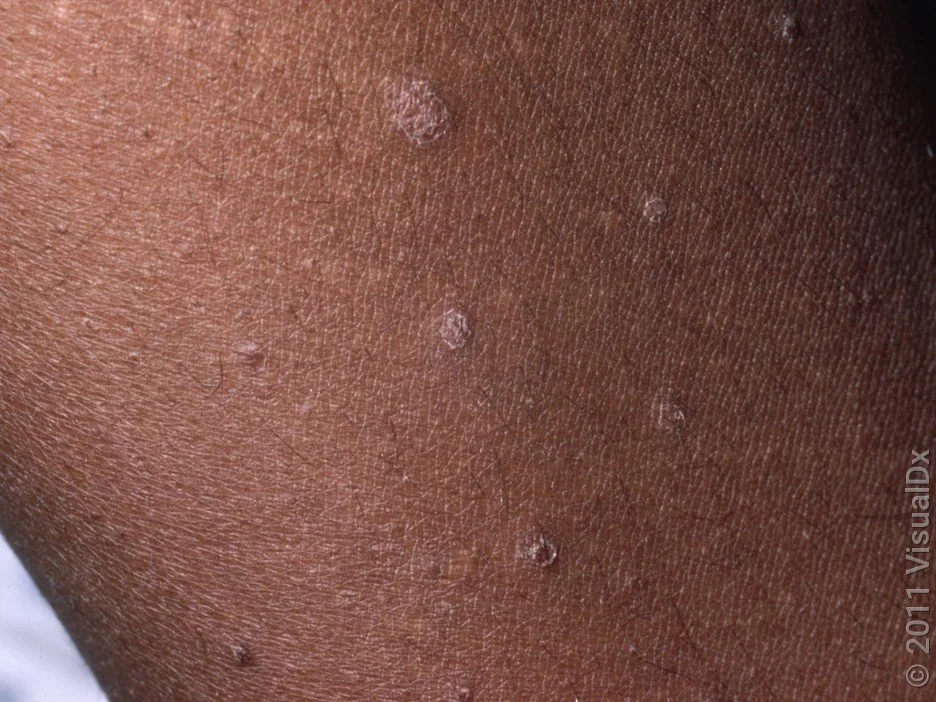
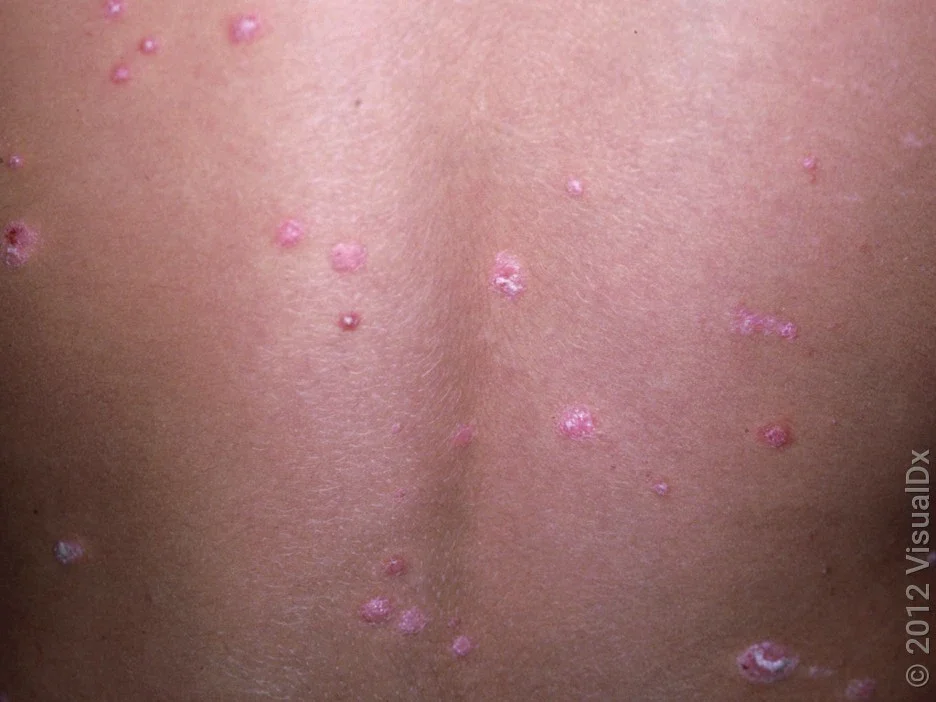
Guttate psoriasis is a type of psoriasis more common on the arms, legs, and torso. In darker skin tones, the patches are small and round on your skin, and they can look violet or brown in color — usually with white or gray scales.
Inverse psoriasis
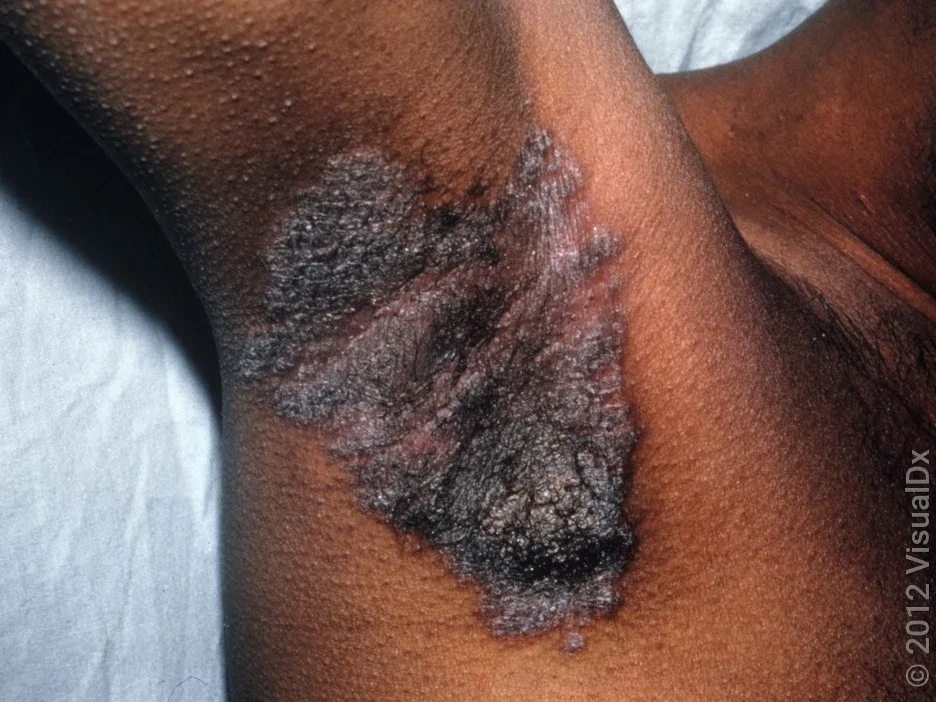
Inverse psoriasis usually affects skin folds — like the armpits, genitals, and buttocks, as well as underneath the breasts. In darker skin tones, patches of psoriasis look shiny violet or brown. Typically, inverse psoriasis isn’t very scaly.
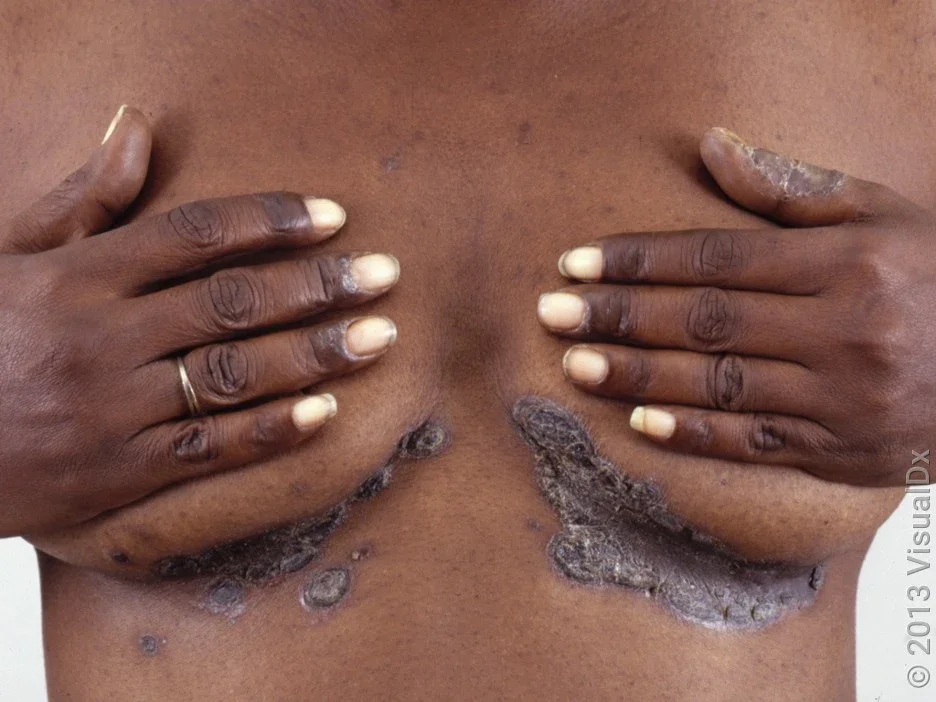
Pustular psoriasis
Pustular psoriasis forms small, white-filled bumps called pustules. They may be surrounded by red or violet patches that can be scaly. Pustules can be on large areas of skin or on certain parts of the body (like the hands and feet).
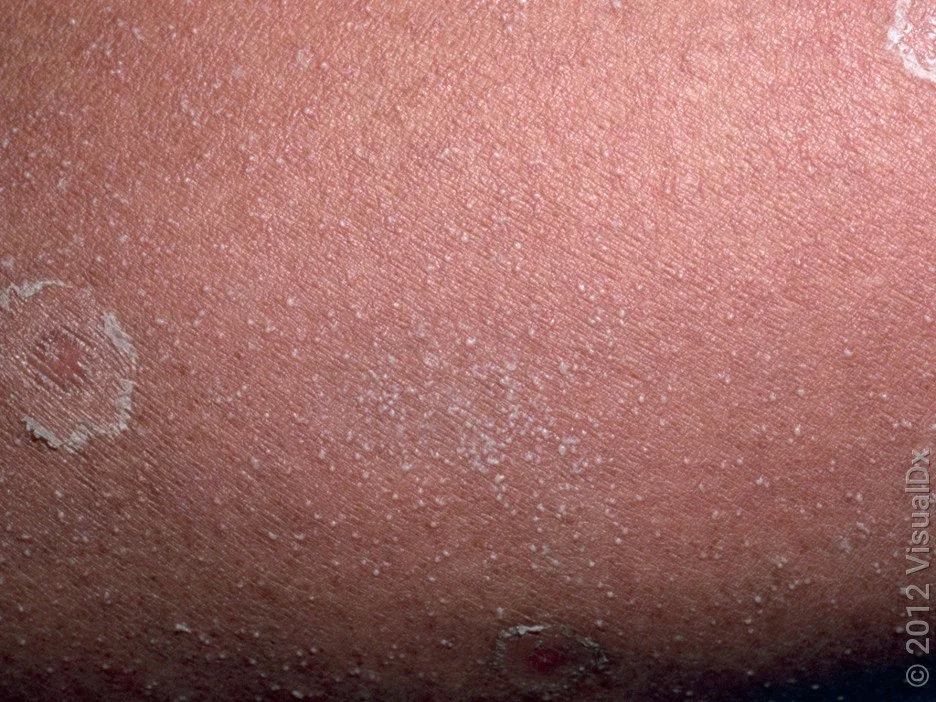
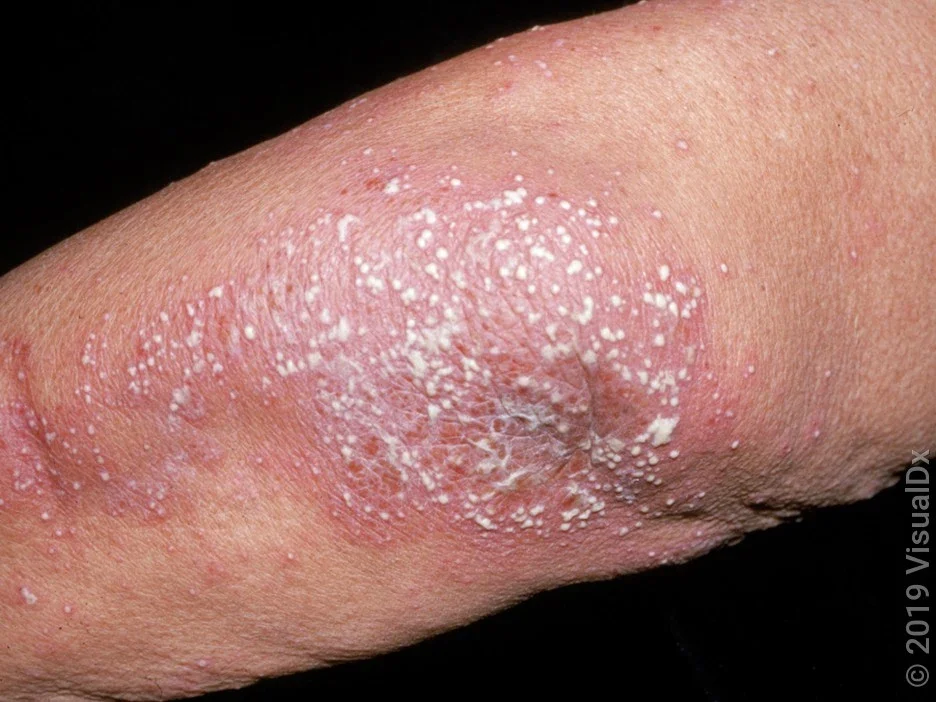
Nail psoriasis
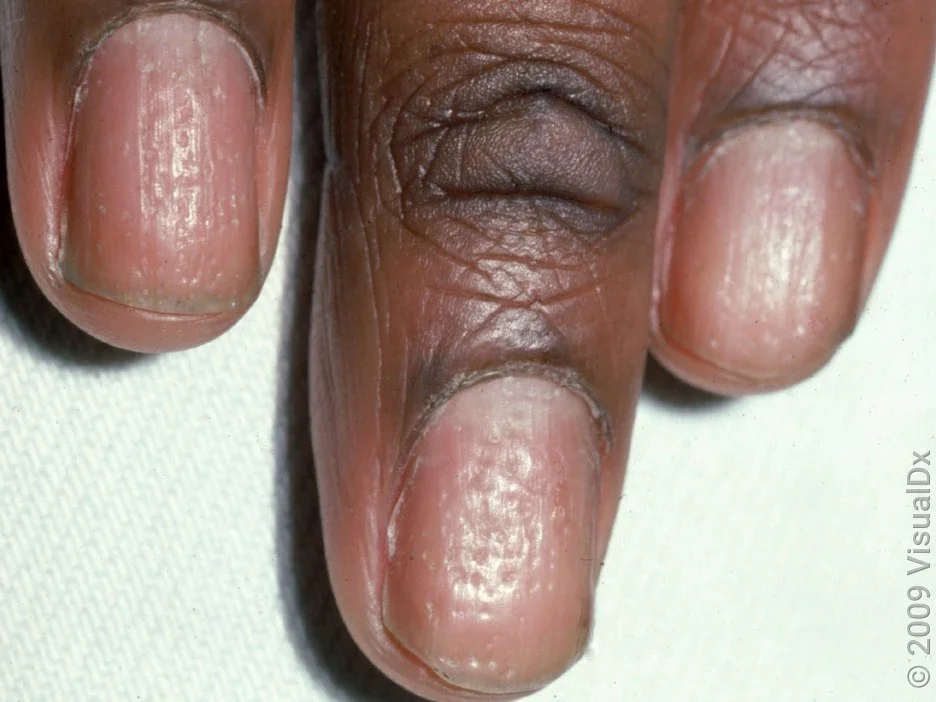
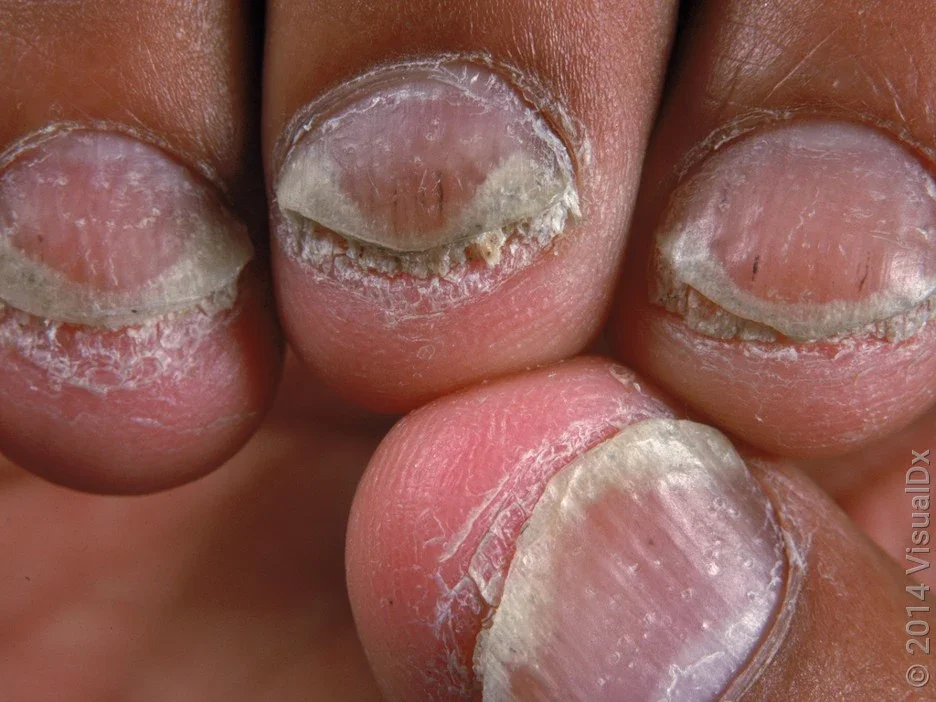
Psoriasis can cause many changes in the nails. These are the same, no matter your underlying skin color. Common changes you may notice are tiny pits in the nail, nail thickening, discoloration, and short or misshapen nails. One nail may be affected — or many. And while nail psoriasis is more common in the hands, it can affect the feet too.
Here’s what nail psoriasis can look like in darker skin tones.
How does psoriasis affect Black people with darker skin tones?
All types of psoriasis can affect all people — no matter their skin color. Psoriasis does seem to be less common in Black people than in white people. But this may be because psoriasis isn’t diagnosed so readily in Black people. So, more people with darker skin tones may have psoriasis without knowing it.
When it comes to complications of psoriasis, Black people seem less likely to have psoriatic arthritis. But Black people are more likely to experience complications more severely when they do occur. This includes physical as well as emotional complications of living with psoriasis.

Read more like this
Explore these related articles, suggested for readers like you.

Here are some of the reasons why Black people experience psoriasis differently than white people:
It can take three times longer for Black people to get a diagnosis of psoriasis.
Black people are four times more likely to need a skin biopsy to get diagnosed.
Psoriasis is often more severe at the time of diagnosis on darker skin because it takes longer to diagnose.
Black people with psoriasis are more likely to have skin symptoms in the hands and feet, which can interfere with many day-to-day functions.
And the difference in experience doesn’t end with diagnosis. Black people are also less likely to be represented in the clinical trials that study new psoriasis medications. This means there isn’t as much information about what works best for treating psoriasis in Black people. And this can make it difficult to find a treatment that works.
Treatment for psoriasis on Black skin and other brown skin tones
For the most part, psoriasis treatment is the same for all skin tones. The treatment you start will depend on:
How severe your psoriasis is
Whether or not you also have psoriasis affecting your joints (psoriatic arthritis)
Your personal preferences
For mild psoriasis, you may just need medicated creams, lotions, or ointments that you apply to the skin. Some examples include:
Topical steroids (like clobetasol or hydrocortisone)
Vitamin D analogues (like calcipotriene)
Calcineurin inhibitors (like pimecrolimus and tacrolimus)
Tazarotene (a type of retinoid)
For more severe psoriasis (or if you have psoriatic arthritis), you may need stronger medication that works throughout your body. Some options include:
Pills that suppress or alter your immune system (like methotrexate, cyclosporine, and Otezla)
Acitretin (a retinoid pill)
Phototherapy (ultraviolet light treatment applied to your skin in a controlled setting)
Special considerations for treating psoriasis on Black skin
Treatment options for psoriasis are the same on all skin types. But there are a few important things to consider when choosing the best treatment for Black or brown skin. This is because psoriasis and psoriasis treatments can have unique effects on darker skin tones.
Before starting treatment for psoriasis, here are some talking points to cover with a dermatologist or primary skin care health professional:
What to expect: Phototherapy treatment can cause skin to darken. This can cause previous dark spots to become even more noticeable. If this is a concern for you, it may be worth exploring a different treatment option.
Treatment effects: After treating psoriasis, there can be long-lasting skin pigmentation changes. In other words, you may be left with light or dark spots on the skin. These spots can often take many months to go away, and they can bother people as much as the psoriasis rash itself. Explore psoriasis treatments that lighten the skin at the same time, like tazarotene.
Scalp treatment: With scalp psoriasis, it’s important to consider hair texture, styling, and how often you wash your hair, when selecting the best treatment for you. For example, oils or foams may be a better option than shampoo for applying medication.
Management of psoriasis triggers
Many things can trigger psoriasis and make it worse. These vary from person to person, but some common ones include:
Medications, like beta blockers and nonsteroidal anti-inflammatory drugs (NSAIDs)
Stress
Infections, like strep throat and seasonal flu
Cold weather
Hormonal changes, like during menstruation and menopause
The best way to manage psoriasis triggers is to know what they are and avoid them as much as possible. Keeping a diary can help you figure out your specific triggers.
When to see a healthcare professional about psoriasis
If you have a skin rash and you think it could be psoriasis, see your dermatologist or another skin care health professional. You may need to find someone with experience in treating skin of color — and the Skin of Color Society can help. It has a searchable database, so you can find an experienced clinician near you.
And, if you have psoriasis that isn’t getting better with treatment, then that’s another sign you need professional help. You may need to try a new strategy or a different combination of treatments.
Frequently asked questions
The fastest way to clear psoriasis is to avoid your triggers and start an effective treatment. For mild psoriasis, this may mean a medicated topical cream. For more severe psoriasis, this may be a medication that works throughout your body (like a pill or shot). A healthcare professional can help you find the best treatment to keep your skin healthy and clear.
Yes, psoriasis can cause ear pain. Psoriasis can develop inside the ear canal, leading to inflammation and thick plaques inside the ear. This could cause pain and itching. And scratching inside the ear can cause skin damage, making the psoriasis worse. If you have psoriasis in or around your ear, be sure to let a healthcare professional know. They can prescribe you the right treatment for inside your ear.
Yes. A certain type of psoriasis called pustular psoriasis can cause small blisters filled with yellowish pus. This is a rarer type of psoriasis: Only about 3% of people with psoriasis have it. But like with other types of psoriasis, there are effective ways to treat it.
The fastest way to clear psoriasis is to avoid your triggers and start an effective treatment. For mild psoriasis, this may mean a medicated topical cream. For more severe psoriasis, this may be a medication that works throughout your body (like a pill or shot). A healthcare professional can help you find the best treatment to keep your skin healthy and clear.
Yes, psoriasis can cause ear pain. Psoriasis can develop inside the ear canal, leading to inflammation and thick plaques inside the ear. This could cause pain and itching. And scratching inside the ear can cause skin damage, making the psoriasis worse. If you have psoriasis in or around your ear, be sure to let a healthcare professional know. They can prescribe you the right treatment for inside your ear.
Yes. A certain type of psoriasis called pustular psoriasis can cause small blisters filled with yellowish pus. This is a rarer type of psoriasis: Only about 3% of people with psoriasis have it. But like with other types of psoriasis, there are effective ways to treat it.
The bottom line
Psoriasis is a common skin condition that affects people of all skin tones. But it doesn’t look the same in everyone. In Black people, psoriasis looks purple, gray, or brown, with silvery scales. Healthcare professionals may be less familiar with the unique features of psoriasis in darker skin tones. This means that many Black people with psoriasis may face delays in diagnosis.
The treatments are the same for psoriasis on Black skin. But light or dark patches may appear after treatment, and these can take months to fade.

Why trust our experts?


Images used with permission from VisualDx (www.visualdx.com).
References
Alexis, A. F., et al. (2014). Psoriasis in skin of color: Epidemiology, genetics, clinical presentation, and treatment nuances. The Journal of Clinical and Aesthetic Dermatology.
American Academy of Dermatology Association. (n.d.). Can you get psoriasis if you have skin of color?
Dickerson, T., et al. (2022). Racial disparities in the diagnosis of psoriasis. Cutis.
Jesitus, J. (2021). Psoriasis strategies in skin of color. Dermatology Times.
Kerr, G.S., et al. (2014). Psoriasis and psoriatic arthritis in African-American patients--the need to measure disease burden. Clinical Rheumatology.
MedlinePlus. (2025). Skin biopsy.
National Psoriasis Foundation. (2022). Psoriasis statistics.
National Psoriasis Foundation. (2024). Locations and types.
National Psoriasis Foundation. (2025). Pustular psoriasis.
Onorati, M. (2022). Why is psoriasis often misdiagnosed in skin of color? National Psoriasis Foundation.