halcinonide
Halcinonide (Halog) is a prescription topical steroid. It's used to treat many types of inflammatory and itchy skin conditions. Halcinonide (Halog) is applied directly to the skin 2 or 3 times per day. This medication comes as a cream and topical solution. Side effects aren't common, but can include skin burning and irritation.


What is Halcinonide (Halog)?
What is Halcinonide (Halog) used for?
- Inflammatory and itchy skin conditions
How Halcinonide (Halog) works
Halcinonide (Halog) is a topical steroid. It blocks certain substances in the body that cause inflammation, which can lead to symptoms like swelling, redness, and itching. This helps treat flare-ups in certain skin conditions.
Drug facts
| Common Brands | Halog |
|---|---|
| Drug Class | Corticosteroid |
| Controlled Substance Classification | Not a controlled medication |
| Generic Status | Lower-cost generic available |
| Availability | Prescription only |
More on Halcinonide (Halog) essentials


Side effects of Halcinonide (Halog)
The following side effects may get better over time as your body gets used to the medication. Let your healthcare provider know immediately if you continue to experience these symptoms or if they worsen over time.
Common Side Effects
- Burning
- Itching
- Irritation
- Dryness
Less Common Side Effects
- Inflamed hair follicles
- Excess hair growth
- Acne or pustules
- Lighter skin color
- Skin inflammation around the mouth
- Eczema (allergic irritation)
- Infection
- Skin thinning
- Stretch marks
- Heat rash
The following Halcinonide (Halog) side effects have also been reported
Side effects that you should report to your care team as soon as possible:
- Allergic reactions—skin rash, itching, hives, swelling of the face, lips, tongue, or throat
- Burning, itching, crusting, or peeling of treated skin
- Fragile or thinning skin that bruises easily
- Skin infection—skin redness, swelling, warmth, or pain
- Small, red, pus-filled bumps on skin around hair follicles
Side effects that usually do not require medical attention (report to your care team if they continue or are bothersome):
- Mild skin irritation, redness, or dryness
- Unexpected hair growth at application site

Get your GoodRx coupon

Pros and cons of Halcinonide (Halog)
Pros
- High-potency steroid that's useful for many different types of more severe skin conditions
- Fewer side effects compared to oral steroids
- Available as a cream and topical solution
Cons
- Available by prescription only
- Need to apply up to 3 times per day
- Not meant for long-term use due to the risk of side effects

Pharmacist tips for Halcinonide (Halog)

- Halcinonide (Halog) is a high-potency corticosteroid. Your dermatologist will recommend that you apply the least amount of medication possible over the affected area(s) for the shortest amount of time. This helps avoid side effects, such as skin thinning and irritation, which might be more likely to happen with stronger steroids.
- You shouldn't use high-potency corticosteroid, like halcinonide (Halog), for longer than 3 months at a time. Doing so raises your risk of side effects, like skin irritation or bruising. If you don't notice any improvements to your skin condition after using this medication for a few weeks, let your dermatologist know. They can talk with you about next steps.
- If you've been using halcinonide (Halog) regularly for a few weeks and want to stop this medication, let your dermatologist know. They can help you do so safely by lowering your dose slowly over time. If you suddenly stop halcinonide (Halog), you might experience symptoms of topical steroid withdrawal, such as skin burning or swelling.
- Wash your hands well before and after you apply halcinonide (Halog) to your skin. This helps prevent the medication from accidentally getting in your eyes. Rinse your eye well with water for at least 15 minutes if you get the medication in your eye.
- Don't place bandages or dressings over the areas where you applied halcinonide (Halog) unless your prescriber says it's okay. Covering the treated area with tight bandages or dressings can cause more medication to get absorbed into your body than intended and raise your risk of skin irritation.
- If your child's dermatologist prescribed halcinonide (Halog) to treat the skin in your child's diaper area, avoid having them wear diapers or plastic pants that are too tight. This can cover the medicated area too tightly, which can cause more medication to get absorbed through the skin and lead to more side effects.
- Don't use other topical steroids while you're using halcinonide (Halog) unless directed by your dermatologist. Applying more than one topical steroid can raise your risk for side effects like skin redness and skin irritation.
- If you have a skin infection that's causing inflammation, you might be prescribed an additional medication alongside halcinonide (Halog) to help treat the skin infection. Let your HCP know if you notice worsening redness, pain, or swelling or any pus where you're applying halcinonide (Halog). You might have to stop using halcinonide (Halog) until your skin infection gets treated.

Risks and warnings for Halcinonide (Halog)
Halcinonide (Halog) can cause some serious health issues. This risk may be even higher for certain groups. If this worries you, talk to your doctor or pharmacist about other options.
Hormone problems and withdrawal
- Risk factors: Using halcinonide (Halog) for a long period of time | Using more halcinonide (Halog) than recommended| Covering applied area with a bandage | Young children
In rare cases, using topical halcinonide (Halog) for a long time and over a large skin area can cause a medical condition called adrenal suppression. This is when your body stops making its own steroid hormones because of the presence of the steroid medication. And if you suddenly stop the medication, it can lead to symptoms of withdrawal include skin swelling, rash, and burning. To prevent adrenal suppression from happening, your healthcare team will prescribe the lowest possible dose of halcinonide (Halog) that works well for you for the shortest amount of time. If you need to use halcinonide (Halog) for a long period of time or for a large area, your care team might ask you to do some lab work to test how well your adrenal gland works. Don't suddenly stop using halcinonide (Halog) without talking to your care team first.
High blood sugar
- Risk factors: Using halcinonide (Halog) for a long period of time | Using more halcinonide (Halog) than recommended
Rarely, using topical halcinonide (Halog) for a long period of time or over large areas of the body can sometimes raise your blood sugar levels. If your blood sugar level isn't controlled, this can lead to diabetes. If you have diabetes, your provider might ask you to check your blood sugar level regularly to make sure this medication is safe for you. Let your provider know if you feel more thirsty or are urinating more than usual.
More on Halcinonide (Halog) warnings


Halcinonide (Halog) dosage
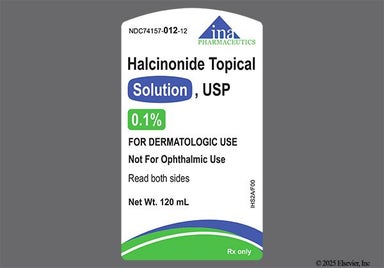
 Bottle of topical solution
| Dosage | Quantity | Price as low as | Price per unit |
|---|---|---|---|
| 120ml of 0.1% | 1 bottle | $606.25 | $606.25 |


How much does Halcinonide (Halog) cost?

What are alternatives to Halcinonide (Halog)?

Halcinonide (Halog) images