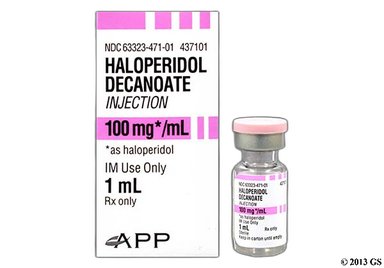
haloperidol injection
Haloperidol injection is an antipsychotic medication that's used to treat schizophrenia. It's a long-acting injection that's given into the muscles monthly by a healthcare provider. It's also available as a shorter-acting injection that's typically given in a hospital setting to people who are experiencing agitation related to schizophrenia. The most common side effects of haloperidol injection are movement-related side effects, such as rigid muscles, tremors, and trouble speaking.


What is Haloperidol injection?
What is Haloperidol injection used for?
- Schizophrenia
How Haloperidol injection works
Haloperidol injection is a typical antipsychotic. It works by blocking the activity of dopamine, a chemical involved with mood and movement, in your brain. This leads to lower dopamine levels, which causes less hallucinations (seeing things that aren't there) and delusions (beliefs in things that aren't true).
Drug facts

Side effects of Haloperidol injection
The following side effects may get better over time as your body gets used to the medication. Let your healthcare provider know immediately if you continue to experience these symptoms or if they worsen over time.
Common Side Effects
- Stiff or rigid muscles, tremors, trouble speaking, and other parkinsonism symptoms (31%)
Less Common Side Effects
- Spasms in muscles of the eye
- Loss of muscle control
- Restlessness
- Stomach pain
- Headache
Haloperidol injection serious side effects
Contact your healthcare provider immediately if you experience any of the following.
- Abnormal heart rhythm: chest pounding, short of breath, chest pain, feeling faint or lightheaded
- Neuroleptic malignant syndrome (NMS): fever, sweating, stiff muscles, confusion, not aware of your surroundings, fast or irregular heartbeat
- Serious infection: fever, pale skin, fast heart rate, lightheadedness, feeling unwell
- Stroke: sudden numbness in your face, arms, or legs (especially on one side of your body), or if you have sudden trouble speaking, seeing, walking, or understanding people
More on Haloperidol injection side effects

The following Haloperidol injection side effects have also been reported
Side effects that you should report to your care team as soon as possible:
- Allergic reactions—skin rash, itching, hives, swelling of the face, lips, tongue, or throat
- Heart rhythm changes—fast or irregular heartbeat, dizziness, feeling faint or lightheaded, chest pain, trouble breathing
- High fever, stiff muscles, increased sweating, fast or irregular heartbeat, and confusion, which may be signs of neuroleptic malignant syndrome
- High prolactin level—unexpected breast tissue growth, discharge from the nipple, change in sex drive or performance, irregular menstrual cycle
- Infection—fever, chills, cough, or sore throat
- Low blood pressure—dizziness, feeling faint or lightheaded, blurry vision
- Stroke—sudden numbness or weakness of the face, arm, or leg, trouble speaking, confusion, trouble walking, loss of balance or coordination, dizziness, severe headache, change in vision
- Seizures
- Trouble passing urine
- Uncontrolled and repetitive body movements, muscle stiffness or spasms, tremors or shaking, loss of balance or coordination, restlessness, shuffling walk, which may be signs of extrapyramidal symptoms (EPS)
Side effects that usually do not require medical attention (report to your care team if they continue or are bothersome):
- Change in sex drive or performance
- Constipation
- Drowsiness
- Dry mouth
- Headache
- Stomach pain
- Weight gain

Get your GoodRx coupon

Pros and cons of Haloperidol injection
Pros
- Typically given monthly
- Low risk for weight gain, compared to some other antipsychotics
- Available as a lower-cost, generic medication
Cons
- Needs to be injected
- Higher risk of movement-related side effects compared to atypical antipsychotics
- Can't be used in children

Pharmacist tips for Haloperidol injection

- Haloperidol injection can make you sleepy. Don't drive or do anything requiring concentration until you know how this medication affects you.
- Avoid drinking alcohol while taking haloperidol injection because it can make you sleepier, drop your blood pressure, and raise your risk of accidental injuries.
- It might take some time before you find the dose that works best for you. Don't stop taking haloperidol injections without talking to your provider first, even if you don't feel better.
- Taking haloperidol injection can make you more sensitive to certain medications, such as barbiturates (e.g., phenobarbital), sedatives, opioid pain medications (e.g., morphine, oxycodone / acetaminophen (Percocet), hydrocodone / acetaminophen (Norco)), and antihistamines (e.g., diphenhydramine (Benadryl)). Taking haloperidol injection with these medications can raise your risk of side effects. Let your provider know about all the medications you're taking before starting haloperidol injection. Don't start any new medications without talking to your provider or pharmacist first.
- There have been reports of people feeling weakness, fever, confusion, and uncontrollable muscle contractions and movements when taking lithium (Lithobid) and haloperidol injection together. Let your provider know if you're taking lithium and if you get any of these side effects while taking both medications.

Common questions about Haloperidol injection
Because haloperidol injection is slowly released in your body, it can take a few weeks before you notice the benefits of this medication. If you and your provider are considering haloperidol injection as a possible treatment, your provider will probably have you try oral haloperidol tablets first. This is so that you know how haloperidol affects you and whether or not you can tolerate its side effects before you start receiving the longer-acting injection. Once you start receiving haloperidol injection, your provider might have you continue taking haloperidol tablets for a few weeks until the effects of the haloperidol injection kicks in.
Typically, you'll need to receive haloperidol injections monthly in order for the levels of this medication to remain stable in your body.
The long-acting haloperidol injection (haldoperidol decanoate) is unlikely to cause sleepiness. But people who've received the short-acting haloperidol injection have reported sleepiness and sedation. If you're starting haloperidol injection for the first time, don't drive or doing any activities that require you to be alert until you know how this medication affects you.
While possible, it's unlikely for you to experience weight gain from haloperidol injection. You're less likely to gain weight from haloperidol injection compared to from some other antipsychotics, such as olanzapine (Zyprexa) or quetiapine (Seroquel). To minimize your risk for weight gain while taking haloperidol injection, make sure to have a healthy diet and regular exercise routine.
Yes, haloperidol is available as tablets and a solution that you can take by mouth. One difference between haloperidol injection and oral haloperidol is how often you need to take your dose. You'll need to receive a haloperidol injection monthly for it to best control your symptoms. But you need to take the haloperidol tablets or solution every day in order for the medication to work. Speak with your provider about which form of haloperidol is best for you.
There isn't enough information available to know if haloperidol injection is safe to take during pregnancy or while breastfeeding. Studies do show that babies born to mothers who received haloperidol in the third trimester of pregnancy can experience withdrawal symptoms, such as agitation, trouble breathing, poor feeding, right after birth. If you're pregnant or thinking of becoming pregnant, talk to your provider to discuss the risks and benefits of taking haloperidol injection.
Haloperidol injection isn't FDA-approved to be given as an IV injection. It's only given as an injection into the muscles. But research shows that healthcare providers sometimes give the fast-acting haloperidol injection through the veins in the hospital setting.

How to save using GoodRx



Risks and warnings for Haloperidol injection
Haloperidol injection can cause some serious health issues. This risk may be even higher for certain groups. If this worries you, talk to your doctor or pharmacist about other options.
Higher risk of death in older people with dementia-related psychosis
- Risk factors: Age 65 and older with dementia and psychosis
 People 65 years and older with dementia sometimes have delusions and hallucinations (believing, seeing, or hearing things that aren't real). This is called dementia-related psychosis. Older people with dementia-related psychosis have a higher risk of death if they take medications like haloperidol injection. Because of this risk, haloperidol injection shouldn't be used in people 65 years and older with dementia-related psychosis. Let your provider know if you or someone you know has dementia before starting haloperidol injection.
 In addition, older patients with dementia-related psychosis treated with some antipsychotics had a higher risk of stroke. Seek medical help immediately if you experience sudden numbness in your face, arms, or legs (especially on one side of your body), or if you have sudden trouble speaking, seeing, walking, or understanding people.
Life-threatening abnormal heart rhythm (QT prolongation)
- Risk factors: Low potassium or magnesium blood levels | Older age | Using other medications that cause QT prolongation | Born with QT prolongation | Hypothyroidism (low thyroid hormone) | History of heart problems or abnormal heart rhythms (arrhythmias) | Slow heart rate
Although rare, haloperidol injection can affect your heart rhythm by prolonging the time period from when the heart pumps and then relaxes. This is known as QT prolongation and it can be life-threatening. Your risk for QT prolongation is higher if you have any of the risk factors listed above. Depending on your risks for QT prolongation, your provider might check your heart rhythm from time to time with an electrocardiogram (EKG). Make sure to tell your provider about all the medications you're taking and don't start any new medications while taking haloperidol injection without talking to your provider or pharmacist first. People who were born with QT prolongation or have a history of arrhythmias should avoid taking haloperidol injection. If you feel your chest pounding, have trouble breathing, chest pain, or feel lightheaded while taking haloperidol injection, call 911 right away.
Difficulty controlling body movements
- Risk factors: Taking other antipsychotic medications | Older age | Female sex | High dose | Taking haloperidol injection for a long period of time | Parkinson's disease | Lewy body dementia
Antipsychotic medications like haloperidol injection can cause uncontrolled body movements, such as eye-twitching or lip-smacking. Your risk of this happening is more likely the longer you take medications like haloperidol injection and if you're taking a higher dose. If you have Parkinson's disease or certain types of dementia, your risk is higher and you shouldn't take haloperidol injection. These movement problems can become permanent. If you experience any uncontrolled movements and aren't able to stop them, talk to your provider right away.
Neuroleptic malignant syndrome (NMS)
- Risk factors: Taking antipsychotic medications
Taking antipsychotic medications like haloperidol injection can cause a rare, but life-threatening condition called neuroleptic malignant syndrome (NMS). Symptoms include fever, sweating, stiff muscles, confusion, not aware of your surroundings, and fast or irregular heartbeat. If you experience any of these symptoms while taking haloperidol injection, seek medication attention as soon as possible. Your provider will likely have you stop taking haloperidol injection and switch you to something else.
Higher risk of falls
- Risk factors: Low blood pressure | Taking medications that lower blood pressure | History of medical conditions that can lower blood pressure
Haloperidol injection can make you tired, lower your blood pressure, or cause you to lose your balance, which can lead to falls and injuries. When standing from a sitting or lying position, make sure to get up slowly and hold onto something. If you have concerns, speak to your provider.
Pneumonia
- Risk factors: Older age | Breathing problems | Smoker
Some cases of bronchopneumonia, a type of infection in your lungs where your lungs get inflamed, have been reported after using antipsychotics like haloperidol injection. Your risk is higher if you're older in age, smoke, or have breathing problems. Seek medical attention immediately if you experience a fever, cough, or trouble breathing.
Low white blood cell counts
- Risk factors: History of low blood cell counts
Though not common, haloperidol injection can lower your white blood cell counts, especially if they've been low previously from other conditions. This can raise your risk of serious infection. You'll need to get blood tests done regularly during the first few months of taking haloperidol injection so your provider can make sure your blood cell counts are in the normal range. If your blood counts drop too low, you'll likely need to stop taking haloperidol injections. If you develop any signs of infection, such as fever, tiredness, chills, cough, or trouble breathing, and they don't go away, contact your provider right away.
Harm to unborn babies
Haloperidol injection should only be used in pregnancy if the benefits outweigh the potential risks to your unborn baby. Newborn babies exposed to haloperidol during the third trimester of pregnancy are at a higher risk for side effects and withdrawal symptoms following delivery. Let your healthcare provider know if you're pregnant or plan to become pregnant while taking haloperidol injection.

Haloperidol injection dosage


Typical dosage for Haloperidol injection
- Your provider will determine your dose of haloperidol injection based on different factors, such as what dose of oral haloperidol you've been taking, your age, and your symptoms. This medication is injected into the muscle and typically given once a month by a healthcare provider in a clinic setting.
Haloperidol is also available as a quick-acting injection to treat agitation from schizophrenia that's given into the muscles by a healthcare provider in a hospital setting.
More on Haloperidol injection dosage


How much does Haloperidol injection cost?
$13.96

Haloperidol injection contraindications
Contraindications are specific health conditions or situations in which a person should not take a medication due to safety concerns. If you have any of the following conditions or if any of the following apply to you, let your healthcare provider know because Haloperidol injection will not be safe for you to take.
- Any condition where there's a slowdown of brain activity that leads to symptoms such slowed breathing, slurred speech, slowed reflexes, and confusion
- Coma
- Parkinson's disease
- Lewy body dementia

What are alternatives to Haloperidol injection?

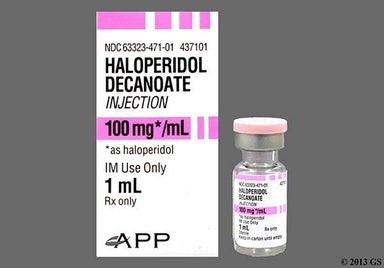
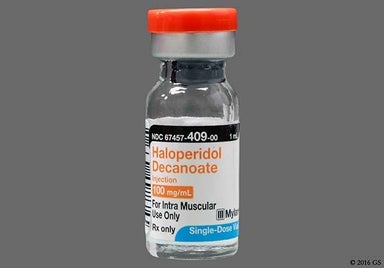
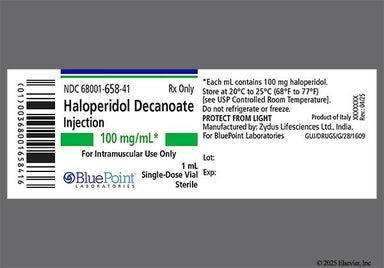
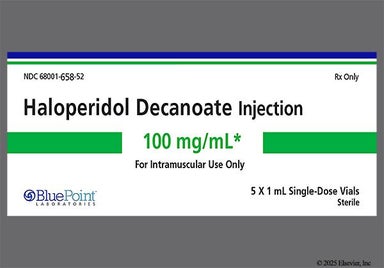
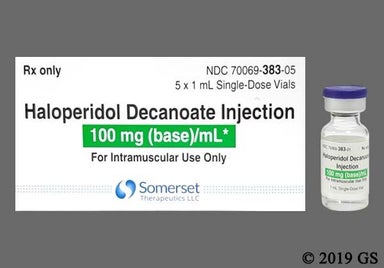
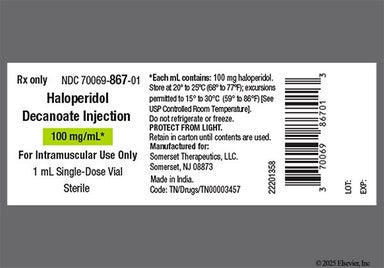
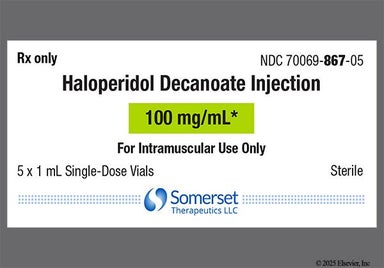
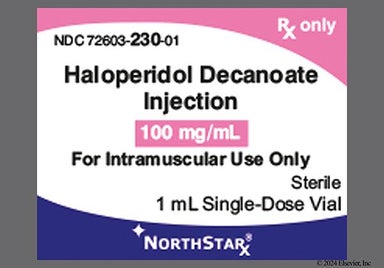
Haloperidol injection images