


Narcan, Flumazenil, Protamine, and More: 9 Common Medication Reversal Agents
Reversal agents are drugs that counteract the effects of other medications. Learn more with this list of reversal agents and when to use them.
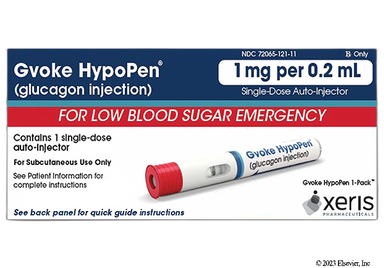
Gvoke (glucagon) is injected under the skin during a medical emergency when you have dangerously low blood sugar and you aren't able to eat or drink anything with sugar by mouth. It comes in an auto-injector pen or a pre-filled syringe that many people find easier to use than a traditional glucagon kit. But like other emergency glucagon injections, it can also cause side effects like nausea and vomiting.

Gvoke (glucagon) is glucagon, a hormone that your body makes to raise blood sugar levels when the levels are too low.
Typically, your body stores the sugar you get from food in your liver until it needs the sugar at a later time. When your blood sugar is too low, glucagon tells your body to release the stored sugar into your bloodstream. When this happens, your blood sugar level goes up.
Usually, your body can sense and control your blood sugar levels. But this system doesn't work as well if you have diabetes or if you take too much insulin. Gvoke (glucagon) works to raise your blood sugar levels if they become too low.
| Common Brands | Gvoke |
|---|---|
| Drug Class | Anti-hypoglycemic |
| Controlled Substance Classification | Not a controlled medication |
| Generic Status | No lower-cost generic available |
| Availability | Prescription only |

The following side effects may get better over time as your body gets used to the medication. Let your healthcare provider know immediately if you continue to experience these symptoms or if they worsen over time.
Adults
Children
Contact your healthcare provider immediately if you experience any of the following.
Along with its needed effects, a medicine may cause some unwanted effects. Although not all of these side effects may occur, if they do occur they may need medical attention.
Check with your doctor immediately if any of the following side effects occur:
Rare
blurred vision
chills
cold sweats
coma
confusion
cool, pale skin
dizziness
fast heartbeat
flushed, dry skin
fruit-like breath odor
headache
increased hunger
increased thirst
increased urination
nervousness
nightmares
seizures
shakiness
slurred speech
sweating
trouble breathing
unexplained weight loss
unusual tiredness or weakness
vomiting
Incidence not known
difficulty with swallowing
dizziness, faintness, or lightheadedness when getting up suddenly from a lying or sitting position
fast, pounding, or irregular heartbeat or pulse
lack or loss of strength
paleness of the skin
pounding in the ears
puffiness or swelling of the eyelids or around the eyes, face, lips, or tongue
sleepiness or unusual drowsiness
slow or fast heartbeat
tightness in the chest
Some side effects may occur that usually do not need medical attention. These side effects may go away during treatment as your body adjusts to the medicine. Also, your health care professional may be able to tell you about ways to prevent or reduce some of these side effects. Check with your health care professional if any of the following side effects continue or are bothersome or if you have any questions about them:
Other side effects not listed may also occur in some patients. If you notice any other effects, check with your healthcare professional.
Call your doctor for medical advice about side effects. You may report side effects to the FDA at 1-800-FDA-1088.




Gvoke (glucagon) can cause some serious health issues. This risk may be even higher for certain groups. If this worries you, talk to your doctor or pharmacist about other options.
Don't use Gvoke (glucagon) if you have a rare tumor called pheochromocytoma. This is because Gvoke (glucagon) can trigger the release of certain hormones that can cause your blood pressure to become dangerously high. If you have this condition, ask your provider about safer ways to treat dangerously low blood sugar.
Avoid Gvoke (glucagon) if you have a type of tumor called insulinoma. Using Gvoke (glucagon) can trigger the tumor to release more insulin, which can put you at high risk for dangerously low blood sugar. If you have this tumor, your provider might suggest other ways to manage low blood sugar.
Gvoke (glucagon) only works if you've been eating a healthy diet and your liver has already stored up enough sugar. It won't work well if you have constantly low blood sugar because of a poor diet, or if you have issues with your adrenal glands. Talk to your provider about how to treat low blood sugar if you have these conditions.
People with tumors that make glucagon have reported a very serious skin rash after they have received continuous glucagon infusion. The skin rash can involve open sores, fluid-filled blisters, and dry and scaly skin on the face, groin, and legs. In reported cases, the rash went away after people stopped using glucagon. This reaction is likely rare with Gvoke (glucagon) because this medication isn't a glucagon infusion, but rather a small dose of glucagon given under the skin. But if you have this type of tumor and you're concerned about this reaction, talk with your provider to see whether Gvoke (glucagon) is appropriate for you.

 Carton
| Dosage | Quantity | Price as low as | Price per unit |
|---|---|---|---|
| 1 HypoPen of 0.5mg/0.1ml | 1 carton | $332.98 | $332.98 |
| 2 HypoPens of 0.5mg/0.1ml | 1 carton | $653.22 | $653.22 |
| 2 HypoPens of 1mg/0.2ml | 1 carton | $651.23 | $651.23 |
| 1 HypoPen of 1mg/0.2ml | 1 carton | $333.39 | $333.39 |
| 1 PFS syringe of 0.5mg/0.1ml | 1 carton | $300.82 | $300.82 |
| 2 PFS syringes of 0.5mg/0.1ml | 1 carton | $595.39 | $595.39 |
| 2 PFS syringes of 1mg/0.2ml | 1 carton | $654.49 | $654.49 |
| 1 PFS syringe of 1mg/0.2ml | 1 carton | $332.94 | $332.94 |
Kit| Dosage | Quantity | Price as low as | Price per unit |
|---|---|---|---|
| 0.2ml vial and syringe of 1mg/0.2ml | 1 kit | $332.95 | $332.95 |

Although certain medicines should not be used together at all, in other cases two different medicines may be used together even if an interaction might occur. In these cases, your doctor may want to change the dose, or other precautions may be necessary. When you are taking this medicine, it is especially important that your healthcare professional know if you are taking any of the medicines listed below. The following interactions have been selected on the basis of their potential significance and are not necessarily all-inclusive.
Using this medicine with any of the following medicines is usually not recommended, but may be required in some cases. If both medicines are prescribed together, your doctor may change the dose or how often you use one or both of the medicines.


Contraindications are specific health conditions or situations in which a person should not take a medication due to safety concerns. If you have any of the following conditions or if any of the following apply to you, let your healthcare provider know because Gvoke (glucagon) will not be safe for you to take.


Prescription savings
Stop paying too much for your prescriptions. Compare prices, get pharmacy coupons, and save up to 80%. Find expert answers to your health questions so you can make the best decisions for yourself and your family.
Health conditions
Medications & treatment
Access & affordability
Medication discounts


You should give yourself an injection of Gvoke if your blood sugar level is very low and you aren't able to eat or drink something with sugar. It can also be given if you've already tried eating something that's high in sugar (e.g., soft drink or fruit juice) but your blood sugar level is still low. Symptoms of low blood sugar (hypoglycemia) include weakness, dizziness, shakiness, and sweating. In dangerous cases, you can become confused or even pass out. If you take insulin for diabetes and don't feel quite right, it's always a good idea to check your sugar in case it's too low or too high.
It's recommended that you let your loved ones or caregivers know that you have diabetes, especially if you're using insulin. The is because you might be at high risk for dangerously low blood sugar. And in the serious case where your blood sugar level drops too low and you pass out, it's important that those around you are aware of your medical condition and can give care (such as give you a Gvoke injection) or provide the needed health information to emergency medical response crews. If possible, make sure to teach those around you when and how to give you a Gvoke injection. You can also wear a medical bracelet in case you pass out around people who might not know about your medical condition.
Gvoke should work pretty quickly, within minutes, to raise your blood sugar. But it's still important to get emergency help after injection so the medical crew can check if you're alright and provide help if needed. If symptoms don't improve within 15 minutes, you'll need to use another dose with a new Gvoke injection while waiting for emergency services to arrive. Once you've recovered enough to eat or drink something with sugar, please do so to to help your body recover and prevent future instances of hypoglycemia.
No, Gvoke can't be injected through your clothes. It's only meant to be injected under the skin of exposed areas of skin in places such as your lower stomach, outer thigh, or outer upper arm.
According to the manufacturer, unopened boxes of Gvoke are good for up to 2 years. Please check the expiration date on your box of Gvoke when you pick it up at the pharmacy. Make a note of the date on a calendar so that you can get a refill before the one you have expires.
