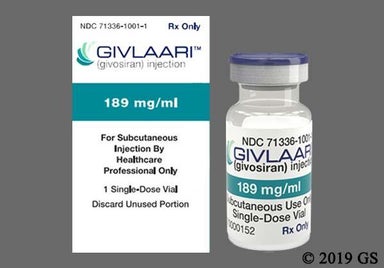
Givlaari
Givlaari (givosiran) is a medication that treats acute hepatic porphyria (AHP), a rare, genetic disease that causes painful attacks on your body. It's a once-monthly injection that your provider gives you.


What is Givlaari (givosiran)?
What is Givlaari (givosiran) used for?
- Adults with acute hepatic porphyria (AHP)
How Givlaari (givosiran) works
Givlaari (givosiran) is a small interfering ribonucleic acid (siRNA). This molecule targets a protein in your liver called aminolevulinate synthase (ALAS1). In AHP, ALAS1 becomes too active in the liver, which causes toxic substances to build up in the body. Givlaari (givosiran) works by lowering the amount of ALAS1 in your liver. This causes the levels of toxic substances to drop, which helps to treat symptoms of AHP.
Drug facts
| Common Brands | Givlaari |
|---|---|
| Drug Class | siRNA |
| Controlled Substance Classification | Not a controlled medication |
| Generic Status | No lower-cost generic available |
| Availability | Prescription only |

Side effects of Givlaari (givosiran)
The following side effects may get better over time as your body gets used to the medication. Let your healthcare provider know immediately if you continue to experience these symptoms or if they worsen over time.
Common Side Effects
- Nausea (27%)
- Injection site reactions (redness, pain, itching, discoloration, swelling; 25%)
- Rash (17%)
- Kidney problems (15%)
- Liver problems (13%)
- Fatigue (10%)
The following Givlaari (givosiran) side effects have also been reported
Side effects that you should report to your care team as soon as possible:
- Allergic reactions—skin rash, itching, hives, swelling of the face, lips, tongue, or throat
- Kidney injury—decrease in the amount of urine, swelling of the ankles, hands, or feet
- Liver injury—right upper belly pain, loss of appetite, nausea, light-colored stool, dark yellow or brown urine, yellowing skin or eyes, unusual weakness or fatigue
- Pancreatitis—severe stomach pain that spreads to your back or gets worse after eating or when touched, fever, nausea, vomiting
Side effects that usually do not require medical attention (report these to your care team if they continue or are bothersome):

Pros and cons of Givlaari (givosiran)
Pros
- Works well to lower AHP attacks
- Given once per month
- Few side effects
Cons
- Hasn't been well studied in children under 18 years old or adults 65 years and older
- Needs to be given by a healthcare provider
- Brand name only, which can be expensive

Pharmacist tips for Givlaari (givosiran)

- Make sure to mark your calendar with your appointments to see your provider and receive your dose of Givlaari (givosiran) so you don't miss any doses. Also mark when you're supposed to get lab tests done so you can be properly monitored.
- Keep track of how you feel in between Givlaari (givosiran) injections to see if there's improvement in your symptoms over time. This way, you can compare your progress from month to month, and discuss with your provider if you think this medication isn't working well for you.
- Givlaari (givosiran) can interact with certain medications. Make sure to tell your provider about all the medications you're taking before starting Givlaari (givosiran). Don't start any new medications while taking Givlaari (givosiran) without talking to your provider or pharmacist first.

Risks and warnings for Givlaari (givosiran)
Givlaari (givosiran) can cause some serious health issues. This risk may be even higher for certain groups. If this worries you, talk to your doctor or pharmacist about other options.
Severe allergic reactions
Although rare, severe allergic reactions to Givlaari (givosiran) are possible, including life-threatening reactions like facial swelling, shock, and anaphylaxis (closing of the throat). If you notice dizziness, a choking sensation, difficulty breathing, wheezing, swelling of the lips or tongue, skin flushing, or rash after receiving Givlaari (givosiran), call 911 right away.
Liver and kidney problems
Givlaari (givosiran) might cause liver and kidney problems. You'll need to get regular blood tests done to make sure your liver and kidney are working properly. If your lab results show signs of liver or kidney problems, your provider might temporarily stop your Givlaari (givosiran) treatment so they can figure out whether the medication is causing these problems. Get medical attention right away if you notice signs of liver problems (e.g., yellowing of your skin or the whites of your eyes, fatigue, low appetite, nausea, stomach discomfort, confusion) or kidney problems (e.g., changes in how much you urinate, muscle cramps, weakness, swelling, dry skin).
Raised blood homocysteine levels
Givlaari (givosiran) can raise your blood homocysteine levels. Homocysteine is an amino acid your body makes. It's not clear how high homocysteine levels from the medication affects your health, but we know that too much homocysteine in your blood can generally damage your blood vessels. Your provider will measure your homocysteine levels before and during treatment with Givlaari (givosiran). If your homocysteine levels are high, your provider might recommend you start taking vitamin supplements, such as vitamin B6 or a multivitamin.

Givlaari (givosiran) dosage
Typical dosage for Givlaari (givosiran)
Givlaari (givosiran) is only available as an injection that's administered by a healthcare provider.
The dose is based on your body weight. In general, the typical dose is 2.5 mg/kg of body weight injected under the skin once per month. Your dose might differ if you're having side effects affecting your liver.

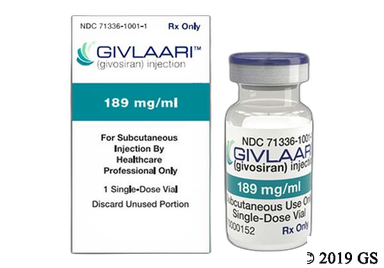
Givlaari (givosiran) images