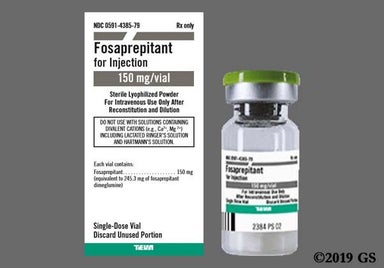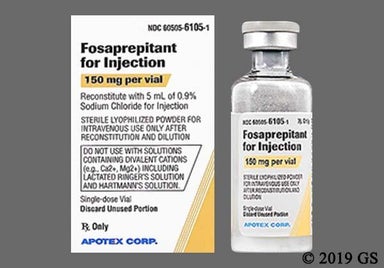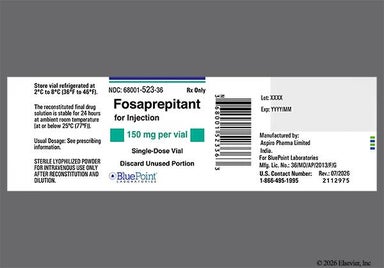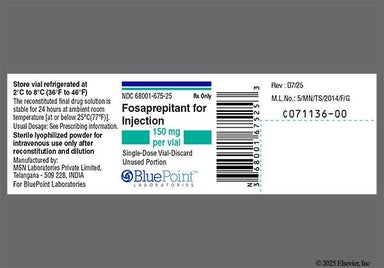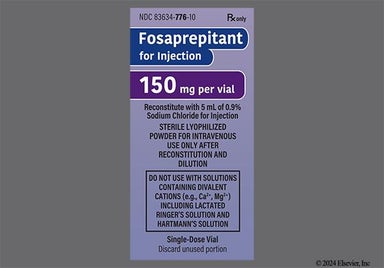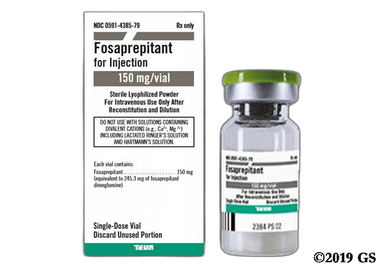

Fosaprepitant (Emend) is an injectable medication used with other medications to prevent nausea and vomiting caused by certain chemotherapy medications in adults and children 6 months and older. It's given as an intravenous (IV) infusion by a trained healthcare provider.
Fosaprepitant (Emend) is used along with other anti-nausea medications to prevent nausea or vomiting caused by certain chemotherapy medications. But it can't be used to treat nausea or vomiting if you're already feeling nauseous.
Fosaprepitant (Emend) is an antiemetic. It helps to prevent nausea and vomiting by blocking a chemical in the brain called substance P, which controls your vomiting reflex.
For adults, the typical dose of fosaprepitant (Emend) is 150 mg infused through the veins (IV) by a healthcare provider. It's given about 30 minutes before the start of your chemotherapy on the first day of chemotherapy treatment. For children, the dose of fosaprepitant (Emend) depends on their age and body weight, and which chemotherapy treatment your child is receiving. Your child's provider will make sure your child gets the correct dose at the right time.
In clinical trials, the most common side effects people reported are feeling extremely tired and diarrhea, followed by low red and white blood cells, weakness, and tingling in the arms or legs. Please note that in the trials, people also received two other anti-nausea medications, dexamethasone and ondansetron (Zofran), so it's hard to know if these side effects are due to fosaprepitant (Emend) alone. As with any IV infusions, fosaprepitant (Emend) can also cause infusion site reactions, including redness, swelling, and pain.
Fosaprepitant (Emend) can interact with many different medications, including common ones like warfarin (Coumadin) and certain birth control medications. For example, fosaprepitant (Emend) can cause birth control medications that contain hormones to not work as well, which can raise your risk for getting pregnant. If you're using this type of birth control, you'll need to use a back up birth control method, such as condoms, both during treatment and for about a month after your last dose of fosaprepitant (Emend). Another example is that fosaprepitant (Emend) can cause warfarin (Coumadin) to not work as well, which can put you at risk for blood clots. If you're taking warfarin (Coumadin), your provider might need to monitor your labs more closely. Tell your provider all of the over-the-counter and prescription medications you're taking, as well as supplements, so they can let you know if there are any interactions with fosaprepitant (Emend).
Although certain medicines should not be used together at all, in other cases two different medicines may be used together even if an interaction might occur. In these cases, your doctor may want to change the dose, or other precautions may be necessary. When you are receiving this medicine, it is especially important that your healthcare professional know if you are taking any of the medicines listed below. The following interactions have been selected on the basis of their potential significance and are not necessarily all-inclusive.
Using this medicine with any of the following medicines is not recommended. Your doctor may decide not to treat you with this medication or change some of the other medicines you take.
Using this medicine with any of the following medicines is usually not recommended, but may be required in some cases. If both medicines are prescribed together, your doctor may change the dose or how often you use one or both of the medicines.
Using this medicine with any of the following medicines may cause an increased risk of certain side effects, but using both drugs may be the best treatment for you. If both medicines are prescribed together, your doctor may change the dose or how often you use one or both of the medicines.