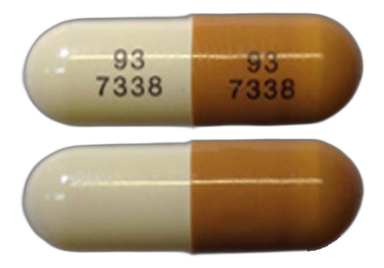
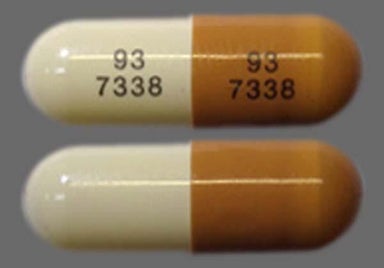
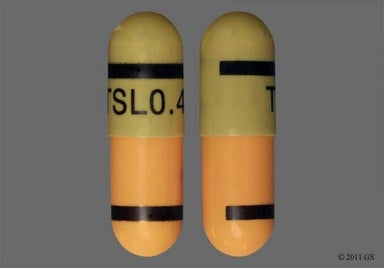
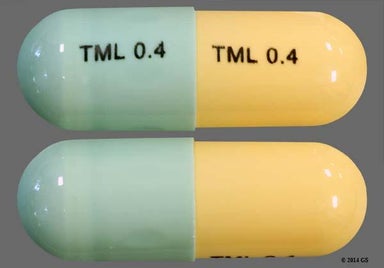
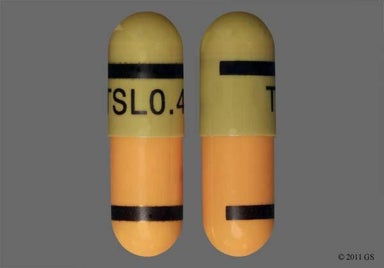
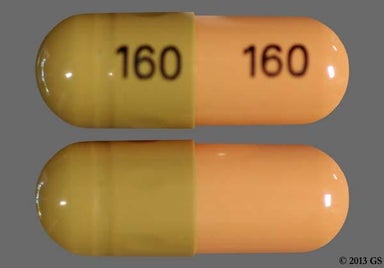
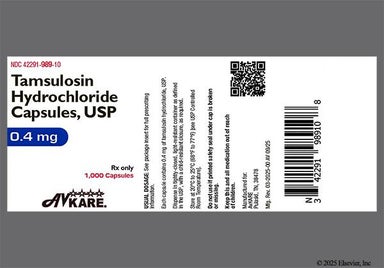
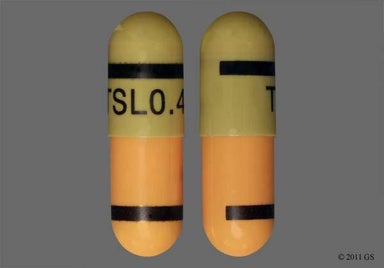
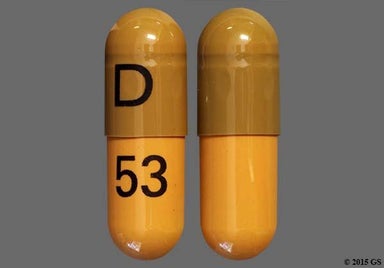
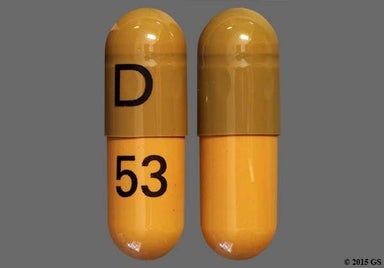
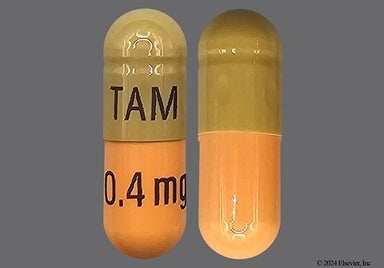
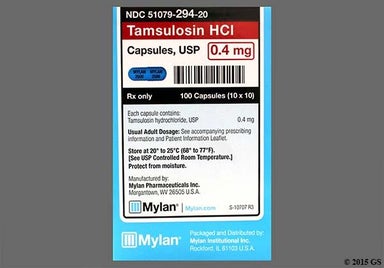
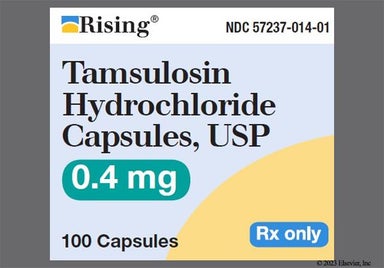
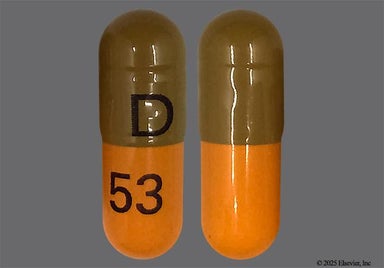
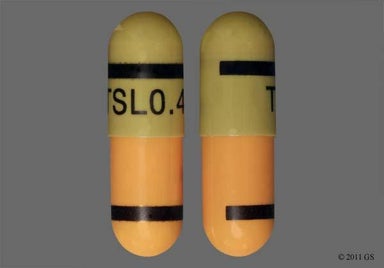
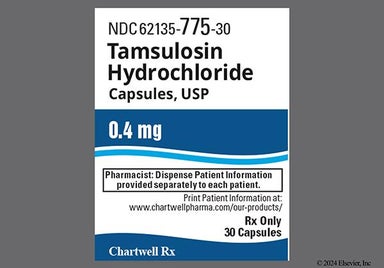
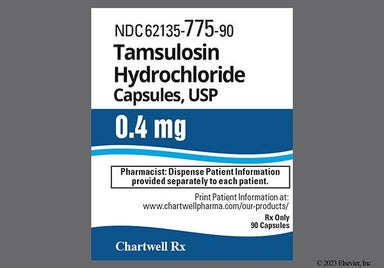
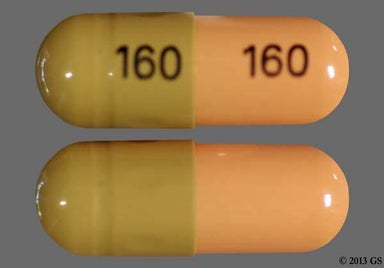
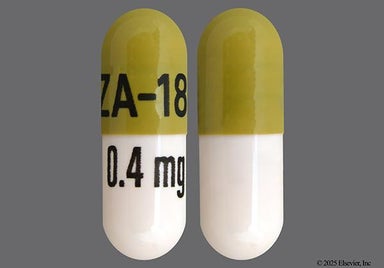
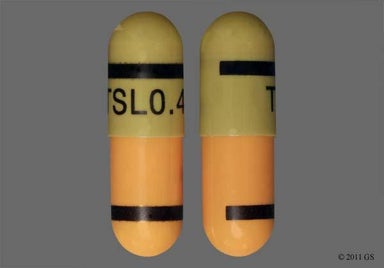
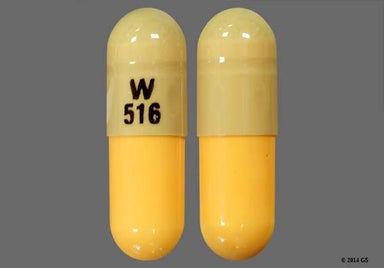
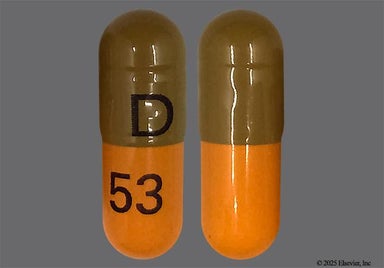
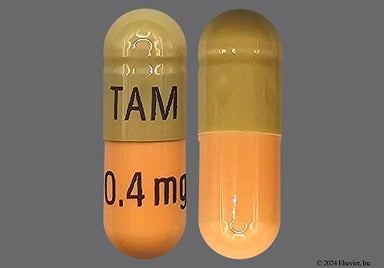
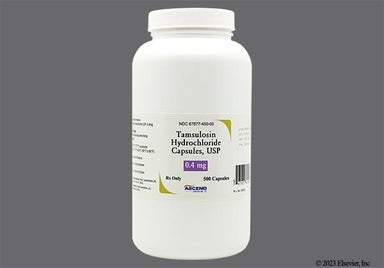
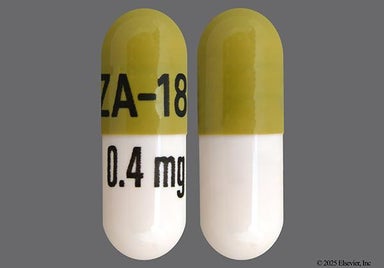
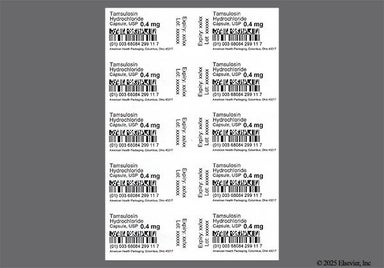
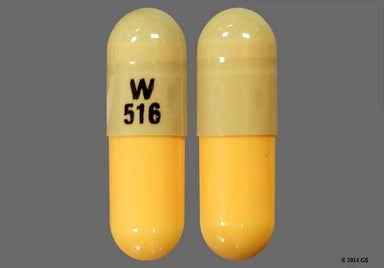
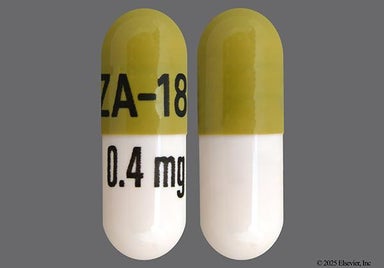
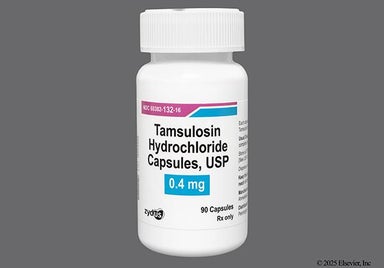
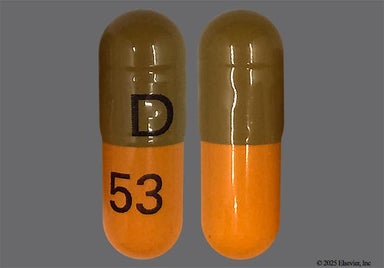
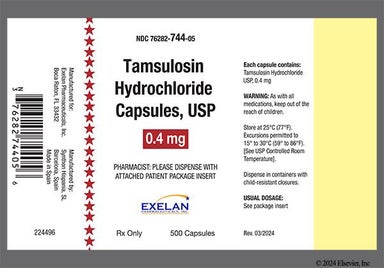
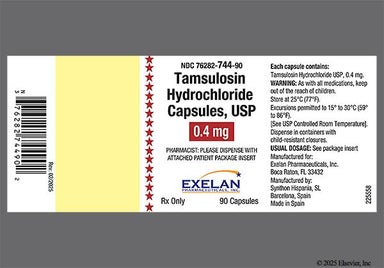
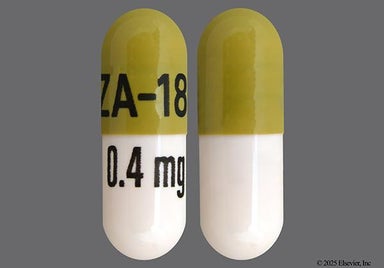
Tamsulosin is an alpha-1 blocker used to treat benign prostatic hyperplasia (BPH), also known as enlarged prostate. It works by relaxing the muscles in your prostate and bladder, making it easier to urinate. The medication comes as a capsule that you take once a day, usually 30 minutes after the same meal each day. Side effects include headache, dizziness, and abnormal ejaculation.
Tamsulosin is an alpha-1 blocker. It specifically targets alpha-1 receptors in the prostate. By blocking these receptors, the medication relaxes the muscles in your prostate and bladder. This makes it easier to urinate and helps to relieve symptoms of BPH.
The following side effects may get better over time as your body gets used to the medication. Let your healthcare provider know immediately if you continue to experience these symptoms or if they worsen over time.
Common Side Effects
Headache (19-21%)
Stuffy nose (13-18%)
Abnormal ejaculation (8-18%)
Dizziness (15-17%)
Infection (9-11%)
Less Common Side Effects
Diarrhea
Back pain
Chest pain
Sleepiness
Weakness
Trouble sleeping
Sore throat
Nausea
Blurred vision
Lower sex drive
Tamsulosin serious side effects
Contact your healthcare provider immediately if you experience any of the following.
The following Tamsulosin side effects have also been reported
Along with its needed effects, a medicine may cause some unwanted effects. Although not all of these side effects may occur, if they do occur they may need medical attention.
Check with your doctor immediately if any of the following side effects occur:
sores, ulcers, or white spots in the mouth or on the lips
sweating
tightness of the chest
unusual tiredness or weakness
Some side effects may occur that usually do not need medical attention. These side effects may go away during treatment as your body adjusts to the medicine. Also, your health care professional may be able to tell you about ways to prevent or reduce some of these side effects. Check with your health care professional if any of the following side effects continue or are bothersome or if you have any questions about them:
Less likely to cause a sudden drop in blood pressure when changing positions compared to similar medications
Cons
Relieves symptoms of an enlarged prostate but doesn’t affect prostate growth
Needs to be taken once a day, 30 minutes after the same meal
Can have negative side effects on your sexual health
Might not be the best option for people with a sulfa allergy
Pharmacist tips for Tamsulosin
Take tamsulosin 30 minutes after the same meal every day. This will help your body absorb the right amount of medication.
Swallow tamsulosin capsules whole. Don't crush, chew, or open them because it will affect how the medication works.
If you miss a dose of tamsulosin, take it as soon as you remember the same day. If you don’t remember until the next day, just take your next dose at your regular schedule. Never take two doses at the same time.
If you stop taking tamsulosin for several days in a row, talk with your prescriber before you start taking it again since your dose might be different.
Tamsulosin can cause dizziness and low blood pressure, especially when you get up too quickly. To lower this risk, move slowly when going from lying down to sitting, and then from sitting to standing.
If you’re an older adult, you might experience more dizziness while taking tamsulosin. These side effects can raise the risk of falls and broken bones. Let your prescriber know if you feel very dizzy or faint.
It's best not to drink alcohol while taking tamsulosin. Alcohol can worsen low blood pressure, especially when changing positions.
Tamsulosin interacts with a lot of commonly used medications. Tell your care team about all the medications you're taking so they can make sure it's safe.
Risks and warnings for Tamsulosin
Tamsulosin can cause some serious health issues. This risk may be even higher for certain groups. If this worries you, talk to your doctor or pharmacist about other options.
Sudden drop in blood pressure upon standing
Risk factors: Moving too quickly from sitting down to standing up | Not enough fluid in your body (dehydration) | Taking other medications that lower blood pressure | Heart failure | Drinking alcohol
When you first start tamsulosin or when your dose is raised, you can experience a sudden drop in blood pressure when standing or sitting up too quickly. This is called orthostatic hypotension. To lower this risk, move slowly from lying down to sitting, and then stand up slowly. Symptoms include feeling lightheaded or dizzy, blurry vision, fainting, nausea, or confusion. Your body should adjust to the medication after the first few days. But if these symptoms continue, tell your prescriber. If you fall and hit your head, get medical help right away.
Be especially careful if you’re also taking certain erectile dysfunction medications (like sildenafil, tadalafil, or vardenafil), because taking them together with tamsulosin can cause dizziness, fainting, or other symptoms of low blood pressure. Always tell your prescriber about all the medications you take so they can check for interactions.
Prolonged and painful erection
Although rare, tamsulosin has been linked to priapism, which is a painful erection that lasts for hours and isn’t related to sexual activity. This condition is very serious because it can cause permanent erectile problems if not treated right away. If you develop an erection that lasts longer than 4 hours, stop taking tamsulosin and get medical attention right away.
Eye problems
Risk factors: Planned cataract or glaucoma surgery
Tamsulosin can cause an eye problem called intraoperative floppy iris syndrome (IFIS), which can happen during cataract or glaucoma surgery. IFIS can make the surgery harder and raise your risk of eye problems afterwards, and it can happen even if you’ve already stopped taking the medicine. Let your optometrist or ophthalmologist know if you take or have ever taken tamsulosin because they might change their surgical technique to lower your risk for IFIS.
Severe allergic reactions
Risk factors: Sulfa allergy
If you have a sulfa allergy, there’s a small chance you could have an allergic reaction to tamsulosin. This is rare, but if your sulfa allergy has ever been serious or life-threatening, let your prescriber know.
Tamsulosin dosage
The average cost for 30 capsules of 0.4mg of Tamsulosin is $9.90 with a free GoodRx coupon. This is 24.89% off the average retail price of $13.18.
GoodRx has partnered with to provide reviews on the different aspects of Tamsulosin.
Effectiveness
Learn more about the effectiveness of Tamsulosin based on real life experiences.
Overall Rating
Based on 75 people taking this medication
2.6
Effectiveness by condition:
benign prostatic hyperplasia62 reviews
3.0
kidney stone7 reviews
2.7
multiple sclerosis2 reviews
1.9
prostatitis2 reviews
1.9
urinary incontinence2 reviews
3.8
Side effects
Learn more about the side effects others have reported while taking Tamsulosin.
Severity of side effects
Based on 187 people taking this medication
None
66%
Mild
15%
Moderate
15%
Severe
5%
0%
50%
100%
Top side effects
Based on 187 people taking this medication
Lightheadedness
4%
Ejaculation dysfunction
2%
Dizziness
2%
Dizziness with hypotension upon standing
2%
Ejaculation delayed
2%
Usage
Review why people stop taking this medication and how long they take it.
Reasons people stopped taking Tamsulosin
Based on 120 people who have taken this medication
Course of treatment ended
26%
Did not seem to work
22%
Doctor's advice
22%
Other
15%
Side effects too severe
11%
Expense
3%
Personal research
2%
Change in health plan coverage
1%
How long people take Tamsulosin
Based on 402 people who have taken this medication
6 to 11 months
1%
1 to <2 years
1%
2 to <5 years
6%
5 to <10 years
25%
10+ years
69%
0%
50%
100%
Powered by:
Interactions between Tamsulosin and other drugs
Tamsulosin may interact with certain medications or supplements. Always let your doctor and pharmacist know about any other medications or supplements (including prescribed and over-the-counter medications, vitamins, and dietary or herbal supplements) that you are currently taking. The list below does not include all possible drug interactions with Tamsulosin. Please note that only the generic name of each medication is listed below.
Although certain medicines should not be used together at all, in other cases two different medicines may be used together even if an interaction might occur. In these cases, your doctor may want to change the dose, or other precautions may be necessary. When you are taking this medicine, it is especially important that your healthcare professional know if you are taking any of the medicines listed below. The following interactions have been selected on the basis of their potential significance and are not necessarily all-inclusive.
Using this medicine with any of the following medicines is not recommended. Your doctor may decide not to treat you with this medication or change some of the other medicines you take.
Boceprevir
Using this medicine with any of the following medicines is usually not recommended, but may be required in some cases. If both medicines are prescribed together, your doctor may change the dose or how often you use one or both of the medicines.
Using this medicine with any of the following medicines may cause an increased risk of certain side effects, but using both drugs may be the best treatment for you. If both medicines are prescribed together, your doctor may change the dose or how often you use one or both of the medicines.
GoodRx Health has strict sourcing policies and relies on primary sources such as medical organizations, governmental agencies, academic institutions, and peer-reviewed scientific journals. Learn more about how we ensure our content is accurate, thorough, and unbiased by reading our editorial guidelines.
Prescription savings
Stop paying too much for your prescriptions. Compare prices, get pharmacy coupons, and save up to 80%.
The typical dose is 0.4 mg or 0.8 mg once a day. If you feel your symptoms aren't improving, contact your prescriber. Don’t take more than what’s prescribed. Your prescriber might also consider adding another medication to help manage your symptoms.
You can take Tamsulosin at any time of the day, but it works best if you take it at the same time each day. Take your dose 30 minutes after the same meal every day to help your body absorb the right amount of medication. Taking it on an empty stomach can cause your body to absorb too much medication, which can raise your risk of side effects.
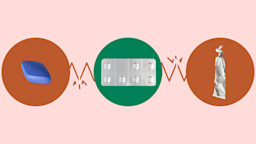
No, Tamsulosin and sildenafil (Viagra) are two completely different medications. Tamsulosin is an alpha-1 blocker used to treat BPH, whereas sildenafil (Viagra) is a phosphodiesterase inhibitor used to treat erectile dysfunction (ED). Talk to your prescriber if you have questions comparing the two medications.
If your prescriber says it’s okay, you can usually stop taking Tamsulosin right away. You don’t need to slowly lower the dose over time because this medication isn’t expected to cause sudden blood pressure changes. But depending on your situation, your prescriber might give you specific instructions for stopping. Don't stop taking this medication unless your prescriber specifically tells you to do so.
Studies show Tamsulosin can start to work right away after the first dose. But it can take several weeks to feel the full benefit from the medication. Talk to your prescriber if you've been taking Tamsulosin and you haven't noticed any improvement in your symptoms.
Yes, Tamsulosin can lower blood pressure, but it's less likely to do so than some other similar medications. It mainly blocks alpha-1 receptors in the prostate, but sometimes it also affects alpha-1 receptors in your blood vessels, causing them to relax. This can lead to lower blood pressure. Make sure to tell your healthcare team if you're taking other medications that lower blood pressure so they can help keep you safe.
Tamsulosin doesn’t typically cause erectile dysfunction (ED), but it can sometimes cause other sexual side effects. Though rare, it can cause abnormal ejaculation, lower sex drive, and priapism (an erection that lasts longer than 4 hours). But some studies have shown that Tamsulosin might not affect your sexual health at all. Talk to your primary care provider if you notice ED or sexually related side effects after starting this medication.
It can take about 3 days for most of Tamsulosin to leave the body. This time frame is estimated based on the half-life of the medication. Even though it lasts this long, it's important to keep taking it once per day to keep the levels high enough in your body. This helps to make sure it works well to treat your BPH symptoms.
Tamsulosin is an alpha-1 blocker. It specifically targets alpha-1 receptors in the prostate. By blocking these receptors, the medication relaxes the muscles in your prostate and bladder. This makes it easier to urinate and helps to relieve symptoms of BPH.Learn more