Key takeaways:
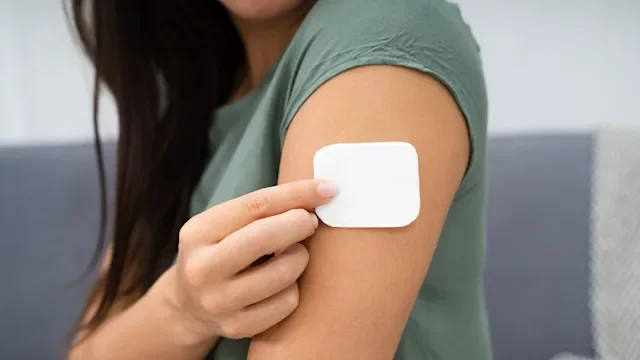
Estradiol (estrogen) patches help relieve menopause symptoms, such as hot flashes and night sweats. You should apply an estradiol patch to clean, dry skin on your lower stomach or upper buttock.
Don’t apply lotion, powder, or oil to skin before applying the patch. Choose a different spot each time you apply a new patch, and wait at least 1 week before reusing the same area. This can help prevent skin irritation and keep your patch securely attached.
Most patches can stay on while you shower or swim. If your patch falls off, try to reapply it to a new area of dry, clean skin. If it won’t stick or you forget to change it, you can typically apply a new patch and continue with your usual schedule.
Always follow the instructions for your specific estradiol patch, and ask your healthcare team if you have questions about applying or replacing it.
Save on related medications
Estradiol (estrogen) patches are a common treatment for menopause symptoms, such as hot flashes and night sweats. They deliver a steady amount of estradiol through your skin and into your bloodstream. But knowing how to apply estrogen patches correctly is important for getting the most benefit from treatment.
You may have questions about where to place your estrogen patch, how often to change it, or what to do if it falls off. Here are pharmacist-backed answers to eight common questions about how to apply estrogen patches.
1. What’s the best way to apply an estrogen patch?
Applying an estrogen patch is fairly simple. But following a few steps can help it stick properly and deliver the right amount of medication.
Search and compare options
Here's how to apply an estrogen patch:
Choose the right spot. Select an area of skin recommended for your specific estrogen patch. This is typically on your lower stomach or upper buttock.
Clean and dry your skin. Make sure the area is clean, dry, and free of lotions, oils, or powders. These products can prevent the patch from sticking properly. You can also wipe the application site with an alcohol swab and let it dry to remove any residue before applying the patch.
Open the patch package. Remove the patch from its protective pouch just before applying it. Avoid cutting or damaging the patch.
Remove the protective liner. Peel away the backing without touching the sticky side more than necessary.
Apply the patch. Place the sticky side against your skin and press firmly with the palm of your hand for about 10 seconds, or as directed by your product’s instructions. Pay special attention to the edges.
Wash your hands. This helps remove any medication that may have gotten on your fingers.
Once you’ve applied the patch, check that it’s firmly attached and the edges aren’t lifting.
Good to know: When removing an old estrogen patch, fold it in half with the sticky sides together and dispose of it according to the product instructions. Used patches still contain medication, so keep them away from children and pets.
2. Where can you apply estrogen patches?
You can apply most estradiol patches to the lower stomach or upper buttock. Choose a different spot each time you apply a new patch, and wait at least 1 week before using the same spot again. Rotating sites helps lower the risk of skin irritation and gives your skin time to recover between applications.
Avoid placing estrogen patches:
On or around your breasts
On skin that’s irritated, broken, or damaged
On areas where tight clothing or waistbands may rub against the patch
On areas where you’ve applied lotion, oil, or powder
Keep in mind: Application sites may vary among brands of estradiol patches. Be sure to read the package instructions for more information about your specific patch before applying it.
3. How often should you change an estrogen patch?
You’ll need to change your estrogen patch either once or twice a week. How often you change your estrogen patch depends on which product you’re prescribed.
Examples of once-weekly estradiol patches include:
Examples of twice-weekly estradiol patches include:
Vivelle-Dot (Dotti)
If you use a twice-weekly patch, you’ll typically change it every 3 to 4 days. For example, you might apply a new patch every Monday and Thursday. If you use a once-weekly patch, you’ll typically change it on the same day each week. It’s a good idea to set a reminder on your phone or calendar to help you stay on schedule.
Good to know: Estrogen patches aren’t all interchangeable. Even patches that contain the same medication may have different dosing schedules or application instructions. Always follow the directions for your specific product.
4. What should you do if your estrogen patch falls off?
Estrogen patches are designed to stay in place during everyday activities. But sometimes a patch can become loose or fall off. If this happens, try to reapply the same patch to a new area of clean, dry skin.
If the patch won’t stick securely, open and apply a new one. But you should still change your patch based on the original schedule. Keep in mind that if this happens, you’ll likely run out of patches earlier than expected. So it’s a good idea to reach out to your pharmacy for guidance. In some cases, you can contact the manufacturer for a replacement patch if one falls off and can’t be reapplied.
Don’t apply tape over your patch to try to keep it in place unless your prescriber recommends it. This may change how medication is absorbed from the patch.
If your patches frequently fall off, talk to your prescriber. They can help you troubleshoot the problem or recommend a different type of patch or different form of estradiol to help avoid this issue.
5. Are there ways to reduce skin irritation from estrogen patches?
Mild redness or itching where you apply an estrogen patch is a common side effect. It usually goes away after you remove the patch. But there are a few things you can do to help reduce irritation:
Rotate application sites. Avoid placing a new patch on the same spot as the previous one. Wait at least 1 week before reusing the same area of skin.
Apply patches to healthy skin. Don’t place a patch on skin that’s already red, irritated, or damaged.
Avoid areas where clothing may press against the patch. Try to place the patch in an area where it won’t rub against underwear elastic or clothing waistbands.
Remove patches gently. Slowly peel the patch away from your skin to avoid causing additional irritation.
Ask your prescriber about a dot matrix patch: Dot matrix patches, such as Vivelle-Dot, are designed to be smaller and less irritating to the skin than other types of estradiol patches.
If you have mild irritation after removing a patch, a cool compress may help soothe the area. If you develop severe redness, swelling, or a rash that doesn’t go away, contact your healthcare team. You may be having a reaction to the patch adhesive or another ingredient.
6. Can you shower or swim with an estrogen patch?
Yes. Most estrogen patches are designed to stay in place while you shower, bathe, or swim. But prolonged exposure to water, heat, or moisture may cause some patches to loosen or fall off.
After showering or swimming, gently pat the area around the patch instead of rubbing it with a towel. Check that the patch is still securely attached. If the edges start lifting or the patch falls off, follow your product’s instructions for reapplying or replacing it.
It’s also a good idea to avoid applying a new patch immediately before showering or swimming unless your product’s instructions allow it. This gives the adhesive time to stick securely to your skin.
7. What should you do if you forget to change your estrogen patch?
If you forget to change your estrogen patch, follow the missed-dose instructions for your specific product. In most cases, it’s recommended to apply a new patch as soon as you remember, but change it based on your original schedule.
Keep in mind that missing or delaying a patch change may cause your estrogen levels to drop. This could lead to the return of menopause symptoms, such as hot flashes or night sweats. Some people may also experience spotting or changes in vaginal bleeding.
If you forget to change your patch and are unsure what to do, ask your pharmacist or prescriber for guidance.
8. Can you cut an estrogen patch in half?
You shouldn’t cut an estrogen patch unless your prescriber specifically tells you to.
Estrogen patches are designed to deliver a specific amount of medication through your skin over time. Cutting a patch may affect how well it sticks or how it delivers medication.
If you feel that your prescribed estradiol patch dosage is too high or too low, talk to your healthcare team. Changing to a different patch is typically a better option than cutting the ones you have.
Frequently asked questions
Common estrogen patch side effects include skin irritation, breast tenderness, and headaches. Bloating and vaginal discharge are also possible. More serious side effects include an increased risk of blood clots, heart-related issues, and certain cancers. But these risks are typically lower with estradiol patches than oral forms of menopausal hormone therapy. Your healthcare team can discuss the risks and benefits of estradiol patches based on your personal history.
There are several alternatives to estradiol patches for menopause symptoms. Topical alternatives to estradiol patches include gels and sprays. Vaginal products, such as creams, tablets, and rings, are also available for certain menopause symptoms. Oral estradiol also works well but typically comes with more risks than topical or vaginal treatments. Nonhormonal treatments are also available. Talk to your healthcare team about the best fit for your needs.
You can typically tell if an estradiol patch is working when your menopause symptoms, such as hot flashes and night sweats, become less frequent or less severe. Some people notice improvements within 2 weeks of starting an estradiol patch, but it may take longer to experience the full benefit.
If your symptoms aren’t improving after several weeks, talk to your healthcare team. They can check whether you’re applying the patch correctly and determine whether you need a change in dose or form of estradiol.
The bottom line
Estradiol (estrogen) patches help relieve menopause symptoms, such as hot flashes and night sweats. You should apply an estradiol patch to clean, dry skin on your lower stomach or upper buttock. Don’t apply lotion, powder, or oil to skin before applying the patch. Choose a different spot each time you apply a new patch, and wait at least 1 week before reusing the same area. This can help prevent skin irritation and keep your patch securely attached.
Depending on the brand, you’ll need to change your estrogen patch once or twice a week. Most patches can stay on while you shower or swim. If your patch falls off, try to reapply it to a new area of dry, clean skin. If it won’t stick or you forget to change it, you can typically apply a new patch and continue with your usual schedule. Always follow the instructions for your specific estradiol patch, and ask your healthcare team if you have questions about applying or replacing it.

Why trust our experts?



References
ConsumerMedSafety.org. (2024). Safe medicine patch disposal. Institute for Safe Medication Practices.
Kopper, N. W., et al. (2009). Transdermal hormone therapy in post-menopausal women: A review of metabolic effects and drug delivery technologies. Drug Design, Development and Therapy.
MedlinePlus. (2025). Estradiol transdermal patch.
Noven Therapeutics. (2026). Minivelle- estradiol film, extended release . DailyMed.
Sandoz. (2026). Vivelle-Dot- estradiol patch, extended release . DailyMed.