Key takeaways:
An EpiPen is an injection device that contains a single dose of epinephrine. EpiPens can help manage life-threatening symptoms of a severe allergic reaction until you receive emergency medical care.
The typical EpiPen dosage for adults and children who weigh at least 66 lbs (30 kg) is to inject 0.3 mg (the contents of 1 auto-injector) into the outer thigh at the first sign of a severe allergic reaction. You can inject your dose through clothing if needed. Call 911 after using an EpiPen.
If your symptoms worsen or return after using an EpiPen, you may need to inject a second dose. Wait about 5 to 15 minutes between doses. Don’t inject more than 2 doses of EpiPen.
Save on related medications
Anaphylaxis is a potentially life-threatening allergic reaction. One of its most notable symptoms is swelling of the mouth, tongue, and throat. Stopping or slowing the symptoms of anaphylaxis can mean the difference between life and death.
If you or a loved one is at risk for anaphylaxis, there’s a good chance you have a prescription for an EpiPen (epinephrine). This single-use injection device can help manage life-threatening allergic reactions until you get emergency medical help.
If you’ve never used an EpiPen, it’s common to have questions about it. For instance, what’s the usual EpiPen dosage? And do children use the same dose as adults?
Good to know: This article covers dosage information for the higher-dose (0.3 mg) EpiPen, which is for people who weigh at least 66 lbs. A lower-dose (0.15 mg) version called EpiPen Jr is available for people who weigh 33 lbs to 66 lbs. The instructions for using EpiPen Jr are the same as for EpiPen.
What’s the typical EpiPen dosage for adults?
The typical EpiPen dosage for most adults is to inject 0.3 mg (the contents of 1 auto-injector) into the outer thigh. You should inject a dose at the first sign of a severe allergic reaction. If needed, you can inject your dose through clothing. After using your EpiPen, call 911 or seek emergency medical help.
EpiPen dosages are based on your body weight. You must weigh at least 66 lbs (30 kg) to use the 0.3 mg dose of EpiPen. Most adults weigh more than this. But if you weigh 33 lbs to 66 lbs (15 kg to 30 kg), you would need to use the lower-dose (0.15 mg) EpiPen Jr.
Each EpiPen package comes with 2 auto-injector pens. This is because in severe cases, you may need to inject a second dose (more on this later). But you should wait at least 5 minutes between the first and second doses.
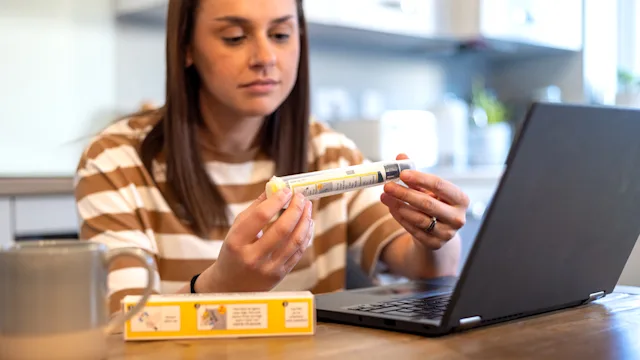
The package also includes a demonstration (trainer) pen. This device doesn’t contain medication. It’s meant to help you practice injecting a dose ahead of time. It’s a good idea to store your trainer pen in a different place from your EpiPens. That way, you don’t accidentally grab the trainer if you need to use the medication.
What’s the typical EpiPen dosage for children?
The EpiPen dosage for children who weigh at least 66 lbs is the same as for adults. You should inject 0.3 mg into your child’s outer thigh as soon as they have symptoms of a severe allergic reaction. Call 911 or seek emergency medical care after using an EpiPen.
If your child weighs 33 lbs to 66 lbs, they should use an EpiPen Jr. The dose of medication in an EpiPen is too high for children in this group.
If your child weighs less than 33 lbs, they shouldn’t use EpiPen or EpiPen Jr. Discuss alternatives with their prescriber. There are other epinephrine products, such as Auvi-Q, that are FDA approved for children with smaller body sizes.
How to use an EpiPen
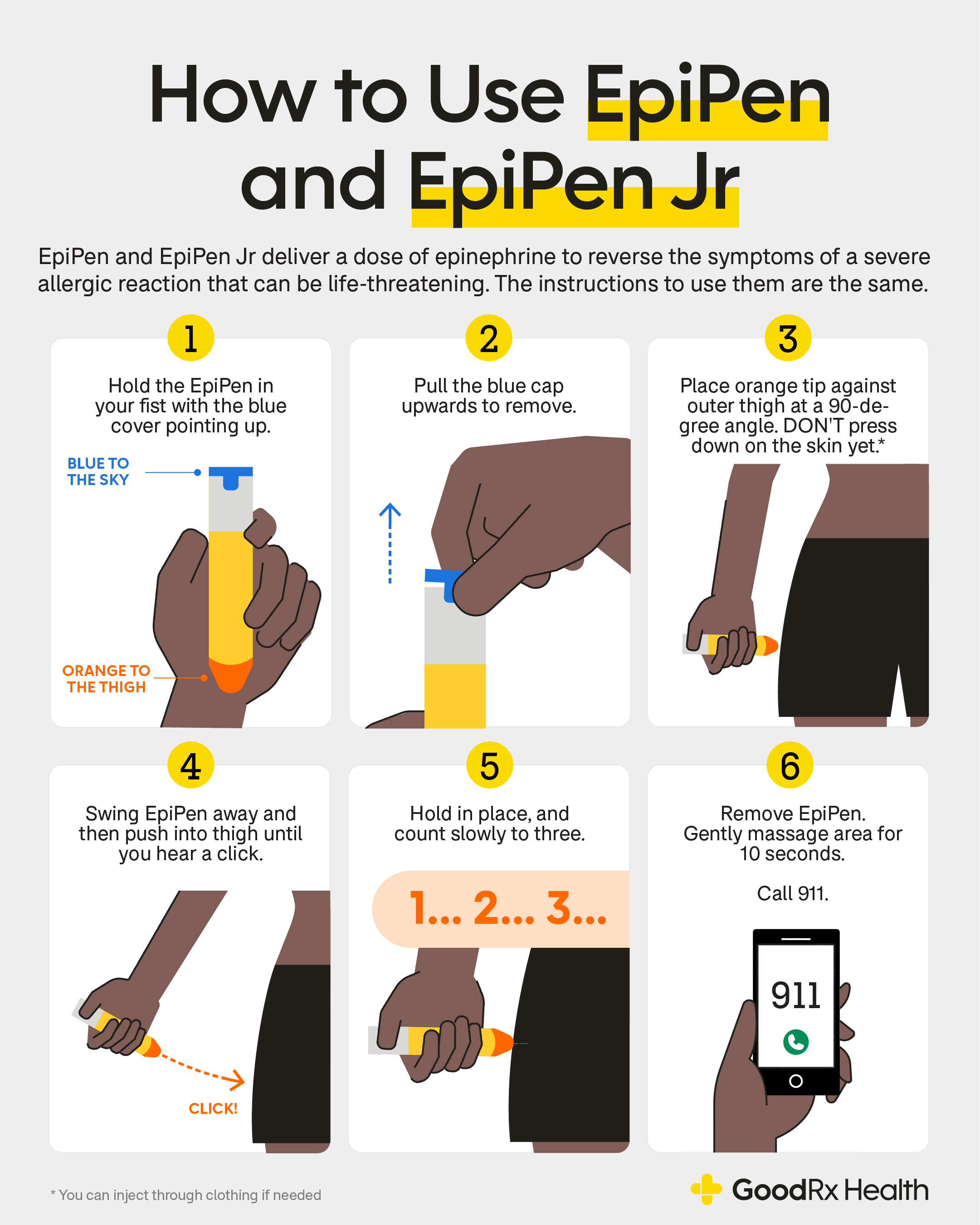
EpiPen’s design makes injection quick and easy during an allergic reaction. It’s an auto-injector device that’s prefilled with a single dose of epinephrine. It also comes with a needle already attached.
There are three main steps for using an EpiPen:
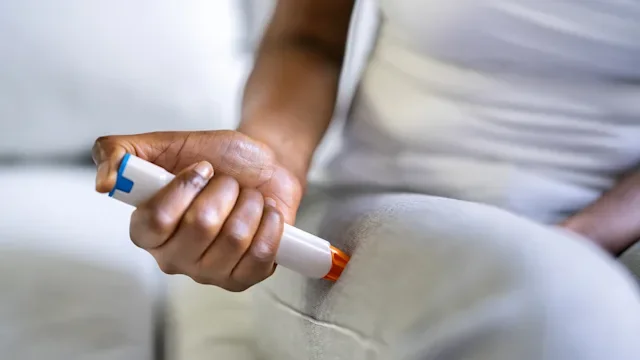
Prepare the device. Remove the EpiPen from its carrying tube. Hold the pen in your hand with the orange tip pointing down (“blue to the sky, orange to the thigh”). Remove the blue safety cover with your other hand.
Administer the dose. Swing and push the auto-injector into the middle of the outer thigh at a 90-degree angle. You should hear a “click.” Hold the device firmly in place for 3 seconds, then remove it from the thigh. Gently rub the injection site for 10 seconds.
Get emergency help. Call 911 or have someone take you to the ER. You may need additional medical care to fully treat your allergic reaction.
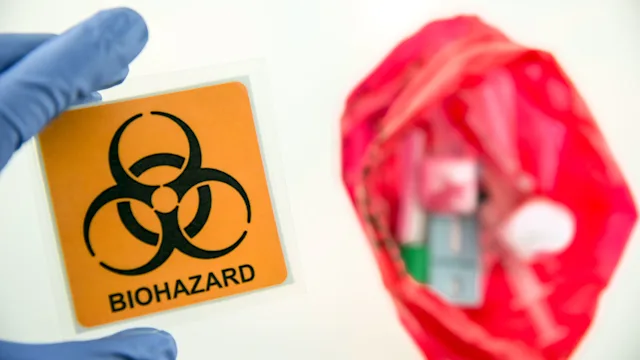
After using an EpiPen, you should throw it away in a needle disposal container. An FDA-cleared sharps container is ideal. But a heavy-duty plastic container with a tight-fitting lid, such as a laundry detergent bottle, is a good alternative.
You can also ask emergency personnel to dispose of it for you. They may have a disposal container more readily available.
Can you give a second EpiPen dose?
Yes, if needed, you can use a second dose of EpiPen. Most of the time, people need only 1 dose to manage allergic reactions. But in severe cases, your symptoms may worsen or return before emergency personnel arrive. In this instance, you should inject a second EpiPen dose about 5 to 15 minutes after the first one.
You shouldn’t use more than 2 doses of EpiPen. Using too much can lead to dangerous side effects, such as severely high blood pressure.
How to save on EpiPen
There are many ways to save on EpiPens, which are available as both brand-name and generic medications.
If you have commercial insurance, one way to save is with a copay savings card. You may be eligible to save up to $300 per brand-name EpiPen prescription and up to $25 off the generic version using a savings card from the manufacturer.
If you don’t have insurance or are underinsured, you may be able to save with a patient assistance program. One patient assistance program fully covers the cost of generic EpiPens for eligible consumers.
Saving with GoodRx is another option. Using a free GoodRx coupon, you may be able to find your epinephrine product for as little as:
The bottom line
EpiPen (epinephrine) is a lifesaving treatment for severe allergic reactions. Adults and children weighing at least 66 lbs (30 kg) should use the 0.3 mg EpiPen dosage. At the first sign of a severe allergic reaction, inject 0.3 mg (the contents of 1 auto-injector) into the outer thigh. You can inject a dose through clothing if needed. Call 911, or go to an ER after using an EpiPen.
In severe cases, you may need to inject a second dose of EpiPen. If your symptoms worsen or return, give a second dose about 5 to 15 minutes after the first one. Don’t give more than 2 doses. Doing so can lead to serious side effects, such as dangerously high blood pressure.

Why trust our experts?




References
Allergy & Asthma Network. (n.d.). What is epinephrine?
Kaleo. (2025). Auvi-Q- epinephrine injection, solution [package insert]. DailyMed.
Mylan. (n.d.). How to use an EpiPen (epinephrine injection, USP) auto-injector.
Viatris. (n.d.). Viatris patient assistance program (U.S.).
Viatris Advocate. (n.d.). Epinephrine injection, USP auto-injector savings card.
Viatris Specialty. (2023). EpiPen- epinephrine injection, EpiPen Jr- epinephrine injection [package insert].
Vijayaraghavan, R. (2020). Autoinjector device for rapid administration of drugs and antidotes in emergency situations and in mass casualty management. Journal of International Medical Research.