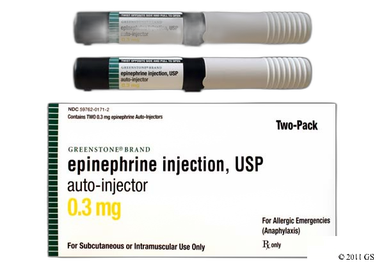
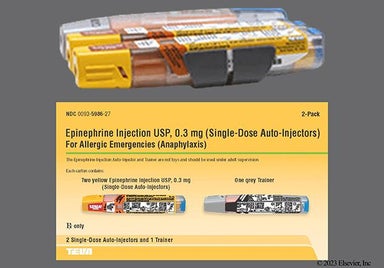
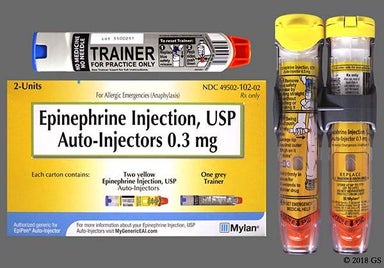
Epinephrine (Epipen), also known as the hormone adrenaline, is a life-saving injectable medication used to ease symptoms of anaphylaxis. It's available as a pre-filled syringe and auto-injector device that you inject into the muscle or under the skin of the middle of the outer thigh. Epinephrine (Epipen) can stabilize your blood pressure and heart rate, as well as ease your breathing. Side effects of this medication include restlessness, high blood pressure, and fast heart rate.
Epinephrine (Epipen) is a non-selective alpha- and beta-adrenergic receptor agonist that acts on receptors throughout the body. In doing so, it keeps your blood pressure from dropping too low, raises your heart rate, and opens your lungs so you can breathe normally. It also helps with swelling, itching, rashes, hives, and stomach issues linked to an allergic reaction.
The following side effects may get better over time as your body gets used to the medication. Let your healthcare provider know immediately if you continue to experience these symptoms or if they worsen over time.
Common Side Effects
Feeling anxious, nervous, or restless
Shaking or tremors
Weakness
Dizziness
Sweating
Racing heart
Less Common Side Effects
Pale skin color
Nausea or vomiting
Headache
Difficulty breathing
Epinephrine (Epipen) serious side effects
Contact your healthcare provider immediately if you experience any of the following.
The following Epinephrine (Epipen) side effects have also been reported
Along with its needed effects, a medicine may cause some unwanted effects. Although not all of these side effects may occur, if they do occur they may need medical attention.
Check with your doctor immediately if any of the following side effects occur:
bleeding, blistering, burning, coldness, discoloration of the skin, feeling of pressure, hives, infection, inflammation, itching, lumps, numbness, pain, rash, redness, scarring, soreness, stinging, swelling, tenderness, tingling, ulceration, or warmth at the injection site
Comes as easy-to-use, prefilled auto-injector devices and syringes
Can be injected through clothing, if needed
Can be used in pregnant or breastfeeding females who are experiencing severe allergic reactions
Cons
Must replace it when it expires, even if it isn't used
Must be stored at room temperature, which can be difficult if you keep this medication in your car during hot or cold weather
Can cause heart-related side effects (e.g., chest pain, irregular heartbeat)
Doesn't last very long, so might need to repeat the dose
Pharmacist tips for Epinephrine (Epipen)
Always carry epinephrine (Epipen) with you at all times so you can be prepared in case you have an allergic reaction.
Make sure you're able to recognize the symptoms of anaphylaxis and know how to correctly give yourself epinephrine (Epipen) injections.
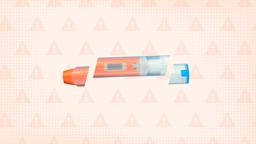
Each brand-name product of epinephrine might have slightly different directions, so be sure to review the instructions for your particular product: EpiPen, EpiPen JR, Adrenaclick, Symjepi. It's also a good idea to go over this information with friends or family members because you might need their help with this medication in emergency situations.
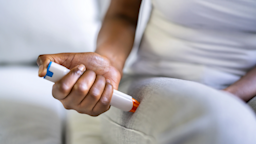
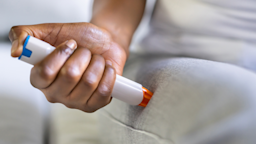
Inject the medication only into the middle of the outer thigh. Never inject into other parts of the body because the medication might not work as well. If necessary, you can inject through clothing. Never put your thumbs, fingers, or hand over the exposed needle.
If you're giving epinephrine (Epipen) to a child, make sure to hold their leg down firmly to prevent it from moving around too much. Doing so will make sure that the needle from the device doesn't break, get stuck in the skin, or accidentally cut through the child's skin during the injection process.
The auto-injector device or prefilled syringe delivers a single dose. Once it's been activated and used, don't try to reuse the same device or syringe again. It's normal if some medication still remains in the device after use. If you need to repeat a second dose, make sure to use a brand new device or syringe.
Store epinephrine (Epipen) at room temperature in the original container to protect it from light. Don't expose the medication to extreme heat (e.g., car glovebox) or cold (e.g., refrigerator or freezer) because this can damage the medication and make it not work well for you. If you do, throw it away and use a new prefilled syringe or device, or ask your provider for a new prescription.
Epinephrine (Epipen) can cause some serious health issues. This risk may be even higher for certain groups. If this worries you, talk to your doctor or pharmacist about other options.
Emergency medical care
Get medical help right away after you use epinephrine (Epipen), even if you start feeling better. It's best to have a healthcare provider monitor your condition just in case the symptoms come back or if you require additional treatments. Epinephrine (Epipen) can't replace immediate medical attention.
Injection-related problems
Epinephrine (Epipen) is only meant to be injected into the muscle or under the skin of the outer thigh. Don't injected it by any other route or into any other area of the body. Doing so can lead to serious medical problems.
If you're giving epinephrine (Epipen) to a child, try your best to hold the child's leg firmly in place and to prevent them from moving too much or kicking to prevent needle injuries.
Risk of skin infection
Serious skin infections are rare, but can happen after using epinephrine (Epipen). To lower this risk, don't inject this medication into the buttock area. If you notice the epinephrine (Epipen) injection site becomes red, warm, swollen, or tender, seek medical care so you can be tested for an infection and receive treatment, if needed.
Okay to use in people with sulfite allergy
Epinephrine (Epipen) might contain sulfites. But if you're experiencing a severe, life-threatening allergic reaction and have an allergy to sulfites, you should still use epinephrine (Epipen) because it's a life-saving medication.
High blood pressure and heart rate
Risk factors: Receiving epinephrine (Epipen) through the veins | History of heart problems | Taking medications that affect heart rate or blood pressure
Epinephrine (Epipen) raises blood pressure and heart rate. Let your provider know if you experience any trouble breathing, chest pain, dizziness, changes in vision, or headache. These could be signs that your blood pressure or heart rate is too high and you might need to receive treatment after your allergic reaction is gone.
Epinephrine (Epipen) dosage
The average cost for 1 package of 2 auto-injectors of 0.3mg of Epinephrine (Epipen) is $146.98 with a free GoodRx coupon. This is 47.73% off the average retail price of $281.18.
Your provider will prescribe epinephrine (Epipen) based on your body weight. Epinephrine (Epipen) is available as a prefilled syringe or device that contains a single and complete dose.
You can inject the medication into the muscle or under the skin in the middle of the outer thigh (even through clothing) when you feel an allergic reaction. Call 911. While you're waiting for help to arrive, you can repeat the dose if symptoms don't go away.
Interactions between Epinephrine (Epipen) and other drugs
Epinephrine (Epipen) may interact with certain medications or supplements. Always let your doctor and pharmacist know about any other medications or supplements (including prescribed and over-the-counter medications, vitamins, and dietary or herbal supplements) that you are currently taking. The list below does not include all possible drug interactions with Epinephrine (Epipen). Please note that only the generic name of each medication is listed below.
Although certain medicines should not be used together at all, in other cases two different medicines may be used together even if an interaction might occur. In these cases, your doctor may want to change the dose, or other precautions may be necessary. When you are taking this medicine, it is especially important that your healthcare professional know if you are taking any of the medicines listed below. The following interactions have been selected on the basis of their potential significance and are not necessarily all-inclusive.
Using this medicine with any of the following medicines is not recommended. Your doctor may decide not to treat you with this medication or change some of the other medicines you take.
Using this medicine with any of the following medicines is usually not recommended, but may be required in some cases. If both medicines are prescribed together, your doctor may change the dose or how often you use one or both of the medicines.
Using this medicine with any of the following medicines may cause an increased risk of certain side effects, but using both drugs may be the best treatment for you. If both medicines are prescribed together, your doctor may change the dose or how often you use one or both of the medicines.
This medicine is Colorless Package.Colorless Not applicable - Epinephrine 2-Pack Auto-Injector 0.3mg/0.3mL Solution for InjectionThis medicine is Colorless Package.Not applicable - Epinephrine 2-Pack Auto-Injector 0.3mg/0.3mL Solution for Injection
GoodRx Health has strict sourcing policies and relies on primary sources such as medical organizations, governmental agencies, academic institutions, and peer-reviewed scientific journals. Learn more about how we ensure our content is accurate, thorough, and unbiased by reading our editorial guidelines.
Prescription savings
Stop paying too much for your prescriptions. Compare prices, get pharmacy coupons, and save up to 80%.
At the first sign of a severe allergic reaction, inject Epinephrine (Epipen) into the muscle, or under the skin, into the side of your thigh. If needed, you can give Epinephrine (Epipen) through clothing. Never inject Epinephrine (Epipen) into the veins or into any other part of your body. Each pre-filled syringe or device contains one dose. Each brand-name product of epinephrine might have slightly different directions. Make sure to review the instructions for your particular product and ask your provider or pharmacist if you have any questions.
Epinephrine (Epipen) works very quickly to relieve symptoms of a serious allergic reaction. But its effects don't last very long. Remember to get medical help right away after you use Epinephrine (Epipen). This is because Epinephrine (Epipen) wears off quickly and there's a risk that you can have another reaction in minutes or hours. If needed, you can give yourself another dose of Epinephrine (Epipen) while waiting for medical help to arrive. But if you need more than two doses of Epinephrine (Epipen), it should be done under the supervision of a healthcare provider. This is because you might need to use other medications and possibly stay in the hospital to treat your severe allergic reactions.
Yes, Epinephrine (Epipen) raises your blood pressure and heart rate. A severe allergic reaction is life-threatening because it can cause your blood pressure and heart rate to drop. So Epinephrine (Epipen) is helpful in someone who's having an allergic reaction because it raises blood pressure and heart rate so that blood continues to flow properly throughout your body.
Yes, epinephrine (also called the hormone adrenaline) is a hormone that's normally made in your adrenal glands. The overall purpose of epinephrine is to prepare your body for the "fight-or-flight" response to stress. It does this by raising your heart rate and blood pressure and opening your airways to make it easier to breathe. Epinephrine (Epipen) is a synthetic (man-made) version of natural epinephrine that has these same actions in your body during an allergic reaction.