Elfabrio
Elfabrio (pegunigalsidase alfa or pegunigalsidase alfa-iwxj) is used to treat a rare genetic problem called Fabry disease. This medication is injected into the veins every 2 weeks by a healthcare provider. Side effects include headache and infusion-related reactions, such as nausea, chills, itchy or flushed skin, chest pain.


What is Elfabrio (pegunigalsidase alfa)?
What is Elfabrio (pegunigalsidase alfa) used for?
- Fabry disease in adults
How Elfabrio (pegunigalsidase alfa) works
Elfabrio (pegunigalsidase alfa) is an enzyme replacement therapy. It provides the body with an enzyme (protein) called alpha-galatosidase A.
In Fabry disease, your body isn't able to make the alpha-galatosidase A enzyme. This enzyme is important for breaking down fat (lipids) to help provide energy to your body. Without alpha-galatosidase A, fat builds up in the body and causes damage to many parts of the body, including the skin, kidneys, heart, and nervous system.
By replacing the missing alpha-galatosidase A enzyme, Elfabrio (pegunigalsidase alfa) helps lower fat buildup in the body for people with Fabry disease.
Drug facts
| Common Brands | Elfabrio |
|---|---|
| Drug Class | Alpha-galactosidase A enzyme replacement |
| Controlled Substance Classification | Not a controlled medication |
| Generic Status | No lower-cost generic available |
| Availability | Prescription only |

Side effects of Elfabrio (pegunigalsidase alfa)
The following side effects may get better over time as your body gets used to the medication. Let your healthcare provider know immediately if you continue to experience these symptoms or if they worsen over time.
Common Side Effects
- Infusion-related reactions (32%)
- Common cold symptoms (21%)
- Headache (21%)
- Diarrhea (19%)
- Fatigue (17%)
- Nausea (17%)
- Back pain (15%)
- Pain in arms or legs (15%)
- Stomach pain (12%)
Less Common Side Effects
- Allergic reaction
- Nerve pain
- Bloody urine
Elfabrio (pegunigalsidase alfa) serious side effects
Contact your healthcare provider immediately if you experience any of the following.
- Serious allergic reaction (e.g., anaphylaxis): difficulty breathing, tightness in the throat, hives, itching, fast heartbeat, nausea, dizziness, lightheadedness, swelling in the face or tongue
The following Elfabrio (pegunigalsidase alfa) side effects have also been reported
Side effects that you should report to your care team as soon as possible:
- Allergic reactions—skin rash, itching, hives, swelling of the face, lips, tongue, or throat
- Infusion reactions—chest pain, shortness of breath or trouble breathing, feeling faint or lightheaded
- Kidney injury (glomerulonephritis)—decrease in the amount of urine, red or dark brown urine, foamy or bubbly urine, swelling of the ankles, hands, or feet
Side effects that usually do not require medical attention (report these to your care team if they continue or are bothersome):
- Diarrhea
- Fatigue
- Headache
- Nausea
- Runny or stuffy nose
- Sore throat

Pros and cons of Elfabrio (pegunigalsidase alfa)
Pros
- Might help improve kidney health in people with Fabry disease
- Injected every 2 weeks
Cons
- Not a cure for Fabry disease
- Hasn't been studied in children

Pharmacist tips for Elfabrio (pegunigalsidase alfa)

- Make sure to mark your appointments on your calendar for when you need to see your provider and get your Elfabrio (pegunigalsidase alfa) infusions. This helps you keep track of your appointments so you don't miss any doses. You'll typically receive an infusion every 2 weeks. If you miss an appointment, contact your provider's office as soon as possible to reschedule.
- Each Elfabrio (pegunigalsidase alfa) infusion will take at least 3 hours for the first few infusions. It might take longer if you experience a reaction to the infusion, since your provider will need to temporarily stop or slow down the infusion. You can bring a book, something to work on, or an electronic device to keep yourself occupied while you receive Elfabrio (pegunigalsidase alfa).
- You might experience infusion-related reactions when you're treated with Elfabrio (pegunigalsidase alfa). Let your provider or nurse know right away if you experience fever, chills, nausea, cough, dizziness, chest pain, or rash during the infusion or even when you're already home. You might need more medical attention.
- Elfabrio (pegunigalsidase alfa) can cause serious allergic reactions. This can happen even if you've safely received this medication before. If you experience any allergic reaction, such as hives, tightness in your throat, or trouble breathing, let your nurse know right away. They'll stop the Elfabrio (pegunigalsidase alfa) infusion and give you medical attention right away.

Risks and warnings for Elfabrio (pegunigalsidase alfa)
Elfabrio (pegunigalsidase alfa) can cause some serious health issues. This risk may be even higher for certain groups. If this worries you, talk to your doctor or pharmacist about other options.
Allergic reactions
- Risk factors: People with antibodies against Elfabrio (pegunigalsidase alfa) in their blood
 Elfabrio (pegunigalsidase alfa) can cause severe and sometimes life-threatening allergic reactions, including anaphylaxis. Get medical attention right away if you experience symptoms of an allergic reaction, such as hives, facial swelling, trouble breathing, tightness in your throat, and a fast heartbeat.
Infusion-related reactions
- Risk factors: People with antibodies against Elfabrio (pegunigalsidase alfa) in their blood
Elfabrio (pegunigalsidase alfa) can cause infusion-related reactions. These reactions include nausea, vomiting, chills, itching, flushing, chest pain, dizziness, headache, weakness, shortness of breath, and muscle ache, among others. They can happen during any Elfabrio (pegunigalsidase alfa) infusion or up to a day after you've gone home. To lower the severity of these reactions and your overall risk, your provider might give you pretreatment medications, such as diphenhydramine (Benadryl), acetaminophen (Tylenol), and corticosteroids. If you experience a reaction while you're getting an infusion, your provider might stop, pause, or slow the infusion. Get medical help as soon as possible if you experience symptoms of a serious reaction, such as trouble breathing, tightness in your throat, hives, and itching.

Elfabrio (pegunigalsidase alfa) dosage
Typical dosage for Elfabrio (pegunigalsidase alfa)
Your healthcare provider will calculate the right dose for you based on your body weight. The typical dose is 1 mg/kg of body weight injected into the veins (intravenous or IV) every 2 weeks.

What are alternatives to Elfabrio (pegunigalsidase alfa)?

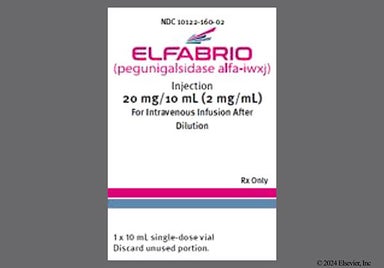
Elfabrio (pegunigalsidase alfa) images