epinastine
Epinastine hydrochloride is an antihistamine eye drop medication. It's used to prevent eye itchiness that's related to allergies. The eye drops are available by prescription for adults and children 2 years of age and older. The medication is placed directly into the eyes twice a day. Side effects include a burning feeling in the eye and eye redness.


What is Epinastine?
What is Epinastine used for?
- Prevention of eye itchiness from allergies
How Epinastine works
Epinastine is an antihistamine and a mast cell stabilizer. When the medication is placed in the eye, it works to block histamine, a chemical that causes itching and redness in the eye due to allergies.
Drug facts
| Common Brands | Elestat |
|---|---|
| Drug Class | Antihistamine |
| Controlled Substance Classification | Not a controlled medication |
| Generic Status | Lower-cost generic available |
| Availability | Prescription only |

Side effects of Epinastine
The following side effects may get better over time as your body gets used to the medication. Let your healthcare provider know immediately if you continue to experience these symptoms or if they worsen over time.
Common Side Effects
- Burning feeling in the eye (up to 10%)
- Eye redness (up to 10%)
- Small bumps around the eye (up to 10%)
- Itchy eye (up to 10%)
- Upper respiratory tract infection (e.g., common cold; 10%))
Less Common Side Effects
- Headache
- Runny nose
- Cough
- Sore throat
The following Epinastine side effects have also been reported
Along with its needed effects, a medicine may cause some unwanted effects. Although not all of these side effects may occur, if they do occur they may need medical attention.
Check with your doctor immediately if any of the following side effects occur:
Some side effects may occur that usually do not need medical attention. These side effects may go away during treatment as your body adjusts to the medicine. Also, your health care professional may be able to tell you about ways to prevent or reduce some of these side effects. Check with your health care professional if any of the following side effects continue or are bothersome or if you have any questions about them:
More common
some side effects were similar to problem being treated
Body aches or pain
chills
difficulty with breathing
ear congestion
headache
loss of voice
unusual tiredness or weakness
Other side effects not listed may also occur in some patients. If you notice any other effects, check with your healthcare professional.
Call your doctor for medical advice about side effects. You may report side effects to the FDA at 1-800-FDA-1088.

Get your GoodRx coupon

Pros and cons of Epinastine
Pros
- Works within 5 minutes
- Applied directly to the eye(s), so there aren't many side effects
- Can be used by children ages 2 years and older
Cons
- Must use twice a day
- Requires a prescription from a healthcare professional
- Only approved for preventing eye itchiness from allergies

Pharmacist tips for Epinastine

- It's best to use epinastine eye drops twice a day, every day, until the pollen season is over or until you're no longer exposed to whatever is causing allergies for you. This helps you get the most benefit from the medication.
- If you're using other eye drop medications at the same time as epinastine, wait at least 5 minutes between each medication. This gives your eye enough time to absorb each medication.
How to use epinastine eye drops:
- Wash your hands before and after putting epinastine drops in your eyes. Make sure the dropper tip doesn't touch your eye or any other surface. Also don't touch the dropper tip with your hands. This will help you avoid contaminating the solution and lower your risk for eye infections, like pink eye.
- Remove any contact lenses before you place the epinastine drop into your eyes. Then wait 10 minutes after using the epinastine eye drops to put your contacts back in. The eye drop has a preservative in it that can damage contacts. In general, don't put your contacts back in if your eyes are red or irritated to prevent more irritation.
- Tilt your head backward and look up. Gently pull your lower eyelid down to form a small pocket and squeeze one drop of medication into this pocket. Don't blink or wipe your eye. Close your eye while pressing a finger against the inside corner of your eye for about 1 minute to help keep the medication in your eye.
- When you're not using the epinastine eye drops, make sure the bottle is closed tightly. Keep the bottle at room temperature. Don't put it in the refrigerator or freezer.

Risks and warnings for Epinastine
Epinastine can cause some serious health issues. This risk may be even higher for certain groups. If this worries you, talk to your doctor or pharmacist about other options.
For use in the eye only
Only use epinastine in your eyes. Don't use the eye drops any other way. For example, don't swallow the medication or use the solution as an injection. Get medical help right away or contract the Poison Control Center at 1-800-222-1222 if you or someone else puts the epinastine eye drops in the mouth and swallows it.
Risk for bacterial infections in the eye if you use contaminated medication
Eye infections can happen if the epinastine in your eye drop bottle gets contaminated with bacteria and then you use the drops in your eyes. For your safety, it's important to wash your hands before each time you use the eye drops. Be careful not to let the dropper tip touch your eye or any other surface. Also avoid touching the dropper tip with your hands.
Don't use while wearing contact lenses
If you wear contact lenses, take them out each time before you place epinastine drops into your eye(s). The solution contains a preservative that can damage contact lenses. Wait at least 10 minutes after you put the medication in your eye before putting your contacts back in. The epinastine eye drops aren't meant to be used to relieve irritation from contact lenses.

Epinastine dosage
 Eye dropper
| Dosage | Quantity | Price as low as | Price per unit |
|---|---|---|---|
| 5ml of 0.05% | 1 eye dropper | $30.93 | $30.93 |

Interactions between Epinastine and other drugs
Although certain medicines should not be used together at all, in other cases two different medicines may be used together even if an interaction might occur. In these cases, your doctor may want to change the dose, or other precautions may be necessary. Tell your healthcare professional if you are taking any other prescription or nonprescription (over-the-counter [OTC]) medicine.

How much does Epinastine cost?
$30.93

What are alternatives to Epinastine?

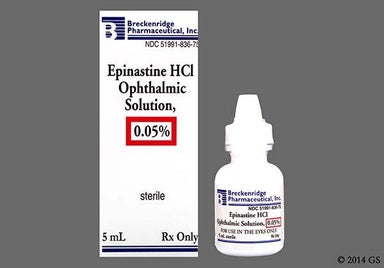
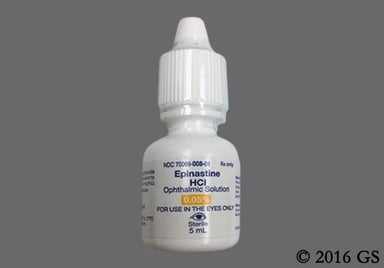
Epinastine images