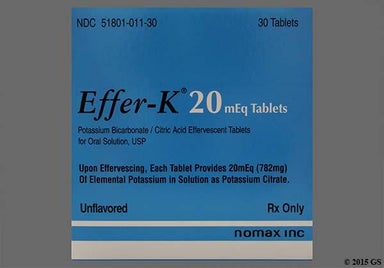
Effer-K
Effer-K (potassium bicarbonate) treats or prevents low potassium levels. It's a lower-cost, fizzing tablet that you dissolve in water or juice.


What is Effer-K (potassium bicarbonate)?
What is Effer-K (potassium bicarbonate) used for?
- Treatment of low potassium
- Prevention of low potassium
How Effer-K (potassium bicarbonate) works
Effer-K (potassium bicarbonate) is a dietary supplement that raises your potassium levels when they are too low. Potassium is essential for the heart, nerve, muscles, and other important processes in the body. Low potassium levels can be due to various causes.
Drug facts
| Common Brands | Effer-K, Klor-Con/EF |
|---|---|
| Drug Class | Dietary Supplement |
| Controlled Substance Classification | Not a controlled medication |
| Generic Status | No lower-cost generic available |
| Availability | Prescription only |

Side effects of Effer-K (potassium bicarbonate)
The following side effects may get better over time as your body gets used to the medication. Let your healthcare provider know immediately if you continue to experience these symptoms or if they worsen over time.
Common Side Effects
- Nausea
- Vomiting
- Abdominal discomfort
- Diarrhea
Less Common Side Effects
- Skin rash
Effer-K (potassium bicarbonate) serious side effects
Contact your healthcare provider immediately if you experience any of the following.
- Dangerously high potassium
The following Effer-K (potassium bicarbonate) side effects have also been reported
Side effects that you should report to your care team as soon as possible:
- Allergic reactions—skin rash, itching, hives, swelling of the face, lips, tongue, or throat
- High potassium level—muscle weakness, fast or irregular heartbeat
Side effects that usually do not require medical attention (report to your care team if they continue or are bothersome):

Get your GoodRx coupon

Pros and cons of Effer-K (potassium bicarbonate)
Pros
- Good for people who can't swallow pills, and tastes better than potassium chloride liquid
- Less likely to cause stomach injury compared to potassium pills
- Available in various flavors
- Inexpensive, including the brand name form
Cons
- Usually taken many times a day
- Can cause stomach upset, so best to take with food
- Must be fully dissolved into a cold liquid
- Requires regular blood draws to monitor potassium levels

Pharmacist tips for Effer-K (potassium bicarbonate)

- Each tablet comes in an individual foil pouch. Keep the tablet in the pouch until you are ready to use it.
- Completely dissolve the tablet in 2 to 3 fl oz (about 1/4 to 1/3 of a cup) of cold or iced water before drinking. If taking the unflavored form, you can dissolve it in cold juice. Do not swallow the tablet whole.
- Stomach upset is a common side effect of all oral potassium supplements. To prevent stomach upset from Effer-K (potassium bicarbonate), try dissolving it in more fluid, take it with food, and sip it slowly over 5 to 10 minutes.
- You'll want to avoid low-salt foods and salt substitutes, since they usually have high amounts of potassium which can make your level go too high. Tell your provider if you are eating these types of foods. Your provider may check your potassium levels more regularly, or adjust your dose of Effer-K (potassium bicarbonate).
- Make sure your provider and pharmacist know about all of your other medications. Some medications raise potassium levels, so if you take them with Effer-K (potassium bicarbonate), your potassium level may go too high. Water pills like Lasix (furosemide) lower potassium levels, so your potassium level will go up if you stop taking them, which means you may need to stop taking Effer-K (potassium bicarbonate) as well.
- Take Effer-K (potassium bicarbonate) exactly as prescribed. It's hard to tell when your potassium level is too low or too high, so make sure to follow-up with your provider and get your potassium labs checked on a regular basis.
- If you have a stomachache that doesn't go away, or notice black-colored stools, these could be signs of injury or bleeding in the stomach or intestines. Let your provider know immediately, since it isn't safe to take Effer-K (potassium bicarbonate) with these conditions.

Risks and warnings for Effer-K (potassium bicarbonate)
Effer-K (potassium bicarbonate) can cause some serious health issues. This risk may be even higher for certain groups. If this worries you, talk to your doctor or pharmacist about other options.
Dangerously high potassium
Risk factors: Kidney disease | Taking water pills that raise potassium levels, such as spironolactone (Aldactone) or triamterene (Dyrenium) | Taking ACE-inhibitors such as lisinopril (Zestril) or benazapril (Lotensin)
Very high potassium levels can be life-threatening, and tend to happen when the body is not able to get rid of potassium fast enough, such as in people with kidney disease. High potassium levels are more likey to happen from potassium injections, but can also happen if you take too much Effer-K (potassium bicarbonate). It's hard to tell when your potassium level is too high, so it's important to follow-up with your provider and get your potassium and kidney labs checked on a regular basis. Make sure your provider and pharmacist know about all of your other medications; certain medications, including certain types of water pills and ACE-inhibitors (lisinopril (Zestril) and other medications that end in -pril), can raise potassium levels and may not always be safe to take with Effer-K (potassium bicarbonate), or will require more frequent lab checks.

Effer-K (potassium bicarbonate) dosage
 Effervescent tablet
| Dosage | Quantity | Price as low as | Price per unit |
|---|---|---|---|
| 20meq | 30 effervescent tablets | $25.03 | $0.83 |
| 25meq | 30 effervescent tablets | $18.43 | $0.61 |
| 10meq | 30 effervescent tablets | $22.68 | $0.76 |
Typical dosage for Effer-K (potassium bicarbonate)
Take 1 tablet by mouth 1 to 4 times daily. Dissolve the tablet completely in water or another beverage beforehand, then drink the solution. Your provider will adjust your dose based on your other medical conditions, medications, and labs.

How much does Effer-K (potassium bicarbonate) cost?
$18.43

What are alternatives to Effer-K (potassium bicarbonate)?

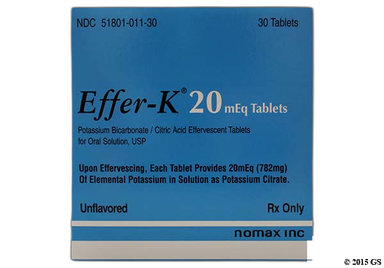
Effer-K (potassium bicarbonate) images