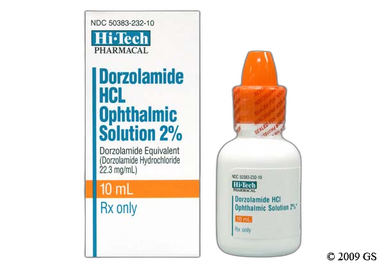
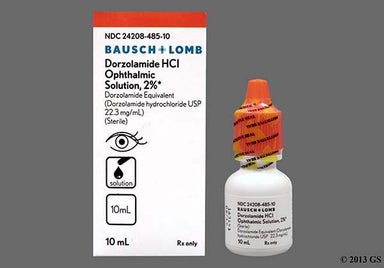
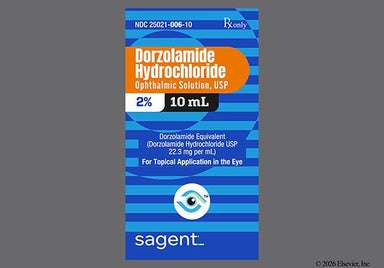
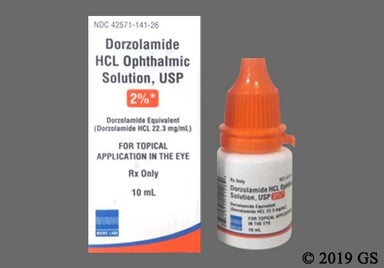
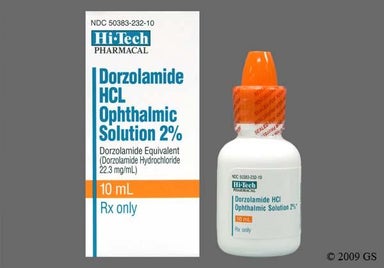
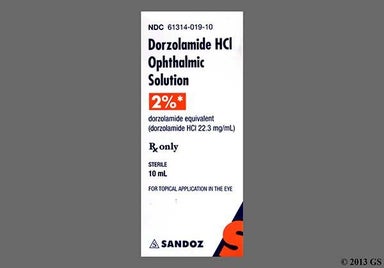
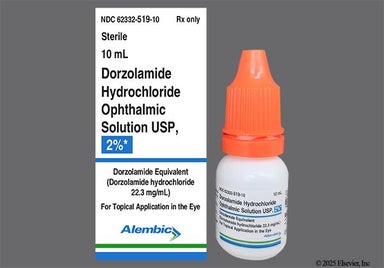
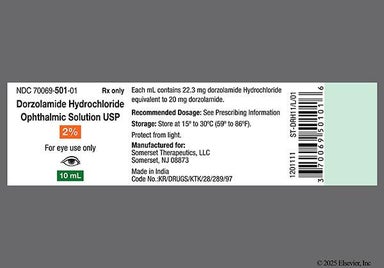
Dorzolamide is an eye drop medication used to treat high pressure in the eye in people with glaucoma or ocular hypertension. The dosage is 1 drop applied directly into the affected eye(s) three times per day. It's available as a generic only as the brand-name medication Trusopt has been discontinued. Dorzolamide is a sulfa medication, so it might not be the best choice if you have a serious sulfa allergy. Side effects include burning or stinging in the eye and a bitter taste in the mouth.
The following side effects may get better over time as your body gets used to the medication. Let your healthcare provider know immediately if you continue to experience these symptoms or if they worsen over time.
Common Side Effects
Burning or stinging in the eye (33%)
Bitter taste (25%)
Bacterial eye infection (10-15%)
Allergic reaction in the eye (10%)
Less Common Side Effects
Pink eye
Eyelid irritation
Blurry vision
Eye redness
Tearing
Dry eye
Light sensitivity
Dorzolamide serious side effects
Contact your healthcare provider immediately if you experience any of the following.
The following Dorzolamide side effects have also been reported
Along with its needed effects, a medicine may cause some unwanted effects. Although not all of these side effects may occur, if they do occur they may need medical attention.
Check with your doctor immediately if any of the following side effects occur:
More common
Burning, stinging, or discomfort when medicine is applied
itching, redness, swelling, or other sign of the eye or eyelid irritation
numbness, tingling, pain, or weakness in the hands or feet
seizures
trembling
weakness and heaviness of the legs
Some side effects may occur that usually do not need medical attention. These side effects may go away during treatment as your body adjusts to the medicine. Also, your health care professional may be able to tell you about ways to prevent or reduce some of these side effects. Check with your health care professional if any of the following side effects continue or are bothersome or if you have any questions about them:
More common
Bitter taste
feeling of something in the eye
Less common
Changes in color vision
difficulty seeing at night
dryness of the eyes
eyelid reactions
headache
increased sensitivity of the eyes to sunlight
Incidence not known
Bloody nose
burning, crawling, itching, numbness, prickling, "pins and needles", or tingling feelings
Doesn't typically cause side effects throughout the rest of your body
Can be combined with other medications
Safe to use in children
Cons
Needs to be used 3 times a day
Can cause eye irritation right after applying a drop
Not the best option if you're allergic to sulfa medications
Pharmacist tips for Dorzolamide
Mark your appointments to see your optometrist or ophthalmologist. You'll need regular eye exams so that your eye specialist can check how well dorzolamide is working for you.
You might need many different eye drop medications to help lower your eye pressure. If you're using other eye drop medications in the evening at the same time as dorzolamide, wait 5 minutes between each medication to give your eye(s) time to absorb each one.
Take out any soft contact lenses from your eye(s) before each dose of dorzolamide. The medication contains a preservative called benzalkonium chloride that can damage your contacts. You can put your contacts back in 15 minutes after you use the eye drops.
Keep the bottle of dorzolamide, especially the tip, clean and free of germs. Always keep it tightly capped when not in use, and avoid touching the dropper tip with your hands or letting it touch your eye or any surface. Contamination can lead to germs entering the medication, which could raise your risk of an eye infection that could lead to vision loss.
Each bottle of dorzolamide contains 10 mL of medication. This should last about 2 months when the eye drops are taken as prescribed (1 drop three times per day). Ask your pharmacist for a refill if you're about to run out.
How to use dorzolamide:
Make sure you know how to use the dorzolamide eye drops to avoid accidentally hurting yourself or wasting any of the medication. Review the Instructions for Use and ask your eye specialist or pharmacist if you have any questions about using the medication.
After washing your hands well with soap and water, tilt your head back so you're looking up. Use your index (pointer) finger to pull your inner corner of your eye down to form a pocket. Gently squeeze 1 drop of medication into the pocket. Then, close your eye and lightly press on the inside corner of your eye for at least a minute.
Risks and warnings for Dorzolamide
Dorzolamide can cause some serious health issues. This risk may be even higher for certain groups. If this worries you, talk to your doctor or pharmacist about other options.
Severe allergic reactions
Risk factors: Sulfa allergy
Although dorzolamide is mainly absorbed into the eye, it's possible for a little bit to get absorbed into your body. Let your care team know if you're allergic to sulfa medications, as dorzolamide is a type of sulfa medication, and you might have a serious reaction when using it. Get medical help right away if you have any signs of an allergic reaction, such as trouble breathing, skin rash or redness, itching, or swelling. Contact your prescriber if you have any symptoms in or around your eyes, such as eye irritation, pain, or itching.
Risk for eye infection (from contamination)
Risk factors: Corneal disease | Injury or damage to the surface of the eye
Wash your hands before each time you use dorzolamide. Also be careful not to let the tip of the bottle touch your eye or any other surface. Don't touch the dropper tip with your hands. It's important to follow these steps to prevent contaminating the medication with germs. Otherwise, you could get eye infections, like bacterial keratitis (a bacterial infection of the cornea).
Risk for swelling of the cornea
Risk factors: Low number of cells on the cornea
Dorzolamide can raise the risk of swelling of the cornea (or corneal edema) in certain people. The cornea is the outermost layer of the eye that protects the front of the eye. Talk to your eye specialist before you start dorzolamide if you've ever been told that your cornea is thin or that you have a low number of cells on the cornea.
Dorzolamide dosage
The average cost for 1 eye dropper of 10ml of 2% of Dorzolamide is $19.23 with a free GoodRx coupon.
Dorzolamide may interact with certain medications or supplements. Always let your doctor and pharmacist know about any other medications or supplements (including prescribed and over-the-counter medications, vitamins, and dietary or herbal supplements) that you are currently taking. The list below does not include all possible drug interactions with Dorzolamide. Please note that only the generic name of each medication is listed below.
Although certain medicines should not be used together at all, in other cases two different medicines may be used together even if an interaction might occur. In these cases, your doctor may want to change the dose, or other precautions may be necessary. When you are taking this medicine, it is especially important that your healthcare professional know if you are taking any of the medicines listed below. The following interactions have been selected on the basis of their potential significance and are not necessarily all-inclusive.
Using this medicine with any of the following medicines is usually not recommended, but may be required in some cases. If both medicines are prescribed together, your doctor may change the dose or how often you use one or both of the medicines.
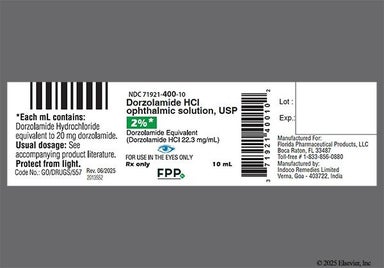
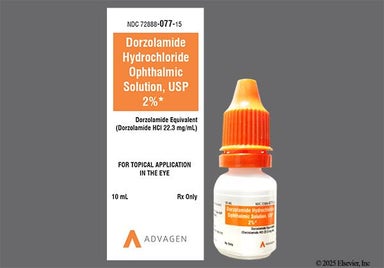
This medicine is Colorless Eye Dropper.This medicine is Colorless Eye Dropper.This medicine is Colorless Eye Dropper.colorless - Dorzolamide Hydrochloride 2% Ophthalmic SolutionThis medicine is Colorless Eye Dropper.This medicine is Colorless Eye Dropper.This medicine is Colorless Eye Dropper.This medicine is Colorless Eye Dropper.colorless - Dorzolamide Hydrochloride 2% Ophthalmic SolutionThis medicine is Colorless Eye Dropper.colorless - Dorzolamide Hydrochloride 2% Ophthalmic SolutionThis medicine is Colorless Eye Dropper.colorless - Dorzolamide Hydrochloride 2% Ophthalmic Solution
GoodRx Health has strict sourcing policies and relies on primary sources such as medical organizations, governmental agencies, academic institutions, and peer-reviewed scientific journals. Learn more about how we ensure our content is accurate, thorough, and unbiased by reading our editorial guidelines.
Prescription savings
Stop paying too much for your prescriptions. Compare prices, get pharmacy coupons, and save up to 80%.
It depends. Sometimes, people take Dorzolamide for their entire life. Talk to your prescriber if you have questions about how long you should be taking this medication. Don't stop taking it unless your prescriber tells you to do so. Stopping Dorzolamide suddenly without proper guidance can raise the pressure in your eye, which can lead to vision problems.
Small amounts of Dorzolamide after a single dose can stay in your system for almost 2 years. This time frame is estimated based on the medication's half-life, which is a measure of the time it takes for the medication to leave the body. Even though a dose can stay in the body for a long time, Dorzolamide must be taken three times per day to keep medication levels in your eye high enough for it to work well.
No, Dorzolamide doesn't lower your blood pressure. But it does reduce the pressure in your eye, which is different. Since Dorzolamide is an eye drop, very little is absorbed into your body, so it typically doesn’t cause side effects that affect other parts of your body, such as low blood pressure.
Yes, Dorzolamide can be used together with brimonidine (Alphagan P. Brimonidine is an alpha-2 agonist, so it works a little differently from Dorzolamide to treat high eye pressure. Depending on how severe your eye condition is, it's possible that your eye specialist might prescribe Dorzolamide and brimonidine (Alphagan P) together. Speak to them about the differences between these medications.
Cosopt (dorzolamide / timolol) is a combination product that contains Dorzolamide as one of the active ingredients. The other active ingredient is the beta blocker timolol. Because Cosopt is a combination product, it might be preferred for people who have more severe symptoms. Ask your eye specialist if you have questions about comparing these two medications.
No, store Dorzolamide at room temperature only. Keep the medication in the original packaging to protect it from light.
After opening, Dorzolamide can be used until the expiration date that's listed on the bottle. Throw away the bottle after this date, even if there's medication still inside. You can ask your pharmacist for a refill if needed.