phenoxybenzamine
Phenoxybenzamine (Dibenzyline) is used to treat a condition called pheochromocytoma. It's taken by mouth, typically 2-4 times a day. But it's not meant for long-term use. Side effects of phenoxybenzamine (Dibenzyline) include low blood pressure when standing from a sitting position, fast heart rate, and stuffy nose. It's available as a brand-name capsule and also as a lower-cost generic.


What is Phenoxybenzamine (Dibenzyline)?
What is Phenoxybenzamine (Dibenzyline) used for?
- Treatment of high blood pressure or sweating in adults with pheochromocytoma
How Phenoxybenzamine (Dibenzyline) works
Phenoxybenzamine (Dibenzyline) is a non-selective alpha blocker. By blocking alpha receptors, phenoxybenzamine (Dibenzyline) prevents certain chemicals (called catecholamines) from binding to these receptors. This helps to relax your blood vessels, lower your blood pressure, and lessen sweating from pheochromocytoma.
Drug facts
| Common Brands | Dibenzyline |
|---|---|
| Drug Class | Alpha blocker |
| Controlled Substance Classification | Not a controlled medication |
| Generic Status | Lower-cost generic available |
| Availability | Prescription only |

Side effects of Phenoxybenzamine (Dibenzyline)
The following side effects may get better over time as your body gets used to the medication. Let your healthcare provider know immediately if you continue to experience these symptoms or if they worsen over time.
Common Side Effects
- Dizziness
- Sleepiness
- Stuffy nose
- Upset stomach
- Small pupils
- Trouble ejaculating
- Pounding heart (fast heart rate)
Phenoxybenzamine (Dibenzyline) serious side effects
Contact your healthcare provider immediately if you experience any of the following.
- Dangerously low blood pressure: dizziness, lightheadedness, pale skin, feeling faint
The following Phenoxybenzamine (Dibenzyline) side effects have also been reported
In rats and mice, phenoxybenzamine has been found to increase the risk of development of malignant tumors. It is not known if phenoxybenzamine increases the chance of tumors in humans.
Along with its needed effects, a medicine may cause some unwanted effects. Although not all of these side effects may occur, if they do occur they may need medical attention.
Some side effects may occur that usually do not need medical attention. These side effects may go away during treatment as your body adjusts to the medicine. Also, your health care professional may be able to tell you about ways to prevent or reduce some of these side effects. Check with your health care professional if any of the following side effects continue or are bothersome or if you have any questions about them:
More common
Dizziness or lightheadedness, especially when getting up from a lying or sitting position
fast heartbeat
pinpoint pupils
Less common
Confusion
drowsiness
dryness of mouth
headache
lack of energy
sexual problems in males
unusual tiredness or weakness
Other side effects not listed may also occur in some patients. If you notice any other effects, check with your healthcare professional.
Call your doctor for medical advice about side effects. You may report side effects to the FDA at 1-800-FDA-1088.

Pros and cons of Phenoxybenzamine (Dibenzyline)
Pros
- Works well to treat high blood pressure and sweating from pheochromocytoma
- Taken by mouth
Cons
- Taken 2 to 4 times per day
- Can't be used long-term because of the risk of cancer

Pharmacist tips for Phenoxybenzamine (Dibenzyline)

- Mark your calendar with your appointments to see your provider during treatment with phenoxybenzamine (Dibenzyline). This is to make sure phenoxybenzamine (Dibenzyline) is working well and is as safe as possible for you.
- It's recommended you measure and record your blood pressure at home and bring these readings to your medical appointments. This will help your provider see how well the medication is working for you and guide any dose changes.
- Taking phenoxybenzamine (Dibenzyline) can raise your heart rate. If you notice your heart rate is going up after starting this medication or if you feel a pounding heart, talk with your provider. If appropriate, they prescribe a beta blocker to help slow your heart rate.
- You might feel dizzy when you start taking phenoxybenzamine (Dibenzyline) and when your provider raises your dose. This side effect should lessen over time as you continue taking the medication and your body gets used to your new blood pressure.
- Phenoxybenzamine (Dibenzyline) can make you sleepy and affect your ability to think, react, and focus. Don't drive or do activities where you need to focus until you know how this medication affects you. Also, don't drink alcohol because it can worsen sleepiness and dizziness.

Risks and warnings for Phenoxybenzamine (Dibenzyline)
Phenoxybenzamine (Dibenzyline) can cause some serious health issues. This risk may be even higher for certain groups. If this worries you, talk to your doctor or pharmacist about other options.
Drop in blood pressure upon standing
- Risk factors: Taking medications for high blood pressure, chest pain, or erectile dysfunction | History of low blood pressure or a drop in blood pressure after taking other medications
Phenoxybenzamine (Dibenzyline) can cause a drop in blood pressure when you stand up from a seated or lying down position. This might make you feel dizzy or it can cause you to faint. Your risk is higher if you're also taking other blood pressure medications or erectile dysfunction medications at the same time. Be cautious with your activities when you first start phenoxybenzamine (Dibenzyline) or when your provider raises your dose.
Medication interactions
Phenoxybenzamine (Dibenzyline) blocks alpha receptors in your body to lower your blood pressure. It can interact with certain medications that activates the same receptors to work. For example, one of the ways epinephrine (Epipen) works to treat a serious allergic reaction is to act on your alpha receptors to raise blood pressure. But if you're taking phenoxybenzamine (Dibenzyline), it can prevent epinephrine (Epipen) from working well. Before you start phenoxybenzamine (Dibenzyline), ask your provider or pharmacist to check to see if there might be any interactions with your current medications.
Not for long-term use (risk of cancer)
Phenoxybenzamine (Dibenzyline) isn't meant for long-term use. There have been a few reports of people developing cancer after taking phenoxybenzamine (Dibenzyline) for a long time. Ask your provider how long should receive treatment with this medication.

Phenoxybenzamine (Dibenzyline) dosage
 Capsule
| Dosage | Quantity | Price as low as | Price per unit |
|---|---|---|---|
| 10mg | 60 capsules | $598.56 | $9.98 |

Interactions between Phenoxybenzamine (Dibenzyline) and other drugs
Although certain medicines should not be used together at all, in other cases two different medicines may be used together even if an interaction might occur. In these cases, your doctor may want to change the dose, or other precautions may be necessary. When you are taking this medicine, it is especially important that your healthcare professional know if you are taking any of the medicines listed below. The following interactions have been selected on the basis of their potential significance and are not necessarily all-inclusive.
Using this medicine with any of the following medicines is usually not recommended, but may be required in some cases. If both medicines are prescribed together, your doctor may change the dose or how often you use one or both of the medicines.
Using this medicine with any of the following medicines may cause an increased risk of certain side effects, but using both drugs may be the best treatment for you. If both medicines are prescribed together, your doctor may change the dose or how often you use one or both of the medicines.
- Acebutolol
- Alprenolol
- Atenolol
- Betaxolol
- Bevantolol
- Bisoprolol
- Bucindolol
- Carteolol
- Carvedilol
- Celiprolol
- Dilevalol
- Esmolol
- Labetalol
- Levobunolol
- Mepindolol
- Metipranolol
- Metoprolol
- Nadolol
- Nebivolol
- Oxprenolol
- Penbutolol
- Pindolol
- Propranolol
- Sotalol
- Talinolol
- Tertatolol
- Timolol
- Vardenafil

How much does Phenoxybenzamine (Dibenzyline) cost?
$598.56

Phenoxybenzamine (Dibenzyline) contraindications
Contraindications are specific health conditions or situations in which a person should not take a medication due to safety concerns. If you have any of the following conditions or if any of the following apply to you, let your healthcare provider know because Phenoxybenzamine (Dibenzyline) will not be safe for you to take.
- Medical conditions where a drop in blood pressure isn't desired

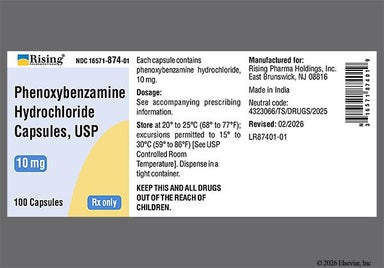
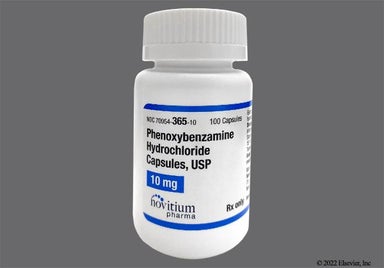
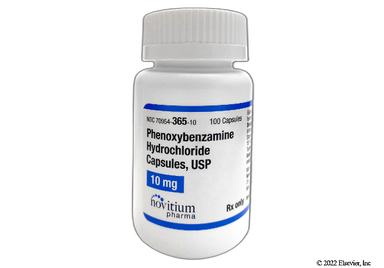
Phenoxybenzamine (Dibenzyline) images