


Children’s NyQuil Dosages: Your GoodRx Guide
The recommended children’s dosage for NyQuil will vary depending on which product you use. Get dosage info for NyQuil Kids Honey, Children’s NyQuil, and more.
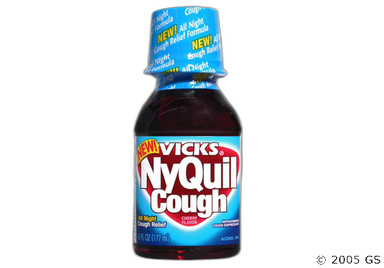
Nyquil Cough (dextromethorphan / doxylamine) is an over-the-counter (OTC) medication for treating symptoms of the common cold, such as cough and runny nose. It's a combination of two medications, dextromethorphan (cough suppressant) and doxylamine (antihistamine). It's taken by mouth, typically every 6 hours as needed, by adults and children 6 years and older. Some common side effects of Nyquil Cough (dextromethorphan / doxylamine) include nausea, stomach upset, and drowsiness. If this medication makes you too sleepy during the day, try taking it only at nighttime or before bed.

Short-term relief of cold symptoms, including:
Nyquil Cough (dextromethorphan / doxylamine) is a combination of two medications.
| Common Brands | Robitussin Nighttime Cough DM, Safetussin PM, Basic Care Night Time Cough |
|---|---|
| Drug Class | Cough suppressant / Antihistamine |
| Controlled Substance Classification | Not a controlled medication |
| Generic Status | No lower-cost generic available |
| Availability | Over-the-counter |

The following side effects may get better over time as your body gets used to the medication. Let your healthcare provider know immediately if you continue to experience these symptoms or if they worsen over time.
Possible dextromethorphan side effects:
Possible doxylamine side effects:
Contact your healthcare provider immediately if you experience any of the following.




Nyquil Cough (dextromethorphan / doxylamine) can cause some serious health issues. This risk may be even higher for certain groups. If this worries you, talk to your doctor or pharmacist about other options.
Nyquil Cough (dextromethorphan / doxylamine) contains dextromethorphan and doxylamine, which are common ingredients in many other over-the-counter products, including Nyquil Cough (dextromethorphan / doxylamine). Taking more than one product containing the same ingredients can lead to an accidental overdose and life-threatening symptoms. Too much dextromethorphan can cause trouble breathing and seizures. Too much doxylamine can cause blurry vision, skin redness, and confusion.
If you're not sure whether you're taking a medication with dextromethorphan or doxylamine, ask your pharmacist to help you check for interactions. If you think that you or your child might’ve accidentally taken too much Nyquil Cough (dextromethorphan / doxylamine), call your Poison Control Center at 1-800-222-1222 right away.
In addition, dextromethorphan can be misused. To lower the risk of misuse, retail stores in most states restricts the purchase of dextromethorphan to people over 18 years old with a valid form of photo identification.
Talk to your PCP first before taking Nyquil Cough (dextromethorphan / doxylamine) if you're taking or have taken a monoamine oxidase inhibitor (MAOIs) within the past 14 days. Also, let them know if you've taken other medications that can raise serotonin levels, such as antidepressants. These medications can interact with Nyquil Cough (dextromethorphan / doxylamine) and cause a medical condition called serotonin syndrome, which is dangerous. Serotonin syndrome can lead to serious side effects, like confusion, stiff muscle, sweating, and fast heart rate. Get medical attention right away if you have any of these symptoms. Your healthcare team can also recommend other safer options to treat your cough.
Speak to your care team first before using Nyquil Cough (dextromethorphan / doxylamine) if you have other medical conditions to make sure this medication is safe and appropriate for you. You might need other treatment if you have a cough with a lot of mucus or long-term coughing caused by conditions like asthma, emphysema, smoking, and bronchitis. In addition, it's possible for this medication to worsen certain medical conditions, such as glaucoma or trouble urinating.
Nyquil Cough (dextromethorphan / doxylamine) can make you sleepy, which can affect your ability to focus, think, or react. This side effect is more likely to happen or be more intense if you're over 65 years old, drink alcohol while taking Nyquil Cough (dextromethorphan / doxylamine), or take other medications that cause sleepiness (e.g., opioids, benzodiazepines, sleep medications). It's best to avoid alcohol and other medications that might make you sleepy while taking Nyquil Cough (dextromethorphan / doxylamine). Don't drive or operate machinery until you know how this medication affects you.

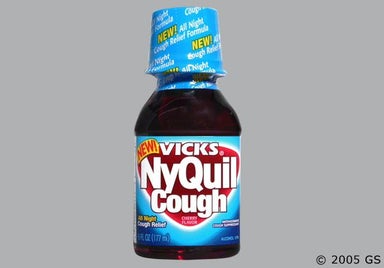
 Bottle of liquid
| Dosage | Quantity | Price as low as | Price per unit |
|---|---|---|---|
| 15mg/6.25mg/15ml | 1 bottle | $7.55 | $7.55 |
Dextromethorphan / doxylamine combinations are made by several manufacturers. Be sure to check the medication label for specific instructions for your product.
Some examples are listed below:
Basic Care Nighttime Cough Each 30 mL of solution contains dextromethorphan 30 mg and doxylamine 12.5 mg.
Children's Robitussin Nighttime Cough Each 10 mL of solution contains dextromethorphan 15 mg and doxylamine 6.25 mg.


Contraindications are specific health conditions or situations in which a person should not take a medication due to safety concerns. If you have any of the following conditions or if any of the following apply to you, let your healthcare provider know because Nyquil Cough (dextromethorphan / doxylamine) will not be safe for you to take.

Short-term relief of cold symptoms, including:




Prescription savings
Stop paying too much for your prescriptions. Compare prices, get pharmacy coupons, and save up to 80%. Find expert answers to your health questions so you can make the best decisions for yourself and your family.
Health conditions
Medications & treatment
Access & affordability
Medication discounts

Nyquil Cough isn't known to directly interact with ibuprofen (Advil). These medications contain different ingredients and relieve different symptoms. Ibuprofen (Advil) is used to help with pain and fever and Nyquil Cough is used to soothe cough and relieve allergies. But keep in mind that ibuprofen (Advil) isn't a good option for everyone because it has heart risks and can cause kidney problems. Before taking over-the-counter medications, speak with your primary care provider (PCP) to make sure it's safe for you to do so.
Yes, the dextromethorphan in Nyquil Cough is a cough suppressant, also known as antitussive. It works to lessen cough by blocking your cough reflex.
Yes, Nyquil Cough can help ease "dry" or non-productive cough in adults and children by suppressing the cough reflex. These types of cough are usually due to throat irritation from a cold or allergies. If you've a wet cough, consider taking Mucinex (guaifenesin) to loosen up the mucus.
Both dextromethorphan and doxylamine in Nyquil Cough can make you sleepy. In particular, doxylamine can cause excessive sleepiness. Avoid drinking alcohol while you take Nyquil Cough because doing so can make you feel even drowsier, leading to accidental injuries. Don't drive a car or do anything that needs a lot of focus until you know how this medication affects you. If you feel drowsy after taking Nyquil Cough, consider only taking this medication at bedtime. Ask your healthcare team about non-drowsy treatment options to help with your symptoms during the day.
Yes, you can take Nyquil Cough with cough drops. Although both products help to relieve cough, they typically have different ingredients (e.g., menthol, pectin) and are safe to take together. Be aware that some cough drops contain dextromethorphan, which can raise your risk of overdose if you take it with Nyquil Cough. If you aren't sure which cough drop is safe for you, speak with a pharmacist on how to best take these medications.
Some dextromethorphan and doxylamine combination medications contain alcohol as an inactive ingredient. But the amount of alcohol in the oral solution is very little since it's used to stabilize the medication. If you've concerns, check with your pharmacist which formulation you have before starting this medication.
