Key takeaways:
Many ancient cultures have used garlic as a form of plant-based medicine.
Some people think that garlic can cure vaginal yeast infections.
In labs, garlic shows anti-yeast properties. But there aren’t good studies showing that it’s effective as a treatment for vaginal yeast infections.
Save on related medications
If you’ve ever had a yeast infection, you may have had a friend suggest using garlic to help cure it. This natural remedy has a reputation for being a quick fix that won’t have you driving to the pharmacy. But does it work? Read below to find out what the science tells us about garlic as a treatment for yeast infections.
What is a yeast infection?
A yeast infection is an infection caused by a fungus (usually candida albicans) that leads to:
Itching and irritation of the vagina and vulva
Vaginal rash
Vaginal discharge (usually a white, odor-free discharge that may look like cottage cheese)
Pain with peeing or sex
Search and compare options
Three-quarters of females will experience a vaginal yeast infection at some point in their lives. Some unlucky people (between 5% and 8%) will develop recurrent yeast infections four or more times a year.
Where did the idea that garlic can treat it come from?
The idea of using garlic as medicine goes all the way back to biblical times. It was mentioned in the Bible during the Jewish people’s flight from Egypt. The first recorded use was in Egyptian times, 1550 BC, when people used garlic to help fight off many different diseases.
Throughout history, many cultures have viewed garlic as a plant with natural healing properties. Historians have found documentation that garlic was used as medicine in historical traditions ranging from the ancient Greeks to Ayurvedic medicine in India to Chinese medicine practitioners.
In more modern times, garlic is said to cure everything from constipation and toothaches to animal bites and vaginal yeast infections.
Claim: A clove of garlic will help a yeast infection
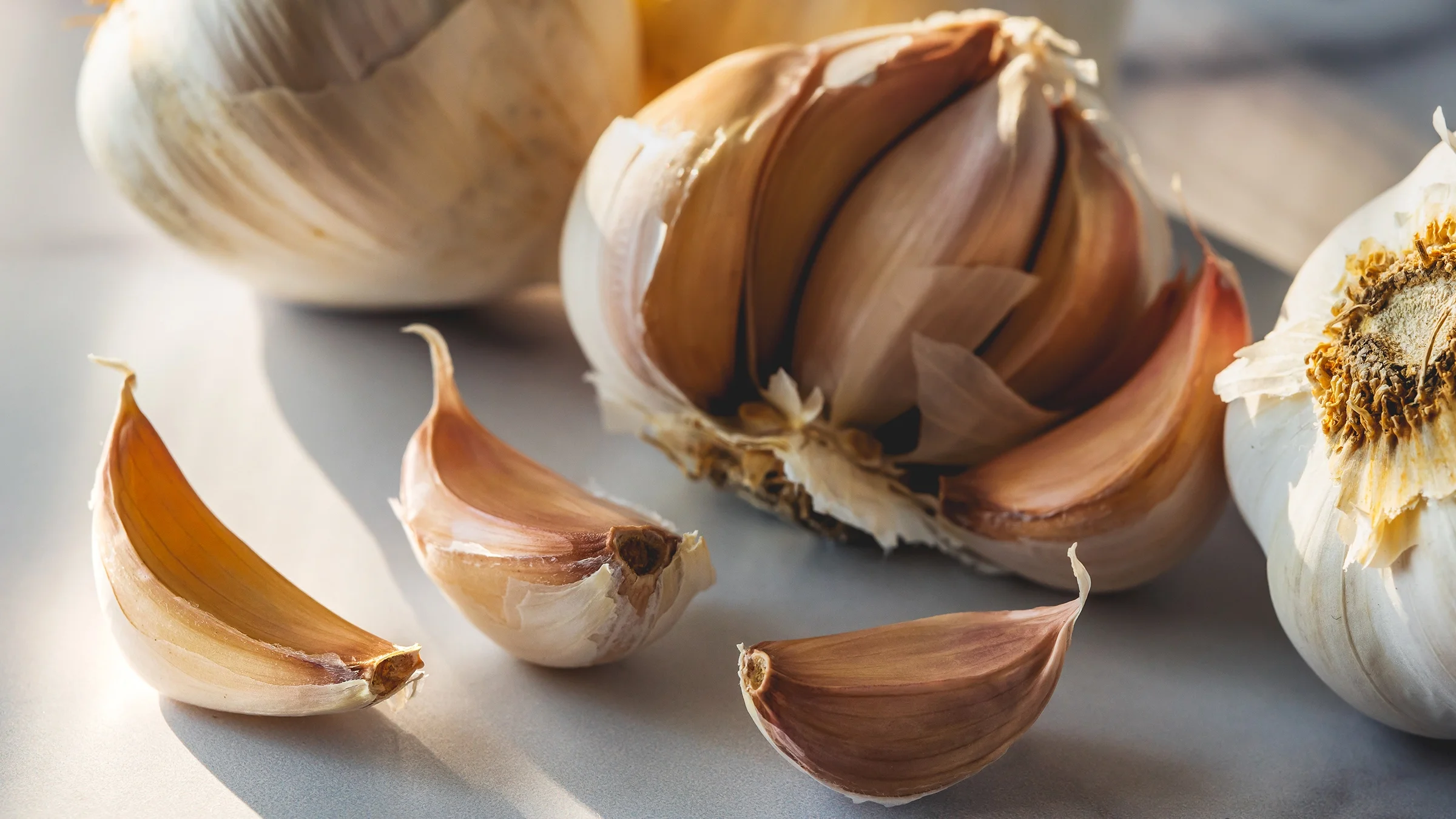
The idea is that if you have a yeast infection, garlic can help cure it. Either you eat it or apply it topically to the vaginal area. People do this either by using a garlic cream and applying it to the vaginal area or by putting a few cloves of garlic in the vagina.
What does the science say?
The secret to garlic’s special properties lies in its main ingredient: allicin. Multiple lab studies have shown that the allicin in garlic can prevent fungal growth and even prevent the growth of candida albicans, the specific fungus that usually causes yeast infections.
Things get more complex when we look for actual studies on the effectiveness of treatment for vaginal yeast infections. The evidence is limited.
One study from Australia used a randomized, placebo-controlled study to see if oral garlic capsules could decrease the number of vaginal yeast colonies in people diagnosed with yeast infections. They did not see any difference between the groups, meaning that oral capsules didn’t seem to kill off yeast.
In one small study, researchers from Iran compared topical clotrimazole cream (an antifungal cream) to a topical cream made from garlic and thyme. They found that these treatments were equally effective in reducing reported symptoms of vaginal itching and discomfort. They didn’t do follow-up studies, however, so it’s hard to say for sure if it truly cured the yeast infections.
Overall, review of the literature shows a lack of clinical studies. And a Cochrane review found that there isn’t good evidence to show that garlic can stop fungal growth outside of a lab.
Are there any side effects to using garlic?
The main potential side effect is that some people will experience a burning sensation in the vaginal area from the garlic. And you may get nauseated if you eat too much.
Also, if you spend time on a treatment that doesn’t work, there’s a risk that the infection will get worse. It’s best to start with a more effective treatment.
What will treat a yeast infection?
Thankfully, most people respond to a simple course of over-the-counter vaginal anti-yeast treatment, such as Monistat, which you take for 1, 3, or 7 days. You can also treat simple yeast infections with one dose of an oral antifungal medicine, fluconazole (Diflucan). You’ll need a doctor’s prescription for an oral medicine. Because of this, many people will first try an over-the-counter remedy. If that doesn’t work, they’ll reach out to their healthcare provider.
Recurrent yeast infections are more difficult to treat and usually involve a longer treatment with oral antifungal medicine. Your healthcare provider may recommend an oral azole antifungal medication that you’ll take every day for 7 to 14 days. Then, you’ll take it as maintenance therapy once a week for 6 months. Some people relapse when they stop the medication. Researchers are studying other potential treatments, such as boric acid, probiotics, or alternative antifungal medicines.
The bottom line
Right now, there isn’t good data to support using garlic to treat yeast infections. While garlic fights off fungus in lab experiments, it doesn’t seem to do it in real life. But the bright side is that using garlic as a treatment is probably not harmful, and most mild yeast infections go away on their own. But if you have more severe symptoms or a history of multiple yeast infections, you’re probably better off going for the tried-and-true medication treatment.

Why trust our experts?




References
Adaki, S. et al. (2014). Garlic: review of literature. Indian Journal of Cancer.
Ankri, S. et al. (1999). Antimicrobial properties of allicin from garlic. Microbes Infect.
Bahadoran, B. et al. (2010). Investigating the therapeutic effect of vaginal cream containing garlic and thyme compared to clotrimazole cream for the treatment of mycotic vaginitis. Iran J Nurse Midwifery Res.
Batiha, G. et al. (2020). Chemical constituents and pharmacological activities of garlic (allium sativum L.): A review. Nutrients.
Centers for Disease Control and Prevention. (2020). Candidiasis.
Dovnik, A. et al. (2015). Treatment of candidiasis: A review of the literature. ActaDermatovenerol Alp Pannonica Adriat.
Lopez, J. (2015). Candidiasis (vulvovaginal). BMJ Clin Evid.
Ringdahl, E. (2000). Treatment of recurrent vulvovaginal candidiasis. American Family Physician.
Rivlin, R. (2001). Historical perspective on the use of garlic. The journal of nutrition.
Van Kessel, K. et al. (2003). Common complementary and alternative therapies for yeast vaginitis and bacterial vaginosis: a systematic review. Obstet Gynecol Surv.
Watson, C. et al. (2013). The effects of oral garlic on vaginal candida colony counts: a randomized placebo controlled double-blind trial. BJOG.
Wilson, C. (2005). Recurrent vulvovaginitis candidiasis; an overview of traditional and alternative therapies. Adv Nurse Pract.