Key takeaways:
Retatrutide is an experimental medication that’s being studied in clinical trials for weight loss, Type 2 diabetes, and more. Tirzepatide (Mounjaro, Zepbound) is a medication that’s FDA approved for Type 2 diabetes, weight loss, and obstructive sleep apnea.
Retatrutide and tirzepatide both act like two gut hormones: glucose-dependent insulinotropic polypeptide (GIP) and glucagon-like peptide-1 (GLP-1). But retatrutide also works like a third hormone called glucagon.
You can access Zepbound KwikPens through GoodRx starting at $299 per month. Subscribers to GoodRx for Weight Loss can also access FDA-approved brand-name GLP-1 medications like Zepbound.
Weight-loss medications are taking the healthcare industry by storm. And with good reason. Some of the newest medications, such as tirzepatide (Zepbound), are also returning the best results. And research continues to discover and study new treatments.
Retatrutide is one treatment that’s gaining a lot of attention. That’s because it works a little differently than weight-loss medications that are currently available. And research suggests that it can promote significant weight loss.
Tirzepatide is one of the best working weight-loss medications on the market. So how does the experimental treatment retatrutide compare?
Retatrutide vs. tirzepatide at a glance
When comparing two medications, it helps to have all the information side by side. The table below highlights similarities and differences between retatrutide and tirzepatide.
| Retatrutide | Tirzepatide | |
|---|---|---|
| FDA-approval status | Not FDA approved (still in clinical trials) | Approved as Mounjaro and Zepbound |
| Medication class | Triple glucose-dependent insulinotropic polypeptide (GIP) / glucagon-like peptide-1 (GLP-1) / glucagon receptor agonist | Dual GIP / GLP-1 receptor agonist |
| Dosage form | Injection | Injection |
| Dosage | Inject under the skin once a week | Inject under the skin once a week |
| Common side effects |
|
|
Below are five things to keep in mind when comparing retatrutide versus tirzepatide.
1. Tirzepatide is FDA approved, while retatrutide is still in clinical trials
The biggest difference between retatrutide and tirzepatide is that tirzepatide is FDA approved. Researchers are still studying retatrutide in clinical trials. “Grey market” versions of retatrutide are being sold online. But these products bypass standard manufacturing safeguards and are intended for laboratory use, not human treatment.
Tirzepatide is approved as two brand-name medications:
Mounjaro for people ages 10 and older living with Type 2 diabetes
Zepbound for weight loss and obstructive sleep apnea (OSA) among adults considered obese. It’s also approved for weight loss for adults considered overweight who also have at least one weight-related health condition.
Retatrutide isn’t approved yet. But it’s being studied for several uses, including:
Long-term maintenance of weight loss
Osteoarthritis of the knee
Metabolic dysfunction-associated steatotic liver disease (MASLD), a type of fatty liver disease
Most of these studies are ongoing. A few of them are expected to wrap up during 2026. So we likely won’t see retatrutide be submitted for FDA approval until at least 2027.
2. Retatrutide and tirzepatide work in slightly different ways
Retatrutide and tirzepatide both act like natural hormones. Tirzepatide mimics two hormones: GIP and GLP-1. But retatrutide acts like three: GIP, GLP-1, and glucagon.
Both medications have the following effects on the body:
Signals your pancreas to release insulin after eating
Signals your liver to make less new glucose (sugar)
Slows the passage of food through your gut, helping you to feel fuller longer
Targets areas of your brain that help balance appetite and regulate food cravings
Counteracts certain hunger hormones that affect weight gain
Tirzepatide is also thought to help reduce inflammation that contributes to OSA. It’s unknown whether retatrutide also works this way. Researchers will know more about this after its OSA clinical trial is complete.
Retatrutide has some effects that tirzepatide doesn’t. Because it acts like glucagon, it may speed up metabolism. It also helps break down fat cells for energy.
3. Retatrutide and tirzepatide are both injections
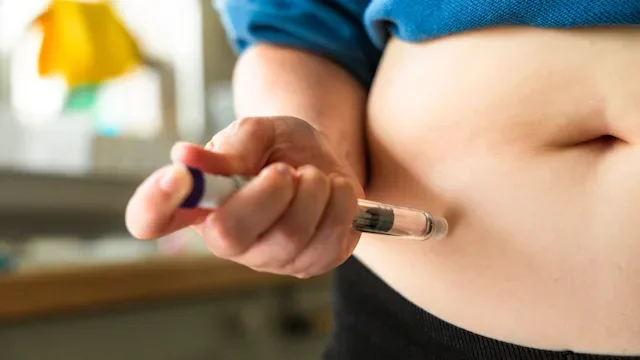
Both retatrutide and tirzepatide are subcutaneous (beneath-the-skin) injections.
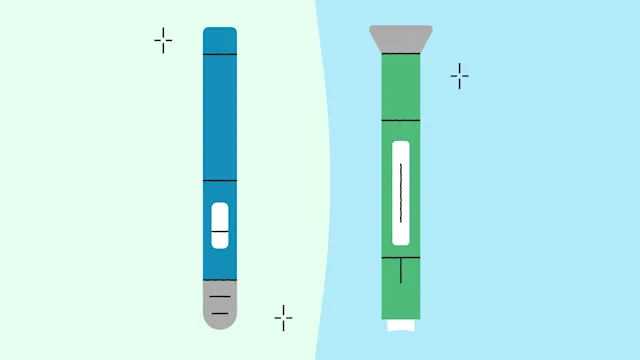
Tirzepatide is an injection that you administer once a week. It comes as single-dose and multi-use injector pens and vials. And there are a range of doses available. After an initial period of slowly raising your dose, most people inject one of the 5 mg, 10 mg, or 15 mg doses weekly (depending on why you’re using it and your response).
In clinical trials, participants used retatrutide as a once-weekly injection, similar to tirzepatide. So if approved, it’s likely that this will be how you administer doses. But it’s unclear which doses might be approved or if there’s a certain schedule to follow. With experimental medications, this information is typically unavailable until after FDA approval.
4. Retatrutide and tirzepatide both work well for weight loss
Both retatrutide and tirzepatide work well for weight loss.
Tirzepatide is currently one of the best working weight-loss medications on the market. In clinical trials, people using tirzepatide lost an average of 15% to 21% of their starting body weight over 72 weeks (about 16.5 months).
In a completed clinical trial, people taking retatrutide lost an average of 26% to 28% of their starting body weight over 68 weeks (about 15.5 months). Other ongoing clinical trials will help confirm retatrutide’s weight-loss potential.
An ongoing head-to-head clinical trial is directly comparing retatrutide and tirzepatide for weight loss. The results of the study will help confirm if one is more effective. The trial is expected to wrap up in December 2026.
5. Retatrutide and tirzepatide have similar common side effects
Because retatrutide and tirzepatide target similar hormones, they share common side effects. Some include:
Nausea
Vomiting
Smaller appetite
The ongoing head-to-head trial mentioned above may provide information on whether retatrutide is more likely to cause certain side effects.
Tirzepatide’s labeling also warns of rare but serious side effects and risks, such as:
Gallbladder problems, including gallstones
Reports of pancreatitis (swelling of the pancreas)
Kidney damage if vomiting or diarrhea is severe
Severe gastrointestinal complications, such as gastroparesis (delayed stomach emptying)
Hypoglycemia (low blood sugar)
Allergic reactions
Tirzepatide also has a boxed warning (the FDA’s strictest warning for medications) for thyroid C-cell tumors. During animal studies, animals that were exposed to tirzepatide developed these types of tumors. This risk hasn’t been confirmed in humans. But to be safe, you shouldn’t use tirzepatide if you have a personal or family history of medullary thyroid cancer. You should also avoid it if you have an inherited condition called multiple endocrine neoplasia syndrome type 2 (MEN 2).
All medications that act like GLP-1 have similar risks and side effects on their labeling. If approved, retatrutide will likely have similar warnings.
How to save on Mounjaro or Zepbound
There are ways to save on Zepbound, which is available as a brand-name medication. If you have commercial insurance, you may be eligible to pay as little as $25 for a 1- or 3-month supply of Zepbound pens through the manufacturer’s copay savings program.
If your plan doesn’t cover Zepbound, you may still be able to save. Lower-cost single-dose vials and KwikPens are available through LillyDirect for $299 (2.5 mg), $399 (5 mg), and $449 (7.5 mg, 10 mg, 12.5 mg, and 15 mg) per month. You can also access Zepbound KwikPens through GoodRx starting at $299 per month.
What's more, subscribers to GoodRx for Weight Loss can access FDA-approved brand-name GLP-1 medications like Zepbound.
The bottom line
Retatrutide and tirzepatide have a number of differences to know about. Tirzepatide is FDA approved as Mounjaro for Type 2 diabetes in people ages 10 and older. And it’s approved as Zepbound for weight loss and obstructive sleep apnea in certain adults. Retatrutide is still in clinical trials and isn’t FDA approved yet.
Retatrutide and tirzepatide work in slightly different ways, but have similar effects on your body. And both retatrutide and tirzepatide promote significant weight loss.

Why trust our experts?



References
Al-Massadi, O., et al. (2019). Glucagon control on food intake and energy balance. International Journal of Molecular Sciences.
ClinicalTrials.gov. (n.d.). Search results: Retatrutide.
ClinicalTrials.gov. (2025). A study of retatrutide (LY3437943) compared to tirzepatide (LY3298176) in adults who have obesity (TRIUMPH-5). National Library of Medicine.
ClinicalTrials.gov. (2025). A study of retatrutide (LY3437943) in participants who have obesity or overweight (TRIUMPH-1). National Library of Medicine.
ClinicalTrials.gov. (2026). A master protocol of multiple agents in adults with metabolic dysfunction-associated steatotic liver disease (SYNERGY-Outcomes). National Library of Medicine.
ClinicalTrials.gov. (2026). A study of retatrutide (LY3437943) in participants who have obesity or overweight and chronic low back pain (TRIUMPH-7). National Library of Medicine.
ClinicalTrials.gov. (2026). A study of retatrutide (LY3437943) in participants without type 2 diabetes who have obesity or overweight (TRIUMPH-9). National Library of Medicine.
ClinicalTrials.gov. (2026). A study of retatrutide (LY3437943) in the maintenance of weight reduction in individuals with obesity (TRIUMPH-6). National Library of Medicine.
ClinicalTrials.gov. (2026). A study of retatrutide (LY3437943) once weekly in participants who have obesity or overweight and osteoarthritis of the knee (TRIUMPH-4). National Library of Medicine.
ClinicalTrials.gov. (2026). Effect of retatrutide compared with placebo in adult participants with type 2 diabetes and inadequate glycemic control with diet and exercise alone (TRANSCEND-T2D-1). National Library of Medicine.
ClinicalTrials.gov. (2026). The effect of retatrutide once weekly on cardiovascular outcomes and kidney outcomes in adults living with obesity (TRIUMPH-Outcomes). National Library of Medicine.
Eli Lilly and Company. (2025). Lilly’s triple agonist, retatrutide, delivered weight loss of up to an average of 71.2 lbs along with substantial relief from osteoarthritis pain in first successful phase 3 trial.
Eli Lilly and Company. (2026). Mounjaro- tirzepatide injection, solution [package insert]. DailyMed.
Eli Lilly and Company. (2026). Zepbound- tirzepatide injection, solution [package insert]. DailyMed.