Key takeaways:
In the body, many peptides act as chemical messengers. They help regulate processes such as appetite, digestion, metabolism, and other important functions.
Researchers have developed peptide-based medications that mimic or enhance these signals to support weight loss.
There are currently four FDA-approved peptide medications for weight loss: Zepbound (tirzepatide), Wegovy (semaglutide injection and pill), and Saxenda (liraglutide).
Several newer peptides, such as retatrutide, survodutide, and VK2735, are still in clinical trials and show promising results. Unregulated or “grey market” peptides sold online are not FDA approved and may carry safety and quality risks.
Save on related medications
Peptides have become a buzzword in the weight-loss world, promoted everywhere from social media to boutique wellness clinics. The term may sound scientific and legitimate, but not all peptides are created equal.
Some peptides are true prescription medications that have been rigorously studied in trials and approved by the FDA. Others are experimental compounds still being studied. And many others are unregulated products marketed without any proof of safety or effectiveness.
So, how can you tell which peptides actually work and which ones might be risky?
What are peptides, and how do they work for weight loss?
Peptides are short chains of amino acids, the building blocks of proteins. In the body, many peptides act as chemical messengers. They influence processes such as metabolism, appetite, and hormone activity.
Certain peptide hormones, such as glucagon-like peptide-1 (GLP-1), play a key role in regulating appetite and blood glucose (sugar). These peptides can help you feel full faster, reduce cravings, and stabilize blood sugar levels after eating.
Medications that mimic or enhance these natural signals can help people eat less and lose weight more effectively. But only a few have been tested thoroughly enough to earn FDA approval. These medications are all categorized as peptides because they’re made of long amino acid chains that closely resemble naturally occurring peptides in the body.
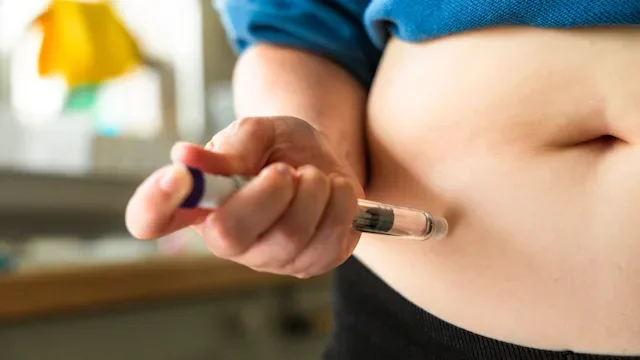
Most peptide medications are available as injections because they’re not absorbed when taken orally. Those that are available in pill form (such as oral semaglutide) use a special absorption enhancer to help more of the medication reach the bloodstream.
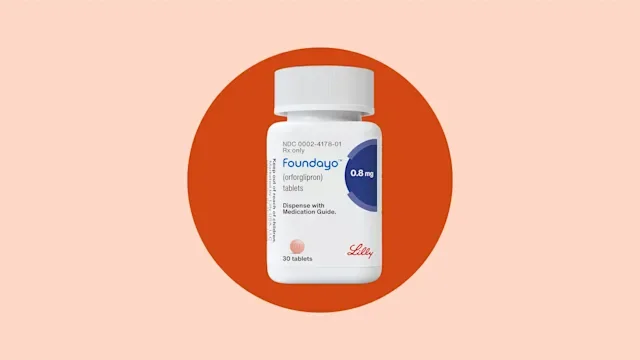
Good to know: Researchers are also developing oral non-peptide medications that act on the same pathways. These newer treatments are designed to offer similar benefits in a smaller, easier-to-make form. Recently, the FDA approved Foundayo (orforglipron) as the first non-peptide GLP-1 receptor agonist for weight loss.
FDA-approved peptides for weight loss
Currently, only four peptide medications are FDA approved for weight loss. These prescription-only medications have good clinical data showing that they’re safe and effective when used as directed.
Liraglutide (Saxenda)
Liraglutide (Saxenda) was the first GLP-1 receptor agonist approved for weight loss for adults and adolescents ages 12 and older. It’s injected once daily and mimics the natural GLP-1 hormone to help reduce appetite and increase feelings of fullness. During a 56-week trial, people using Saxenda lost an average of 8% of their starting body weight with the highest dose.
Semaglutide injection (Wegovy)
Semaglutide (Wegovy) is a once-weekly injectable GLP-1 receptor agonist for adults and adolescents ages 12 and older. During clinical trials, participants lost an average of 15% of their starting body weight over 68 weeks (almost 16 months) with the 2.4 mg dose. They also had improvements in their blood pressure and cholesterol levels, physical functioning, and inflammation.
More recently, a higher-dose version of Wegovy (called Wegovy HD) was approved. It contains 7.2 mg of semaglutide, which is 3 times the amount as the 2.4 mg Wegovy dose. During clinical trials, people receiving the 7.2 mg dose lost about 19% of their starting body weight at 72 weeks (about 17 months), on average.
Beyond weight loss, injectable semaglutide also treats Type 2 diabetes (as Ozempic) and has proven cardiovascular, liver, and kidney benefits for certain people.
Semaglutide pill (Wegovy)
If you don’t like injections, semaglutide is also available as an oral pill for adults. It’s taken once daily, first thing in the morning on an empty stomach. During clinical trials, participants lost an average of about 14% of their starting body weight at 64 weeks (almost 15 months). Cardiovascular risk factors, such as C-reactive protein (marker of inflammation) and cholesterol levels, also improved.
Similar to semaglutide injections, the pill also has uses beyond weight loss. It’s approved to treat Type 2 diabetes (as Rybelsus and the Ozempic pill) and to lower the risk of serious cardiovascular problems among certain people.
Tirzepatide (Zepbound)
Tirzepatide (Zepbound) is a once-weekly injection that mimics GLP-1 and a second hormone called glucose-dependent insulinotropic polypeptide (GIP) for additive effects. During clinical trials, people using the highest tirzepatide dose lost an average of 21% of their starting body over 72 weeks (16.5 months).
In addition to helping people lose weight, tirzepatide was the first medication approved to treat moderate-to-severe obstructive sleep apnea. And similar to semaglutide, tirzepatide also treats Type 2 diabetes (as Mounjaro) and has a growing list of potential uses.
Promising peptides still in clinical trials
Several other peptides are currently being studied for weight loss in clinical trials. GLP-1 and GIP remain common targets. But researchers are also exploring other peptide hormones — such as glucagon and amylin — as potential pathways for future treatments.
Retatrutide
Retatrutide is an investigational peptide that’s administered as a once-weekly injection. It’s known as a “triple agonist” because it mimics three peptide hormones — GLP-1, GIP, and glucagon. Glucagon helps boost energy expenditure and promotes fat burning. It also typically raises blood sugar levels, but this effect is balanced by the blood sugar-lowering actions of GLP-1 and GIP.
Early retatrutide clinical trial results have been promising. After 48 weeks (11 months), participants receiving the medication lost up to 24% of their starting body weight. For reference, people in the tirzepatide trial had about 21% average weight loss over 72 weeks.
Retatrutide is currently being studied in a phase 3 trial for weight loss, which is expected to be completed in the first half of 2026. Other studies, including a head-to-head trial with tirzepatide, are also ongoing.
Survodutide
Survodutide is an investigational dual-agonist peptide that’s also given as a once-weekly injection. It works by mimicking GLP-1 to reduce food intake and glucagon to boost energy expenditure.
Survodutide is being studied for weight loss, cardiovascular risk reduction, and a type of fatty liver disease called metabolic dysfunction-associated steatohepatitis (MASH). In early clinical trials, people using the highest survodutide dose lost about 19% their starting body weight over 46 weeks, on average. People in the MASH trial had improvements in liver inflammation without worsening liver scarring.
The phase 3 weight-loss trial for people without diabetes has been completed, but results haven’t been released yet. The weight loss trial for people with diabetes is expected to wrap up shortly.
VK2735
VK2735 is a dual GLP-1/GIP receptor agonist being studied as both a weekly injection and a daily oral medication. Early results suggest rapid and meaningful weight loss.
With VK2735 injections, the average weight loss was almost 15% with the highest dose at 13 weeks. Weight loss with the highest dose of the pill form was about 12% over the same time frame.
VK2735 injections are currently being studied in phase 3 trials involving people with and without diabetes. Both studies are expected to be completed in 2027.
Eloralintide
Eloralintide is an investigational peptide that mimics amylin, a hormone that helps regulate appetite and slow digestion. It’s being studied as a once-weekly injection. Findings from early clinical trials showed an average weight loss of 20% with the highest dose at 48 weeks.
Eloralintide is currently being studied in phase 3 trials for weight loss among people with and without diabetes. The studies are expected to be completed in the next 2 to 4 years.
What are ‘grey market’ peptides?
“Grey market” peptides are products sold outside of the traditional healthcare system. Often, they’re sold online or through wellness clinics, and they aren’t FDA approved for medical use.
These products are often marketed as quick fixes for weight loss, muscle building, or recovery. In advertisements, companies use familiar drug names like semaglutide, tirzepatide, or retatrutide. But many products are actually “research-grade” peptides intended for laboratory use, and not for human treatment.
Because they’re obtained outside of medical care, these products may cut a healthcare professional out of the process. This can leave people to manage their own dosage and use without clear guidance or reliable safety and efficacy data.
Grey market peptides also bypass standard manufacturing safeguards. Their ingredients, strength, and sterility can vary. Some may be contaminated or mislabeled. They may also contain impurities from the manufacturing process. In some cases, these impurities can trigger unwanted immune responses, including allergic reactions.
What about compounded peptides?
It’s important to distinguish grey market peptides from compounded medications. Compounded peptides are made by licensed pharmacies that must follow specific quality standards and sourcing requirements.
But these pharmacies generally can’t replicate commercially available peptide medications unless there’s a medical need, such as a shortage. There are also certain peptides that the FDA currently does not allow for compounding due to safety risks, though this may change.
How to talk to your healthcare team about peptides
If you’re interested in peptide medications for weight loss, your healthcare team can help you understand your options and choose a safe, evidence-based treatment. Consider asking questions such as:
Which medications are FDA approved for weight loss?
What kind of results can I realistically expect?
What are the potential side effects and risks?
How will this medication fit in with my health history and other treatments?
Are there lower-cost or insurance-covered options available?
Your healthcare team can also help you avoid unregulated or unsafe products and ensure you’re getting a medication that meets quality standards. You can also access FDA-approved peptides for weight loss online from reputable telehealth providers, such as GoodRx for Weight Loss.
The bottom line
Peptides are short chains of amino acids. In the body, many act as chemical messengers, regulating processes like appetite and metabolism. Some peptide-based medications, such as Wegovy (semaglutide), Zepbound (tirzepatide), and Saxenda (liraglutide), are FDA approved and have strong evidence supporting their use for weight loss.
Other peptides in development show promising results. At the same time, “grey market” peptides sold online or through unregulated sources can be risky due to quality concerns, lack of oversight, and limited safety data.
If you’re considering a peptide for weight loss, it’s best to work with a healthcare professional. They can help you choose a safe, evidence-based option that fits your needs.

Why trust our experts?



References
Achilleos, K., et al. (2025). Beyond efficacy: Ensuring safety in peptide therapeutics through immunogenicity assessment. Journal of Peptide Science.
American College of Cardiology. (2025). OASIS 4: Significant weight loss with oral semaglutide comparable with high-dose, SC versions.
Bays, H. E., et al. (2026). Weekly subcutaneous VK2735, a GIP/GLP-1 receptor dual agonist, for weight management: phase 2, randomized, 13-week VENTURE study. Obesity.
Billings, L. K., et al. (2025). Eloralintide, a selective amylin receptor agonist for the treatment of obesity: A 48-week phase 2, multicentre, double-blind, randomised, placebo-controlled trial. The Lancet.
Boehringer Ingelheim. (2023). Boehringer Ingelheim to advance survodutide into three global Phase III studies in obesity.
Clegg, R., et al. (2026). Wellness peptide craze: Why people are injecting drugs 'not for human consumption'. BBC.
ClinicalTrials.gov. (2025). A study of retatrutide (LY3437943) compared to tirzepatide (LY3298176) in adults who have obesity (TRIUMPH-5). National Library of Medicine.
ClinicalTrials.gov. (2025). A study of retatrutide (LY3437943) in participants who have obesity or overweight (TRIUMPH-1). National Library of Medicine.
ClinicalTrials.gov. (2025). VK2735 for weight management phase 3 (VANQUISH 1). National Library of Medicine.
ClinicalTrials.gov. (2026). A study of Eloralintide (LY3841136) in participants with obesity or overweight, and Type 2 diabetes (ENLIGHTEN-2). National Library of Medicine.
ClinicalTrials.gov. (2026). A study of Eloralintide (LY3841136) in participants with obesity, or overweight without Type 2 diabetes (ENLIGHTEN-1). National Library of Medicine.
ClinicalTrials.gov. (2026). A study to test the effect of survodutide (BI 456906) on cardiovascular safety in people with overweight or obesity (SYNCHRONIZE - CVOT). National Library of Medicine.
ClinicalTrials.gov. (2026). A study to test whether survodutide (BI 456906) helps people living with overweight or obesity who also have diabetes to lose weight (SYNCHRONIZE-2). National Library of Medicine.
ClinicalTrials.gov. (2026). A study to test whether survodutide (BI 456906) helps people living with overweight or obesity who do not have diabetes to lose weight (SYNCHRONIZE-1). National Library of Medicine.
ClinicalTrials.gov. (2026). VK2735 for weight management Type 2 diabetes phase 3 (VANQUISH 2). National Library of Medicine.
De Groot, A. S., et al. (2023). Immunogenicity risk assessment of synthetic peptide drugs and their impurities. Drug Discovery Today.
Dehestani, B., et al. (2021). Amylin as a future obesity treatment. Journal of Obesity & Metabolic Syndrome.
Jastreboff, A. M., et al. (2023). Triple–hormone-receptor agonist retatrutide for obesity — a phase 2 trial. The New England Journal of Medicine.
National Human Genome Research Institute. (2026). Peptide. National Institutes of Health.
Pi-Sunyer, X., et al. (2015). A randomized, controlled trial of 3.0 mg of liraglutide in weight management. The New England Journal of Medicine.
Sanyal, A. J., et al. (2024). A phase 2 randomized trial of survodutide in MASH and fibrosis. The New England Journal of Medicine.
Scott, R. V., et al. (2018). Problem or solution: The strange story of glucagon. Peptides.
U.S. Food and Drug Administration. (2025). Certain bulk drug substances for use in compounding that may present significant safety risks.
Viking Therapeutics, Inc. (2025). Viking Therapeutics announces positive top-line results from phase 2 VENTURE-oral dosing trial of VK2735 tablet formulation in patients with obesity. PR Newswire.
Wharton, S., et al. (2024). Survodutide for treatment of obesity: Rationale and design of two randomized phase 3 clinical trials (SYNCHRONIZE‐1 and ‐2). Obesity.
Wharton, S., et al. (2025). Once-weekly semaglutide 7·2 mg in adults with obesity (STEP UP): a randomised, controlled, phase 3b trial. The Lancet.
Wilding, J. P. H., et al. (2021). Once-weekly semaglutide in adults with overweight or obesity. The New England Journal of Medicine.