Key takeaways:
Wegovy is an FDA-approved semaglutide medication for weight loss. Compounded semaglutide is an unapproved version prepared by certain compounding pharmacies.
Wegovy has been studied extensively in clinical trials and is manufactured at FDA-registered Novo Nordisk facilities. It comes in injectable and oral forms in fixed doses.
Compounded semaglutide products come with unique risks since the quality can vary across pharmacies. Their safety and effectiveness haven’t been evaluated by the FDA.
If you're new to using GoodRx for Wegovy savings, you can pay an introductory price for the first two fills of $199 per month for the injection and $149 per month for the pill (only available for certain doses). For future fills and other Wegovy doses, you can pay $349 per month for the injection and $299 per month for the pill. Subscribers to GoodRx for Weight Loss can also access FDA-approved, brand-name GLP-1 medications.
Save on related medications
Semaglutide has become one of the most-talked-about medications in recent years, especially for weight loss. Wegovy, an FDA-approved semaglutide medication, has helped many people lose weight. But Wegovy’s popularity has led to supply shortages in the past, making it harder for people to access it in some cases. As a result, some people turned to compounded semaglutide products: custom-made versions prepared by compounding pharmacies. And these products are still around, even though the Wegovy shortages have ended.
Compounded medications can be appropriate in specific, limited situations. But they’re not exactly the same as FDA-approved products. If you’re considering compounded semaglutide, it’s important to understand how it compares to Wegovy. Here are five key differences to consider.
1. Wegovy is FDA approved, but compounded semaglutide is not
One of the biggest differences between Wegovy and compounded semaglutide is that Wegovy is FDA approved, while compounded semaglutide products are not.
Because it is FDA approved, Wegovy has been rigorously reviewed for safety, effectiveness, and manufacturing quality. It’s produced under strict FDA-regulated standards. It also comes with approved labeling, dosage instructions, and storage requirements.
Compounded semaglutide products, on the other hand, don’t go through FDA review. Compounded medications are meant to address specific individual needs, such as avoiding an ingredient in a commercial product because of an allergy. So they aren’t required to undergo the same testing and evaluation as FDA-approved medications.
2. Wegovy has been studied extensively, and compounded semaglutide has not
Before they’re approved, medications go through large, multiphase clinical trials. Wegovy went through this process, which involved studying the medication across thousands of participants over several years. Compounded semaglutide products haven’t been studied in this same way.
Wegovy’s clinical trials established:
How well it works for weight loss (and other health conditions)
Its most common side effects and risks
The proper dosage and titration schedule
Which groups of people may benefit from treatment (or should avoid it)
With compounded semaglutide, no standardized clinical data exists to show if the products work the same as Wegovy. Their safety and effectiveness can depend on how they’re prepared, what ingredients are used, and other factors.
This lack of data doesn’t mean that compounded semaglutide is unsafe or ineffective. But it does mean that the potential risks and benefits may be harder to predict. For that reason, it’s important to be cautious about any claims being made about compounded semaglutide products.
3. Wegovy and compounded semaglutide may contain different ingredients
Another difference between Wegovy and compounded semaglutide is the ingredients they contain. Wegovy uses a standardized formulation of semaglutide base. It also contains carefully tested inactive ingredients that support stability and proper absorption.
Compounded semaglutide, however, may contain:
A different form of semaglutide: The FDA has said that salt forms (such as semaglutide acetate) shouldn’t be used for compounding. Pharmacies should only use semaglutide base.
Inactive ingredients that can affect stability or tolerability: These inactive ingredients can vary by pharmacy.
Added substances such as vitamin B12: These ingredients intend to differentiate the product from Wegovy. But they haven’t been studied in combination with semaglutide.
Because compounded semaglutide products differ in formulation, two products from two different pharmacies may not be the same. And neither is guaranteed to match Wegovy’s formulation, safety profile, or potential benefits.
4. Compounded semaglutide may come in different dosage forms and doses than Wegovy
Wegovy comes in specific dosage forms and doses that have been approved by the FDA. Compounded semaglutide can be prepared in alternative forms and nonstandard doses, which may be appropriate in cases where someone has a specific medical need.
Wegovy is available in two FDA-approved forms:
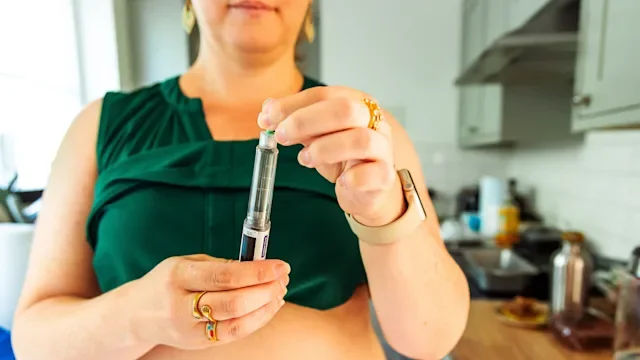
Injectable semaglutide, supplied in single-use prefilled pens with fixed weekly doses ranging from 0.25 mg to 2 mg
Oral semaglutide (Wegovy pills), available in doses ranging from 1.5 mg to 25 mg, formulated with a special absorption-enhancing ingredient
Compounded semaglutide can differ from the above in several ways. It can come in:
Multi-dose vials: Compounded semaglutide is often supplied in vials rather than single-use pens, which means each dose has to be measured manually. This adds a potential for dosage errors.
Alternative forms: Some compounded semaglutide products are prepared in alternative forms, such as sublingual (under-the-tongue) drops and nasal sprays. These forms haven’t been studied extensively in humans. It’s also unclear whether they’re absorbed reliably or reach effective levels in the bloodstream.
Nonstandard doses: Compounded versions may be offered in doses that are higher or much lower (“microdoses”) than Wegovy doses. These doses haven’t been studied, making their safety and effectiveness uncertain.
5. Wegovy is manufactured under strict FDA standards
Another difference between Wegovy and compounded semaglutide is where and how they’re made. Wegovy is produced in FDA-registered Novo Nordisk facilities that meet rigorous federal manufacturing and quality requirements. Compounded semaglutide products are typically made by pharmacies overseen primarily at the state level.
FDA-approved medications like Wegovy must be made under strict quality standards. As a part of meeting these standards, each batch is carefully tested to confirm its strength, purity, and consistency. The FDA also reviews and oversees how and where Wegovy is made, which helps ensure its safety and quality.
Compounded semaglutide products don’t go through this same type of federal review. Many are made in traditional compounding pharmacies that follow state Board of Pharmacy requirements, which can vary by location. Some compounding pharmacies operate as FDA-registered outsourcing facilities, which are required to follow more stringent manufacturing standards.
Because of these differences, the quality of compounded semaglutide products may vary depending on where they’re made.
How to choose
Deciding which option is best for you depends on your individual medical needs.
In most cases, FDA-approved medications like Wegovy are recommended over compounded medications. They’ve been thoroughly studied and must meet strict manufacturing standards. But there are limited situations in which your prescriber may consider a compounded version — usually, if an FDA-approved product isn’t available to or appropriate for you.
If you’re considering your options, here are some factors to discuss with your healthcare team:
Safety and quality: Wegovy offers the most consistent, evidence-based option. Compounded semaglutide products can vary in strength, ingredients, and quality.
Ingredient needs: A compounded product may be appropriate if you have a documented allergy or intolerance to an ingredient in Wegovy.
Access and affordability: Some people explore compounded semaglutide because of cost barriers. However, there are several ways to make Wegovy more affordable.
Your prescriber can help you review these factors and determine which option aligns best with your needs.
How to save on Wegovy
There are ways to save on Wegovy, which is available as a brand-name medication. GoodRx coupons or a manufacturer copay savings card could help make your prescription more affordable. Here’s how to access savings:
Save with GoodRx. If you’re new to using GoodRx for Wegovy savings, you can pay an introductory price of $199 per month for the first two fills of the injection (only available for certain doses). For future fills and for other Wegovy doses, you can pay $349 per month. Subscribers to GoodRx for Weight Loss can also access FDA-approved, brand-name GLP-1 medications.
Save with a copay savings card. If you have commercial insurance, you could pay as little as $0 for up to a 90-day supply of Wegovy.
The bottom line
Wegovy (semaglutide) and compounded semaglutide may seem similar, but they’re not the same. Wegovy is FDA approved, well studied, and made under strict manufacturing standards. Compounded versions of semaglutide aren’t reviewed by the FDA and can vary in their ingredients and quality.
For most people, FDA-approved medications like Wegovy are preferred. But in limited situations, such as if you have an ingredient allergy, your prescriber may consider a compounded product. Always discuss the potential risks and benefits of medications with your healthcare team to determine what’s right for you.

Why trust our experts?



References
[Please keep the automatic spacing in between references. See Style Guide section on reference formatting.]
Moiz, A. (2024). Long-term efficacy and safety of once-weekly semaglutide for weight loss in patients without diabetes: A systematic review and meta-analysis of randomized controlled trials. The American Journal of Cardiology.
U.S. Food and Drug Administration. (2022). Information for outsourcing facilities.
U.S. Food and Drug Administration. (2024). FDA alerts health care providers, compounders and patients of dosing errors associated with compounded injectable semaglutide products.
U.S. Food and Drug Administration. (2025). Current good manufacturing practice (CGMP) regulations.
U.S. Food and Drug Administration. (2025). FDA’s concerns with unapproved GLP-1 drugs used for weight loss.