Key takeaways:
Research shows that red light therapy may help calm redness and inflammation, which may help conditions like rosacea. But the evidence is still limited.
Red light therapy isn’t a stand-alone treatment. It works best when used alongside proven rosacea treatments, like topicals or in-office therapies.
Red light isn’t a quick fix. You’ll likely need multiple sessions per week for several weeks before seeing changes. And maintenance treatments will be needed.
Before trying red light therapy, talk to a dermatologist, especially if you have darker skin, take medications (like retinoids), or have a condition like lupus.
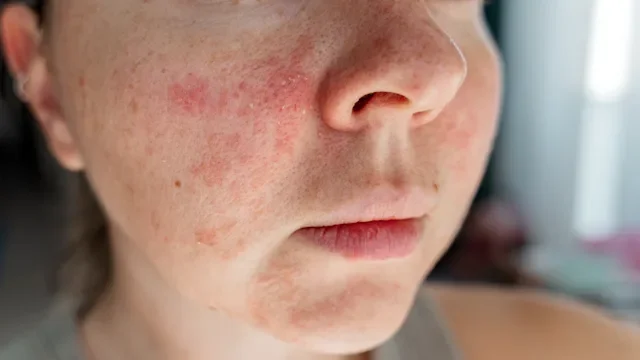
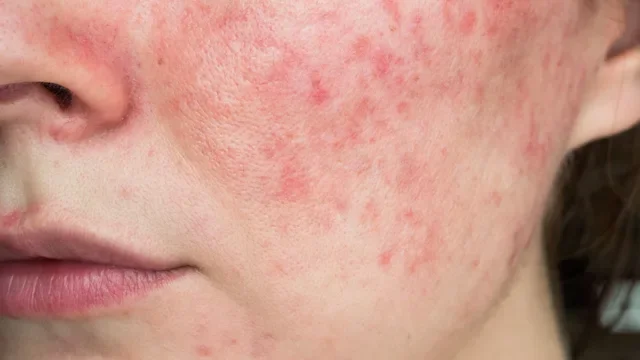
Everyone blushes from time to time. But if you notice persistent redness and a rosy tinge that lingers for longer, it might be rosacea.
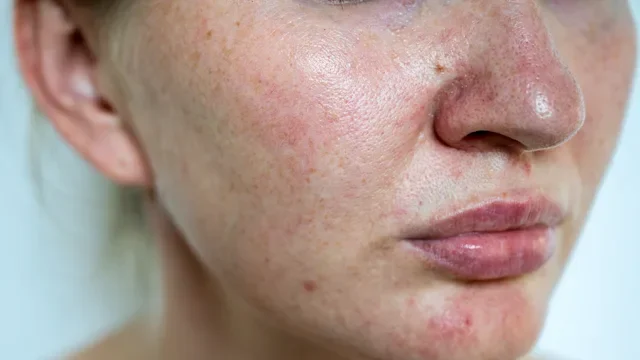
Rosacea affects about 5% of people across the world. It starts with redness and can evolve into pustules (bumps similar to acne) and visible blood vessels. Sometimes, being aware of the flushing can make your skin turn even more red.
If this has been happening to you, know that there are several treatment options available. This article explores whether red light therapy could be one of them.
What is red light therapy?
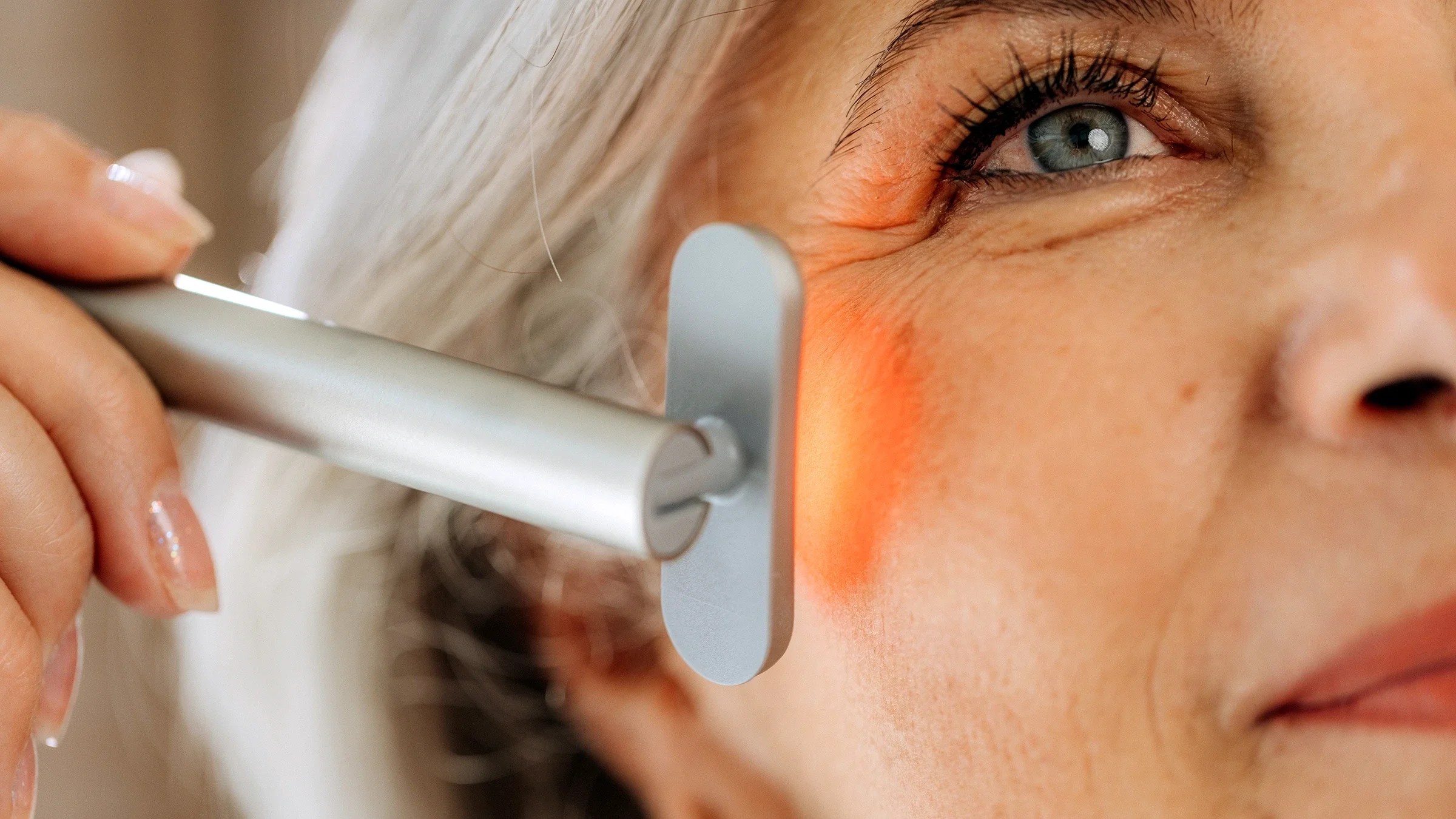
Red light therapy is a noninvasive treatment used to treat many conditions related to inflammation. It applies low levels of red or near-infrared light to your skin. Red light therapy is also called photobiomodulation or low-level laser therapy (LLLT).
You can get red light therapy in a few different ways:
In-office treatments at a dermatologist’s office or medical spa
At-home light-emitting diode (LED) face masks or light panels
Handheld wands
How does red light therapy work?
Red light therapy works by sending low-level wavelengths of red or near-infrared light into your skin. Red light wavelengths usually fall between 620 nm and 700 nm, while near-infrared light ranges from 700 nm to 1,440 nm.
Red light therapy works at the cellular level. When red or near-infrared light hits your skin, it’s absorbed by the mitochondria inside your cells. Mitochondria are the parts of your cell that produce energy. The absorbed light triggers a reaction that boosts the production of adenosine triphosphate (ATP), a molecule that creates energy in the cells. This process helps lower inflammation and increase blood flow.
Does red light therapy treat rosacea?
Rosacea is a skin condition that causes facial redness. It can also lead to visible blood vessels and acne-like bumps. Some early research suggests that red light therapy may help treat rosacea.
A 2020 report followed 2 people with rosacea who got LED therapy that combined blue light (480 nm) and red light (650 nm) twice a week. Both people experienced less redness, burning, and itching after just five sessions. Their symptoms improved even more after 10 sessions, and neither person reported side effects.
A 2022 review looked at 9 studies and found that light therapy generally helped improve rosacea symptoms.
Even though the research on red light therapy is still limited, these are promising results.
How long does red light therapy take to work for rosacea?
In the 2020 case study, participants showed improvement after 5 weeks of treatment. Sessions were twice a week for 15 minutes. But it might take longer than a month for you to see results. The key is being consistent. And you’ll likely need ongoing sessions to manage symptoms.
Are there any risks in using red light therapy for rosacea?
Most people don’t experience side effects from red light therapy. Side effects may include temporary irritation or redness, which usually goes away quickly. Unlike ultraviolet (UV) light from the sun, red light doesn’t increase cancer risk.
Still, it’s a good idea to talk to a healthcare professional before trying red light therapy. This is especially important if you:
Have a condition that makes you sensitive to light (like lupus)
Take medications that increase light sensitivity (like retinoids)
Have darker skin, which is more prone to hyperpigmentation (dark spots) from light
Most importantly, don’t shine red light directly into your eyes. It can cause damage, which is why some devices come with eye protection you’ll need to wear during use.
Frequently asked questions
Yes, at-home red light devices have become a lot more accessible in the last few years. You can find red light therapy in the form of LED face masks, handheld wands, and full light panels. When shopping for a device, look for the words "FDA-cleared" on the label. This means the FDA considers the device safe for at-home use, but it doesn’t mean the device is proven to work. Remember to always wear protective goggles while using red light therapy.
Yes, you can combine red light with other treatments for rosacea. Red light is usually considered an add-on treatment, not a replacement for proven rosacea treatments. Effective rosacea treatments include topicals like azelaic acid or ivermectin, as well as in-office treatments like intense pulsed light (IPL) or pulsed dye laser.
Always check the instructions that come with your red light device and follow the recommendations. You’ll get the best results by sticking to the device’s recommended session length. Some research suggests too much red light can cause even more redness and swelling.
Yes, at-home red light devices have become a lot more accessible in the last few years. You can find red light therapy in the form of LED face masks, handheld wands, and full light panels. When shopping for a device, look for the words "FDA-cleared" on the label. This means the FDA considers the device safe for at-home use, but it doesn’t mean the device is proven to work. Remember to always wear protective goggles while using red light therapy.
Yes, you can combine red light with other treatments for rosacea. Red light is usually considered an add-on treatment, not a replacement for proven rosacea treatments. Effective rosacea treatments include topicals like azelaic acid or ivermectin, as well as in-office treatments like intense pulsed light (IPL) or pulsed dye laser.
Always check the instructions that come with your red light device and follow the recommendations. You’ll get the best results by sticking to the device’s recommended session length. Some research suggests too much red light can cause even more redness and swelling.
The bottom line
More research is still needed, but small studies suggest that red light may help with rosacea. If you’re buying a red light device to use at home, make sure it’s FDA-cleared. And be sure to use it with goggles to protect your eyes.
The most important thing to remember is that seeing results from red light requires consistency. You may need multiple sessions a week, depending on your device’s instructions. That also means it isn’t a quick fix. Red light works best when used along with other effective rosacea treatments.

Why trust our experts?



References
Li, A., et al. (2022). Photodynamic therapy in the treatment of rosacea: A systematic review. Photodiagnosis and Photodynamic Therapy.
Ludmann, P., et al. (2024). Is red light therapy right for your skin? American Academy of Dermatology Association.
Maghfour, J., et al. (2024). Photobiomodulation CME part I: Overview and mechanism of action. Journal of the American Academy of Dermatology.
National Rosacea Society. (2024). New study estimates rosacea’s worldwide prevalence.
Sorbellini, E., et al. (2020). Coupled blue and red light-emitting diodes therapy efficacy in patients with rosacea: Two case reports. Journal of Medical Case Reports.