Key takeaways:
Psoriatic arthritis (PsA) is an autoimmune condition that affects both the skin and joints.
Symptoms of PsA often start in the hands, feet, and spine.
Getting a diagnosis and starting treatment early gives you the best chance of staying healthy and active.
Psoriatic arthritis (PsA) is a joint disease (arthritis) that affects about 1 in 3 people with psoriasis. It’s an autoimmune condition where the body’s own immune system attacks healthy parts of the body.
Early diagnosis and treatment improve outcomes, so it’s important to look out for early signs. Beyond the joints and skin, PsA can affect other parts of the body as well. Below are nine symptoms and early warning signs of PsA.
1. Skin rash (skin psoriasis)
In many cases, the first sign of PsA is a skin rash called psoriasis. Rashes may start 5 to 12 years before any joint symptoms develop. Though less common, it’s also possible for joint pain to start before skin changes develop.
There are several different types of psoriasis. Plaque psoriasis is the most common type of psoriasis rash. It often appears on the elbows, knees, and scalp. The rash is made up of thick, raised patches called plaques. These patches are pink, red, or violet, depending on your skin color. They have a flaky layer of silvery scale over them.
Less common types of psoriasis include:
Inverse psoriasis: smooth, thin patches of skin usually found in skin folds
Guttate psoriasis: small, red, or brown round patches, usually on the torso, arms, and legs
Pustular psoriasis: small, pus-filled bumps that look like pimples
Erythrodermic psoriasis: a life-threatening condition where the skin looks “burned”


2. Joint pain, swelling, and stiffness (inflammatory arthritis)
PsA can cause pain, swelling, and stiffness in the joints. The official term for this is “inflammatory arthritis.” This is different from osteoarthritis (arthritis caused by wear and tear of aging).
People with PsA describe feeling like their joints are frozen or in need of lubrication. The stiffness of this inflammatory arthritis tends to improve with movement and worsen after long periods of rest. But when PsA is severe, people may feel stiff all day long.
PsA can affect just about any joint in the body. But it most commonly affects the hands and feet as well as the spine. When arthritis affects the fingers, it can cause dactylitis. When it affects the spine, it’s called spondylitis (more on these below).
3. Nail changes (nail psoriasis)
Because the nails are an extension of the skin, people with PsA can also notice changes in their nails. Just like in skin psoriasis, there are some distinctive changes that psoriasis can cause in nails. It’s common for nails to fall off completely with psoriasis. This is called onychomadesis.
Other nail changes can include:
Nail pitting, tiny dents throughout the nail plate
Onycholysis, when the nail detaches from the nail bed and turns white
Subungual hyperkeratosis, thick scale that forms underneath the tip of the nail
Color changes, such as small patches on the nail bed that can be yellow-pink, white, or deep red
Lines or ridges across the nails (from top to bottom, or side to side)
Nails that look crumbly
Thickened nails
These changes tend to lessen with treatment — although it can take several months to notice the change.

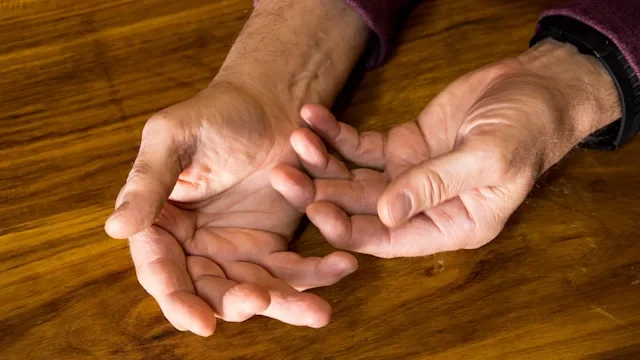
4. Swollen fingers and toes (dactylitis)
PsA can lead to a peculiar enlargement of the fingers and toes. You may hear this kind of swelling called “sausage fingers” disease or “sausage toes.” The official name is “dactylitis.” This occurs when one whole finger or toe becomes swollen, red, and painful. This swelling makes it difficult to bend the affected finger or toe.
5. Back and pelvis pain (spondylitis)
PsA may cause inflammation in the spine and pelvis (buttock area), leading to pain and stiffness anywhere from the neck down. The official term for this is spondylitis.
Back pain due to PsA is different from back pain due to osteoarthritis because it’s inflammatory. It’s typically worse in the morning and improves with activity.
6. Tendon and ligament pain (tendonitis)
Aside from causing inflammation inside the joints, PsA also causes inflammation in the tendons and ligaments around joints. This can cause different types of pain:
Tendonitis: This is when an entire tendon is inflamed. One example of this is Achilles tendonitis, when inflammation in the Achilles tendon causes pain in the back of the leg, right above the heel.
Enthesitis: This is inflammation at the exact spot that the tendon attaches a muscle to the bone.
Plantar fasciitis: This is when inflammation affects the ligaments that connect your heel to your toes on the sole of the foot, causing foot pain that’s worse in the morning.
7. Rib pain (costochondritis)
Just like PsA can cause inflammation in bones, tendons, and ligaments, it can also cause inflammation of cartilage. One place this happens is in the ribcage, where cartilage connects the ribs to the breastbone. Inflammation here is called costochondritis. Typically, costochondritis pain gets worse when your rib cage expands to take a deep breath in.
8. Fatigue
People with PsA often feel tired. This makes sense because chronic inflammation can deplete the body’s energy. One study found that over 3 in 4 people with PsA experience fatigue. But it isn’t all bad news. Fatigue can get better with treatment as inflammation lessens.
9. Eye inflammation
PsA can cause different types of inflammation in the eyes too. Most commonly, it can cause dryness of the eyes or inflammation of the eyelids (blepharitis). Less often, it can cause a severe kind of inflammation called “uveitis” (or iritis). Symptoms of uveitis include sensitivity to light, eye redness, and pain.
How do you diagnose psoriatic arthritis?
PsA is a “clinical diagnosis.” This means there’s no single test that diagnoses it. The diagnosis is typically made by a rheumatologist (specialist in autoimmune and joint diseases) when you have PsA symptoms and other signs.
Rheumatologists use a combination of clues to get to the bottom of things, including:
Your symptoms
An exam of your body that focuses on your skin and joints
Blood work
Imaging of the joints (like X-rays)
If you have psoriasis, you can take the Psoriasis Epidemiology Screening Tool (PEST) online to identify early symptoms. The PEST can help you figure out if you need to see a rheumatologist.
The journey to diagnosis may not be straightforward because PsA looks different for every person who has it. Your most important job is to report any symptoms right away.
Frequently asked questions
There are several conditions that have similar symptoms to PsA. These can include inflammatory conditions like:
Rheumatoid arthritis
Lupus
Ankylosing spondylitis
Reactive arthritis
Infectious arthritis
There’s no cure or fast way to relieve PsA, but there are effective medication treatments available. Most treatments take weeks to months for a full effect. Some at-home remedies that may be helpful include eating a balanced diet, exercise, and getting appropriate rest.
Both rheumatoid arthritis and PsA are chronic conditions that can lead to significant disability and an impact on your quality of life. In severe cases, rheumatoid arthritis can shorten the lifespan by 1 to 10 years due to its systemic effects. In general, PsA isn’t considered a life-threatening condition. But there’s some evidence that it may also shorten one’s lifespan, particularly in women.
There are several conditions that have similar symptoms to PsA. These can include inflammatory conditions like:
Rheumatoid arthritis
Lupus
Ankylosing spondylitis
Reactive arthritis
Infectious arthritis
There’s no cure or fast way to relieve PsA, but there are effective medication treatments available. Most treatments take weeks to months for a full effect. Some at-home remedies that may be helpful include eating a balanced diet, exercise, and getting appropriate rest.
Both rheumatoid arthritis and PsA are chronic conditions that can lead to significant disability and an impact on your quality of life. In severe cases, rheumatoid arthritis can shorten the lifespan by 1 to 10 years due to its systemic effects. In general, PsA isn’t considered a life-threatening condition. But there’s some evidence that it may also shorten one’s lifespan, particularly in women.
The bottom line
Psoriatic arthritis (PsA) is an autoimmune disease that affects the skin, joints, and sometimes other parts of the body. In many people, psoriasis rashes start several years before joint symptoms. If you think you could have PsA, reach out to your primary care provider. Early diagnosis and treatment can keep you healthy and active.

Why trust our experts?



Images used with permission from VisualDx (www.visualdx.com).
References
American Academy of Dermatology Association. (2022). Psoriatic arthritis: Overview.
American College of Rheumatology. (n.d.). What is a rheumatologist?
Chen, L. C., et al. (2024). Associations between biological ageing and the risk of, genetic susceptibility to, and life expectancy associated with rheumatoid arthritis: a secondary analysis of two observational studies. The Lancet.
Constantin, M. M., et al. (2021). Psoriasis beyond the skin: Ophthalmological changes (review). Experimental and Therapeutic Medicine.
Donvito, T. (2019). What is dactylitis? The ‘sausage finger’ swelling you should know about. CreakyJoints.
Gossec, L., et al. (2022). Effect of fatigue on health-related quality of life and work productivity in psoriatic arthritis: Findings from a real-world survey. The Journal of Rheumatology.
Kerola, A. M., et al. (2022). All-cause and cause-specific mortality in rheumatoid arthritis, psoriatic arthritis and axial spondyloarthritis: a nationwide registry study. Rheumatology.
National Psoriasis Foundation. (n.d.). Screen for PSA.
National Psoriasis Foundation. (2025). Types of psoriasis.
Repinski, K. (2019). What is costochondritis? The alarming arthritis chest pain you might not know about. CreakyJoints.
Spondylitis Association of America. (n.d.). Could your chronic back pain be caused by spondyloarthritis?