Key takeaways:
A muscle imbalance occurs when there is a difference in size, strength, or symmetry between muscle groups.
Repetitive movements, poor posture, and overtraining can cause muscle imbalances.
A well-rounded fitness program can help correct and prevent muscle imbalances. It should include whole-body strengthening exercises and stretches.
Muscle imbalances happen to the best of us. Everything from your job to your exercise routine can make the muscles on one side of your body weaker or smaller than those on the other side. These imbalances can lead to pain, stiffness, and injuries. But a complete fitness routine, including stretching and strengthening exercises, can help.
What is a muscle imbalance?
A muscle imbalance occurs when there is a difference in size or strength between muscle groups. There are two different types of muscle imbalances:
Opposing muscle groups: Each joint has muscles that work in opposing directions for movement. For example, in your knee joint, the quadriceps on the front of your thighs help straighten your legs. The hamstrings on the back of your thighs help to bend your legs. Runners often have strong quadriceps and weak hamstrings, resulting in a muscle imbalance.
Right to left imbalances: You can have an imbalance between muscle groups on the right and left sides of your body. For example, your right bicep may look larger than your left bicep. It also affects flexibility. For instance, you can turn your head farther in one direction than the other.
Search and compare options
When you have a muscle imbalance, the overused muscle becomes tight or inflamed as the underused muscle weakens. This can change the joint's regular movement pattern, limit your mobility, and cause injuries.
What are the signs of a muscle imbalance?
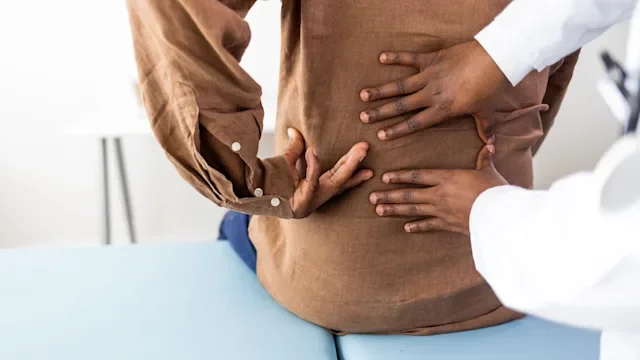
Muscle imbalances can appear anywhere, including the shoulders, hips, back, and neck. It is important to recognize the signs of a muscle imbalance so you can correct it before it causes pain or injury. Common signs of a muscle imbalance include:
Pain or stiffness unrelated to a specific injury
Differences in strength, flexibility, or balance
Visible differences in muscle size
Poor posture
What causes a muscle imbalance?
More than one factor can cause or add to a muscle imbalance. Once the imbalance occurs, your body continues an altered movement, called relative inflexibility, unless you try to fix it. Here are the most common causes of muscle imbalances.
Repetitive movements
Experts say that overuse from repetitive movements is one of the top reasons people develop muscle imbalances. Work or everyday activities — such as pulling a lever, chopping food, or typing — can be to blame.
Doing the same exercise routine or training a specific muscle group for a sport can also trigger muscle imbalances. Sports that use one hand, such as tennis or bowling, can add to muscle imbalances.
Poor posture or inactivity
Sitting or slouching at your desk, craning your neck to look down at your phone, or putting all your weight on the same leg when standing can contribute to muscle imbalances.
Injuries
Injuries can lead to muscle imbalances as you overcompensate with the uninjured side. If you injure your right ankle, you will put more weight on your left side when walking. This results in the muscles on your left side working harder to support your weight.
Handedness
People naturally use their dominant hand more often. So minor strength differences between muscles on your left and ride side are to be expected. But factors like overuse can turn these minor differences into significant imbalances.
One study found that this difference may be more pronounced in right-handed people. Right-handers had 10% more grip strength in their right hand than their left. But lefties didn't have a significant difference between the two sides. Researchers in a different study believe this difference is due to lefties adapting to a right-handed centered environment, so they use both hands more.
Shoes
Research suggests that wearing high heels or wedges often for long periods can cause muscle imbalances. They can tighten your calves and misalign your hips and knees, causing low back pain.
How do you fix muscle imbalances?
Muscle imbalances don't happen overnight, so it may take several months to see any improvement. You should visit your healthcare provider or physical therapist if you have an injury. They can test for muscle imbalances and help pinpoint the best exercises to correct them.
A therapeutic exercise program should include moves that stretch tight muscles and strengthen weaker muscles. For example, if you sit all day, you may develop tight hip flexors and weakened gluteal muscles. This muscle imbalance puts your pelvis in an anterior pelvic tilt which can lead to low back pain. Your exercise program might include hip flexor stretches, foam rolling exercises, and moves to strengthen your glutes, hamstrings, and core.
If one side is stronger, your therapist may also recommend unilateral exercises. These single-limb exercises allow you to work one side of your body at a time to regain strength. Examples include single-leg step-ups, single-leg deadlifts, and single-arm bicep curls.
Tips to prevent muscle imbalances
It's easier to prevent a muscle imbalance than to correct one. The following tips can help.
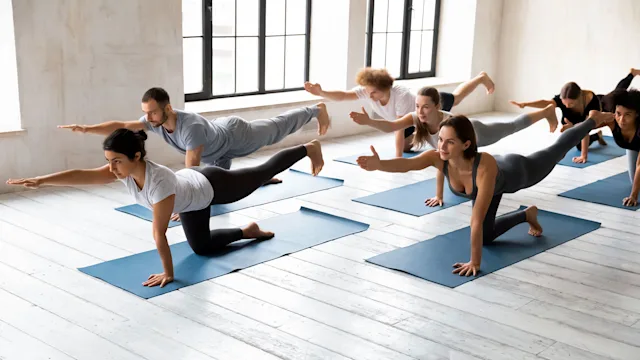
Change your exercise routine regularly. Cross-training with different types of exercise is a great way to avoid muscle imbalances, injuries, and boredom. For instance, runners might add weekly yoga and strength training sessions for a well-rounded fitness routine.
Train both sides of your body. Do bilateral exercises like squats, deadlifts, and burpees to work both sides of your body simultaneously. Be sure to do the same number of reps and sets on each side when you practice unilateral exercises.
Include multi-directional exercises. Practice rotating, pushing, and pulling exercises, such as a lunge with a twist, medicine ball chops, and rotating sit-ups. These multi-planer exercises make sure that you don't limit yourself to movement in one linear plane of motion, as with squats, sit-ups, and pulldowns.
Switch things up in your daily routine. Depending on your job and other responsibilities, it may be hard to avoid repetitive movements. But be mindful of daily activities that can contribute to muscle imbalances. If you're a side sleeper, try to alternate sides. Don't always cross your legs in the same direction. And try carrying groceries with your non-dominant hand. These small changes can make a difference.
Stretch often. Regular stretching can help correct or prevent muscle imbalances, especially when combined with strengthening exercises. Try doing 5 to 10 minutes of daily stretching that targets your core and upper and lower-body muscles.
Get up and get moving throughout the day. Physical activity throughout the day — even a few minutes every hour — can keep your muscles loose, your blood flowing, and your muscles balanced. You can try some quick desk exercises if you sit for extended periods at work.
Check your footwear. Avoid wearing heels, wedges, or other unsupportive shoes for long periods. And if you do, make sure you stretch your calves regularly. Look for supportive shoes that keep your feet in a neutral position.
The bottom line
Minor differences in muscle size or strength are normal. But more significant muscle imbalances can limit joint movement and cause injuries. Repetitive motions from sports or daily activities can trigger these imbalances. A well-rounded exercise program that strengthens and stretches all muscle groups can help correct or prevent muscle imbalances.

Why trust our experts?




References
Biga, L. M., et al. (2019). 11.1 describe the roles of agonists, antagonists and synergists. Anatomy & Physiology.
Brookbush, B. (2014). Relative flexibility: Compensation, progressions, and contraindicated exercise. National Academy of Sports Medicine.
Cedars-Sinai. (2021). The Healthy: Four signs you have a muscle imbalance.
Franettovich, M., et al. (2011). Muscle imbalance among elite athletes. British Journal of Sports Medicine.
Gedela, R. K., et al. (2008). Validity of 10% rule in left hand dominant people. Indian Journal of Physiotherapy.
Hosford, B. (2015). 10 daily habits that can cause muscular imbalances. The American Council on Exercise.
International Sports Sciences Association. (2022). Multi-planar training: Frontal, sagittal, transverse planes.
Kim, D., et al. (2015). Effect of an exercise program for posture correction on musculoskeletal pain. Journal of Physical Therapy Science.
McCall, P. (2016). Muscle imbalance | 6 things to know about muscle imbalances. The American Council on Exercise.
Naik, G. R., et al. (2017). Does heel height cause imbalance during sit-to-stand task: Surface EMG perspective. Frontiers in Physiology.
Neme, J. R. (2022). Balancing act: Muscle imbalance effects on musculoskeletal injuries. Missouri Medicine.
Stastny, P., et al. (2018). Muscle imbalances: Testing and training functional eccentric hamstring strength in athletic populations. Journal of Visualized Experiments.
Stull, K. (n.d.). Overactive versus underactive muscles: What does it all mean? National Academy of Sports Medicine.
University of Michigan. (n.d.). Time to move.
Ziyagil, M. A., et al. (2015). Effects of handedness on the hand grip strength asymmetry in Turkish athletes. Comprehensive Psychology.