Key takeaways:
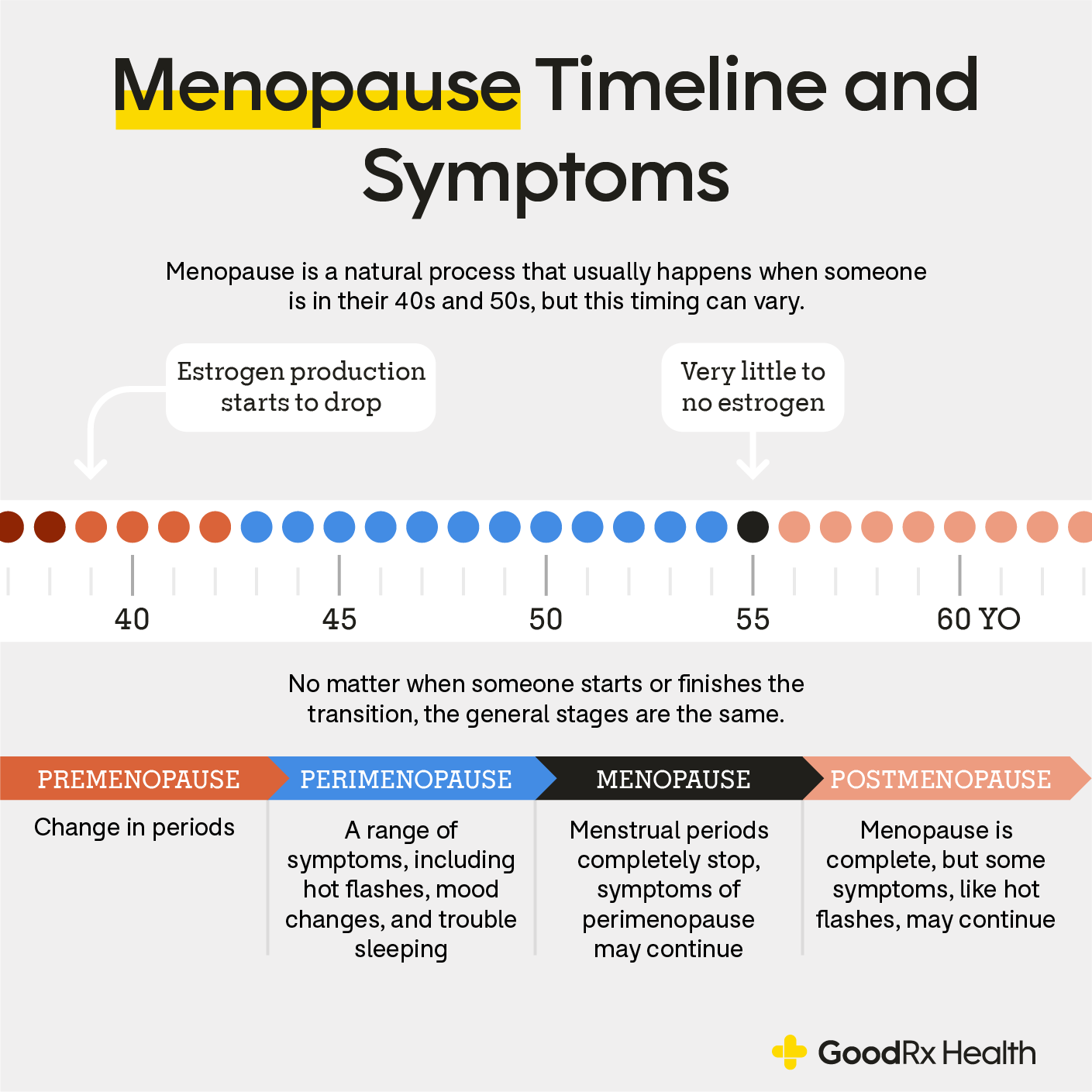
Menopause is a natural transition that usually starts between the ages of 45 and 55, but some people will start earlier or later.
Menopause has four general stages. The whole process can take up to 14 years.
The length of time for the earlier menopausal stages varies, but most people can tell which stage they’re in based on their symptoms.
For a long time, people were taught a simple story about menopause. Most people know menopause as the time when the female menstrual cycle becomes irregular, then stops completely. But thanks to growing research and awareness, people are now learning that menopause is a bit more complex than that.
There are actually several stages of menopause. During menopause, your body’s production of two hormones — estrogen and progesterone — begins to change. The complex changes in these hormones leads to a range of different symptoms at each stage. If you’re in your 40s or 50s and experiencing new changes in your body, understanding the different stages of menopause and how long they last can be helpful.
When does menopause usually start?
Most women experience menopause between the ages of 45 to 55. But this can vary.
Premature menopause is when menopause begins before the age of 40. This can happen for a variety of reasons:
Family history or genetics
Exposure to radiation or certain chemotherapy drugs
Smoking
Surgical removal of ovaries (This causes menopause to start immediately.)
Surgical removal of the uterus (With this surgery, your ovaries remain and continue producing hormones, but this increases the risk of early menopause.)
Other medical conditions that affect reproductive hormones
How long does the menopausal transition last?
The menopausal transition usually takes around 7 years. But it can last up to 14 years. And each person’s experience throughout the menopausal transition is different.
Average duration and factors that affect menopause
Although the menopausal transition lasts about 7 years on average, there’s no single timeline that applies to everyone. Hormone levels — especially estrogen — fluctuate unpredictably during this time, which is why symptoms and cycle changes can stretch out for years before periods stop completely.
Factors that affect how long the stages of menopause last include:
Family history
Smoking
Medical treatments
Body weight
Overall health
Even though the duration and symptoms can vary, the arc of menopause is divided into stages that can help serve as a guide for where you might be in the process. Let’s go over each stage.
What are the stages of menopause?
The stages of menopause include premenopause, perimenopause, menopause, and postmenopause. Here’s what to expect in each stage.
Stage | Common age range | Key hormonal changes | Main symptoms |
|---|---|---|---|
Premenopause | Lasts until perimenopause begins | Estrogen and progesterone fluctuate with the menstrual cycle, but are stable overall. | Regular menstrual cycle |
Perimenopause | Early 40s to early 50s | A drop in estrogen and progesterone levels | Irregular periods, hot flashes, difficulty sleeping, vaginal dryness, mood changes |
Menopause | Mid 40s to mid 50s | Low estrogen | Absence of period |
Postmenopause | The rest of one’s life after menopause | Low estrogen | Absence of period |
Premenopause
Premenopause means “before menopause.” Technically, it’s not considered a true phase of menopause in a medical sense. It refers to the time before perimenopause, when your periods are still regular and your hormones haven’t started changing yet. Progesterone and estrogen go up and down during a typical menstrual cycle, but overall they’re stable.
People sometimes use “premenopause” and “perimenopause” interchangeably, but they mean different things.
Perimenopause
Perimenopause means “around menopause.” It starts when there’s a natural drop in hormone levels — mainly progesterone and estrogen — as you age. Most often, perimenopause begins in the mid-40s. But it can happen earlier or later for some people.
Perimenopause symptoms
For many women, the first sign of perimenopause is a change in their menstrual cycle. Your periods may get heavier and last longer. Or your periods may be lighter and end earlier than normal. They often become less regular over time.
Other symptoms include:
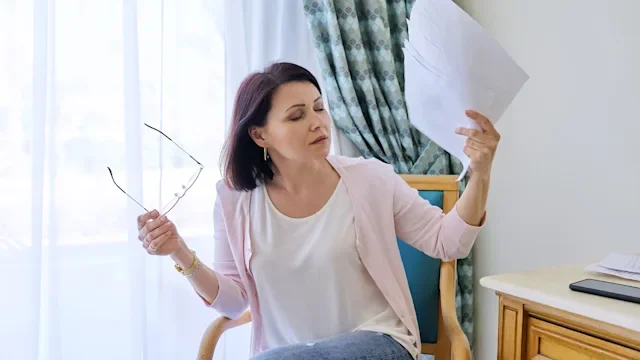
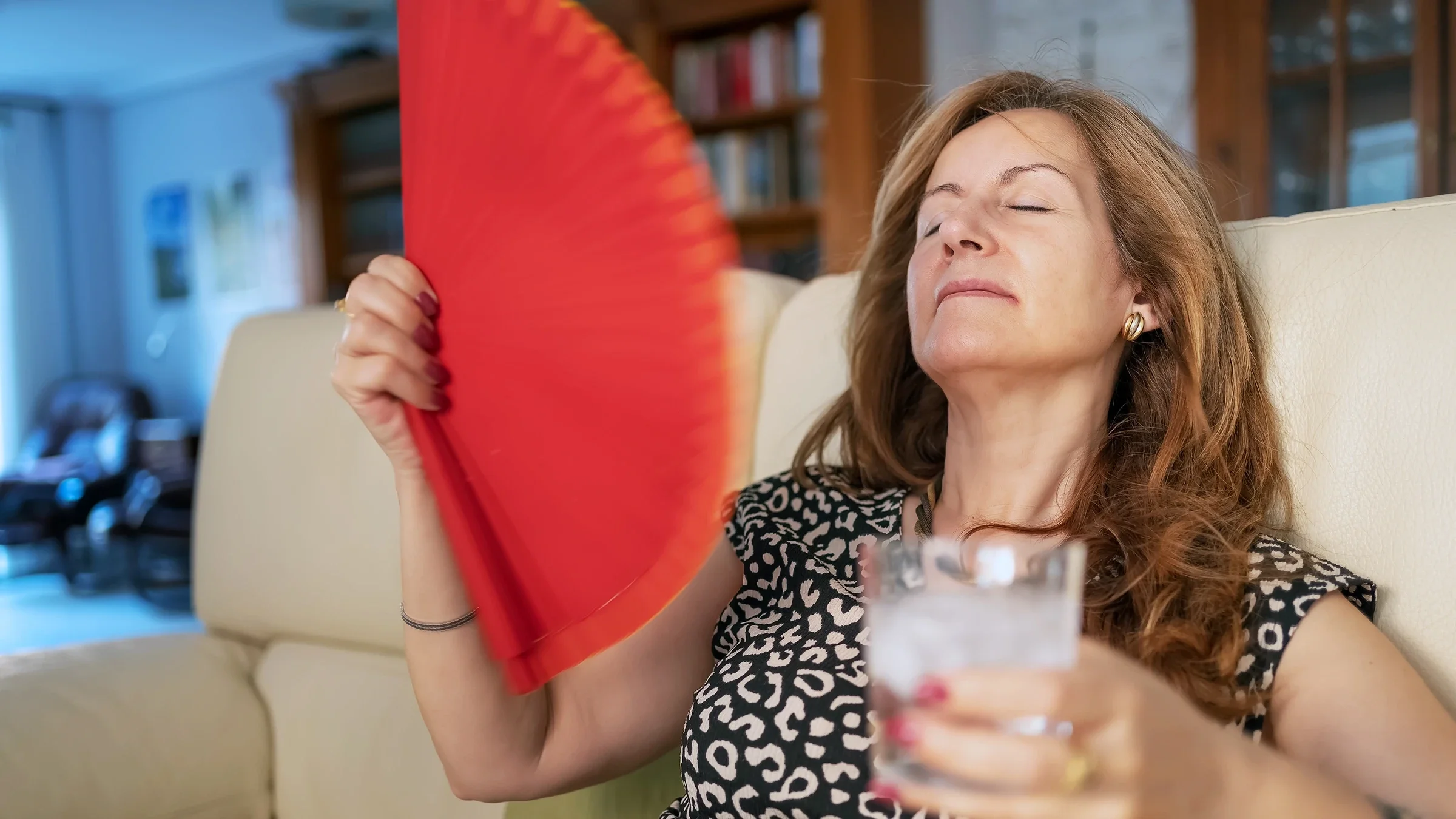
Hot flashes: These are short bursts of heat felt in your face and neck. Hot flashes can also cause redness and flushing. These can last for mere seconds to several minutes.
Changes in mood: You might experience an increase in anxiety or depression, or feeling moodier.
Trouble sleeping: This includes difficulty both falling asleep and staying asleep. Sleep can also be disrupted by night sweats.
Brain fog: You may have trouble concentrating.
Vaginal thinning: This can cause dryness, and it increases the risk of urinary tract infections (UTIs).
Decreased sex drive (libido): This is due to a drop in estrogen and other hormone levels that affect libido.
Weight gain: This is a common and natural physical change that most people experience in the years leading up to menopause.
Perimenopause can last as little as a few months to as long as 4 to 8 years. Keep in mind that it’s possible to get pregnant during perimenopause.
Menopause
Menopause begins when the body makes very little or no estrogen and progesterone. The symptoms of menopause are often the same as the ones listed above for perimenopause.
Technically, someone reaches menopause when it’s been a year since their last period. For example, if 11 months go by without a menstrual period, but it returns in month 12, that person isn’t considered to be in menopause yet.
After 12 months have gone by without a period, it means you’ve completed menopause and are now postmenopausal. This also means you can no longer get pregnant.
Postmenopause
Postmenopause is the final stage of menopause. Although many symptoms of perimenopause and menopause usually go away during postmenopause, some may continue. This is especially true for hot flashes. Hot flashes may last for several years after menopause ends.
People who are postmenopausal are also at an increased risk for heart and bone disease, since estrogen usually protects your heart and bones. But these conditions often don’t produce symptoms. This is why it’s important for people who are postmenopausal to be screened for these conditions.
A person is considered postmenopausal for the rest of their life after menopause.
Quiz: Am I in perimenopause?
How to manage menopause symptoms
If you’re going through menopause and looking for relief, rest assured that you have plenty of options. Whether you’re interested in natural remedies, medications, or lifestyle changes, you can find an approach that matches your unique needs.
Here are some ways to manage menopause symptoms:
Eat a nutritious diet. A diet rich in whole grains, lean protein, fruits, and vegetables can help some women feel better during menopause.
Adopt good sleep habits. Poor sleep is a common symptom of menopause. And it can worsen other symptoms, like brain fog and mood swings. Establishing good sleep hygiene can help minimize the sleep disturbances that are so common during this phase.
Exercise. Strength training, aerobic exercise, and balance exercises have all been shown to help ease menopause symptoms.
Wear lightweight clothing. If you’re having hot flashes or night sweats, wearing loose, light clothing can help you feel more comfortable.
Try mind-body treatments. Mind-body treatments — like acupuncture, hypnosis, mindfulness, and yoga — can help ease symptoms, like hot flashes and night sweats.
Consider supplements. Some supplements, like Relizen or phytoestrogens, may help relieve symptoms, like vaginal dryness or hot flashes.
Consider menopause hormone therapy (MHT): MHT (also known as hormone replacement therapy, or HRT) comes in many forms: pills, shots, creams, vaginal devices, and more. The best option for you depends on your symptoms and medical history. Talk to a healthcare professional you trust to see if hormone therapy is right for you.
Frequently asked questions
The main sign that menopause is coming to an end is that you stop having your periods. When 12 months have passed without your period, you have officially reached menopause. Other signs that menopause may be coming to an end include improved sleep, better mood, and fewer hot flashes. But the lines can be blurry; some women will continue to have lingering symptoms for years, even when they’re in postmenopause.
After menopause, symptoms — like sleep problems and mood swings — usually get better. But your body doesn’t go back to its premenopause normal. Most women will also gain or lose weight throughout menopause, and this can be normal. Shifts in bone density and heart health are also a part of aging that happen after menopause. Menopause is a time of transformation and change throughout your body. So, after menopause, many women find that their body has a new normal.
There’s some research to suggest that after menopause, cells in your blood seem to age faster. But researchers don’t understand exactly why this is. Sleep problems — which are common in perimenopause — can lead to cell changes that speed up the aging process. Lower estrogen levels after menopause might also play a role in aging of the skin and bones. Some studies suggest that using hormone therapy can slow down the aging process.
There isn’t one “healthiest" age for menopause. Most women experience menopause between ages 45 to 55, and the average age is 52. This is considered a typical age range.
If menopause happens before age 40, it’s called premature ovarian insufficiency (POI). Early menopause can be linked to certain health risks, so it’s important to talk with a healthcare professional if your periods stop earlier than expected.
The worst stage of menopause will depend on your individual symptoms. Some women only experience a change in the menstrual cycle, and others have hot flashes, sleep disturbances, and mood problems. Some studies suggest that sleep quality has a big impact on your quality of life. If you experience sleep problems during any stage of menopause, that stage may feel like the worst one.
Menopause doesn’t cause major changes in your appearance. But, during menopause, estrogen levels decrease. Over time, this can cause changes in the appearance of your skin and hair. You might also notice changes in body shape, like more fat around your waist. Drinking plenty of fluids and exercising can help offset some of these changes.
The main sign that menopause is coming to an end is that you stop having your periods. When 12 months have passed without your period, you have officially reached menopause. Other signs that menopause may be coming to an end include improved sleep, better mood, and fewer hot flashes. But the lines can be blurry; some women will continue to have lingering symptoms for years, even when they’re in postmenopause.
After menopause, symptoms — like sleep problems and mood swings — usually get better. But your body doesn’t go back to its premenopause normal. Most women will also gain or lose weight throughout menopause, and this can be normal. Shifts in bone density and heart health are also a part of aging that happen after menopause. Menopause is a time of transformation and change throughout your body. So, after menopause, many women find that their body has a new normal.
There’s some research to suggest that after menopause, cells in your blood seem to age faster. But researchers don’t understand exactly why this is. Sleep problems — which are common in perimenopause — can lead to cell changes that speed up the aging process. Lower estrogen levels after menopause might also play a role in aging of the skin and bones. Some studies suggest that using hormone therapy can slow down the aging process.
There isn’t one “healthiest" age for menopause. Most women experience menopause between ages 45 to 55, and the average age is 52. This is considered a typical age range.
If menopause happens before age 40, it’s called premature ovarian insufficiency (POI). Early menopause can be linked to certain health risks, so it’s important to talk with a healthcare professional if your periods stop earlier than expected.
The worst stage of menopause will depend on your individual symptoms. Some women only experience a change in the menstrual cycle, and others have hot flashes, sleep disturbances, and mood problems. Some studies suggest that sleep quality has a big impact on your quality of life. If you experience sleep problems during any stage of menopause, that stage may feel like the worst one.
Menopause doesn’t cause major changes in your appearance. But, during menopause, estrogen levels decrease. Over time, this can cause changes in the appearance of your skin and hair. You might also notice changes in body shape, like more fat around your waist. Drinking plenty of fluids and exercising can help offset some of these changes.
The bottom line
Menopause is a natural process that usually happens when someone is in their 40s and 50s, but this timing can vary based on genetics and health conditions. No matter when someone starts or finishes the transition, the general stages are the same. By understanding the physical and health changes that take place in each stage, you can better care for and understand your changing body during this time.

Why trust our experts?


References
Abildgaard, J., et al. (2021). Changes in abdominal subcutaneous adipose tissue phenotype following menopause is associated with increased visceral fat mass. Scientific Reports.
Ahlborg, H. G., et al. (2003). Bone loss and bone size after menopause. The New England Journal of Medicine.
Baker, F. C., et al. (2018). Sleep and sleep disorders in the menopausal transition. Sleep Medicine Clinics.
Gold, E. B. (2012). The timing of the age at which natural menopause occurs. Obstetrics and Gynecology Clinics of North America.
Jankowska, K. (2017). Premature ovarian failure. Menopause Review.
Johns Hopkins Medicine. (n.d.). Introduction to menopause.
Kochersberger, A., et al. (2024). The association of race, ethnicity, and socioeconomic status on the severity of menopause symptoms: A study of 68,864 women. Menopause.
Levine, M. E., et al. (2016). Menopause accelerates biological aging. Proceedings of the National Academy of Sciences of the United States of America.
Liu, Y., et al. (2024). Hormone therapy and biological aging in postmenopausal women. JAMA Network Open.
Moorman, P. G., et al. (2012). Effect of hysterectomy with ovarian preservation on ovarian function. Obstetrics & Gynecology.
Nash, Z., et al., et al. (2022). Bone and heart health in menopause. Best Practice and Research Clinical Obstetrics and Gynaecology.
National Health Service. (2022). Overview: Menopause.
National Institute on Aging. (2024). What is menopause? National Institutes of Health.
NHS Inform. (2024). After the menopause.
Peacock, K., et al. (2023). Menopause. StatPearls.
Soares, C., et al. (2026). Impact of sleep disturbances on health-related quality of life in postmenopausal women: A systematic review. Menopause.
Stevenson, S., et al. (2007). Effect of estrogens on skin aging and the potential role of SERMs. Clinical Interventions in Aging.
The Menopause Society. (n.d.). Menopause definitions.
Thiyagarajan, D. K., et al. (2024). Physiology, menstrual cycle. StatPearls.
UCLA Health. (2016). Menopause, sleepless nights may make women age faster.
World Health Organization. (2024). Menopause.
Zouboulis, C. C., et al. (2022). Skin, hair and beyond: The impact of menopause. Climacteric.