Key takeaways:
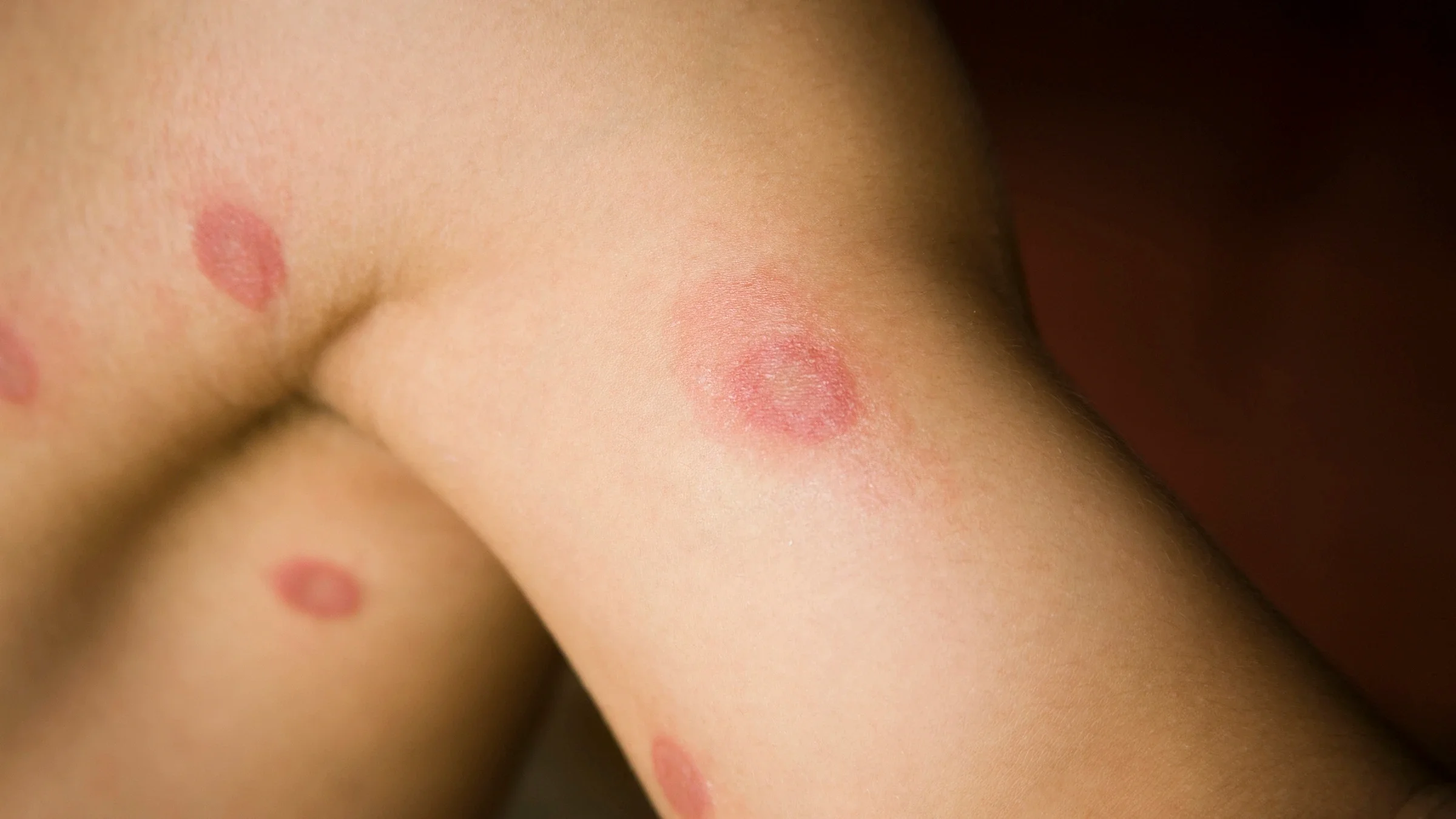
People can find it hard to tell the difference between ringworm and eczema. Both can cause an itchy, circular rash.
Ringworm is a contagious fungal infection, easily treated with antifungal medication.
Eczema, on the other hand, is a chronic skin condition caused by a faulty skin barrier. Eczema usually requires long-term treatments.
Ringworm and eczema are two common rashes that can be hard to tell apart. This is because they both can appear as a circular rash that’s very itchy and flaky. And they both can last on the skin for weeks or months at a time.
But beyond these similarities, ringworm and eczema are very different. Each condition has some key features that make it unique and can help tell it apart. Knowing how to tell the difference can help make sure you get the right diagnosis and treatment.
What’s the difference between ringworm and eczema?
Let’s take a look at the key differences between ringworm and eczema.
Causes
Ringworm is an infection caused by tinea — a type of fungus that lives on the skin.
Eczema isn’t an infection — it’s a chronic rash. Eczema usually stems from a faulty skin barrier. This means the skin gets dry and irritated more easily, which can lead to eczema. Eczema can have many triggers, including:
Extreme temperatures
Exposure to allergens (like dust mites)
Irritants (like soaps and detergents)
Location
Ringworm can happen anywhere on the body, including the nails and scalp. There are many different kinds of tinea infections, and they’re named based on where the infection and the rash is on the body. Here are some examples:
Tinea corporis (ringworm on the body)
Tinea capitis (scalp ringworm)
Tinea cruris (jock itch)
Tinea pedis (athlete’s foot)
Onychomycosis (fungal infection on the nail)
While eczema can also affect anywhere on the body, it’s most common in the folds of the skin. Common places people get eczema include:
The neck
Behind the knees
Inside the elbows
The hands
The wrists
Shape
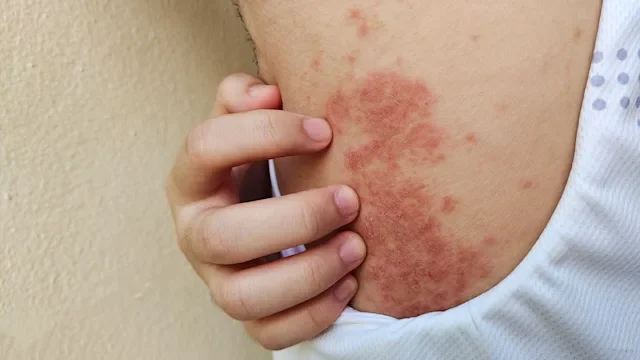
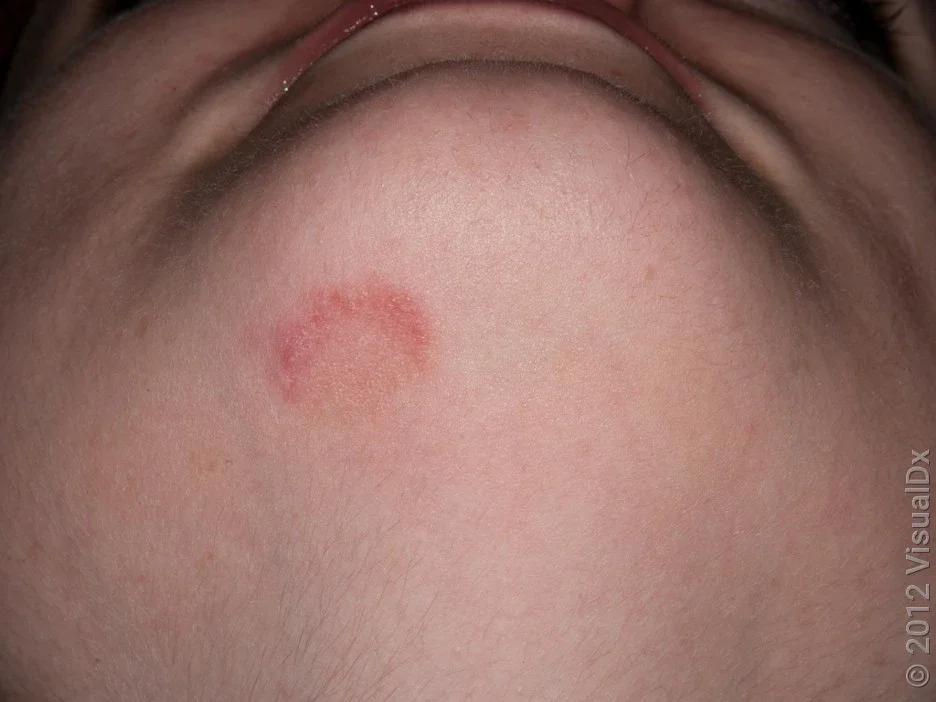
A ringworm rash is usually round or curved in shape. That’s why it’s called “ringworm.” It often shows up as one or a few patches on the skin. The patches can range from small (like the size of a quarter) to quite large (bigger than your palm).
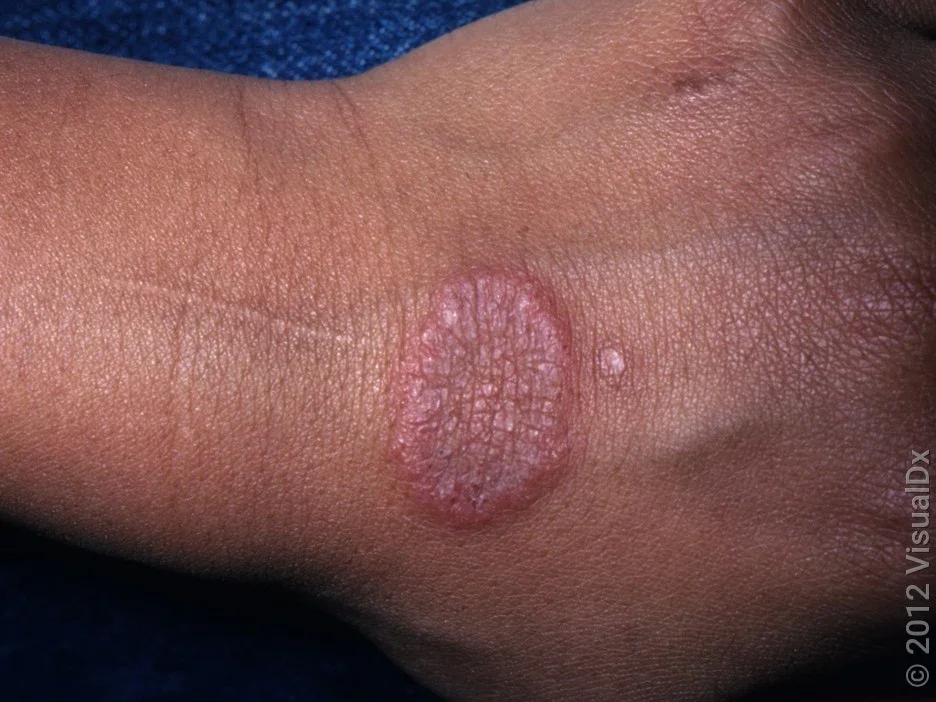
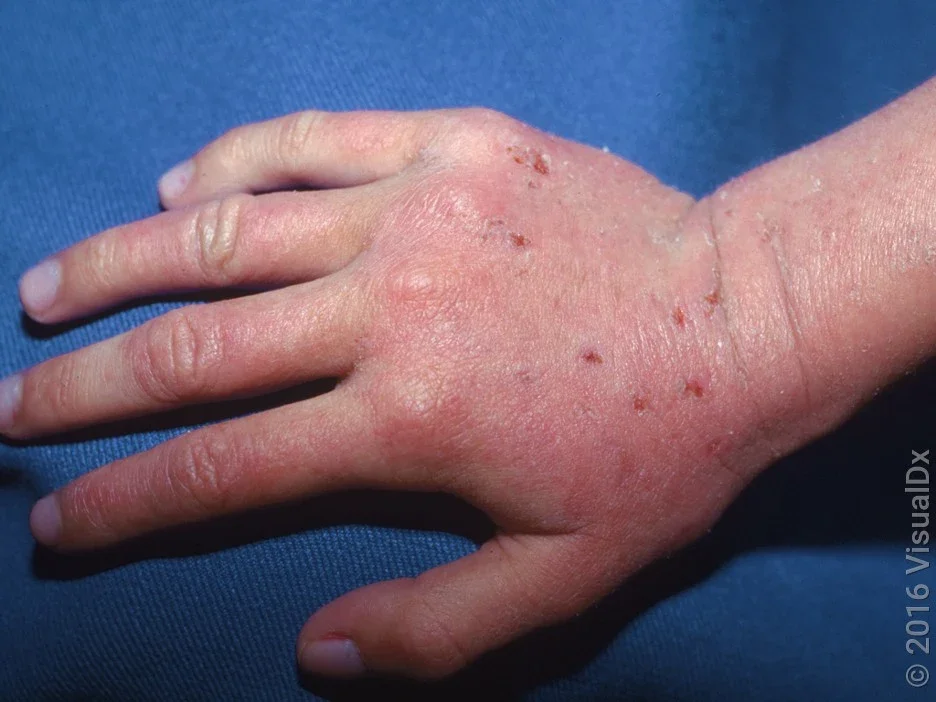
Eczema, on the other hand, can take on different shapes and can involve many different parts of the body at once. An eczema rash can be round, but it doesn’t have to be.
Treatment
One last key difference between ringworm and eczema is how they respond to treatment. Ringworm can be cured. Once you treat the infection, the rash goes away.
Eczema is usually a chronic condition. This means that it may come and go over time, but it often needs long-term treatment to manage the symptoms.
Ringworm vs. eczema pictures
Here are some images of ringworm and eczema to help you tell the difference between the two conditions.

What are the symptoms of ringworm vs. eczema?
Ringworm and eczema can look similar, but there are some clues that can help tell them apart. These include things like the rash’s location, shape, and symptoms.
| Eczema | Ringworm | |
|---|---|---|
| How does it look when it starts? |
|
|
| How does it feel? |
|
|
| Where does it happen on the skin? |
|
|
| How does it look when it’s advanced? |
|
|
| Other symptoms? |
|
How do you get ringworm?
The most common way to get a ringworm infection is from touching another person or animal with it. That’s because the fungus that causes a ringworm infection is spread by touch. In rare cases, it can pass from object to person, but this isn’t common.
Certain factors can increase your risk of getting a ringworm infection. These include:
Warm climate: Fungus is more common in warmer climates. If you live somewhere tropical, your risk of ringworm is higher.
Close-contact activities: Sports with heavy contact, like wrestling or jiu jitsu, increase your risk of ringworm.
Heavy sweating: Fungus tends to thrive in warm, moist areas. Moisture from sweat increases your risk of ringworm.
Animal contact: Having close contact with animals, like with pet ownership, may increase your risk of ringworm.
Diabetes: If you have diabetes, you’re at a higher risk of fungal infections like ringworm.
How do you treat ringworm?
Antifungal medications can easily treat ringworm. Most of the time, medicated creams are enough to clear the infection. But sometimes, antifungal pills may be needed.
Topical treatments
Antifungal creams (like clotrimazole and miconazole) can usually treat small ringworm infections. These creams are often available over the counter (OTC). Antifungal creams are safe to use long term and can help prevent fungal infections in people who are at higher risk.
Oral treatments (pills)
Antifungal creams won’t always be enough to treat the infection. You may need treatment with antifungal pills if your ringworm rash:
Covers a large section of skin
Hasn’t improved with OTC creams
Is located on the scalp (creams don’t penetrate well through hair)
These cases often need treatment with oral antifungal medications. There are many options — terbinafine is a common one. Antifungal pills are very effective, but they have some risks. For people who have liver disease, these pills can put stress on the liver. For healthy people, this is usually not a real risk. In fact, recent data shows that regular lab monitoring of liver function isn’t necessary for healthy people taking antifungal medications.
How do you treat eczema?
There are many treatment options for eczema. These include at-home treatments, medications, and in-office treatments with a healthcare professional. The specific treatment depends mainly on how severe your symptoms are and your preferences.
At-home treatments
Most eczema treatment starts with good skin care and keeping your skin moisturized. Here are some at-home treatments to help improve eczema symptoms:
Moisturizers: Daily moisturization can help soothe skin and decrease eczema flare-ups.
Wet dressings: Layering skin with ointment and a wet layer of bandages can help lock in moisture.
Relaxation: Using techniques to relax and reduce stress can decrease eczema itchiness. For example, laughter can help lower stress in children with eczema, and this may improve their skin symptoms.
Medications
Anti-inflammatory creams can treat most mild cases of eczema. Anti-inflammatory pills and injections may be needed for more serious cases of eczema. Common medications that treat eczema include:
Corticosteroid pills: like prednisone
Steroid creams: like triamcinolone
Nonsteroidal creams: like pimecrolimus and tacrolimus
Antibiotic creams: like mupirocin
Oral immunosuppressants: like methotrexate, cyclosporine, or Rinvoq (upadacitinib)
Immunosuppressant injections: like Dupixent (dupilumab) for people ages 6 months or older, Adbry (tralokinumab-ldrm), Ebglyss (lebrikizumab-lbkz), and Nemluvio (nemolizumab-ilto) for people ages 12 and older
In-office treatments
Sometimes, in-office procedures can be helpful in treating eczema. Ultraviolet light treatment (phototherapy) reduces the inflammation caused by eczema. It’s best for those with moderate-to-severe eczema who haven’t responded to other treatments.
Diagnosing ringworm vs. eczema
A healthcare professional can diagnose most cases of ringworm and eczema with a physical exam. But sometimes it can be hard to tell them apart just by looking at them. These additional tests can help make the right diagnosis.
A skin scraping test looks at skin flakes under a microscope to see if there’s fungus.
A skin biopsy is a minor office procedure where a dermatologist cuts a very small piece of the skin and sends it to a lab where a pathologist examines it under the microscope.
Should you seek medical care for symptoms of ringworm or eczema?
If you have rashes that last more than 2 weeks and don’t get better, you should get expert advice. Ringworm and eczema rashes can look the same, but the treatments are different. So it’s important to know which one you have before trying to treat them.
OTC treatments for eczema — such as steroid creams — can actually make ringworm worse. This can sometimes be a clue that you have ringworm and not eczema. So, if you're concerned about ringworm or eczema, it’s best to get a professional evaluation to help make the right diagnosis.
Frequently asked questions
Ringworm is contagious, but eczema isn’t. If you have ringworm, it’s important to get treatment to keep it from spreading to other parts of your body and other people.
Eczema has a genetic component. It runs in families, meaning you’re more likely to have it if someone in your family has it. But there are other factors beyond your genetics that influence whether or not you get eczema.
Yes, both ringworm and eczema can look like psoriasis. However, this isn’t very common. If your dermatologist isn’t sure what the diagnosis is, a small skin biopsy can help clarify things.
Mild ringworm can sometimes go away by itself, but it’s uncommon. If ringworm isn’t treated, it’s more likely to spread to other parts of your body. That’s why it’s best to treat ringworm early.
Sometimes, rashes other than eczema can look like ringworm. Some examples include:
If you’re not sure if you have ringworm, your dermatologist can help you get the right diagnosis.
Ringworm is contagious, but eczema isn’t. If you have ringworm, it’s important to get treatment to keep it from spreading to other parts of your body and other people.
Eczema has a genetic component. It runs in families, meaning you’re more likely to have it if someone in your family has it. But there are other factors beyond your genetics that influence whether or not you get eczema.
Yes, both ringworm and eczema can look like psoriasis. However, this isn’t very common. If your dermatologist isn’t sure what the diagnosis is, a small skin biopsy can help clarify things.
Mild ringworm can sometimes go away by itself, but it’s uncommon. If ringworm isn’t treated, it’s more likely to spread to other parts of your body. That’s why it’s best to treat ringworm early.
Sometimes, rashes other than eczema can look like ringworm. Some examples include:
If you’re not sure if you have ringworm, your dermatologist can help you get the right diagnosis.
The bottom line
Sometimes, it can be hard to tell the difference between ringworm and eczema — especially if you’ve not had either skin condition before. Both can cause a circular rash that’s itchy and flaky.
But that’s where the similarities end. Ringworm is a curable and contagious infection. Meanwhile, eczema is a chronic skin condition that can come and go, and it requires ongoing treatment.
If you have a rash for more than 2 weeks, it’s a good idea to get help from a healthcare professional. They can make sure you have the right diagnosis and suggest the proper treatment plan for you.

Why trust our experts?



Images used with permission from VisualDx (www.visualdx.com).
References
DermNet. (2008). Nummular dermatitis.
Kim, S., et al. (2018). The effects of a humor intervention on the physiological, physical, and psychological responses of school-aged children with atopic dermatitis in South Korea: A pilot study. Journal of Pediatric Nursing.
MedlinePlus. (n.d.). Skin biopsy.
MedlinePlus. (2025). Skin lesion biopsy.
MedlinePlus. (2025). Skin lesion KOH exam.
National Eczema Association. (2025). Phototherapy.
Stolmeier, D. A., et al. (2018). Utility of laboratory test result monitoring in patients taking oral terbinafine or griseofulvin for dermatophyte infections. JAMA Dermatology.