Key takeaways:
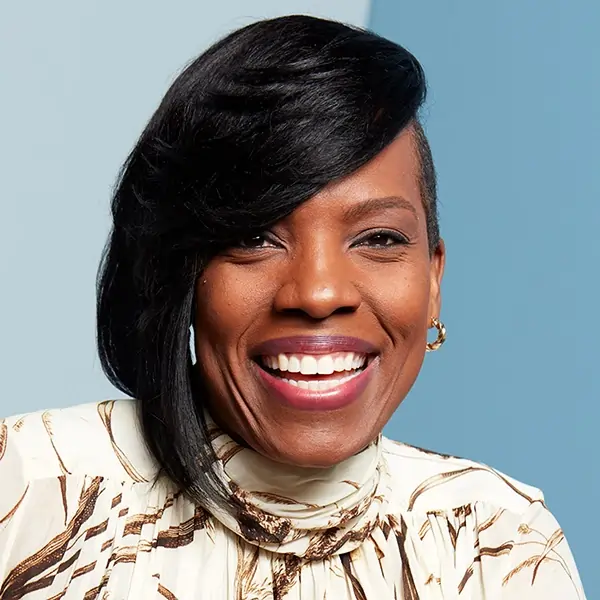
Phyllisa Deroze lived with a Type 2 diabetes diagnosis for 8 years.
Then, she found out she actually had a different kind of diabetes — something unusual between Type 1 and Type 2.
She’s now a diabetes advocate who wants to make sure Black women with diabetes feel heard.
On New Year’s Eve in 2010, Phyllisa Deroze was sure she was heading into the best year of her life.
“I came into that January living my life like it was golden,” she says. She had recently finished her PhD at Penn State and moved to North Carolina for a job as a literature professor. She was 31 years old, had lost 50 pounds, and was working out 5 days a week.
“I remember looking in the mirror and saying, ‘I feel so good right where I am.’”
And then came February.
Her first symptom was extreme fatigue. Then came the overpowering thirst.
“I felt like someone in the desert who couldn’t get to water,” she says. New to the area, Phyllisa scheduled an appointment with a primary care doctor. She says the doctor told her that because she was working out so much, she needed more electrolytes. The doctor recommended she drink Gatorade.
“My blood sugar was never checked. Thirty seconds could have changed it all,” she says.
Within a week, Phyllisa knew something was very wrong. Her thirst increased, and she was urinating constantly. Her vision became blurry. She was saying incoherent things in lectures. She even passed out at home while taking a bath.
So, she went back to her doctor. This time, they checked her blood sugar. The medical assistant whispered to her that it was so high.
“At this point, I was certain I was dying,” Phyllisa says. She texted her mother, a licensed practical nurse, who told her to go to the emergency room immediately.
At the ER, her glucose measured 597, and a nurse asked her how long she had been diabetic. “I’m not diabetic!” Phyllisa remembers saying.
“Not only are you diabetic, you are going into a diabetic coma,” she says the nurse replied.
She was diagnosed with Type 2 diabetes and was in the hospital for 6 days. But it would turn out to be a misdiagnosis.
A setback and an opportunity for diabetes advocacy
Phyllisa set out to learn everything she could about diabetes. The educational pamphlets from the hospital pointed out that African Americans have higher rates of diabetes. But the pamphlets offered little context or comfort for her.
“I wanted to see someone who had diabetes, who looked like me, and was enjoying life and smiling,” she says.
One of the first things she did was start blogging about her life with diabetes. Her goal was to cook her way through one of legendary singer Patti LaBelle’s cookbooks. It featured recipes tailored for people with diabetes.


Within a few months, Phyllisa had started to find her stride. But, she was driving home from work one afternoon in April when something told her to stop at Walmart to pick up a few things. In that 20-minute shopping trip, a tornado ripped through her neighborhood and destroyed her home.
She lost everything and had to live in a hotel for months. It was a low point, but it also awakened a spark.
“I had two near-death experiences, back to back,” she says. “Becoming an advocate for people with diabetes was the only thing I could think to do to make sense of it.”
Fighting for the right diagnosis: Latent autoimmune diabetes in adults (LADA)
Phyllisa had been living with diabetes for 8 years. She was doing all the right things, like following a low-carb diet and exercising. She’d become a runner, with nearly forty 5K races under her belt. But still, her blood sugar level kept increasing. She felt nearly as awful as she did back when she was first diagnosed. And she needed more and more insulin as time went by.
She was regularly attending diabetes advocacy events. At one of them, she met a man who had originally been diagnosed with Type 2 diabetes. Like her, his blood sugar kept getting dangerously high, even as he was working to manage his condition. After taking a Type 1 diabetes antibody test, he learned that he had latent autoimmune diabetes in adults (LADA) — sometimes called Type 1.5 diabetes. It is an unusual, slow-progressing form of autoimmune diabetes.
“It’s basically a slow progression of Type 1 diabetes,” Phyllisa says. People with LADA have insulin production at some point, so they don’t appear to have Type 1. But gradually, the body begins to attack insulin-producing beta cells, creating insulin dependency.
Phyllisa asked her endocrinologist to run the Type 1 antibody test, but the endocrinologist said no. Phyllisa says she fit the profile for LADA. She had a quick onset, was under 30 years old at diagnosis, and was the only person in her family with diabetes.
“But I was a Black woman. You see a Black woman, you automatically think it’s Type 2 diabetes,” she says. Type 2 diabetes is the more common form of diabetes seen in Black people. But Phyllisa didn’t feel heard by her care team. By that time, she’d read LADA is often misdiagnosed in people with diabetes.
“A number of factors stacked up against me in the mindset of those who like to group people together,” she says.
In September 2019, she was able to get her OB/GYN to order the test to check for LADA. It screened her for antibodies against the insulin-making cells of the pancreas. The results confirmed Phyllisa’s suspicions. And her endocrinologist told her to come in immediately. Phyllisa had become insulin dependent. But, she finally had the correct diagnosis.
Her message to Black women with diabetes: Be heard
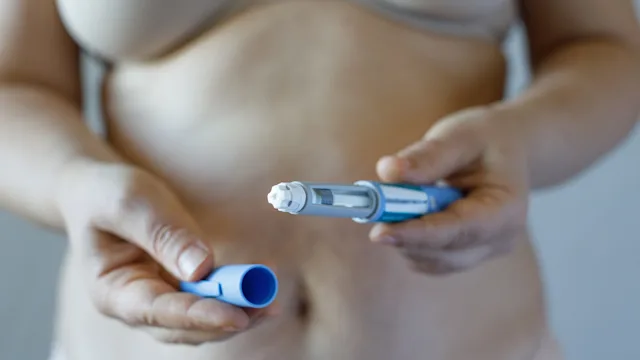
With an insulin pump, Phyllisa is now able to manage her diabetes. But she wants to make sure what happened to her doesn’t happen to others, especially other Black women.
“I have a PhD, and I couldn’t get doctors to listen to me,” she says. “People project onto my brown skin. So when I try to explain my condition, I’m not heard.”
That’s one of the reasons she created Black Diabetic Info. It provides the kind of information she wishes she would have had.
“It’s the resource I needed instead of those pamphlets,” she says. Phyllisa works to educate and also tackles issues like the high price of insulin. She has lived in both Dubai and France and has discovered that insulin is exponentially more expensive in the U.S.
“Why is that?” she asks. “And why are there so many food deserts in predominantly African American neighborhoods?”
She now lives in South Florida with her husband and 6-year-old daughter. She says she's committed to speaking truth to power, and to uplifting others — both those who look like her and those who don’t. She doesn’t want anyone else with diabetes to be talked over, ignored, or second-guessed.
In her case, it meant demanding a simple test to get the proper diagnosis.
“If you suspect you have LADA, ask to be tested,” she says.
She has a simple message for healthcare professionals, as well: Look beyond categorizations and hear what patients are saying, she says. Their lives depend on it.

Why trust our experts?