Key takeaways:
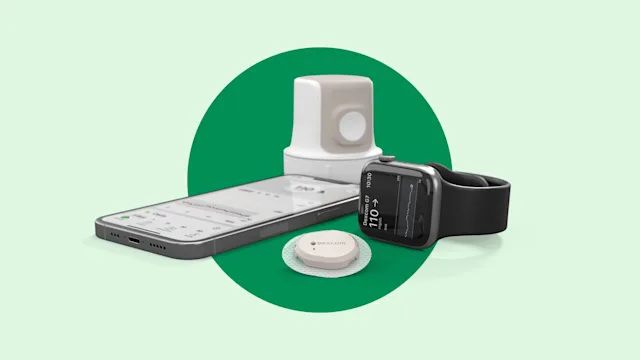
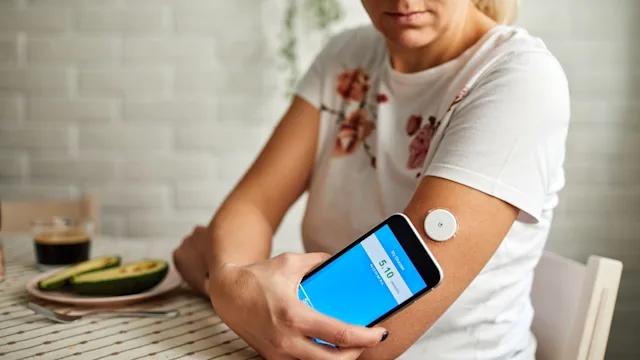
Dexcom G7 is a continuous glucose monitor that’s cleared by the FDA for adults and children ages 2 and older with diabetes. The G7 works with a mobile app or a stand-alone receiver to help you track your glucose (sugar) trends.
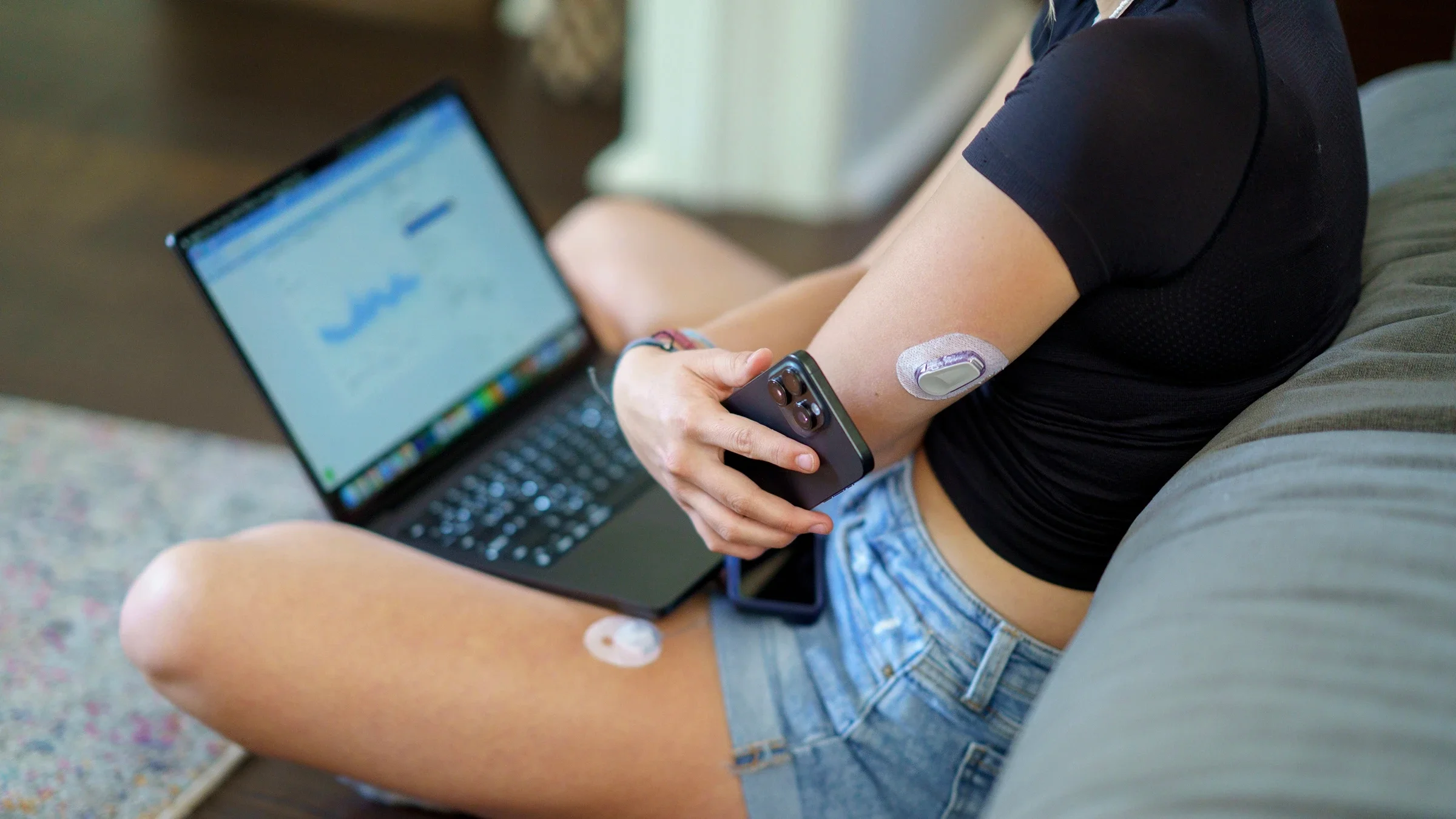
The Dexcom G7 sensors are all-in-one disposable devices. They come preassembled with a transmitter, so they’re ready to insert. A standard sensor lasts 15 days.
You have the option to use a stand-alone Dexcom G7 receiver to view your results. But you can also send results to a smartphone, a smart watch, or an insulin pump.
Without insurance, a Dexcom G7 receiver is $377.78. Two sensors (a 30-day supply of 15-day sensors) are $487.89. GoodRx has exclusive discounts that can help you save on sensors and a receiver at certain pharmacies. You also can reduce the cost of Dexcom G7 with the manufacturer’s pharmacy savings program or patient assistance program if you qualify.
Save on related medications
Dexcom G7 is a prescription-only continuous glucose monitor (CGM). This system makes it easier for people living with diabetes to check their glucose (sugar) levels without pricking their fingers multiple times a day. The Dexcom G7 system disposable sensors are preassembled with a transmitter. You can use a stand-alone G7 receiver to view your results. But you can also use a compatible smartphone, a smart watch, or an insulin pump.
Some insurance plans cover all or part of the Dexcom G7 system. If you don’t have insurance, you may qualify to use manufacturer discounts, the manufacturer’s patient assistance program, or another patient assistance program. You can also save by using exclusive discounts from GoodRx.
We will explore information about cost and how to save on the Dexcom G7 CGM system.
How much does Dexcom G7 cost without insurance?
The cost of the Dexcom G7 without insurance varies, depending on the types of sensors you use and whether you’re buying a receiver. The G7 system has two sensor options:
A 10-day sensor
A 15-day sensor
The two sensor types may have different costs associated with them.
You can use a smartphone, a smart watch, or an insulin pump instead of a stand-alone receiver. So you may not need to purchase this item.
The table below highlights the average retail costs of the different Dexcom G7 CGM components.
Dexcom G7 costs
Dexcom G7 component | Average retail price |
|---|---|
1 receiver (should last for several years) | |
1 carton of 3 sensors (30-day supply of 10-day sensors) | |
1 carton of 2 sensors (30-day supply of 15-day sensors) |
Which factors affect the cost of Dexcom G7?
Without insurance, what you pay for Dexcom G7 depends on several factors, including your:
Pharmacy: All pharmacies set their own retail prices.
Location: Medications and devices can vary in cost based on region.
Fill size: Sometimes, medications and devices can be more affordable over time when purchased in larger quantities.
Sensor type: There may be differences between the cost of the 10- and 15-day sensors.
Receiver use: Your initial costs will be lower if you’re using a compatible smart device you already own instead of a stand-alone receiver.
Does insurance cover Dexcom G7?
Most health insurance plans cover Dexcom G7. You’re most likely to have coverage with Medicaid and with commercial plans, including those purchased through an Affordable Care Act (ACA) marketplace. Medicare Advantage and Part D plans rarely cover this CGM.
If you have insurance, review your plan’s summary of benefits and coverage and formulary (list of covered medications) to determine whether Dexcom G7 is covered. If not, contact your plan provider and ask about your coverage options. You can also discuss alternatives with your prescriber or pharmacist.
Most health insurance plans that include Dexcom G7 on their formularies require enrollees to get prior authorization. Some plans also require enrollees to do step therapy (try other CGMs first).
How different insurance plans cover Dexcom G7
The following charts show the likelihood of having coverage for Dexcom G7 with different types of insurance plans. They also show the likelihood of needing to obtain a prior authorization or complete step therapy.
Insurance type | Enrollees covered for the Dexcom G7 receiver | Enrollees required to get prior authorization | Enrollees required to do step therapy |
|---|---|---|---|
94.5% | 64.9% | 15.8% | |
Commercial plans (excluding ACA plans) | 95.7% | 60.5% | 5.2% |
Medicare (Medicare Advantage and Part D plans)* | 2% | 1.7% | 0% |
Medicaid, including state-run and managed care plans | 87.6% | 61.7% | 5.7% |
Insurance type | Enrollees covered for the Dexcom G7 10-day sensors | Enrollees required to get prior authorization | Enrollees required to do step therapy |
|---|---|---|---|
ACA plans | 94.5% | 64.3% | 16.1% |
Commercial plans (excluding ACA plans) | 96.4% | 60.6% | 5.2% |
Medicare (Medicare Advantage and Part D plans)* | 2.1% | 1.7% | 0% |
Medicaid, including state-run and managed care plans | 87.6% | 61.6% | 5.7% |
*Data does not reflect coverage under original Medicare (Part B).
Source: Managed Markets Insight & Technology, LLC™, as of August 8, 2025. (See methodology below.)
Tips if Dexcom G7 isn’t covered by insurance
If your insurance doesn’t cover Dexcom G7, you still have options:
Use a GoodRx coupon for exclusive discounts on your 10- and 15-day sensors. You can also use GoodRx to save on the receiver.
Ask your prescriber about alternative CGMs.
Request a formulary exception from your insurance company. If your request is denied, you have the right to file an appeal with your plan.
When it’s time for open enrollment, compare different health insurance plans. Another one might provide coverage for this CGM system.
Ways to save on Dexcom G7
Whether or not you have insurance, there are ways to reduce the cost of Dexcom G7. Here are four options.
1. Use a GoodRx coupon
Regardless of insurance status, you can use GoodRx to access exclusive discounts for the G7 sensors and receiver.
Dexcom G7’s price at certain pharmacies is around $185 for two 15-day sensors with a free GoodRx discount. The price for three 10-day sensors is also about $185 with a GoodRx discount. The Dexcom G7 receiver is about $85 if you use GoodRx.
Visit www.goodrx.com, or download the GoodRx app on your mobile device and use a coupon. Here’s how:
On the app or website, type “Dexcom G7 15 Day” or “Dexcom G7 10 Day” in the search field.
Choose the desired item (sensor or receiver) and quantity. Input your ZIP code or address, or select “Use my current location,” so you see results for local pharmacies.
Choose how you prefer to receive your coupon. You may want it emailed or texted to you, or you may want to print it out.
Take your coupon to the pharmacy. Present the coupon to the pharmacy’s staff early in the filling process to help avoid delays at the pickup counter.
2. See if you qualify for a coupon at participating pharmacies
If you don’t have insurance or your commercial insurance has a high copay, you may be able to save by paying cash and using a manufacturer’s coupon at participating pharmacies.
3. Check if you’re eligible for a patient assistance program
The Dexcom Patient Assistance Program may be able to help you access this CGM system at a reduced cost. As of publication time, the program portal was being updated and was not accepting new applications until January 1, 2026. You may also be able to get help through other patient assistance programs.
4. Tap into your HSA, FSA, or HRA
Consider using a flexible spending account (FSA), a health savings account (HSA), or a health reimbursement arrangement (HRA) to pay for your medication. These types of accounts have multiple tax benefits when they’re used to pay for qualified healthcare expenses. This can reduce your out-of-pocket costs through tax savings. But be sure to review your account’s contribution limits, rollover limits, and eligible expenses.
The bottom line
Dexcom G7 is a continuous glucose monitor (CGM) that helps people with diabetes track their glucose (sugar) levels. The CGM system includes wearable sensors with preassembled transmitters that send readings to a receiver. You can use a compatible smart device instead of the Dexcom G7 receiver.
Without insurance, a Dexcom G7 receiver is $377.78. Two sensors (a 30-day supply of 15-day sensors) are $487.89. And three sensors (a 30-day supply for 10-day sensors) are about $520. GoodRx exclusive discounts can help you save on a 30-day supply of 10- or 15-day sensors and on a receiver at certain pharmacies.
If you don’t have insurance, you could pay about $185 for a 30-day supply of 10- or 15-day sensors and about $85 for a receiver with a GoodRx coupon that offers exclusive discounts at select pharmacies.
If you don’t have insurance or you have a high copay with your commercial insurance plan, you may be able to access Dexcom G7 components at a reduced cost through the manufacturer’s coupon program. For those who qualify for another avenue to discounted components, the Dexcom Patient Assistance Program reopens for new enrollees on January 1, 2026.

Why trust our experts?



Methodology
We obtained national prescription coverage data for each medication from Managed Markets Insight & Technology (MMIT). The data reflects health insurance coverage as of August 8, 2025.
We calculated the percentage of enrollees in plans that cover each medication by dividing the number of enrollees covered for the medication within a specific insurance channel (e.g., ACA, Medicare, Medicaid) by the total number of enrollees in all plans within that channel.
We determined the percentage of enrollees in plans with a prior authorization requirement by calculating the proportion of enrollees in plans that required prior authorization for the medication within each channel.
Finally, we measured the percentage of enrollees in plans with a step therapy requirement by calculating the proportion of enrollees in plans that imposed step therapy requirements for the medication in each channel.
These estimates, derived from national MMIT coverage data, provide insight into health insurance coverage for each medication. They take into account restrictions such as prior authorization, step therapy, and quantity limits. The percentages are expressed relative to the total number of enrollees covered by various insurance channels, including ACA plans, commercial (excluding ACA) plans, Medicare, and Medicaid (both state-run and managed care plans).
References
Dexcom. (n.d.). Dexcom patient assistance program.
Dexcom. (n.d.). Exclusive Dexcom offers.
Dexcom. (2023). We have you covered for your Dexcom G6 or Dexcom G7 continuous glucose monitoring system!
Medicaid.gov. (n.d.). Managed care. Centers for Medicare & Medicaid Services.